Why Is My Furnace Not Working? Little Elm Pro Provides Basic Checks & Solutions
Key Takeaways
- A furnace that seems dead often turns out to be a thermostat set to the wrong mode, dead batteries, or a schedule quietly blocking heat
- A clogged air filter restricts airflow, can push the system toward overheating, and may trigger a safety shutdown
- Gas furnaces still depend on electricity for the blower, control board, and ignition system, so a tripped breaker can stop heat completely
- Repeated shutdowns, gas odors, or ignition trouble call for a qualified technician rather than more home troubleshooting
- Testing the furnace before the first freeze can catch a failing part while there is still time to schedule a repair
Furnace Not Heating? Start Here
A furnace can stop producing heat for reasons ranging from a thermostat left in the wrong mode to a serious ignition fault, and the two look almost identical from the living room. The difference matters because one takes thirty seconds to fix, while the other needs a trained technician with the right tools and safety training.
Checking the basic settings and visible components first makes sense before assuming the system needs major repair. A thermostat glitch, a dirty filter, or an interrupted power supply can all mimic a failing furnace, and ruling those out saves both time and an unnecessary service call. Air Zone Experts has put together guidance on this kind of troubleshooting, walking homeowners through what is safe to check before picking up the phone.
Four Basic Checks Before Calling for Help
Confirm the Thermostat Is Set to Heat
A thermostat accidentally set to Cool or Off can make a perfectly healthy furnace look broken. Confirm the mode is set to Heat and the target temperature is set above the current room temperature, since a furnace will not fire up if the thermostat does not think heat is needed. A blank display often points to depleted batteries or a lost connection to power, and smart thermostats add another layer, since a schedule or app setting can quietly override what the homeowner expects to happen.
Inspect and Replace a Dirty Air Filter
A filter that looks gray, heavily caked with dust, or visibly bowing inward under air pressure is overdue for replacement. Restricted airflow from a clogged filter can push the furnace toward overheating, and some systems will shut themselves down through built-in safety controls rather than keep running under that stress. Swapping in a correctly sized replacement filter is one of the easiest preventive steps a homeowner can take before the heating season ramps up.
Check the Power Supply and Breaker
Even a gas furnace depends on electricity to run its blower motor, control board, and ignition system, so a dead outlet or tripped breaker can stop heat just as surely as an empty gas tank. Check that the furnace's power switch is in the on position and look at the electrical panel for a breaker that has flipped. A breaker that trips once can usually be reset, but a breaker that trips again right away is a warning sign and should not be reset repeatedly; that pattern points to an electrical fault that needs professional diagnosis.
Clear Blocked Supply Vents and Returns
Furniture, rugs, and curtains have a way of migrating in front of supply vents and return-air grilles over the course of a year. Blocked openings interfere with airflow throughout the home and can contribute to rooms that never seem to warm up evenly. Walking through each room and confirming that vents and returns are open and unobstructed is a quick task that supports more consistent heating.
When Cold Air or Short Cycling Signals Trouble
Some furnace symptoms go beyond the four basic checks and point toward a developing mechanical or airflow issue.
Furnace Blowing Cold Air
A furnace that runs but pushes out cold air may be dealing with restricted airflow, a flame-sensor or igniter fault, blocked registers, or a blower problem. A short burst of cooler air at the very start or end of a heating cycle can be normal for some systems, so the real concern is cold air that continues throughout the cycle. Checking the filter and clearing the registers is a reasonable first step, but cold air that persists after those checks points toward a component that needs professional attention.
Repeated Starting and Stopping
A furnace that keeps firing up and shutting down without completing a normal heating cycle is short cycling, and the causes span a wide range: restricted airflow, a dirty filter, thermostat problems, overheating, or even a furnace that was sized incorrectly for the home. Replacing a clogged filter sometimes resolves a simple airflow issue, but short cycling that keeps happening after that needs a technician to track down the underlying cause rather than repeated homeowner guesswork.
Blocked Condensate Drain Shutdowns
High-efficiency furnaces generate condensation as part of normal operation, and that water needs somewhere to go through a dedicated condensate drain. A blocked drain allows water to build up, and the resulting safety switch can stop the furnace from running at all. Homeowners sometimes notice water pooling near the unit alongside repeated shutdowns, and because the drainage system ties into electrical components, a persistent problem here calls for a technician rather than a DIY fix.
Ignition, Gas, and Venting: Call a Pro
Some furnace problems cross a line where homeowner troubleshooting should stop completely, and safety takes priority over convenience.
Igniter and Flame-Sensor Failures
Modern furnaces rely on electronic ignition systems in place of a standing pilot light, and when the igniter or flame sensor malfunctions, the burners may fail to light at all. A furnace that starts and then shuts off within a few seconds often means the control system is not receiving the flame-sensing signal it expects. These components sit right at the intersection of gas and electrical systems, which is exactly why they need a qualified technician rather than a homeowner repair attempt.
Gas Odor or Carbon Monoxide Warning Signs
A rotten-egg smell near the furnace calls for leaving the house immediately and contacting the gas company from a safe location outside, without operating switches, appliances, or phones inside the building. Carbon monoxide carries no smell at all, which makes a working carbon monoxide alarm essential in any home with a gas furnace. If that alarm sounds, or anyone in the house develops a headache, nausea, dizziness, or weakness while the furnace runs, the right move is to get everyone outside and seek emergency help right away.
Blocked Intake and Exhaust Vents
Outdoor intake and exhaust openings can get clogged with leaves, debris, snow, or ice, especially after a storm rolls through North Texas. A visual check of accessible outdoor openings is a reasonable homeowner task, but dismantling vent piping or attempting repairs on the venting system is not. Suspected venting problems, including anything involving combustion gases, belong in the hands of a trained technician.
Test Your Furnace Before the Cold Arrives
Waiting for the first freezing night to uncover a furnace problem leaves little room for a comfortable fix. Testing the system ahead of time turns a potential emergency into a scheduled repair.
Run a Simple Heat-Mode Test
Set the thermostat to Heat, push the target temperature above the current room reading, and listen for the furnace to start up as expected. Give the system enough time to complete its normal startup sequence, then confirm that warm air is actually reaching the vents. A furnace that will not start, keeps cycling on and off, or produces unusual noises or odors during this test has told the homeowner everything needed to justify calling for professional help before winter demand hits full swing.
What a Pre-Winter Inspection Covers
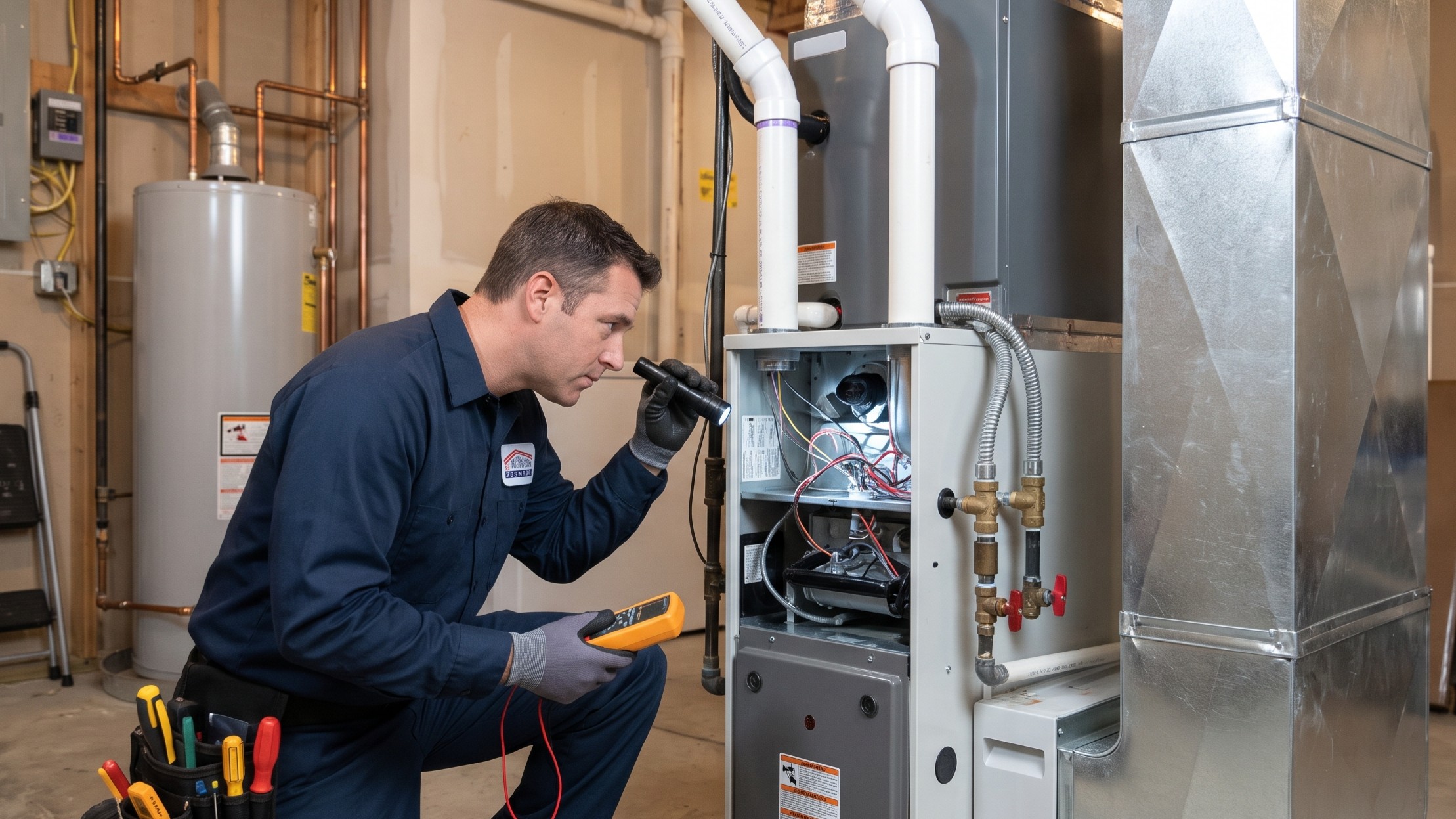
A professional pre-winter inspection goes well beyond what a homeowner can check from the living room. Technicians typically assess:
- Burners and the heat exchanger
- The ignition system and flame sensor
- The blower assembly
- Electrical connections and safety controls
- Venting components where applicable
The exact checklist varies by furnace model, but the goal stays the same: catching wear or faults before the coldest stretch of the season puts real strain on the system.
Basic Checks Catch Problems Before Winter Hits
A thermostat set correctly, a clean filter, solid power, and clear vents resolve a large share of furnace complaints without any tools beyond a flashlight and a little patience. When those checks do not bring the heat back, or when gas, electrical, ignition, combustion, or venting concerns show up, stepping back and calling a trained technician protects both the equipment and the household.
For homeowners ready to put a furnace through its paces before the first hard freeze, a furnace not heating checklist is a practical place to start the season off right.
Air Zone Experts
City: Little Elm
Address: 2617 Teal Cove Ln,
Website: https://airzoneexperts.com/


Comments
Post a Comment