What Is Hydro Jetting Used For? What Houston Restaurant Owners Should Know
Key Takeaways
- Hydro jetting uses a high-pressure hose and rear-facing jets to scour grease and buildup off the inside of pipe walls, going well beyond punching a hole through a clog
- Grease can cool and stick to the pipe between a kitchen sink and the grease trap, so a pump-out on schedule does not clean those lines
- A camera inspection should come before jetting on any line with unknown condition, since cracked joints or heavily corroded cast iron may need repair or lower pressure first
- Slow floor drains, gurgling sinks, sewer smells near the dish pit, and repeat clogs are signs a line is due for cleaning
- High-volume kitchens with heavy frying often need jetting more frequently than lighter-volume operations, and a workable schedule can be built around that difference
Grease is patient. It waits inside pipe walls long after a kitchen has done everything right on paper, and that patience is exactly why so many restaurant owners get blindsided by a backup they thought they'd already prevented.
Grease Lines Clog Even After Pump-Outs
A restaurant can pump its grease trap right on schedule and still end up with a flooded floor drain in the middle of a Friday dinner rush. Pumping empties the interceptor tank, but it doesn't touch the lines running between the sinks and that tank, where grease has often already cooled and stuck to the pipe wall long before reaching the trap.
The grease trap often receives the most attention because it is regularly scheduled for pumping, logged, and inspected. "The branch lines connected to it, however, can accumulate grease, dishwater residue, and food debris without showing obvious signs of trouble," says a technician from K&R Mechanical Services, which provides hydro jetting for restaurants across Houston. "Focusing commercial kitchen drain maintenance solely on the trap leaves these pipes vulnerable to buildup that can eventually restrict flow and cause backups."
Understanding what hydro jetting actually does, and why it differs from a quick pump-out, helps explain why some kitchens stay backup-free for years while others fight the same clog every few months.
Why Grease Builds Inside the Pipe Wall
Grease leaves a fryer or sauté pan as a hot liquid, and liquids flow easily through pipe. The trouble starts the moment that grease starts cooling, which happens fast once it hits cooler wastewater and the metal or PVC walls of a drain line. As it cools, it thickens and clings, leaving a thin film behind even when the water keeps moving.
That film doesn't rinse away the next time hot water runs through. Instead, each new batch of grease adds another thin layer on top of the last one, the same way wax builds up on a candle. Over weeks and months, a pipe that once had a wide-open interior can narrow dramatically, even though nothing about the outside of the pipe looks any different.
How Food Solids Add to the Buildup
Grease rarely travels alone. Rice, coffee grounds, and other small food solids wash down the same drains, and when they mix with a layer of softened grease, the combination turns into a paste that sticks even more stubbornly to the pipe wall. This paste can also trap larger debris, narrowing the line further and giving bacteria a place to take hold, which contributes to the sewer smells some kitchens notice near their dish pits.
Hydro Jetting vs. Snaking a Clog
A drain snake, sometimes called a cable machine or auger, is built to solve one specific problem: a blockage stopping water from flowing. The spinning cutting head bores through whatever is clogging the line and opens a path. Water starts moving again, and the immediate crisis is over.
The limitation is what gets left behind. Snaking clears a channel through the clog, but the grease coating the rest of the pipe wall stays exactly where it was. That coating can start narrowing the opening again within weeks, which is why some kitchens find themselves calling for the same line to be snaked over and over.
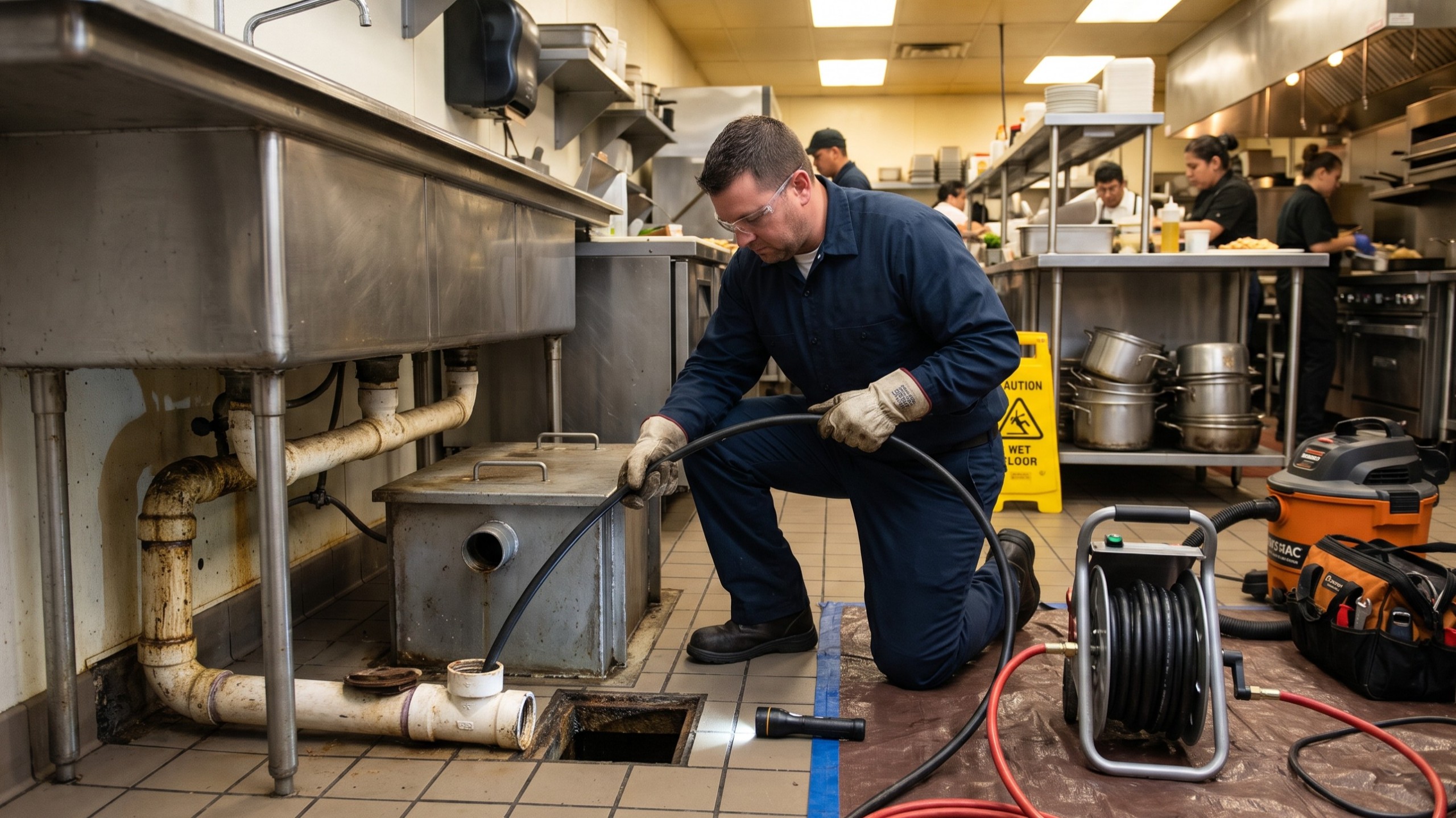
Hydro jetting takes a different approach entirely. A technician feeds a high-pressure hose into the line through a cleanout, and that hose is fitted with a nozzle built for cleaning rather than cutting:
- Forward-facing jets help break through any blockage in the way
- Rear-facing jets spray water around the full circumference of the pipe as the hose advances
- The high-pressure spray scours grease, scale, and buildup directly off the interior pipe wall
- Loosened debris flushes along the line instead of staying stuck behind
The result is a pipe that's been cleaned on the inside, rather than simply reopened. That difference is the core reason restaurant owners should think of jetting as pipe maintenance, not simply a stronger way to clear a clog.
Check Pipe Condition Before Jetting
High-pressure water is a powerful tool, and that power is exactly why pipe condition matters before any jetting begins. A pipe in good structural shape handles the pressure from jetting without issue. A pipe with existing weak points is a different story, and pushing high pressure through a damaged line can turn a routine cleaning into a bigger repair job.
What a Camera Inspection Reveals
A camera inspection sends a small camera down the line ahead of any cleaning work, giving a direct look at what's really going on inside the pipe. This step can reveal the pipe's material, where joints are aligned or separated, how much corrosion has built up, whether roots have intruded, and exactly where grease is thickest along the run. That information shapes the whole plan, since a technician can decide whether to jet at full pressure, use a lower-pressure approach, snake the line instead, or recommend a repair before any cleaning happens.
When a Line Needs Repair First
Cracked joints and heavily corroded cast iron are the two conditions that most often call for caution. Jetting a line with a cracked or offset joint at the pressures commercial equipment can reach has the potential to turn a cleaning appointment into a sewer repair. In these cases, repairing or replacing the damaged section first, or cleaning at reduced pressure, protects the line and avoids a costlier problem down the road.
Warning Signs a Line Needs Cleaning
Most grease-clogged lines give some warning before they fail outright. Kitchen staff are often the first to notice these signs during a normal shift, which makes it worth training the team to flag them early rather than waiting for a full backup:
- Floor drains that drain slowly, especially during the dish rush
- Gurgling sounds coming from sinks
- A sewer smell lingering near the dish area
- The same line needing to be snaked more than once in a few months
- Water backing up into a floor sink shortly after the grease trap was just pumped
Any one of these on its own is worth a closer look. Several happening together is a strong signal that grease has built up enough along the pipe wall to need a real cleaning, not just another quick snake.
Scheduling Jetting Around Kitchen Hours
One concern that keeps some restaurant owners from booking jetting sooner is the worry that it will shut down the kitchen during service. In most cases, that worry isn't necessary. Commercial jetting is typically run through exterior cleanouts, which means the work can usually happen without anyone stepping foot inside the kitchen itself.
That access point makes it practical to schedule jetting after closing or before the morning prep crew arrives, keeping the kitchen fully usable during business hours. A contractor available around the clock makes this kind of scheduling easier to arrange, since the work can be fit around a kitchen's actual hours instead of forcing a kitchen to work around the contractor.
How Often Kitchens Should Jet Lines
There isn't a single right answer for every kitchen, since volume and cooking style both affect how fast grease builds up. A few general patterns are worth using as a starting point:
- High-volume kitchens with heavy frying often benefit from jetting on a quarterly basis
- Lighter-volume kitchens may only need jetting once or twice a year
- Pairing a jetting visit with a regularly scheduled grease trap pump-out makes the whole routine easier to track and remember
Treating jetting as scheduled maintenance, rather than something that only gets called in during an emergency, tends to save money and stress over time. A kitchen that waits for a backup to force the issue is usually dealing with a bigger mess, a longer disruption, and a higher bill than one that keeps lines on a regular cleaning cycle.
Clean Pipe Walls Prevent Repeat Backups
The throughline across all of this is simple: a clean pipe wall is what keeps a kitchen's drains working the way they're supposed to. Pumping a trap, snaking a clog, and jetting a line all solve different problems, and understanding which tool fits which situation keeps a restaurant from relying on the wrong one.
For restaurant owners ready to get ahead of the next backup, scheduling a commercial kitchen drain cleaning visit before problems start is one of the simplest ways to protect a kitchen's plumbing year-round.
K&R Mechanical Services
City: Houston
Address: 12634 Haynes Road
Website: https://krmechanicalsvcs.com/
Phone: +1 (281) 408-9414


Comments
Post a Comment