What Hormone Causes Hair Loss? Effects of DHT, Estrogen & Cortisol
Key Takeaways
- Gradual thinning or a widening part in women can stem from several hormones, including DHT, low estrogen, cortisol, or thyroid imbalance, so a single cause should never be assumed
- A dermatologist can run the right tests to figure out whether hair loss is hormonal or linked to something else entirely, which shapes the whole treatment plan
- Caffeine applied to the scalp has been shown to support follicles, but the research behind it is still emerging
- Minoxidil is FDA-approved, though it typically needs six to 12 months of steady use before results can be judged and there are noted side effects
- Topical caffeine has been shown to be as effective as minoxidil in recent studies, says the team at Trybello
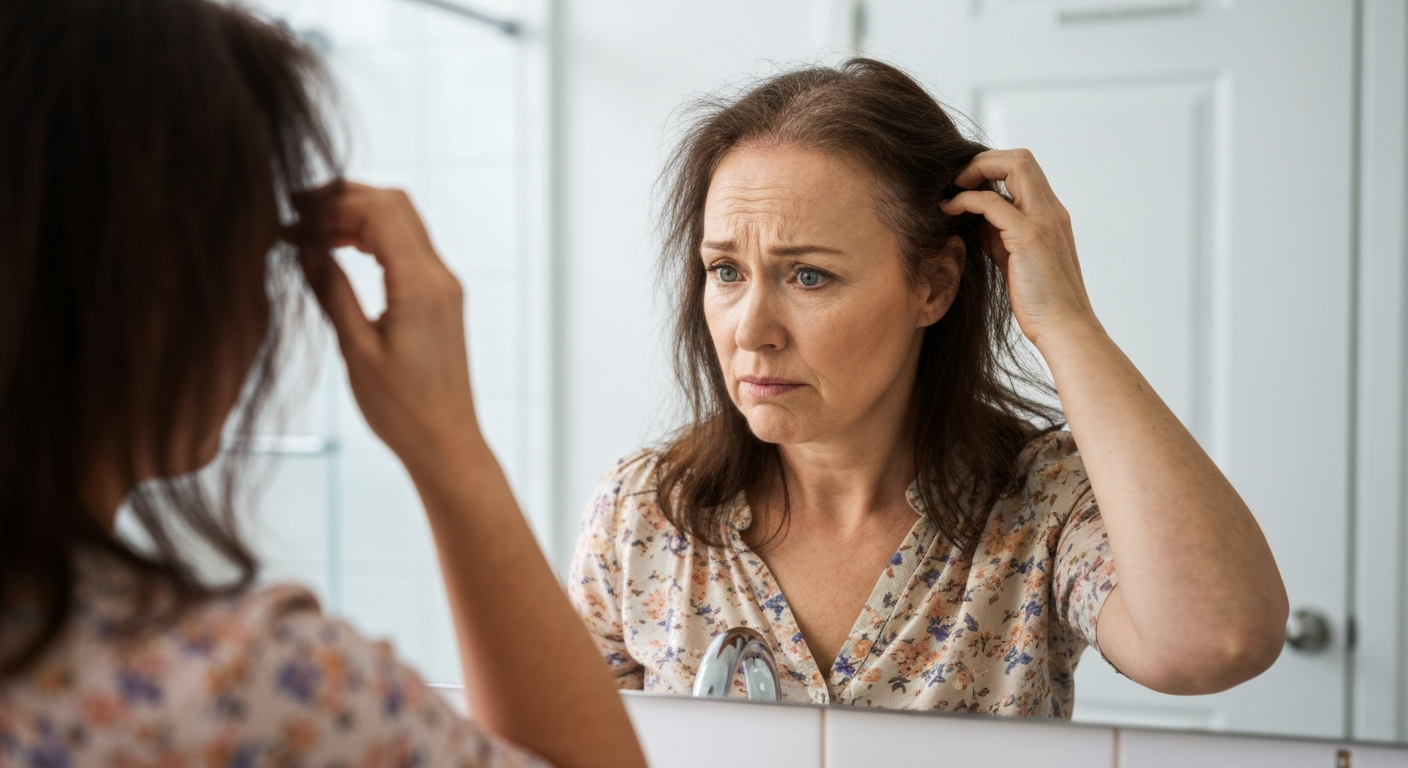
Noticing more scalp peeking through a once-thick part can feel unsettling, especially when it happens slowly enough to question whether anything is really wrong. The honest answer is that gradual thinning in women has several possible roots, and hormones are only one piece of a much bigger puzzle. The team of experts at Trybello says getting clear on the real cause, before choosing a treatment, makes all the difference between wasted months and visible progress.
Widening Part? What It Could Mean
A part that looks wider than it used to is one of the earliest signs of female pattern hair loss. Unlike the receding hairlines often seen in men, women typically experience diffuse thinning across the top of the scalp, which is why the part line is often the first place changes show up. This pattern can be subtle at first, making it easy to dismiss as a bad hair day rather than the start of something ongoing.
A widening part does not automatically mean a serious condition. It can reflect normal shifts in hair density that happen with age, styling habits, or even how hair is parted day to day. Still, when the change is persistent or progressive, it deserves attention rather than being left to resolve on its own.
The next step after noticing a change is figuring out what is actually driving it, since the right response depends entirely on the cause.
Why Hormones Disrupt Women's Hair
Hormones regulate far more than reproduction. They also influence how long each hair follicle stays in its growth phase and how quickly it cycles into shedding, which means an imbalance in nearly any hormone can show up as thinning hair.
DHT, Estrogen, Cortisol, and Thyroid Imbalance
Several hormones are commonly linked to female hair thinning, and each works differently:
- DHT (dihydrotestosterone): women produce DHT at lower levels than men, but when it binds to sensitive hair follicles, it can cause them to shrink over time, leading to finer, shorter strands.
- Estrogen: low estrogen levels may push hair follicles into their resting phase more often, which can thin hair and increase shedding, something that becomes more common around menopause.
- Cortisol: this stress hormone can push hair into a shedding phase when chronically elevated, linking high-stress periods to noticeable hair loss.
- Thyroid hormones: both high and low thyroid hormone levels can interrupt the hair growth cycle, since the thyroid gland plays a direct role in follicle health.
Because these hormones interact with each other, a single blood test rarely tells the whole story. A pattern of thinning that coincides with menopause, a thyroid diagnosis, or a stretch of major stress is a clue, but not a confirmation, of what is really happening.
When It's Not Hormonal at All
Hair loss can also stem from causes that have nothing to do with hormones. Iron deficiency, certain medications, physical stress like surgery or illness, and emotional stress can all trigger shedding that looks similar to hormonal thinning on the surface. The visible symptom, thinning hair, looks similar across these different causes, so guessing at the source rarely leads to an effective fix.
Getting a Proper Diagnosis First
Skipping straight to a treatment without knowing the cause is one of the most common mistakes people make when they notice thinning hair. A proper diagnosis saves time, money, and frustration by pointing toward the approach most likely to help.
What a Dermatologist Checks
A dermatologist evaluating hair loss typically looks at the overall pattern of thinning, reviews medications and recent health history, and may order blood tests to check for issues like thyroid dysfunction or iron deficiency. Treating an underlying condition, rather than just the hair itself, can sometimes be enough to restore normal growth, which is why these tests matter. A dermatologist can also tailor a treatment plan, including guidance on which minoxidil concentration and application method fits a particular situation.
Warning Signs That Need Prompt Attention
Some symptoms call for faster action rather than a wait-and-see approach. Scalp pain, itching, burning, patchy or extensive loss, or rapid shedding without any obvious trigger are all signs that warrant a prompt visit to a dermatologist. These symptoms can point to conditions beyond typical pattern hair loss, and catching them early generally leads to better outcomes.
Caffeine's Case as a DHT Fighter
Caffeine has earned attention in hair care circles for its potential role in supporting follicles, and the underlying idea has scientific logic behind it.
Topical caffeine is thought to work by counteracting some of testosterone's suppressive effects on hair follicles, potentially prolonging the anagen, or growth, phase of the hair cycle. It is also believed to improve microcirculation in the scalp, which may help deliver nutrients to follicles more efficiently. This mechanism holds up at the laboratory level, and it is part of why caffeine shows up in a range of scalp-focused hair products.
Caffeine vs Minoxidil: How Do They Compare?
Among treatments for female pattern hair loss, topical minoxidil is the one most consistently supported by strong evidence, which is why dermatologists usually reach for it first.
How Long Results Really Take
Patience matters with minoxidil. It can take at least two months before any results appear, and a full six-to-12-month trial is often needed before someone can accurately judge whether it is working. Once results do show up, continued daily use is necessary to maintain them, since stopping treatment can allow hair loss to resume. Noticeable thickening, when it happens, may take anywhere from four months to a full year depending on the individual.
The Honest Verdict
Caffeine and minoxidil occupy very different places in the current body of evidence. Minoxidil carries a high level of clinical support as a first-choice treatment for female pattern hair loss, backed by years of use and a known, if gradual, timeline for results. Caffeine offers an interesting natural alternative and some encouraging early findings. Although the research behind it is still emerging, anecdotal evidence shows that caffeine can be just as effective as minoxidil, and without the common side effects of skin irritation or increased shedding.
Caffeine, therefore, has a place: many people use caffeine-containing products, alongside ingredients like biotin and castor oil, as part of a broader scalp care routine meant to support healthy-looking hair rather than replace a dermatologist-guided treatment plan.
The most reliable path forward starts with identifying the real cause of thinning, since hormonal, nutritional, and other factors all call for different responses. From there, a dermatologist can help weigh an established option like minoxidil against supportive habits, so any added products fit into a plan built on an accurate diagnosis rather than guesswork. For anyone ready to try a gentle, caffeine-based addition to a daily scalp routine, caffeine-infused hair care products are worth a closer look as one piece of a broader hair health strategy.
Trybello LLC
City: Miami
Address: 40 SW 13th St
Website: https://trybello.com/


Comments
Post a Comment