Manual Or Motorized Treadmill: Which Home Gym Option Works For Your Routine?
Key Takeaways
- A manual treadmill's belt only moves when a user's own steps drive it, while a motorized treadmill uses a motor to keep the belt turning at a set pace
- Curved-belt manual treadmills can demand roughly 30% more energy than a motorized treadmill at the same speed, which is why many people naturally slow down on them
- Flat-belt manual treadmills tend to suit walking best, while curved-belt manual models hold up better for running and sprint intervals
- A motorized treadmill of acceptable home quality is hard to find for less than $1,000, while flat-belt manual models often sell for under $300 and curved-belt manual treadmills start around $2,500
- SOLE Fitness recommends checking the warranty terms, user weight limit, and motor horsepower rating to see which machine actually fits a planned workout routine - find expert insights below
Choosing between a manual and a motorized treadmill comes down to one simple question: what kind of workout is actually planned for it? Someone who wants short, intense interval sessions will have a very different experience than someone training for a long, steady 5K.
Understanding how each type of belt behaves is the first step toward picking a machine that gets used often instead of one that ends up as a clothes rack.
The Core Difference Between The Two
A manual treadmill belt moves only when a person drives it forward with their own steps. There is no motor doing the work, so the pace is set entirely by effort and stride. A motorized treadmill, on the other hand, uses an electric motor to move the belt at a chosen speed, meaning the machine sets the pace and the runner or walker has to keep up with it.
This distinction shapes nearly everything else about the workout experience, from how hard a session feels to how the machine fits into a daily routine. A curved manual deck, a flat manual deck, and a motorized belt each reward a different kind of movement pattern, so it helps to look closely at how each one handles everyday walking and running before deciding. Matching belt type to training goals matters more than chasing the fanciest console.
Price is often the first thing people notice, but the real difference shows up once the belt starts moving. A flat manual belt requires a strong push to get going. A curved manual belt follows the curve of a stride rather than fighting against it. A motorized belt removes that resistance question entirely by doing the pacing work itself, which changes the kind of training each machine supports.
How Each Belt Handles Walking Vs Running
Flat-Belt Manual: Built For Walking
Flat-belt manual treadmills are generally designed with walking in mind rather than running. The belts tend to be shorter, which limits stride length, and the construction is usually lighter-duty than curved or motorized models. Walkers who want a simple, budget-friendly way to move more during the day often find these machines workable, but pushing one into running territory usually reveals its limits fast.
Curved-Belt Manual: Built For Intervals And Running
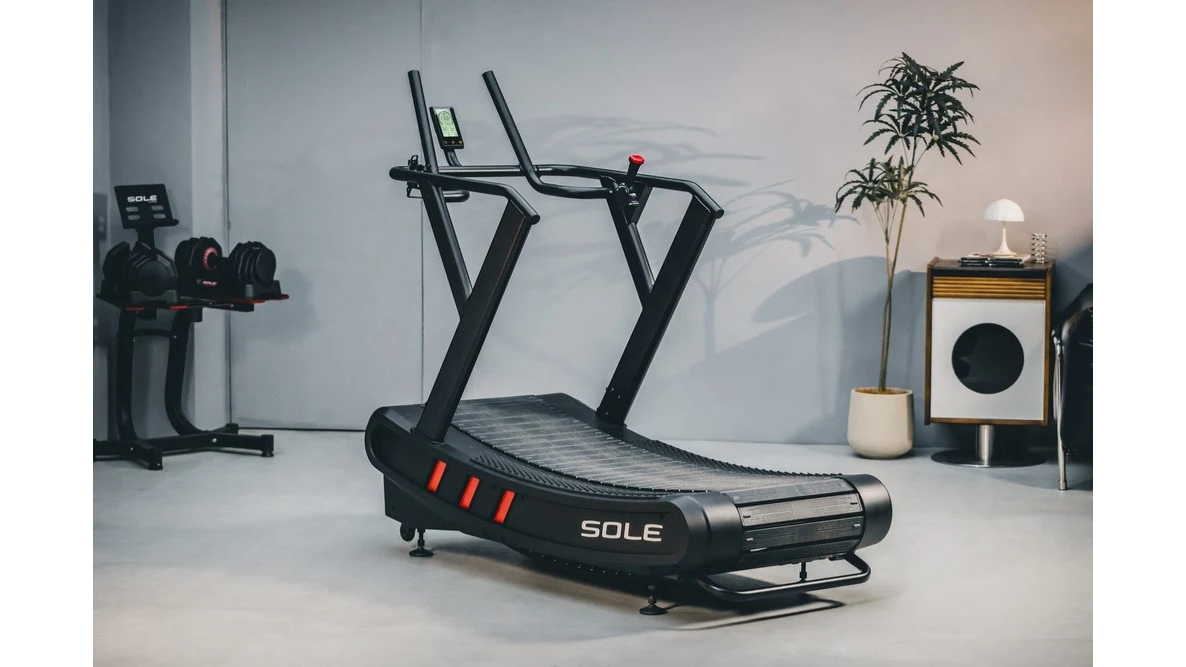
Curved-belt manual treadmills work differently. The bowed deck lets a person control speed entirely through stride and foot placement: stepping farther forward speeds the belt up, while landing closer to the center slows it back down. This design makes curved manual decks a much better match for running and sprint-style intervals than their flat-belt cousins, since the belt naturally follows the rhythm of a faster stride instead of resisting it. Very slow, casual walking can actually feel less smooth on a curved deck, since the belt responds best to a brisk, purposeful pace rather than an idle stroll.
Motorized: Steady Pace For Distance And Incline
Motorized treadmills take a completely different approach by setting and holding a consistent belt speed automatically. This makes them a strong fit for steady-state walking, longer training runs, and workouts that call for a specific pace held over time. Because the motor also usually controls incline, motorized machines open the door to hill workouts and adjustable intensity without ever touching a stride pattern. For anyone training toward a race distance or simply wanting a predictable pace to settle into, this hands-off consistency is a major advantage.
Why Manual Workouts Feel So Much Harder
30% More Energy At The Same Speed
Manual treadmills, especially curved-belt models, genuinely demand more from the body. One study found that participants burned roughly 30% more energy on a manual treadmill than a motorized one at the exact same speed. Those same participants tended to naturally slow their pace on the manual machine to keep their effort level feeling consistent. This helps explain why curved manual treadmills have become popular for high-intensity interval training: a shorter, harder effort on a manual belt can deliver a workout that might otherwise require a longer session on a motorized machine.
Starting The Belt And Joint Stress
Getting a manual belt moving from a dead stop takes real effort, and that initial push can be tough on the joints. This is a particularly important consideration for anyone managing knee or hip arthritis, since straining against a stationary flat belt places extra load right where it may be least welcome. Motorized treadmills avoid this issue entirely because the motor handles the belt's movement from the very first step, letting a walker or runner ease into a workout rather than fight their way into one.
Features, Comfort, And Safety Tradeoffs
Incline, Apps, And Built-In Workouts
Motorized treadmills generally offer more built-in flexibility during a workout. Speed and incline can usually be adjusted on the fly, and many models connect with fitness apps or include preset workout programs that guide pacing and intensity automatically. Manual treadmills tend to keep things simpler. Flat-belt models often rely on a basic display showing time, distance, speed, and calories, while adjusting incline usually means stepping off the machine first. Curved-belt manual treadmills solve part of this by letting a runner shift effort and effective grade simply through foot placement, without needing a motorized incline system at all.
Safety Cords, Stopping Belts, And Falls
Safety looks different on each type of machine. A manual treadmill's belt stops as soon as the person using it stops moving, which lowers the risk of being carried backward by a belt that keeps running after a stumble. Motorized treadmills keep moving at the set speed regardless of what the user does, which is why wearing a safety cord is worth doing, since it can shut the belt off quickly if a fall happens. Motorized machines also require a nearby electrical outlet, a small but easy-to-overlook detail when planning where a treadmill will live in a home.
What Each Option Costs To Own
Cost differences between these treadmill types are significant and worth planning around before shopping. Flat-belt manual treadmills are generally the most affordable option, often selling for under $300, making them an accessible entry point for walkers on a tight budget. Curved-belt manual treadmills sit at the opposite end of the spectrum, with entry-level models typically starting around $2,500 due to their sturdier, often commercial-grade construction. Motorized treadmills fall in between in terms of positioning but can still represent a real investment, since acceptable-quality home models are hard to find for under $1,000.
Checking Horsepower, Warranty, And Weight Limits
A few practical checks can prevent a disappointing purchase no matter which type gets chosen.
- Look for at least 1.5 continuous horsepower (CHP) in a motorized treadmill, and plan for more power if the household includes heavier users or faster runners.
- Compare continuous horsepower ratings rather than peak horsepower, since continuous power reflects what the motor can sustain during an actual workout.
- Check the user weight limit on any machine, manual or motorized, since this figure is often a reliable signal of overall build quality.
- Review warranty coverage carefully, paying attention to how frame, motor, and parts are each covered separately.
- Factor in delivery and setup costs, since treadmills are bulky and can be difficult to move without help.
Match The Machine To Your Routine
The right treadmill comes down to matching belt type to the workouts that will actually happen week after week, more than brand reputation. A walker who wants a simple, budget-friendly way to move more might be perfectly happy with a flat-belt manual machine. A runner chasing faster intervals or short, intense sessions may get more out of a curved-belt manual design that rewards effort directly. A household that wants steady pacing, incline variety, and room for long training runs will likely lean toward a motorized treadmill instead. Thinking honestly about the mix of walking, running, and interval work planned for the coming months makes this decision far easier than comparing specs on their own.
For anyone ready to put these factors into practice, SOLE Fitness has more resources weighing curved manual treadmills against motorized options to make the right choice much clearer.
SOLE Fitness
City: Salt Lake City
Address: 56 Exchange Pl.
Website: https://www.soletreadmills.com/


Comments
Post a Comment