Latex Mattress on an Adjustable Base: How It Helps With Incline Bed Therapy
Key Takeaways
- Incline bed therapy raises the whole sleeping surface on a gentle slope, typically around 5 to 7 degrees, rather than propping up the head with pillows.
- A tilt-only foundation keeps a latex mattress flat as it rises, while many hinged adjustable bases bend the mattress at the waist.
- A latex mattress is best paired with a foundation that has closely spaced slats, good airflow, and a weight rating that comfortably covers the mattress and sleepers.
- A remote-controlled range of 0 to 12 inches makes it possible to start flat and raise the bed gradually.
- A foam wedge under the current mattress is a low-cost way to try incline sleeping before buying a full foundation.
Most mattress shopping comes down to firmness, materials, and price. Once sleeping on a gentle head-to-foot slope enters the picture, the foundation underneath becomes just as important as the mattress on top. This is especially true for latex, which works best on steady, breathable support. The team of experts at Incline Sleep says pairing a latex mattress with the wrong base can bend it in the wrong place, limit airflow, or make the incline hard to adjust.
What Incline Bed Therapy Involves
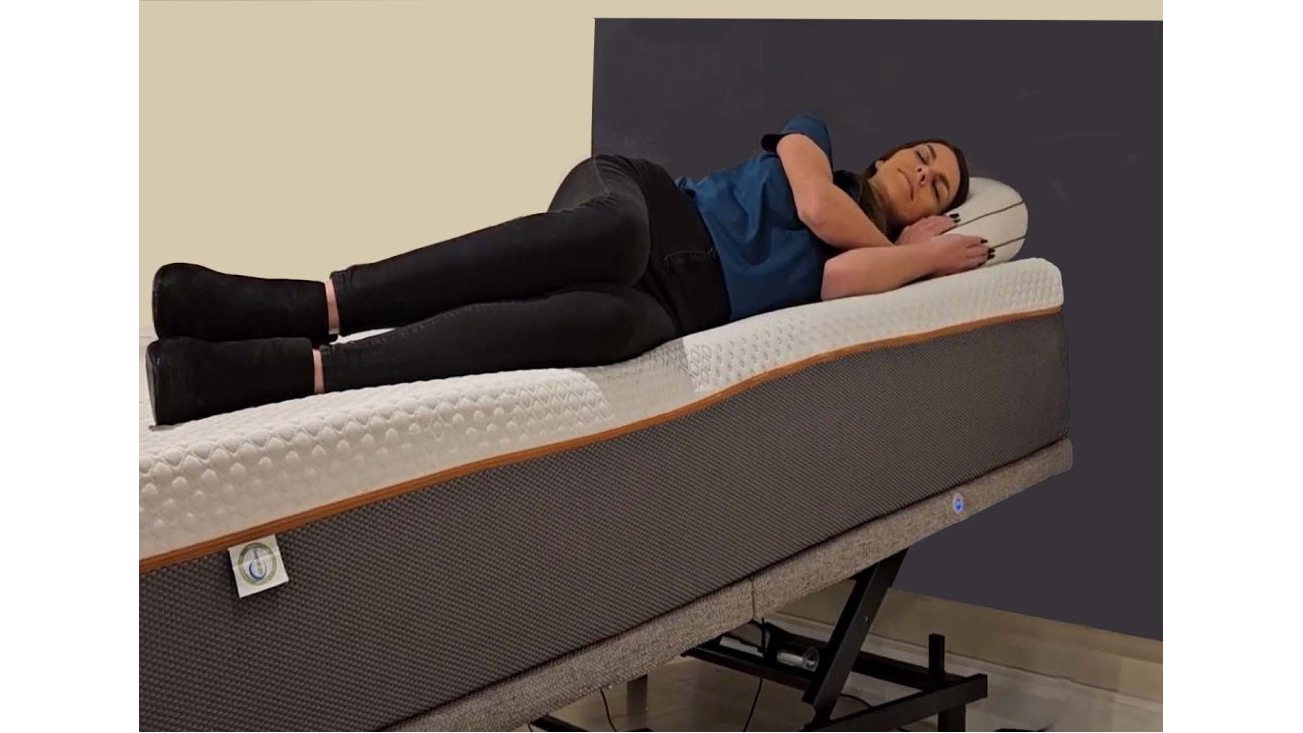
Incline bed therapy means sleeping with the entire body on a gentle slope from head to foot, instead of lying completely flat. Most guidance places that slope at around 5 to 7 degrees, which on a typical bed works out to roughly 6 to 7 inches of elevation at the head end. The goal is a straight, even incline, not a sharp bend partway up the body.
This is where many first attempts go wrong. Stacking extra pillows lifts only the head, folds the body at the waist, and tends to slide out of position overnight. A properly built incline raises the whole surface, so the head, shoulders, and torso all rest on the same line. People choose this setup for a range of reasons, including nighttime reflux, snoring, and overall sleep comfort.
Hinged Adjustable Bases vs Tilt-Only Foundations
Adjustable bases are often assumed to do the same job, but most are designed differently. A typical adjustable base has hinged sections that raise the head and feet separately, bending the mattress into a seated or zero-gravity shape. That position can be comfortable for reading or watching TV, but it doesn't create the straight, full-body slope incline bed therapy relies on.
A tilt-only foundation works differently. Instead of folding at hinges, it raises the head end of the entire frame, so the mattress stays flat and simply tilts. This matters for side and back sleepers in particular, since a flat surface lets the body settle naturally in either position. It also matters for the mattress itself, because the latex is supported as one even surface from top to bottom.
What a Latex Mattress Needs From Its Foundation
The base under a latex mattress needs to provide three things: even support, airflow, and enough strength for the load.
Even support comes from the slats. Slats placed close together, such as 1.5 inches apart, give the mattress a consistent surface to rest on, so no section is left without support. Wider gaps leave more of the mattress unsupported between slats, so it's worth checking spacing before buying.
Airflow is the second consideration. A slatted foundation lets air move beneath the mattress, helping keep the sleeping surface comfortable through the night. Solid platforms with no gaps offer much less ventilation.
Strength matters too. Checking the foundation’s weight rating against the combined weight of the mattress and the people using it is an easy step to overlook. Some tilting foundations are rated to support up to 1,200 pounds, which leaves a comfortable margin for most households.
Choosing the Right Tilt Range
Once the foundation is chosen, the next question is how far it should tilt. A remote-controlled range of 0 to 12 inches covers everything from completely flat to a noticeably steeper slope, giving sleepers room to adjust as they get used to the change.
Most people do best starting at the lower end and raising the bed gradually over several nights. Too steep can feel unnatural, while too flat may not make a noticeable difference. The 5 to 7 degree range mentioned earlier is a sensible target, and a remote makes it easy to settle on the height that feels right.
A wide range is also useful over the longer term. Unlike blocks or a fixed wedge, a remote-controlled foundation can be adjusted in seconds, so the angle can follow the sleeper’s comfort instead of staying locked in place.
Setting Up the Foundation
Setup is usually simpler than people expect. Many tilting foundations ship unassembled with all hardware included and can be assembled without tools in about 15 minutes. Once assembled, the base can sit inside a standard bed frame or directly on the floor.
A few checks help before the first night:
- The foundation size matches the mattress exactly, with no overhang at the edges.
- The base sits level and stable before any tilt is applied.
- The mattress is centered on the slats and does not shift when the foundation rises.
- The remote works through the full range, from flat to the highest setting, before the bed is made.
Trying Incline Sleep With a Wedge First
Not everyone is ready to replace their foundation straight away. A foam incline wedge placed under the current mattress offers a simple, lower-cost way to try full-body incline sleeping first. Because it sits beneath the mattress rather than on top, it raises the sleeping surface without bending it in the middle.
A wedge holds a fixed angle, so it does not offer the adjustability of a remote-controlled foundation. Still, it lets sleepers try the difference before committing, and some retailers credit the wedge cost toward a full base when customers upgrade.
Tilt-Only or Head-and-Foot Adjustment?
Some incline foundations offer full-body tilt only, while others add separate head and foot adjustment on top of the incline. A tilt-only base focuses entirely on keeping the mattress flat on one even slope, which suits people whose main goal is incline sleeping. A head-and-foot model adds positions for reading, relaxing, or raising the legs, which some sleepers value for everyday comfort.
The right choice depends on how the bed will be used. For incline bed therapy alone, a tilt-only foundation keeps things simple. If the bed also serves as a place to sit up and read, the extra adjustment may be worth it, as long as the sleeper returns to a flat or even incline at night.
Building the Right Base for Latex and Incline Sleep
A latex mattress and an incline setup work best together when the foundation keeps the mattress flat, supported, and ventilated as it tilts. Closely spaced slats, a solid weight rating, and a tilt range that starts flat give sleepers the most control as they ease into the change. Incline Sleep, an educational resource dedicated to sleeping on an incline, explains the difference between tilting a bed and bending it: the whole body should rise on one even slope, rather than lifting only the head or folding at the waist. That is exactly why the foundation matters as much as the mattress.
Incline Sleep
City: Glendale
Address: 4439 W Greenway Rd
Website: https://inclinesleep.com


Comments
Post a Comment