How to Maintain Powder-Coated Wheels: Tips to Stop Fading & Corrosion
Key Takeaways
- Brake dust, road salt, harsh cleaners, and UV rays are the four main threats to a powder-coated wheel finish
- A pH-neutral cleaner in the 6.5 to 7.5 range, used with a few minutes of dwell time and paired with soft brushes, removes grime without wearing down the coating
- Drying wheels fully after every wash and sealing with a compatible protectant are two easy habits that prevent water spots and long-term fading
- Winter and summer call for different routines - keep reading for the seasonal habits that make the biggest difference
- Willer Time specifically recommends options built for quick, safe wipe-downs between full washes on painted and powder-coated wheels - find more expert insights below
Powder-coated wheels have a reputation for toughness, and that reputation is earned. The coating forms a hard, bonded layer that resists chipping and corrosion far better than standard paint. That toughness does not mean the finish is indestructible, though. Left uncleaned or cleaned the wrong way, even a high-quality powder coat can dull, fade, or start to corrode at the edges.
Keeping wheels looking sharp mostly comes down to a short list of gentle, consistent habits rather than expensive restoration work. And here it is.
The Four Threats to Your Finish
Four things do almost all the damage to a powder-coated wheel over time. Brake dust is the most constant offender, since it contains metallic particles that can etch into the coating if it sits too long. Road salt and moisture come next, especially in climates with winter storms, where leftover salt residue can creep into tiny imperfections and start corrosion before anyone notices. Harsh cleaners, particularly anything acidic or marketed as a heavy-duty tarnish remover, can strip color and sheen from the surface. UV exposure from daily sun can fade pigment over months and years, which is why shaded cleaning and routine protection both matter.
Understanding these four threats makes the rest of the maintenance routine make sense. Every step in this routine, from the cleaner chosen to the time of day a wheel gets washed, exists to block one or more of these specific risks.
Gather the Right Tools First
A safe wash starts before the hose even comes out. Having the right cleaner and brushes on hand prevents the common mistake of reaching for whatever is under the sink, which is often too aggressive for a coated finish.
Choosing a pH-Neutral Cleaner
A pH-neutral or mild soap-based cleaner is the safest match for powder coating. Neutral cleaners generally fall in the pH 6.5 to 7.5 range, which is gentle enough to lift brake dust and road grime without attacking the coating itself. Acidic cleaners, tarnish removers, and anything containing bleach should stay off the shelf entirely, since these can discolor or soften the finish. When a cleaner's dwell time is listed on the label, usually somewhere between thirty seconds and five minutes depending on the formula, it should never be allowed to dry on the wheel before rinsing.
Soft Brushes for Face, Barrel, and Lugs
Different parts of a wheel need different tools. A soft-bristle brush handles the visible face, a dedicated barrel brush reaches into the inner barrel where a large share of brake dust actually collects, and a lug-nut brush gets into tight crevices around bolts without scratching anything. Using separate brushes for each area, rather than one all-purpose pad, keeps grit from one section from being dragged across another. Abrasive pads, steel wool, or anything with a rough texture should never touch a powder-coated surface.
A Step-by-Step Safe Wash Routine
With the right supplies ready, the wash itself follows a simple, repeatable order. Skipping steps, especially rinsing or drying, is usually where damage starts.
Rinse, Clean, and Scrub Gently
Start by pre-rinsing the entire wheel with a hose to knock loose dirt, dust, and grit free before any scrubbing begins. This step alone prevents a lot of fine-scratch damage, since scrubbing over loose grit is essentially sanding the finish. Next, apply the chosen pH-neutral cleaner and let it sit for its recommended dwell time to loosen stuck-on brake dust. Then scrub gently with the soft brushes, working the face, inner barrel, spokes, and lug areas one at a time so the cleaner never has a chance to dry before it is rinsed away. Finally, rinse thoroughly with clean water until no soap residue remains, since leftover cleaner can leave spotting or streaking once it dries.
Dry Thoroughly to Stop Water Spots
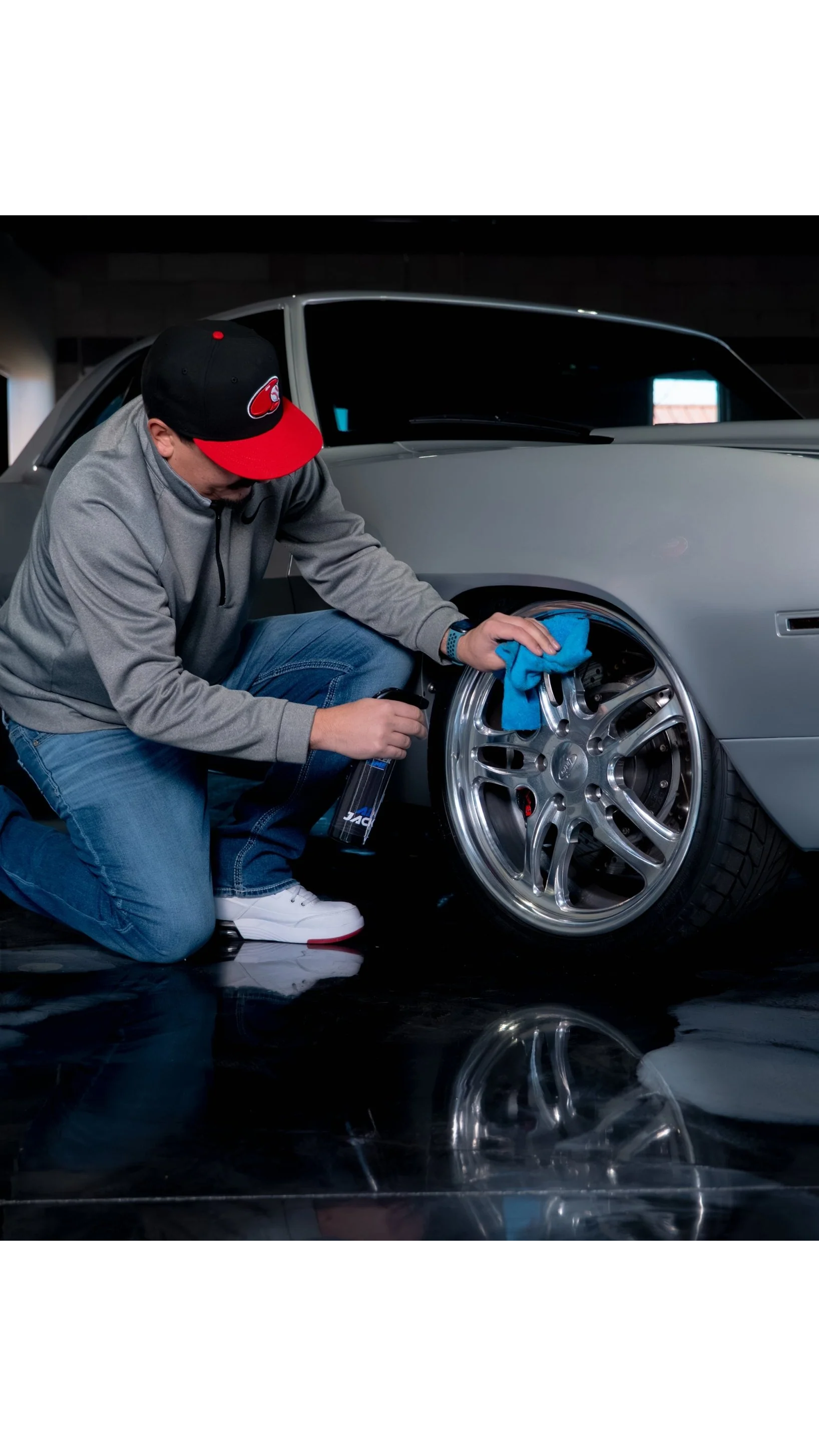
Water left to air-dry on a wheel tends to leave mineral spots, and it can pool around bolt holes, valve stems, and spoke edges where it lingers longer than expected. Wiping the wheel down with a clean microfiber towel right after rinsing solves both problems at once. This step takes only a minute or two per wheel but makes a visible difference in how clean the finish looks once everything dries.
Seal With a Compatible Protectant
Once the wheel is clean and dry, a wax or sealant made for coated or clear-coated surfaces adds a protective layer against future grime, brake dust, and UV fading. A sealant also makes the next wash easier, since grime has a harder time sticking to a protected surface in the first place.
This is a good point in the routine to reach for a quick detail spray.
Seasonal Habits That Save Wheels
Weather plays a bigger role in wheel care than most owners expect, and adjusting habits by season heads off two of the most common damage patterns.
Winter: Rinse Salt Off Often
Road salt is one of the fastest routes to corrosion on any wheel, coated or not. Rinsing wheels frequently through winter, rather than waiting for a full wash day, keeps salt from sitting against the finish long enough to cause damage. This matters even more after storms or heavy salting events, when residue can build up quickly between regular washes.
Summer: Wash Cool, Stay Shaded
Hot weather brings a different problem: water evaporating too fast in direct sun, which leaves behind mineral spots and streaks. Washing in the shade, or early in the day before the sun heats the metal, gives cleaner and rinse water time to work properly before drying. This single habit solves most of the streaking issues that pop up during summer washing.
Cleaning Mistakes That Cause Damage
Most finish damage traces back to a handful of avoidable mistakes rather than normal wear. Knowing what to skip is just as useful as knowing what to do.
Harsh Chemicals and Abrasive Pads
Acidic wheel cleaners, bleach-based products, and abrasive scrub pads are the fastest way to dull or strip a powder-coated finish. These products are often marketed as heavy-duty solutions for stubborn brake dust, but their strength is exactly what makes them risky on a coated surface. When unsure whether a product is safe, testing it on a small, hidden spot first is a simple way to avoid a costly mistake across an entire wheel.
Never Clean a Hot Wheel
Cleaning a wheel that is hot from driving or sitting in direct sun can cause cleaner to dry almost instantly, leaving streaks and spots that are hard to remove. It can also stress the coating itself. Letting wheels cool to the touch before starting any cleaning step, and avoiding brake components entirely during cleaning, protects both the finish and the brake system.
Spot Corrosion Before It Spreads
A quick visual check after every wash catches small problems before they become expensive ones. Running a cloth or eye over the wheel face, inner barrel, spokes, bolt holes, and rim edges reveals early corrosion, usually as small bubbles, dull patches, or rough spots where the coating may have chipped. Chips and curb scuffs deserve prompt attention, since moisture can work its way under the coating through even a tiny gap and spread corrosion from the inside out. Avoiding a pressure washer aimed directly at chip edges is a simple precaution that prevents forcing water further under the finish. Catching these signs early, especially right after winter driving, keeps a small repair from turning into a full recoat.
Gentle, Regular Care Prevents Damage
Powder-coated wheels reward consistency more than intensity. A gentle pH-neutral wash, thorough drying, a compatible sealant, and a quick seasonal adjustment for salt or sun cover nearly everything needed to keep a finish looking new for years. Skipping harsh chemicals, abrasive pads, and hot-wheel cleaning removes most of the risk that leads to fading or corrosion in the first place.
For an easy way to keep that just-washed shine between full details, Willer Time has more resources explaining why quick detail sprays made for wheels and paint should be part of any regular routine.
Willer Time
City: Colorado Springs
Address: 2020 N Academy Blvd Ste 261
Website: https://willertime.com/
Phone: 1(800) 555-1234
Email: support@willertime.com


Comments
Post a Comment