How to Choose Soft Baby Clothes for Every Stage, From Newborn to Toddler
Key Takeaways
- Babies outgrow sizes quickly, so each stage needs its own pieces. A few well-made ones usually serve better than a drawer full of bargains.
- The fabric matters most. Smooth, breathable cotton stays comfortable on sensitive skin and holds up to the constant washing of the early years.
- Each stage has its own priorities: easy changes for newborns, freedom to move for crawlers, and durability for toddlers.
- Fit, finishing and safety rules, especially for sleepwear, are worth checking before buying.
- Gentle care keeps baby clothes soft long enough to be handed down to a younger sibling.
Few things grow faster than a baby. A newborn outfit may fit for only a few weeks, and by the toddler years, knees, elbows, and playground slides test every seam. That pace makes it tempting to buy cheap and replace often. Yet many parents find the opposite works better: fewer pieces at each size, chosen well, that stay soft and look good long enough to be worn by a younger sibling or saved.
Brands built around that idea tend to start with the fabric. Nellapima, a family-run Peruvian Pima cotton brand founded in 2016, describes its approach as quality not something to reach for once and forget. The same principle applies to any shopper choosing clothes for each stage, from the first weeks through the toddler years.
Start With the Fabric
Before thinking about styles or sizes, it helps to look at what the clothes are made of. Baby skin is thinner and more delicate than adult skin, and baby clothes are washed far more often than most garments in a home.
Cotton remains the most common choice because it is breathable and gentle. Within cotton, quality varies widely. Long-staple cottons, such as Pima, are spun from longer fibers that make smoother, stronger yarn. The fabric feels softer from the first wear and tends to keep that softness through repeated washing, rather than turning rough or thin.
A quick check helps: run a hand across the fabric. It should feel smooth rather than fuzzy, with no scratchy patches, and it should drape gently instead of feeling stiff. The label should clearly list fiber content. “100% cotton” or a named cotton type tells far more than “cotton blend.”
Newborn: Easy Changes and Gentle Layers
The first months are about comfort and convenience. Newborns sleep much of the day, need frequent diaper changes and have little tolerance for being pulled in and out of tight necklines.
Pieces that work especially well at this stage:
- Gowns. A gown slips on easily and leaves room for quick diaper changes, which makes it a favorite for the first weeks at home. Convertible gowns can be closed at the bottom for warmth or opened for changes.
- Footies and zipper footies. These keep feet covered without socks that slip off. A two-way zipper makes overnight changes faster.
- Soft one-pieces with wide or envelope necklines. These go on over the head without a struggle.
A small number of special pieces also belong in a newborn wardrobe: a coming-home outfit, something for first photos and perhaps a gown for a christening or baptism. These are the pieces families keep most often.
Infant: Room to Move
Somewhere between three and twelve months, babies start rolling, sitting, crawling and pulling up. Clothes need to move with them.
Bubbles become a favorite here. Their rounded shape and elastic leg openings give babies room to kick and crawl while still looking put together. Footies continue to work well, especially in cooler months, and pajamas take on a bigger role as sleep routines settle.
Look for:
- Snaps or zippers that open easily, ideally along the inseam, so diaper changes do not require a full outfit change.
- Flat, neatly finished seams that will not rub as a baby crawls and rolls.
- Fabric with a little natural give, so a garment moves without pulling at the shoulders.
Toddler: Durability for Busy Days
By the toddler years, clothes take a beating. Knees hit the floor, sleeves get pushed up and outfits are changed after lunch more often than anyone would like.
Durability becomes the priority. Strong seams, well-attached snaps, and fabric that resists pilling make the difference between a piece that wears out in a season and one that stays in good shape for the next child. Dresses, sets and two-piece pajamas start to replace one-pieces, and comfort still matters as much as looks.
This is also when special-occasion clothes become fun again: holiday outfits, matching family looks and pieces for birthdays and photos.
Everyday Pieces and Heirloom Pieces
A useful way to plan any baby wardrobe is to divide it into two groups.
Everyday clothes handle daily life: naps, meals, playtime and the endless laundry cycle. They should be simple, soft and easy to wash.
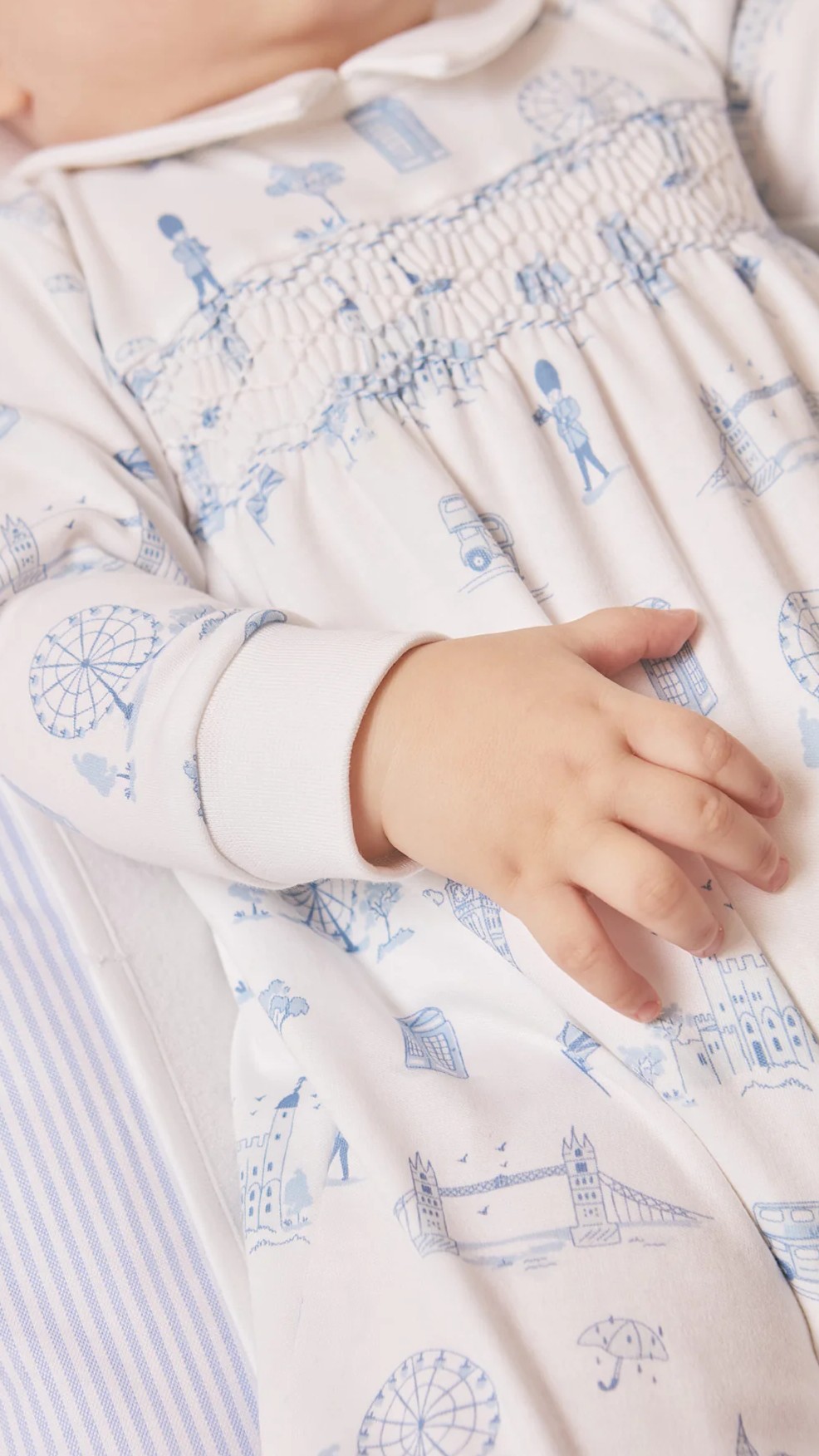
Heirloom pieces are saved for moments: holidays, photos, family gatherings and gifts. They often include details such as hand smocking or embroidery, and they are more likely to be kept, passed down or stored for a future grandchild.
Many brands organize their collections the same way. Nellapima, for example, offers an Everyday line in simpler designs and a Heritage collection of hand-smocked and embroidered pieces for occasions and keepsakes, both made in Peru from the same Pima cotton. Thinking in these two groups makes it easier to spend where it counts and keep the wardrobe from growing out of control.
Gifts at Each Stage
Grandparents, aunts and friends often wonder what to bring. A few ideas that work well at each stage:
- For a baby shower or a newborn: a soft gown or footie in a slightly larger size, so it fits after the first few weeks, or a coming-home outfit if the family has not chosen one yet.
- For the first year: a bubble or a special outfit for holiday photos, chosen in the size the baby will wear when that season arrives.
- For a toddler:pajamas, a dress or a matching set, plus something for a birthday or a family gathering.
A gift box with a note about the piece, whether it was chosen for a first holiday or a christening, turns clothing into something a family is more likely to keep. Outfits like these are often the ones saved for younger siblings or future grandchildren.
Getting the Fit Right
Sizing is one of the trickiest parts of buying baby clothes, because babies grow at different rates. A few habits help:
- Go by length and weight, not age. Size charts are a better guide than the age printed on the tag.
- Buy ahead, but not too far. A few pieces in the next size up are useful. Buying many sizes ahead risks clothes that do not match the season when they finally fit.
- Check the neckline and leg openings. A garment that fits the body but squeezes the neck or thighs will not be worn for long.
- Leave some room, but not too much. Slightly roomy is comfortable. Very loose clothing can bunch up and is not suitable for sleep.
Safety Basics
In the United States, children’s clothing must meet federal safety requirements under the Consumer Product Safety Improvement Act (CPSIA), which includes limits on substances such as lead. Reputable brands are open about how their products comply and how they are tested.
Sleepwear has its own rules. U.S. regulations require children’s sleepwear to be either flame-resistant or snug-fitting, with an exception for infant garments sized 9 months and under. For cotton pajamas, that usually means a close, snug fit is part of the design, not a sizing mistake. Small parts such as buttons and decorations should be firmly attached on any garment.
Care That Keeps Clothes Soft
The way clothes are washed has as much to do with how long they last as the way they are made. Always follow the care label first. A general routine that suits most cotton baby clothes:
- Machine wash cold on a gentle cycle.
- Use a mild detergent, and skip the bleach and fabric softener.
- Tumble dry on low, or lay flat to dry.
- Turn pieces with embroidery or smocking inside out before washing.
High heat is a common reason cotton shrinks or loses its softness early. A little care at each wash keeps clothes soft and ready to be handed down to the next child.
Building a Wardrobe for Each Stage
A thoughtful baby wardrobe does not need to be large. At each size, a handful of soft everyday pieces, a few special outfits for the moments that matter and some attention to fit, safety and care are enough to get a family through that stage, from the first weeks home to the busy toddler years.
Families who want to see how one maker approaches each stage can browse Nellapima’s newborn-to-toddler clothing, from gowns and footies to bubbles, pajamas and dresses.
About Nellapima: Nellapima is a family-run baby and children’s clothing company that has been making pieces in Peru from 100% Peruvian Pima cotton since 2016. Its Heritage line features hand-smocked and embroidered designs for holidays, photos, gifts and keepsakes, and its Everyday line brings the same soft cotton to simpler styles for newborns through the toddler years. You can buy Nellapima products online at https://www.nellapima.com/.
Nellapima
City: Atlanta
Address: 250 Spring Street Northwest
Website: https://www.nellapima.com
Phone: +1 713 904 5001


Comments
Post a Comment