How Do Neuromodulation Devices Work? A Guide to Noninvasive Options
Key Takeaways
- Neuromodulation works by delivering electrical signals directly to a nerve target, either calming overactive signals or triggering activity where there was none before.
- Noninvasive devices work entirely through the skin, avoiding surgery and the risks that come with it.
- Open-loop systems deliver steady or scheduled stimulation, while closed-loop systems adjust in real time based on a measured body signal, a distinction worth understanding before choosing a device.
- Matching a device to a condition depends on the target nerve or brain area, since noninvasive options vary considerably in where and how they deliver a signal.
- Nuropod by Parasym is one example of a noninvasive, vagus-nerve-focused wearable device designed for everyday use outside a clinical setting.
Choosing a neuromodulation device can feel like picking between tools without knowing what any of them actually do. Some sit at the ear. Some attach to the scalp. Some respond to a nerve signal in real time, while others run on a fixed schedule. Understanding these differences before a clinical conversation can make that conversation far more productive.
What Neuromodulation Actually Does
Neuromodulation is a broad term for technology that acts directly on nerves, altering how they fire by delivering an electrical signal to a specific target area. Rather than treating symptoms through the bloodstream, a neuromodulation device aims at a particular nerve pathway, brain region, or spinal segment and changes activity right there.
The range of conditions this approach touches is wider than most people expect. Noninvasive options have been studied for chronic pain, mood regulation, cognitive function, and autonomic nervous system support, among other areas. The specific nerve or brain region being targeted largely determines which device category is relevant, which is why understanding the landscape of noninvasive options matters before narrowing down to one.
How Electrical Stimulation Changes Nerve Signals
Electrical stimulation works by creating a local shift in the voltage across a neuron’s membrane. Depending on how the electrical field is applied, this shift can either excite the nerve into firing or inhibit the signal from continuing along its path. In practical terms, a low-voltage current can quiet pain signals traveling toward the brain or support a neural pathway that benefits from regular activation.
Noninvasive devices deliver this signal entirely through the skin, without breaking the surface. Electrodes make contact at a specific external location, and the pulse travels inward toward the target nerve or brain region. The most suitable approach depends on the desired effect, how precisely the signal needs to be placed, and the biological traits of the target tissue. Because the signal has to travel through skin and other tissue before reaching its target, placement accuracy matters considerably.
Types of Noninvasive Neuromodulation Devices
Noninvasive neuromodulation covers several distinct device categories, each targeting a different area of the nervous system.
Transcranial magnetic stimulation uses a device held against the head to send magnetic pulses into selected brain areas without sedation or an incision. It is commonly used in clinical settings and has been studied for conditions including depression and chronic pain. Sessions typically take place in a clinical environment under professional supervision.
Transcranial direct current stimulation sends a low, steady current between electrodes placed on the scalp. It has been studied for its potential effects on cognitive function, mood, and pain, and is used in both clinical and research settings. Like transcranial magnetic stimulation, it targets the brain directly through the scalp.
Noninvasive vagus nerve stimulation takes a different approach, targeting the vagus nerve at the ear or neck rather than the brain directly. The vagus nerve runs between the brainstem and major organs including the heart, lungs, and gut, and plays a significant role in how the body regulates stress responses, recovery, and autonomic balance. Devices in this category deliver electrical pulses to the vagus nerve through the skin, typically at the ear or along the side of the neck, without any surgical component.
These categories differ in their target location, the type of signal they deliver, their intended use, and their regulatory status. Comparing them requires attention to those distinctions rather than treating noninvasive neuromodulation as a single uniform approach.
Open-Loop vs. Closed-Loop: How Devices Decide When to Stimulate
Beyond device type, noninvasive neuromodulation devices also differ in how they decide when to deliver a signal. This distinction shapes the day-to-day experience of using a device and how responsive it can be to changes in a person’s condition.
Open-loop systems deliver stimulation continuously or on a fixed, preset schedule, regardless of what the body is doing at that moment. The signal goes out at set intervals, and the device does not adjust based on any feedback it receives from the body. This approach is simpler and well-established, and many widely used devices operate this way.
Closed-loop systems take a more adaptive approach. They monitor a clinically relevant physiological signal in real time, such as a brain signal or heart rate pattern, and adjust stimulation in response to what they detect. This means the device can respond to the body’s own changing state rather than applying the same signal around the clock. Closed-loop systems are an active area of research and development, and their availability depends heavily on the condition being treated and the specific device category.
Matching the Device to the Condition
Not every noninvasive neuromodulation approach suits every condition, and the choice often comes down to where the problem originates and what kind of nervous system activity is being targeted.
Transcranial approaches are more commonly associated with brain-level conditions, including mood disorders and certain pain syndromes, and are typically administered or supervised by a clinician. Vagus nerve stimulation, by contrast, targets the autonomic nervous system through one of its major peripheral pathways, and devices in this category have been studied across a wider range of contexts including stress, recovery, sleep, and inflammation.
Vagus nerve stimulation devices also vary considerably among themselves. They differ in where they make contact with the nerve, what stimulation parameters they use, and whether they are intended for clinical use, consumer wellness use, or both. Regulatory status varies accordingly, and understanding which category a specific device falls into is an important part of evaluating it accurately.
Risks and Practical Questions to Ask
Noninvasive devices work entirely through the skin, which means they carry no surgical risks. That said, noninvasive electrical stimulation is not without considerations. Skin irritation at the electrode contact point is among the more commonly reported issues. Some devices may cause tingling, mild discomfort, or redness at the application site, particularly at higher stimulation intensities. Reported side effects vary by device type, target location, and individual response.
Before committing to any noninvasive device, a few practical questions are worth raising. Understanding what stimulation parameters the device uses, including frequency, pulse width, and intensity, helps clarify what signal the nerve is actually receiving. Knowing whether the device has been studied in randomized controlled trials, and in populations similar to the person considering it, provides useful context for evaluating its evidence base. Cost, maintenance requirements, and whether clinical supervision is needed are also practical factors worth addressing before starting.
What Noninvasive Vagus Nerve Stimulation Looks Like in Practice
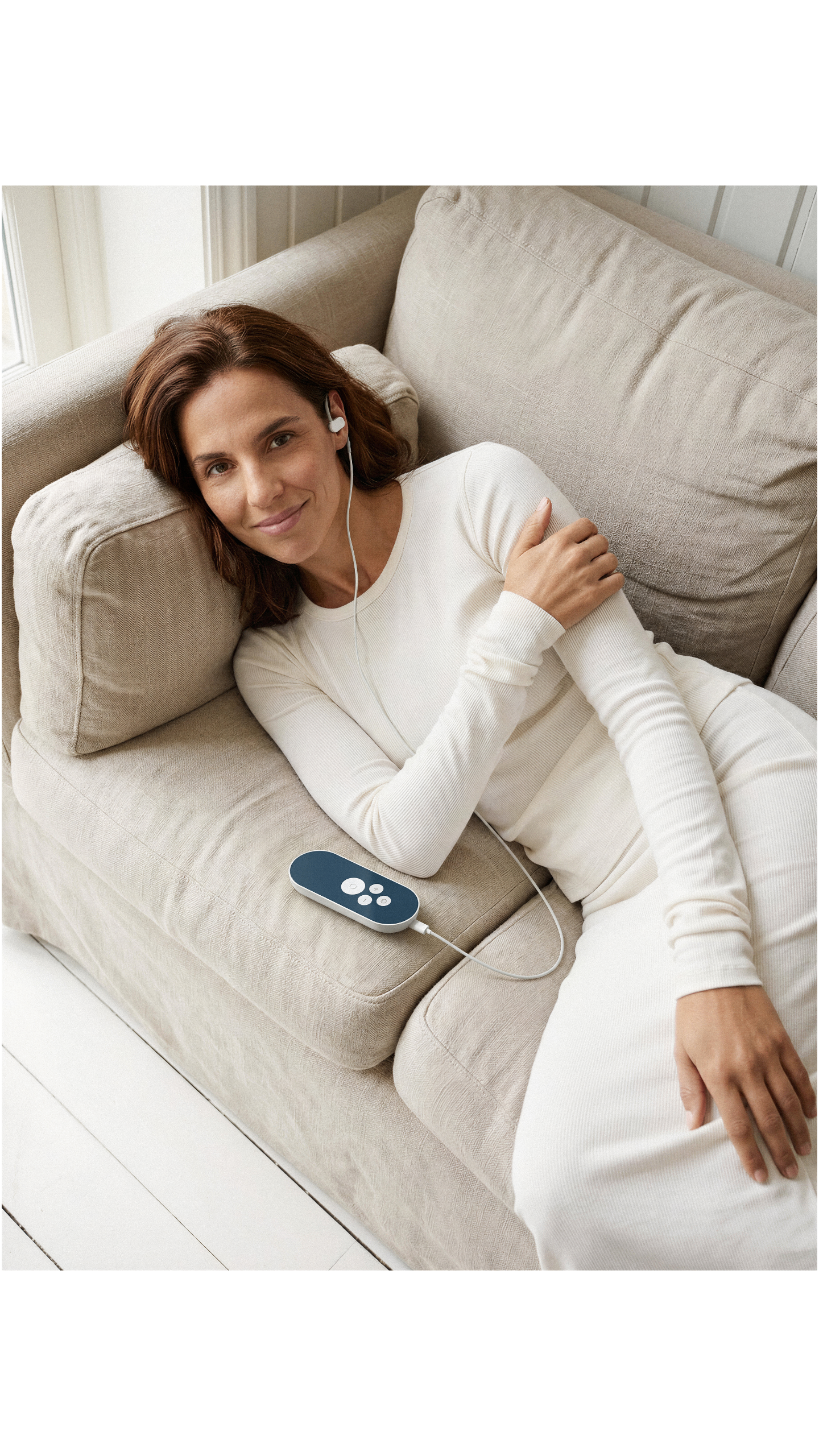
Nuropod by Parasym is one example of a noninvasive vagus nerve stimulation device designed for everyday use. It clips onto the tragus of the ear and delivers gentle electrical pulses to the vagus nerve using Parasym’s proprietary AVNT™ waveform. Most people use it for around 30 minutes, once or twice a day, while working, reading, or relaxing. Nuropod is a wellness product, not a medical device. The technology behind it is backed by more than 60 completed clinical studies and over 100 ongoing, with more than 10 years of research and development by Parasym.
The Right Choice Depends on the Individual
No single noninvasive neuromodulation device fits every person or every condition. A person exploring options for stress and autonomic support has different needs from someone receiving clinical treatment for a mood disorder, and the signal type, target location, and intended use of a device should reflect those differences.
The most useful next step is bringing specific questions about signal type, target area, evidence base, and practical requirements into a conversation with a qualified clinician, who can match the clinical picture to the device category that fits best. For those at the beginning of that process, understanding the basic distinctions covered here between device types, target locations, and delivery approaches provides a foundation for making that conversation as productive as possible.
Disclaimer: Research referenced in this article was conducted using Parasym’s neuromodulation technology under research conditions. Findings relate to specific study populations and should not be interpreted as guaranteed individual outcomes. Nuropod is classified by the FDA as a non-significant risk device and is not intended to diagnose, treat, cure, or prevent any disease.
Nuropod by Parasym
City: Sacramento
Address: 2108 N Street
Website: https://nuropod.com/
Email: press@nuropod.com


Comments
Post a Comment