Google Business Profile Views but No Calls? Where Interest Drops Off
Key Takeaways
- A profile view only confirms the listing appeared on Search or Maps, not that a visitor read the services, considered the practice, or planned to call
- The calls metric on a Google Business Profile counts clicks on the call button, not confirmed, answered, or completed conversations
- Some prospective clients may use a website or booking link instead of calling, so call counts alone cannot measure total interest
- Testing the phone number, website link, and booking process on a phone, then comparing those results against actual inquiry records, is a practical starting point
- Local search visibility work can help pinpoint where interest stalls between a profile view and a booked appointment
Profile views climbing month after month can feel like progress, right up until the appointment book stays thin. For an independent med spa or wellness practice, that gap between visibility and bookings is one of the most common and most frustrating patterns to untangle.
Views Are Up, the Phone Isn't Ringing
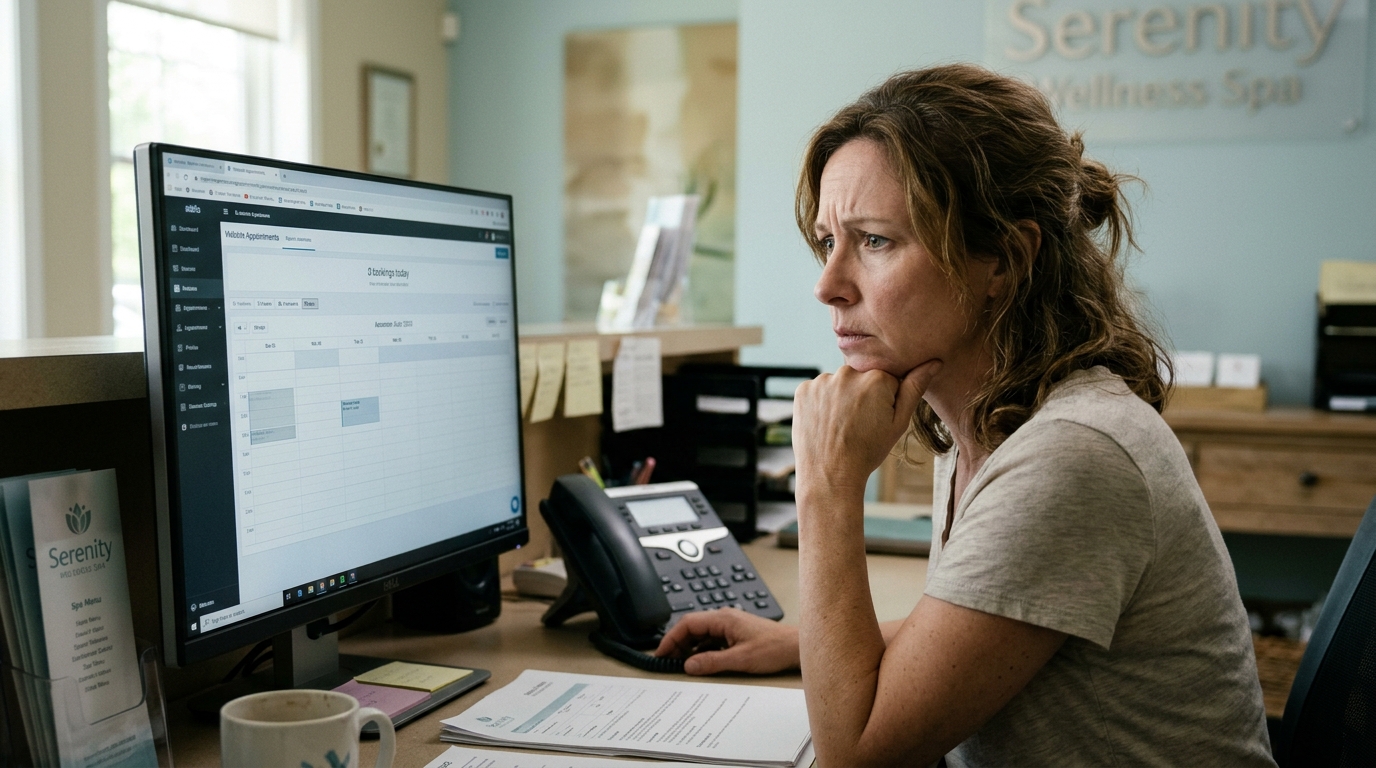
A med spa owner checking monthly numbers might see profile views rising steadily while the phone stays quiet and treatment rooms sit open. The instinct is to blame Google for sending the wrong audience, or to assume the profile simply needs more photos. Either guess could be right, but neither is confirmed without a closer look.
The more useful question is where potential clients are getting stuck between finding the practice and actually booking with it. Local SEO work built around this kind of diagnosis treats visibility and conversion as separate problems, because fixing the wrong one wastes both time and budget.
This pattern shows up often. A practice can be doing almost everything right on the visibility side and still lose most of its interested visitors somewhere along the path to a booked consultation. Finding that drop-off point starts with understanding what the numbers in a Business Profile report actually measure.
What a Profile View Actually Tells You
A view means the profile appeared to someone on Google Search or Maps, under Google's own reporting rules. It says nothing about whether that person read the service list, felt reassured by the photos, or even considered calling. Treating views as a stand-in for interest skips several steps that matter.
Calls Metric Counts Clicks, Not Conversations
The calls figure inside Business Profile Performance counts clicks on the call button. It does not confirm that a receptionist answered, that the caller stayed on the line, or that a consultation got booked. Someone might also copy the number down and dial later, or end the call before it connects. A rise in views next to flat call-click numbers is worth investigating, but it is not proof that something is broken.
Website Clicks and Bookings Follow a Different Path
Not every interested visitor calls. Some click through to the website, browse a treatment page, and book online instead. Completed bookings only show up in the Performance report when bookings run through a connected booking provider, so a practice using its own system may see activity that Google never counts. Website clicks and call clicks also come from a mix of organic search and any Google Ads running on the profile, which means profile activity should not be credited entirely to organic visibility. Reviewing views, clicks, and bookings together, rather than any single number alone, gives a more honest picture of where attention is going.
Seven Places Interest Can Stall
Once it is clear that a view is not a lead, the next step is figuring out exactly where the path breaks down. There are several common points of friction, and most practices will recognize at least one.
1. Searches That Don't Lead to Appointments
People search at very different stages of deciding what they want. A search for "what is microneedling" usually signals research. A search for "microneedling consultation near me" signals someone closer to choosing a provider. Both can produce a profile view, but they represent very different levels of readiness to pick up the phone. Reviewing the search terms available in the Performance report, then comparing them against the services that actually generate appointments, helps separate curious browsers from ready bookers.
2. Services That Aren't Clearly Described
A category like "medical spa" or "wellness center" tells a searcher what kind of business this is, not whether it offers the specific treatment they want. Google's own profile guidance recommends listing services directly, rather than relying on the business category to carry that information. Someone weighing laser hair removal who lands on a profile with generic photos and vague descriptions may simply move on to the next search result instead of calling.
3. Reviews That Leave Questions Unanswered
A strong star rating helps, but it answers only part of what a first-time client wants to know. Ten short reviews saying "great place" leave more questions than a handful of detailed accounts describing what the consultation actually felt like. Responding to reviews publicly, something every profile owner can do beneath the review on Search and Maps, shows how a practice handles feedback and concerns in real time.
4. Photos That Skip the Experience
Attractive treatment room photos catch the eye, but they rarely answer who provides the service or what a first visit is actually like. Google's guidance points out that photos can show the team and completed work, giving visitors a more concrete sense of the practice before they ever arrive. For services built on trust, like aesthetic and wellness treatments, that sense of familiarity often starts well before someone walks through the door.
5. A Website That Sends Visitors Astray
A visitor clicking through from a profile to a homepage listing twenty services now has to find the right page, understand it, and locate a way to book, all in a few seconds on a phone screen. Each extra step is another chance for that person to leave. Checking the mobile contact and booking path after a click-through is one of the most direct ways to spot where friction builds up after someone leaves the profile.
6. Calling or Booking Is Harder Than It Looks
A call button can work flawlessly while the actual inquiry goes nowhere. Missed calls during treatments, a voicemail that gives no indication of when someone will call back, or a booking form that is slow and clunky on mobile can all quietly turn interest into a lost opportunity. Checking call coverage and missed-call follow-up helps separate a discovery problem, where the right people simply aren't finding the practice, from a contact-handling problem, where they find it but can't get through.
7. Measuring Activity Instead of New Clients
Views, clicks, and call-button taps describe activity. They do not answer the question that matters most to an owner: how many of those interactions became a new client. A practice might see call clicks hold steady while online bookings quietly increase, or receive plenty of calls that go unanswered because follow-up is slow. Business Profile activity, website analytics, and actual customer records each capture a different slice of the client experience, and none of them should be treated as a stand-in for the others.
Matching the Pattern to the Problem
The pattern in the data points toward where to look next, even if it does not prove the exact cause on its own.
- High views paired with few profile interactions suggests checking whether the listing appears for relevant services and communicates them clearly
- Website clicks with few inquiries points toward testing treatment pages, mobile speed, and booking forms
- Call clicks with few real conversations suggests checking missed calls and business-hour coverage, since a click is not proof a call connected
- Inquiries with few booked appointments points toward response times and how staff handle common questions
- Booked appointments with few new clients suggests reviewing cancellations, no-shows, and how consistently booking sources get recorded
These patterns narrow the search. They do not replace the next step of actually testing the path firsthand.
Tracking Interest From Click to Client
A useful first check costs nothing but a few minutes: call the listed number, open the website link from the profile, and try booking an appointment, all from a phone. Comparing what happens against actual inquiry and appointment records reveals gaps that the Performance report alone cannot show.
From there, it helps to track profile interactions separately from confirmed, answered calls, qualified inquiries, booked consultations, first-time visits, and revenue. Keeping these as distinct categories, rather than adding them together, avoids overstating results and prevents counting one person more than once as they move through several channels before finally booking.
A 30-Day Plan to Close the Gap
A focused month is often enough to surface where things are breaking down and to start fixing the most obvious obstacles.
Week 1: Establish What's Happening
Record a baseline from Business Profile Performance, then test the phone number, website link, and booking form directly. Review any missed calls and how quickly follow-up happens. List the highest-value services alongside the searches most likely to lead to them.
Week 2: Remove Obvious Obstacles
Correct service descriptions, hours, and contact details anywhere they are outdated or unclear. Make sure booking links work smoothly on mobile. Set a clear process for returning missed calls and following up on inquiries within a reasonable window.
Weeks 3-4: Build Trust, Then Compare Results
Strengthen one priority service page with clear explanations of what a consultation involves, who provides the treatment, and how to book. Add current, authentic photos and request honest reviews from eligible clients through a consistent process. By the end of week four, compare interactions and confirmed inquiries against the baseline, noting what shifted and what still needs attention. Thirty days is enough to catch tracking gaps and early signs of change, though it is not a reliable deadline for ranking improvements or revenue growth, and measurement should continue well beyond the first month.
Visibility Alone Doesn't Fill the Calendar
A Google Business Profile that earns steady views is already doing part of its job, putting the practice in front of people who are considering care. What happens next determines whether that visibility turns into a full calendar: whether those visitors can understand the services, trust the practice, and take a simple next step. Before spending more to attract additional views, it is worth confirming where the current interest is actually going. For practices ready to dig into that question, local search visibility work can help identify exactly where the path from click to client needs attention.
DataDriven Digitals
City: Brampton
Address: 8005 Financial Drive, Unit A4
Website: https://datadrivendigitals.com
Email: hello@datadrivendigitals.com


Comments
Post a Comment