EV Charger Cost, Rebates & Best Level 2 Picks: Delaware Electrician Guide
Key Takeaways
- Picking a home Level 2 charger means lining up the connector, charging rate, and amperage with both the vehicle and the home's electrical panel capacity
- Equipment for a Level 2 charger generally runs $400 to $1,000, while installation at $300-$2,000 depends on the home's wiring setup
- Delaware's Energize Delaware program can cover up to 50% of equipment and installation costs for most residents, or up to 90% for those who are income-eligible
- Delmarva Power customers may be able to stack a separate smart charger rebate, which includes a $50 annual incentive for eligible customers who install a qualified Level 2 smart charger, on top of state incentives, though supplies are limited
- Permits and inspections are often part of a Level 2 charger install, and knowing which rebate program actually applies to a single-family home can save a lot of confusion later
Buying an electric vehicle is the easy part. Figuring out how to charge it at home, without overloading a breaker panel or missing out on hundreds of dollars in rebates, takes a bit more homework. Delaware homeowners looking at a Level 2 charger need to think through vehicle compatibility, electrical panel capacity, realistic installation costs, and which incentive programs actually apply to a single-family house rather than an apartment building. Getting those four pieces right before signing off on a purchase prevents wasted money and avoids a charger that underperforms or trips breakers.
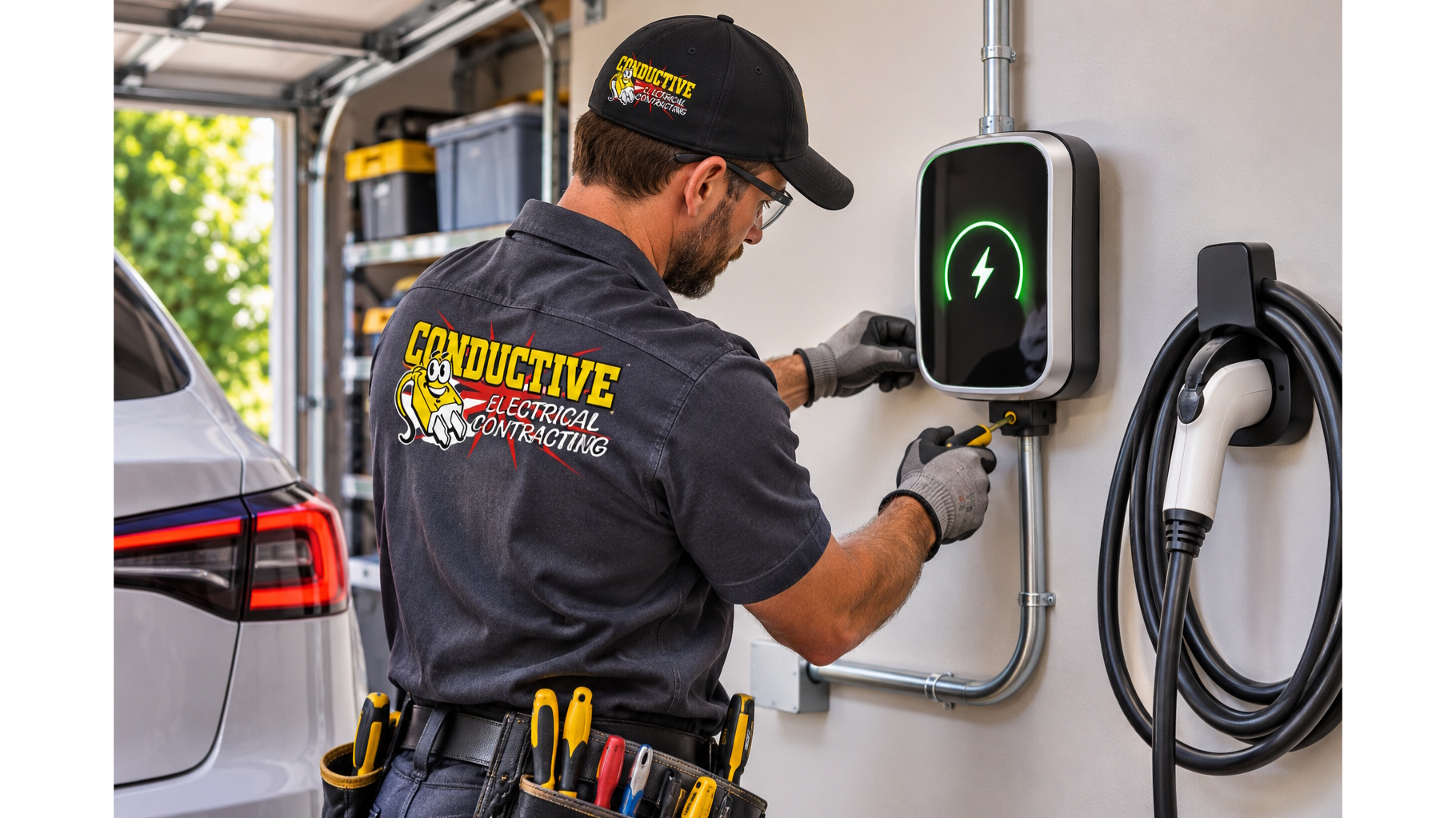
There is a fair amount of fine print buried in Delaware's various rebate programs, and some of it changes depending on income, utility provider, and even the type of home being charged at. Conductive Electrical Contracting has been installing electrical systems across Kent and New Castle counties for more than 20 years, and that kind of hands-on experience with panel upgrades and dedicated circuits is exactly what gets put to work when a Level 2 charger needs to go in safely and up to code.
This guide walks through rebate programs, matching a charger to a specific car, panel capacity questions, cost ranges, and what to expect from the permitting and inspection process.
Delaware EV Charger Rebates Explained
Delaware runs more than one incentive program for EV charging equipment, and that can get confusing fast. The state's Energize Delaware residential EVSE rebate is the one most homeowners will actually use, covering up to half the cost of equipment and installation for the average applicant, and up to 90% for those who qualify based on income. A separate state program through DNREC covers EV charging stations too, but it is not built for single-family homes. On top of that, Delmarva Power offers its own smart charger rebate that works alongside state incentives rather than replacing them. Knowing which program fits a specific situation, before buying equipment, saves time and paperwork headaches later.
Match the Charger to Your Car
Not every Level 2 charger works the same way with every electric vehicle. Picking equipment that fits the car's charging capability, rather than just grabbing the highest-wattage unit on the shelf, makes a real difference in both performance and long-term safety.
Connector and Charging Rate Compatibility
AAA advises choosing a home charger with a connector that matches the vehicle and a charging rate that lines up closely with what the car can actually accept. A charger rated well above a vehicle's maximum acceptance rate will not charge any faster since the car itself limits the rate, so spending extra for a higher-output unit without checking the vehicle's specs can be money wasted. Checking the owner's manual or the automaker's charging specifications before shopping for equipment is a simple step that prevents that kind of mismatch.
Amperage Limits: Why 80% Matters
A home charger should never draw more than 80% of the amperage available on its circuit, according to AAA's guidance for safe installations. That 80% rule exists because continuous loads, like hours of EV charging, need headroom on the circuit to avoid overheating. In practice, this looks like:
- A 32-amp charger, rated around 7.6 kW, needs a minimum 40-amp circuit
- A 40-amp charger, rated around 9.6 kW, needs a minimum 50-amp circuit
- A 48-amp charger, rated around 11.5 kW, needs a minimum 60-amp circuit
These pairings matter because an undersized circuit paired with a higher-amperage charger creates a genuine fire risk, not an inconvenience.
Does Your Panel Have Capacity?
Before any charger gets mounted on a garage wall, the home's electrical panel needs a hard look. Level 2 charging runs on a dedicated 208/240-volt AC circuit, and depending on the vehicle, it can add as much as 35 miles of range per hour. That kind of output asks a lot of a panel that may already be running close to its limit with HVAC equipment, a range, a dryer, and everyday household loads. A licensed electrician can run a load calculation to confirm whether the existing panel has room for a new dedicated circuit or whether a panel upgrade needs to happen first.
Plug-In vs. Hardwired Chargers
Level 2 chargers generally connect one of two ways: plugging into a compatible 240-volt outlet, similar to what a clothes dryer uses, or getting hardwired directly into the home's electrical system. Plug-in units offer more flexibility, since they can be unplugged or relocated more easily, while hardwired units tend to handle higher amperage loads and often fit better in a permanent garage or driveway setup. Either option may call for breaker upgrades or other electrical component changes, which is why a site visit from an electrician tends to catch issues before they become expensive surprises mid-project.
What Home Installation Really Costs
Level 2 charger equipment alone generally costs between $400 and $1,000, with the spread driven by charging speed, brand reputation, and extra features like Wi-Fi connectivity or scheduling apps. Installation at $300 to $2,000 depending on the home's wiring setup adds another layer to the total, and where a particular home lands in that range depends heavily on its existing wiring and panel setup.
What Drives Costs Higher
Several factors tend to push installation costs toward the higher end of that range:
- Higher amperage requirements that call for a larger breaker or heavier gauge wire
- A long cable run between the electrical panel and the charger's mounting location
- A difficult or hard-to-access installation spot, such as a detached garage
- The need for a full panel upgrade if existing capacity is too limited
Homeowners with a newer panel and a charger location close to the panel typically see costs on the lower end, while older homes or detached structures tend to need more extensive work.
Who Qualifies for Incentives
Rebate eligibility in Delaware depends on a handful of specific requirements, and missing one of them is the easiest way to get an application rejected.
Energize Delaware Residential Rebate Rules
Energize Delaware's residential EVSE rebate requires that the applicant be a Delaware resident and the primary electric account holder, with one rebate allowed per household. The charger has to be a Level 2 unit installed at the residence, and the rebate covers up to 50% of equipment and installation costs at the market rate, rising to as much as 90% for income-eligible applicants. Self-installed chargers do not qualify. The application needs a paid contractor invoice, the charger's purchase invoice, a photo of the installed unit, and a home performance audit, and it has to be submitted within 60 days of installation. That 60-day window is easy to miss if paperwork gets pushed to the back burner after the install is done, so keeping every document organized from day one matters.
Delmarva Power Smart Charger Rebate
Delmarva Power offers its own incentive on top of what the state provides: a $300 rebate plus a $50 annual incentive for eligible customers who install a qualified Level 2 smart charger. Participation requires a secure home Wi-Fi connection and sharing charging data with the utility. This rebate is advertised as limited and available while supplies last, so checking current availability before counting on it as part of a project budget is a smart move.
Why DNREC's Program Won't Apply to Your House
Delaware's DNREC runs an Electric Vehicle Charging Station Rebate Program, but it specifically does not offer rebates for single-family home charging stations. That program, which covers stations purchased and installed after May 1, 2026, directs homeowners back toward the Energize Delaware residential rebate instead. There is also a separate multifamily rebate track through the U.S. Department of Energy's Alternative Fuels Data Center, listing up to $4,000 for a single-port charger and up to $8,000 for a dual-port charger, but those incentives apply to multifamily dwellings, not single-family homes. Understanding which program is built for which housing type up front saves a lot of wasted application effort.
Permits, Inspections, and Hiring Right
Electrical projects involving new dedicated circuits or panel upgrades often require a permit, and the completed work typically needs a local inspection to confirm it meets applicable code requirements. Skipping that step carries real risk, since unpermitted electrical work can complicate a home sale down the road and may leave a safety issue undiscovered. A qualified, licensed electrician generally handles the permit application and schedules the inspection as part of the overall installation process, taking that administrative burden off the homeowner's plate.
Hiring the right professional for this kind of job also matters for the rebate paperwork itself, since Energize Delaware's program requires a paid contractor invoice rather than a self-installation. Working with someone familiar with Delaware's permitting process and the specific documentation each rebate program asks for tends to make the whole project move faster and with fewer surprises.
Plan Before You Plug In
A Level 2 charger is a long-term investment in daily convenience, and getting the planning right before any equipment gets purchased pays off in both performance and savings. Matching the charger's connector and amperage to the vehicle, confirming the home's panel has room for a new dedicated circuit, and budgeting realistically for both equipment and installation all come before worrying about which incentive to apply for. Once those pieces are settled, reviewing current Energize Delaware and Delmarva Power rebate requirements can turn a meaningful chunk of the project cost into money back. For homeowners ready to move forward, working with an experienced electrical contractor to handle the panel assessment, installation, and permitting can turn a complicated process into a straightforward one.
Conductive Electrical Contracting
City: Smyrna
Address: 59 Elwood Drive
Website: https://conductiveelectric.com/
Phone: +1 302 319 4061


Comments
Post a Comment