Drain Tile Replacement or Drain Tile Cleaning ? Foundation Specialist Explains
Key Takeaways
- Drain tile and perimeter drain are two names for the same foundation groundwater system, though it is possible some older homes were built without one at all
- A camera inspection can tell the difference between a blocked outlet, a damaged pipe section, and a system that has failed completely
- Surface grading, downspout placement, and basement waterproofing solve related but separate problems from a buried drain line
- Cleaning, or patching a section is often enough; full replacement is reserved for systems that are crushed, missing, or badly deteriorated
- A drain camera can identify plugs, broken drain tiles, or tree roots before any repair work begins
Basement water ingress in an older Lower Mainland home almost always leads to the same two words: drain tile and perimeter drain. Homeowners hear both terms used interchangeably by contractors, home inspectors, and neighbours, which can make a simple drainage question feel confusing fast. Sorting out what these terms actually mean, and what might be going wrong underneath the yard, is the first step toward a repair that actually lasts. CrackMaster Concrete Lower Mainland serves older houses across the region, where wet soil and groundwater pressure has put real strain on foundations that were built decades ago.
Drain Tile and Perimeter Drain: Same System
Drain tile, weeping tile, perimeter drain, and foundation drain all describe the same basic idea: a perforated pipe installed alongside the foundation footing that collects groundwater before it can push against basement walls. Water enters through small openings in the pipe and travels away from the house, often discharging to a sump pump or a municipal storm sewer. The pipe can sit outside the foundation wall or, in some retrofit situations, inside along the basement floor perimeter.
The terminology gets murkier when people mix in French drains, which are a different system altogether. A French drain is a gravel-filled trench with a perforated pipe built to divert surface water and groundwater away from a yard, while foundation weeping tile sits much deeper, right at the base of the footing, managing groundwater rather than rain runoff. Both involve buried pipe and gravel, which is likely why the names get swapped so often, but they address different sources of moisture.
Why Older Homes Leak Differently
An older home with a wet basement does not automatically have a broken drain tile system. Sometimes there was never a system to break in the first place, and sometimes the system has been underperforming for years. Understanding which scenario applies changes the entire repair conversation.
Some Homes Were Never Built With One
Homes built around 1920 or earlier often predate the standard use of drain tile systems entirely. For these properties, ongoing seepage does not necessarily point to a failed pipe, because there may be no pipe to fail. In these cases, water ingress is more likely tied to grading, hydrostatic pressure against bare foundation walls, or simply the absence of any groundwater management system around the footing.
Clogging Doesn't Mean the System Works
A home with an existing drain tile system is not guaranteed to have a functioning one. Soil, sediment, and fine particles migrate into the perforations over the years, gradually narrowing the pipe's capacity until it can no longer keep pace with groundwater during heavy rain. The pipe stays in the ground, but it stops doing its job long before anyone notices a wet spot on the basement floor.
Clay and Concrete Pipes Deteriorate Over Time
Older systems were frequently built from clay or concrete sections rather than modern rigid PVC. These materials deteriorate, crack, and sometimes collapse outright as decades pass, and tree roots are notorious for finding their way into joints and openings. The right fix for this kind of damage depends heavily on how much of the pipe run is actually affected: a short damaged section calls for a different repair than a line that has failed along its full length.
Finding the Real Source First
Matching the repair to the actual problem starts with an honest look at where water is coming from, not an assumption that the drain tile is automatically the culprit. Skipping this step is how homeowners end up paying for the wrong fix.
Leak History, Cracks and Moisture Signs
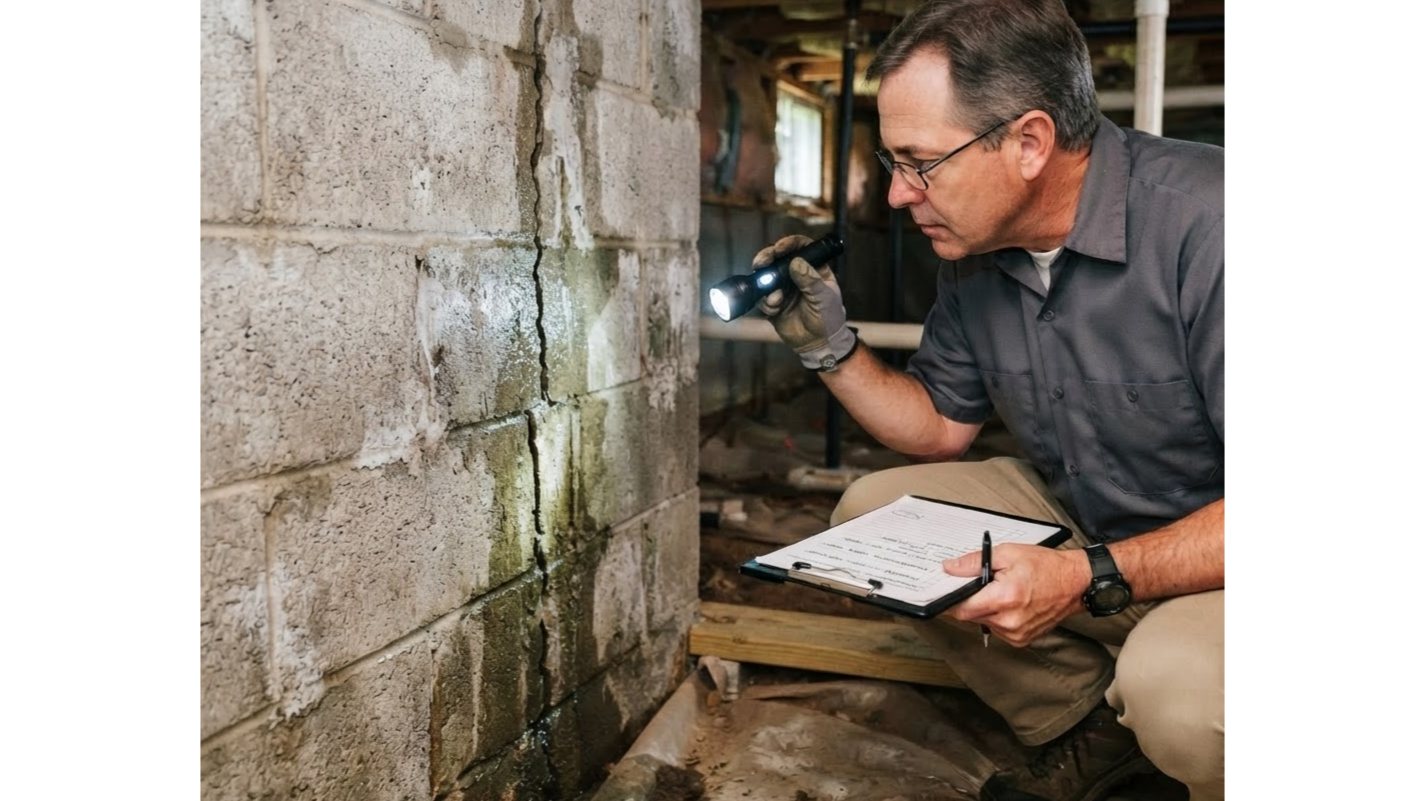
A proper assessment starts indoors with questions: when does water appear, how much, and after what kind of weather? Staining or efflorescence on foundation walls, musty odours, and the location of visible cracks all help narrow down whether water is coming through the wall itself, rising from the floor slab, or entering at a specific corner tied to a downspout or grading issue outside.
What a Drain Camera Reveals
A drain camera inspection takes the guesswork out of the equation by sending a lens directly into the perimeter drain line. A camera can identify plugs, broken drain tiles, or tree roots inside the drainage system, giving a clear picture of whether the problem is a localized blockage or something more widespread. This kind of inspection distinguishes between a pipe that needs a simple cleanout and a system that has genuinely failed, which matters enormously when deciding how much work is actually needed.
Surface Grading and Downspouts vs the Buried Pipe
Not every leak traces back to the buried drain tile at all. Ground that slopes toward the house, downspouts discharging right at the foundation, and poor surface drainage can all push water toward basement walls regardless of how well the underground pipe is functioning. Restoring a slope away from the foundation and redirecting downspouts are straightforward steps that address surface water, but they will not fix a collapsed or heavily silted drain tile line sitting several feet underground. These two problems can exist independently or at the same time, which is exactly why an inspection needs to look at both.
Matching the Repair to the Problem
Once the source is identified, the repair itself tends to fall into one of a few categories, ranging from minor maintenance to a full system overhaul.
Cleaning, Hydro Jetting, or Patching a Section
Many perimeter drain problems turn out to be isolated rather than systemic. Cleaning out accumulated sediment, Hydro Jetting a blocked run, or patching a single damaged section can restore function without disturbing the rest of the system. This approach keeps costs and disruption down, and it is often the right call when a camera inspection shows the bulk of the line is still structurally sound.
When Full Replacement Makes More Sense
Full replacement becomes the more durable option when a system is missing altogether, badly crushed, or discharging poorly despite repeated attempts at cleaning. Older clay or concrete pipe that has deteriorated extensively along its length is a common candidate for this kind of work, since patching a few spots on a pipe that is failing everywhere else only delays the next leak. A rigid perforated pipe bedded in clear crushed gravel, sloped consistently around the building, reflects standard practice for new installations and replacement work alike.
Where Waterproofing Fits In
Waterproofing covers a different, though related, set of solutions. Membranes applied to exterior foundation walls, crack injections for leaking foundation cracks, sump pumps, and interior drainage channels all fall under this umbrella. These approaches manage water that has already found its way toward or through the foundation wall, working alongside the drain tile system rather than replacing its function. A home can need both a drain tile repair and a waterproofing measure at the same time, since one deals with groundwater collection and the other deals with the wall itself.
Checking Your System Before It Fails
Waiting for a flooded basement is the most expensive way to identify a drainage problem. A proactive check, at minimum every three years, catches early warning signs before they become structural repairs. Basement wall staining, pooling water near the foundation after rain, and a persistently musty smell in a crawl space are all worth investigating right away rather than waiting for the next scheduled check.
A light obstruction can sometimes be cleared through an accessible cleanout without specialized equipment, though a cap or fitting that looks damaged should not be forced. For anything beyond basic clearing, confirming whether water actually moves through the line, or spotting root intrusion and sediment buildup, usually calls for a camera scope rather than guesswork from the surface.
Inspection, Not Guesswork, Guides the Right Fix
An older home with a wet basement rarely needs the most expensive possible repair, but it almost always needs an accurate diagnosis first. Drain tile and perimeter drain describe the same groundwater collection system, and whether that system needs a quick cleanout, a targeted patch, or full replacement depends entirely on what an inspection actually finds underground. Surface grading fixes and waterproofing measures solve real problems too, just not the same ones a buried, failing pipe creates.
For homeowners trying to figure out which category their situation falls into, starting with a proper drain tile inspection provides a clearer path forward than guessing based on a wet patch on the basement floor.
CrackMaster Concrete Lower Mainland
City: Port Coquitlam
Address: 2419 Friskie Ave
Website: https://www.wetbasementrepairvancouverbc.com
Email: crackmasterconcretebc@gmail.com


Comments
Post a Comment