Chronic Knee Pain - Pain Physician Explains Shockwave Therapy for Healing
Key Takeaways
- The best approach to chronic knee pain looks beyond short-term relief and works to protect mobility and address the root cause of the problem
- Shockwave therapy can ease pain and improve function in knee osteoarthritis, but it has not been shown to regenerate cartilage in people
- Exercise, strengthening, and weight management remain the most strongly supported non-surgical steps for knee osteoarthritis
- A diagnosis-driven plan that combines several approaches is a reasonable way to address chronic knee pain
- Curious how a low-cost trial session can help someone decide if shockwave therapy is worth pursuing further? That answer is covered below
Chronic knee pain can quietly reshape a life, turning stairs into a dreaded obstacle and a short walk into a calculated risk. The temptation is to chase whatever promises the fastest relief, but lasting mobility calls for a different kind of plan, one built around understanding the cause rather than just muting the symptom.
The Real Goal: Lasting Mobility, Not Just Relief
Knee pain that sticks around for months rarely has a single fix, and chasing short-term comfort alone can leave the underlying problem free to progress. A better standard for any treatment plan asks whether it protects long-term function, not just whether it dulls today's ache. Strength, range of motion, gait, and body weight work together as a connected system, so a treatment plan should address the knee as part of that system rather than as an isolated hinge that just needs oiling.
For people interested in newer options like shockwave therapy, knee pain mapping provides a way to see how a joint responds before committing to a full program. Pairing that kind of assessment with proven basics, rather than replacing them, supports a steady path toward recovery.
What's Actually Causing Your Knee Pain
Most chronic knee pain in adults traces back to osteoarthritis, a condition where the cartilage cushioning the joint wears down and the surrounding tissues become inflamed. Other causes, including old ligament injuries, meniscus tears, or tendon irritation, can mimic arthritis symptoms, which is why figuring out the real source matters before choosing a treatment path. Pain location, timing, and what makes it better or worse all offer clues worth paying attention to.
How Clinicians Diagnose Knee Osteoarthritis
A clinician can often diagnose knee osteoarthritis through a physical exam and a conversation about symptoms, without needing an X-ray right away. That exam typically checks range of motion, muscle strength around the joint, swelling, tenderness, and the way a person walks. When the diagnosis is unclear or something seems off, blood tests, imaging, or a joint-fluid test may help rule out other conditions, and a referral to a specialist may follow if more support is needed.
When to See a Clinician About Knee Pain
Knee pain deserves a medical evaluation when it starts limiting daily life, not simply when it becomes unbearable. A simple guideline holds up well: if the knee is affecting the ability to walk comfortably or enjoy regular activities, it is time to get it checked out. Waiting too long can allow weakness and poor movement patterns to build on top of the original problem, making recovery slower once treatment finally starts.
Can Shockwave Therapy Heal Your Knee?
Shockwave therapy has drawn attention as a non-invasive option for stubborn joint pain, and for good reason, since it can meaningfully reduce discomfort and improve how a knee functions day to day. The bigger question many people ask is whether it can actually heal the joint from the inside, repairing worn cartilage rather than just calming the pain signals around it.
How Shockwave Pulses Reach the Joint
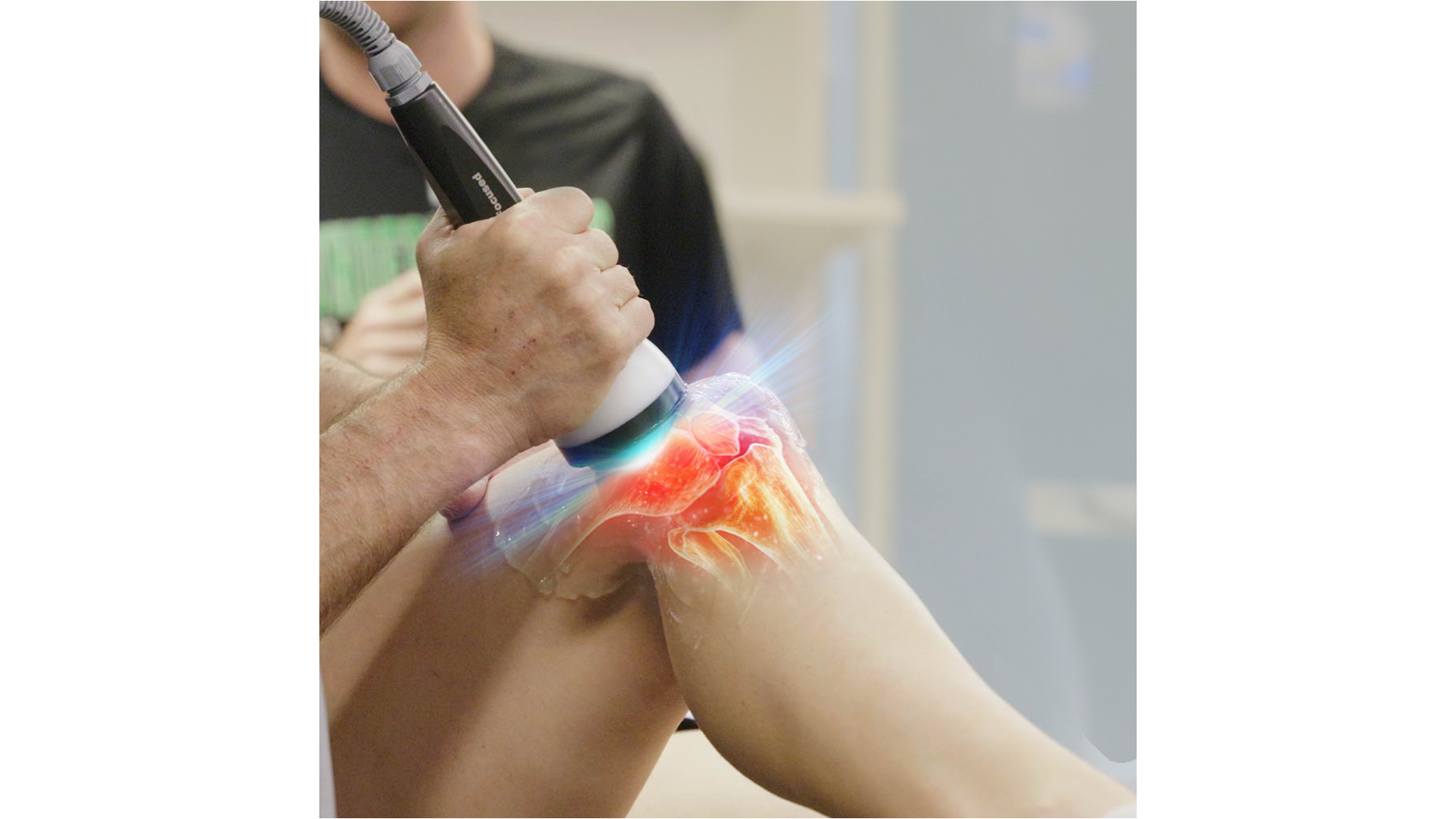
Shockwave devices deliver acoustic pressure pulses into the tissue surrounding a painful joint. Focused shockwaves can concentrate their energy at a specific depth, which makes them useful for targeting structures deeper in the knee, while radial pressure waves are strongest near the surface and lose intensity as they travel deeper. The type of wave used, and where it is aimed, affects which tissues actually receive the stimulation.
Pain Relief and Function vs. Cartilage Regeneration
Research on extracorporeal shockwave therapy for knee osteoarthritis shows it may reduce pain and improve function, which is genuinely useful for someone struggling to move comfortably. However, those improvements do not prove that the treatment regenerates cartilage or changes the underlying disease process in people. The proposed mechanisms behind the pain relief involve shifts in sensory-nerve signaling and local inflammation, but evidence that shockwave pulses rebuild cartilage tissue remains unconfirmed. Framed honestly, shockwave therapy works best as a tool for managing symptoms and supporting function, alongside other measures, rather than as a standalone cure for joint degeneration.
Exercise and Weight Management Still Matter Most
Among every non-surgical option available for knee osteoarthritis, exercise stands out as the one intervention strongly recommended across the board. Low-impact cardio, quadriceps strengthening, and range-of-motion work form a practical starting point, with intensity adjusted to current pain levels and ability. Physical therapy can take this further by also strengthening the hips, teaching activity modifications, and introducing tools like a cane or walker when they genuinely help rather than hinder movement.
Low-Impact Moves That Ease Stiffness
Some of the most effective options are also the gentlest on the joint:
- Walking in well-fitted, supportive shoes to reduce jarring impact
- Water-based exercise or pool therapy, which supports body weight while allowing movement
- Bicycling or swimming for cardiovascular benefit without pounding the knee
- Quadriceps strengthening exercises to better support the joint from above
- Cold packs for acute swelling and heat for easing general stiffness
These approaches do not reverse arthritis, but they consistently help manage pain and stiffness, and they carry very little risk compared with more invasive options.
Why Even Modest Weight Loss Helps
Extra body weight places direct, repeated load on the knees with every step, so even a small amount of weight loss can translate into noticeably less daily strain on the joint. Weight management is not about reaching some ideal number; it is about reducing the mechanical burden the knee carries thousands of times a day. Combined with strength and balance exercise, weight management rounds out the foundation that every other knee treatment, including shockwave therapy, ultimately builds on.
Testing the Waters Before Committing
Deciding whether to pursue a treatment like shockwave therapy does not have to mean committing to a long, costly program upfront. A smaller, introductory session can offer a realistic preview of how a joint is likely to respond before any bigger decision gets made.
What a Mapping Session Involves
Mercy Family Health and Pain Management, based in DuBois, Pennsylvania, offers an introductory StemWave mapping session priced at $50, and patients do not need to be part of the practice's family medicine side to receive it. The mapping session is meant to help a patient decide whether to proceed, before considering a fuller program described as at least 10 sessions, with additional cost depending on how many regions need treatment. That structure gives someone a lower-stakes way to gauge personal response before investing further.
Combining Shockwave With Other Supportive Therapies
Shockwave therapy tends to work best as part of a broader plan rather than as a lone fix. Supportive approaches that often appear alongside it include:
- Near-infrared light therapy, intended to support cellular energy and healing
- Vibration plate therapy, aimed at supporting nerve function, muscle strength, and balance
- Gait retraining, which addresses walking patterns that may be contributing to joint strain
- An anti-inflammatory eating pattern, which supports the body's broader healing response
Stacking these elements with standard measures like strengthening and weight management reflects the same principle found throughout knee osteoarthritis care: no single therapy does all the work alone.
A Customized Plan Outperforms Any Single Treatment
Chronic knee pain rarely responds to a one-size-fits-all strategy. A more reliable path forward treats shockwave therapy as one piece of a larger plan alongside proven basics such as strength work, gait, and weight management. Pain relief feels good in the moment, but the deeper goal is a knee that moves well for years to come, supported by strength, a healthy gait, manageable body weight, and a treatment plan matched to an accurate diagnosis. For anyone unsure where to start, a conversation with a clinician about knee pain mapping can help clarify which combination of approaches fits a particular knee and a particular life.
Mercy Family Health and Pain Management
City: DuBois
Address: 531 Delarme Road
Website: https://www.americastruehealth.com


Comments
Post a Comment