What Pet Owners Need From Vet Service Pages Before They Book?
Key Takeaways
- Pet owners need clear service descriptions, honest pricing information, and an obvious way to book before they trust a vet clinic enough to call
- Species-specific service pages, like separate pages for dog and cat dental care, match how pet owners actually search and help clinics stand out
- Websites that take more than three seconds to load can lead to 53% of users leaving the site before they ever see the content
- Reviews, doctor bios, and staff photos work together to turn a first-time website visit into real confidence
- Reviewing veterinary service pages against how pet owners search can reveal where confidence and bookings are being lost
Pet owners rarely book a veterinary appointment from the first website they find. They compare options, read reviews, scan service pages, and lately, they may even run into AI-generated summaries before a clinic's name ever comes up in conversation. Each of those touchpoints either builds confidence or chips away at it, and the service page often carries the most weight because it answers the question pet owners actually care about: will this clinic take good care of my animal? DataDriven Digitals looks closely at how clinics present that information, since a page that reads clearly to a worried pet owner also tends to perform better in search. The rest breaks down what belongs on a strong vet service page and why gaps in that information quietly cost clinics new clients.
Why Pet Owners Abandon Clinic Searches
Searching for a new vet is rarely a calm process. A pet owner is often dealing with a sick animal, a recent move, or a recommendation from a friend, and they want answers fast. When a clinic's website buries its services, skips pricing information, or loads slowly on a phone, that pet owner does not wait around to figure it out. They close the tab and try the next clinic on the list.
This kind of drop-off happens more often than most clinic owners realize. Pet owners typically check a clinic's Google Maps listing, skim reviews, compare a handful of websites, and now sort through AI-generated answers before they ever pick up the phone. If a service page cannot quickly confirm that the clinic treats their type of pet, offers the needed service, and is upfront about what to expect, the search simply continues elsewhere.
A highly skilled veterinary team can still lose new clients if their website does not communicate that skill clearly, and the care itself is rarely the problem. Confidence gets built or lost online long before a pet ever walks through the clinic door, which means the service page carries real weight.
The Information Every Service Page Needs
A service page should answer a pet owner's questions before they feel the need to ask them out loud. That means laying out the basics clearly: what the service involves, who performs it, and what a first visit looks like. Pages that skip these details often leave pet owners filling in the blanks with guesswork, and guesswork rarely favors the clinic.
Clear Service Descriptions and Costs
Pet owners want a plain explanation of what a service actually includes, written in language that does not require a veterinary degree to follow. A dental cleaning page, for example, should describe what happens during the procedure, how long it typically takes, and what kind of follow-up care to expect. Pricing clarity matters just as much, even when an exact number is not always possible to post. A page that gives a cost range, explains what affects pricing, or clearly states that costs vary by pet size or condition goes a long way toward building trust compared to a page that stays silent on the topic.
Species-Specific Pages Pet Owners Search For
Generic pages that lump every pet together can work against a clinic rather than for it. Pet owners tend to search in specific terms, typing phrases like "cat dental cleaning" or "dog vaccinations" rather than a general search for "pet services." Clinics that build species-specific pages instead of one broad page match that search behavior more closely, which helps pet owners find exactly what they are looking for and helps the page stand out in search results. A clinic offering care for dogs, cats, and exotic pets benefits from separating those services rather than combining everything into a single page that tries to cover too much at once.
FAQs That Answer Questions Before the Call
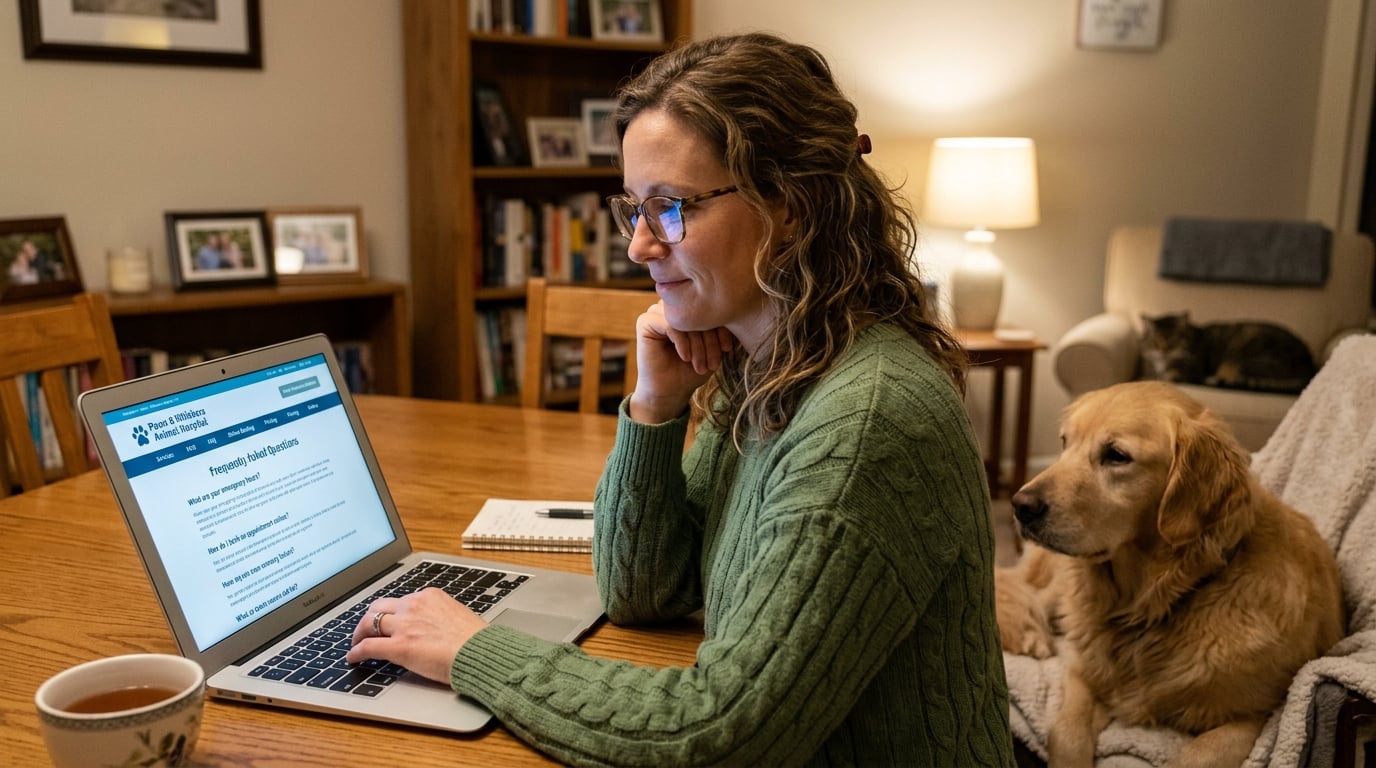
A well-built FAQ section does double duty. It answers the small but important questions that often stop a first-time pet owner from booking, such as what to bring to an appointment, whether a referral is needed, or roughly what a procedure costs. It also takes pressure off the clinic's phone lines, since fewer people need to call just to get basic information. Common questions worth answering directly on a service page include:
- What should I bring to my pet's first appointment?
- How long does this procedure typically take?
- What does recovery look like after this service?
- Is this service likely to be covered by pet insurance?
- How soon can I get an appointment for this service?
Trust Signals That Change Minds
Even a clearly written service page needs backup. Pet owners are trusting a clinic with a family member, and they look for signs that other people have had good experiences before committing to an appointment.
Reviews and Testimonials
Testimonials and reviews from real clients carry significant weight with prospective pet owners, often more than anything the clinic says about itself. A service page that includes a few relevant reviews near the booking button, rather than burying all feedback on a separate page, reinforces confidence at the exact moment a pet owner is deciding whether to move forward. Reviews that mention the specific service being viewed, such as a satisfied comment about a dental procedure on the dental page, are especially persuasive because they match the pet owner's current need.
Doctor Bios and Staff Photos
Pet owners want to know who will actually be caring for their animal. Doctor bios that highlight a veterinarian's experience, areas of interest, and personal connection to animal care help build rapport before the first visit ever happens. Photos of the care team and the clinic itself add to that sense of familiarity. A page filled with real images of staff members and the physical space feels more trustworthy than generic stock photography, and it gives nervous pet owners a mental preview of where they are headed.
Design and Speed Shape First Impressions
Content only works if pet owners can actually access it comfortably, so the technical experience of a page carries as much weight as what it says.
Mobile-Friendly Layouts
A large share of pet owners browse clinic websites from a phone or tablet while juggling a leash, a carrier, or a worried pet in the next room. A layout that is hard to read or use on a small screen creates friction at exactly the wrong moment. Clean, intuitive design with concise content signals professionalism and reliability, while a cluttered or outdated layout can quietly undercut a clinic's credibility even when the care provided is excellent.
Why Slow Pages Lose Visitors
Speed is not a minor technical detail. Websites that take more than three seconds to load can lead to 53% of users leaving the site. A slow-loading service page can cost a clinic new clients who never saw a single word of carefully written content, simply because they gave up waiting. Page speed issues often stem from oversized images, outdated website platforms, or unnecessary scripts, all of which are fixable once identified.
Turning a Visit Into a Booking
Getting a pet owner to the service page is only half the job. The page still needs to make the next step obvious, or that visitor leaves without ever reaching out.
Clear Calls to Action
A service page should never leave a pet owner wondering what to do next. Clear calls to action, such as a prominent "Book an Appointment" button placed near the top of the page and repeated further down, keep the path to contact simple and visible. Vague or buried buttons force pet owners to hunt for a way to reach the clinic, and many will not bother.
Online Scheduling and New Client Forms
An online scheduler lets pet owners book appointments outside of business hours, which matters since plenty of pet-related worries happen at night or on weekends when the phone line is closed. New client forms available online let first-time visitors fill out paperwork ahead of time, which smooths the actual visit and reduces waiting room friction. Together, these tools turn a passive website visit into an active booking without requiring a phone call at all.
Why Gaps in Service Pages Limit Clinic Growth
When a service page leaves out pricing details, skips reviews, or buries the booking button, pet owners do not usually complain. They simply leave and choose a different clinic, often without the original clinic ever knowing a potential client was lost. Gaps like a missing dedicated page for a popular treatment, inconsistent reviews scattered across platforms, or a Google Business Profile that does not clearly list services all chip away at the same goal: helping the right pet owners choose a clinic with confidence. A clinic can offer outstanding veterinary care and still struggle to grow if its website does not reflect that quality clearly and consistently.
Service Pages Decide Whether Pet Owners Book
A veterinary service page is often the deciding factor between a pet owner who calls and one who quietly moves on to a competitor. Clear descriptions, honest pricing information, species-specific detail, genuine reviews, fast load times, and an obvious path to booking all work together to answer the question every pet owner is really asking: can this clinic be trusted with my pet? Clinics that treat their service pages as a core part of the client experience, rather than an afterthought, give pet owners the confidence they need to take that next step. For clinics looking to strengthen that experience, reviewing veterinary service pages against how pet owners actually search can reveal exactly where confidence is being lost and where it can be rebuilt.
DataDriven Digitals
City: Brampton
Address: 8005 Financial Drive, Unit A4
Website: https://datadrivendigitals.com
Email: hello@datadrivendigitals.com


Comments
Post a Comment