Sizing Whole-Home Generators: Grapevine Electrician on Load Calculations
Key Takeaways
- A whole-home generator should be sized from the electrical loads a household actually plans to run together, not from square footage or the panel's maximum rating alone
- Undersized generators can cause problems during an outage, while oversized units cost more upfront for capacity the home will never use
- Motor-driven equipment like HVAC compressors and well pumps often needs extra starting watts above their running wattage, and that surge has to factor into sizing
- Load management can let a smaller generator cover a home's priorities by temporarily holding back high-draw equipment instead of running everything at once
- A home assessment that checks electrical load, gas service, and generator placement typically comes before any sizing recommendation can be trusted
A Grapevine home's power needs during an outage come down to math, not guesswork. Picking a whole-home standby generator means figuring out which appliances and circuits actually need to keep running, then matching that demand to the right size unit. Square footage might seem like a quick shortcut, but it leaves out the details that matter most: how many HVAC systems a house runs, how many major appliances need power at once, and whether a well pump or an EV charger adds to the load.
Why Generator Size Comes Down to Load, Not Square Footage
A 2,500 square-foot home with one small HVAC system and modest appliances has very different power needs than a 2,500 square-foot home with two AC units, an electric range, and a home office full of equipment. Square footage says nothing about any of that. What matters is the actual electrical load the household expects to draw at the same time, including the extra punch required to start up motors like air conditioners and well pumps.
This is why a proper sizing conversation starts with a question: what does the home need to keep running when the grid goes down? Generator sizing starts with calculating a home's actual load, including HVAC size and major appliances, rather than leaning on square footage as a stand-in for demand. That distinction separates a generator that quietly does its job for years from one that either struggles under load or costs thousands more than necessary.
The panel's maximum rating is a limit, not a sizing guide, either. A 200-amp panel does not mean a home needs a generator built to match the panel's theoretical ceiling. It means the home can draw up to that much power across every circuit, most of which will never run simultaneously during an outage. Sizing should reflect the realistic combination of loads a homeowner wants backed up, not the panel's full capacity on paper.
The Real Risk of Guessing a Generator's Size
Guessing at generator size might feel efficient, but it tends to backfire in one of two directions. Either the unit falls short right when it is needed most, or it sits there running at a fraction of its real capability while the homeowner pays for power they never use.
Undersized Units Cause Problems, Oversized Units Waste Money
An undersized generator can struggle the moment real-world demand hits it: the air conditioner tries to start, the refrigerator kicks on, and the compressor's starting surge pushes the unit past what it can supply. That can trip breakers, stall the generator, or shorten its lifespan through repeated overload. An oversized generator runs fine but costs more upfront and burns more fuel than a correctly sized unit would, all to cover loads the home will never actually ask it to carry at once. Getting the size right the first time avoids both outcomes, which is why a load calculation matters more than picking a number that sounds safely large.
How a Proper Load Calculation Works
A load calculation turns guesswork into a clear, defensible number. It starts with a full accounting of what needs power, moves through the tricky math of motor starting demand, and finishes by deciding whether load management can trim the final size without sacrificing coverage.
List Every Appliance and Circuit You Want Backed Up
The first step is building a complete list of every appliance and circuit intended to run during an outage. That means walking through the home circuit by circuit: HVAC systems, refrigerators, sump pumps, well pumps if applicable, lighting, outlets, the garage door opener, and anything else that matters day to day. Each item on that list carries a running wattage, usually found on the appliance's nameplate or in its owner's manual. Skipping this step and estimating from memory is one of the most common ways a generator ends up mismatched to a home's real needs.
Running Watts vs. Starting Watts for Motors and HVAC
Motor-driven equipment complicates the math because it often needs a burst of extra power just to start, well beyond what it needs to keep running. Air conditioners, well pumps, refrigerators, and sump pumps all fall into this category. A central AC unit might run at a steady wattage once it is going, but the compressor's initial start can demand significantly more for a brief moment. A simplified way to estimate this: total the running wattage of every selected load, then add the starting wattage of whichever single item has the highest starting requirement. That combined figure gives a more realistic picture than running wattage alone, especially in a Texas summer when the AC compressor is almost guaranteed to be part of the equation.
Using Load Management to Avoid Oversizing
Load management provides a way to keep a generator's size reasonable without giving up coverage on the circuits that matter most. Rather than sizing a unit to handle every possible load running simultaneously, load management temporarily holds back lower-priority, high-draw equipment, like a second air conditioner or an electric range, so the generator can keep essential circuits running without being overwhelmed. This approach also matters for automatic transfer setups, where several motors might try to start at once when power transfers; staggering those starts, whether through load management or careful planning, prevents a surge that a generator's capacity alone might not handle gracefully.
Matching Capacity to Your Home's Demand
Once the load calculation is done, the numbers point toward a practical size range. Most homes in the Grapevine area land somewhere in three general categories, though the right fit always depends on the specific mix of equipment in that particular house.
11-13 kW: Essential Coverage for Smaller Homes
This range tends to work for homes under 2,000 square feet running a single, smaller AC unit. It covers the essentials: lighting, refrigeration, outlets, and one HVAC zone, which is often enough for a smaller household that wants reliable coverage without paying for capacity it will not use. Homes with multiple HVAC zones or larger square footage typically outgrow this range quickly.
16-18 kW: The Common Range for Mid-Size Homes
Homes between 2,000 and 3,500 square feet frequently land in this middle range, though the right number still depends on the home's specific equipment and expected load rather than square footage alone. This size often accommodates a full central AC system along with major appliances and the circuits most households consider non-negotiable during an outage. It is a common landing point because it balances solid coverage against a reasonable upfront investment.
20-24 kW: Larger Homes, Multiple HVAC Systems, and EV Charging
Larger homes, properties with more than one HVAC system, or households planning for EV charging alongside generator backup tend to need this higher range. It also suits homeowners who want broader circuit coverage without prioritizing which rooms or systems get power first. A home office running sensitive equipment or medical devices that cannot tolerate any interruption often pushes the decision toward this range as well.
What a Home Assessment Actually Covers
Numbers on a spec sheet only tell part of the story. A home assessment connects the load calculation to the physical realities of a specific property, from the electrical panel to the gas meter to where the unit will actually sit.
Electrical Load, Gas Service, and Placement
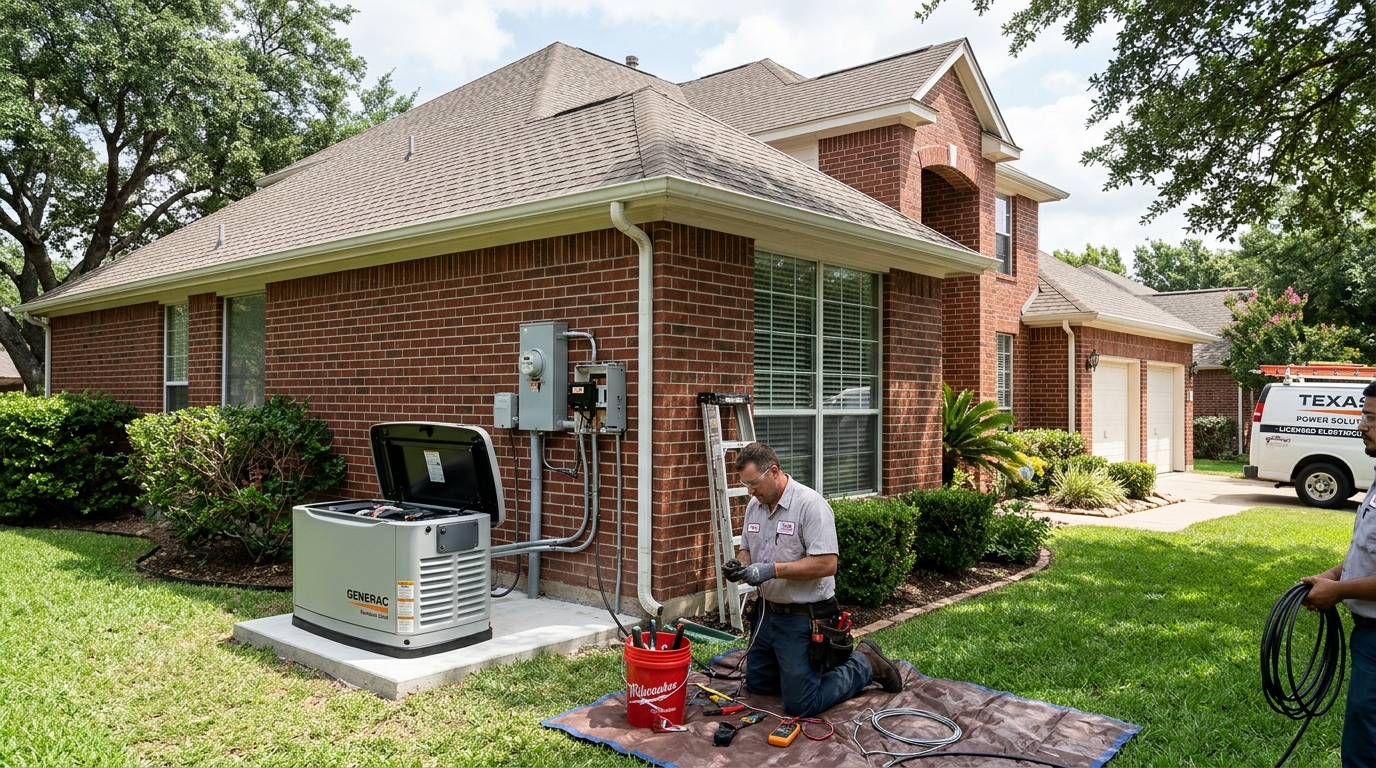
A thorough assessment typically covers three things: the home's electrical load, the gas service available to fuel the generator, and a suitable location for the unit itself. Electrical load confirms the sizing math holds up against the home's actual panel and wiring. Gas service matters because a standby generator running on natural gas needs adequate supply to run at full output without starving other household appliances. Placement accounts for code-required setbacks from windows, doors, and property lines, along with practical access for future maintenance. Skipping any one of these three pieces can turn a well-calculated generator size into an installation headache.
How the Transfer Switch Puts the Calculation to Work
All that calculation work culminates in the automatic transfer switch, the component that actually puts the sizing decision into action. The transfer switch detects a utility outage, signals the generator to start, transfers the home's load from utility power to generator power, and then reverses the whole process once utility power returns. It stands between a correctly sized generator and a home that actually experiences uninterrupted backup power. A transfer switch that is undersized or mismatched to the generator's output can bottleneck everything the load calculation worked to get right, which is why it deserves the same careful attention as the generator itself.
The Right Size Is the One That Matches Your Loads
The best whole-home generator for a Grapevine property is not the biggest one available or the one that matches a neighbor's installation. It is the unit sized around a specific household's real electrical habits: the appliances that matter most, the HVAC systems that need to keep running, and the starting demand those systems bring with them. A careful load calculation, paired with an honest look at whether load management can trim excess capacity, turns generator shopping into a straightforward decision rather than a guessing game.
Homeowners weighing their options can start by listing out the circuits and appliances they consider non-negotiable during an outage, then working from there toward a size that fits. For a closer look at how that process plays out for a specific property, consider Epic Electrical's whole-home generator installation options built around an actual load calculation rather than a one-size-fits-all recommendation.
Epic Electrical
City: North Richland Hills
Address: 7304 Hialeah Cir W
Website: https://epicelectrical.com/


Comments
Post a Comment