Science of Breaks: How the 3.3 Rule Builds Better Work Habits
Key Takeaways
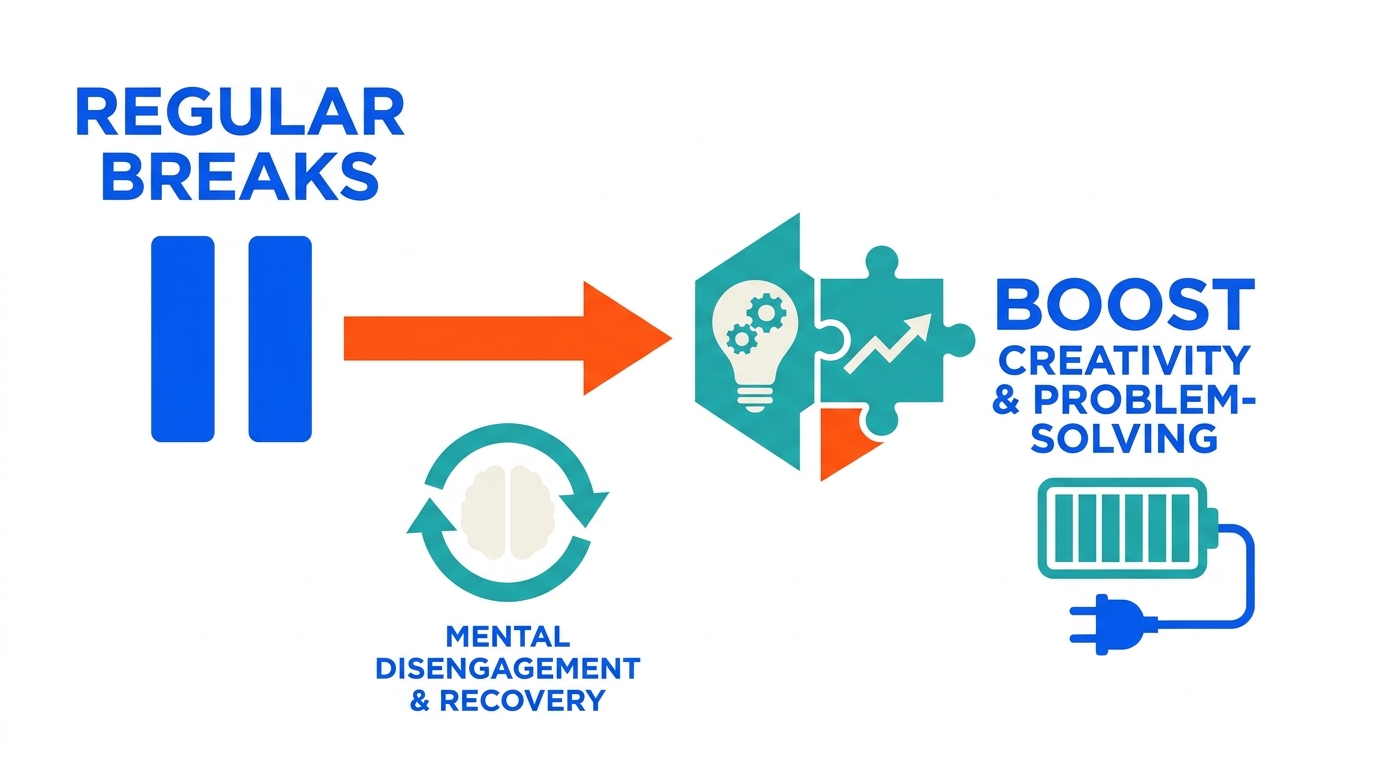
- Short breaks, lunch breaks, and even a few minutes away from a desk are all linked to better focus and steadier energy throughout the workday
- A five-minute break taken halfway through an attention task helped participants perform better than those who worked straight through, based on research covered by the American Psychological Association
- The popular 3.3 work-to-break ratio is not backed by a single definitive study, so the smarter move is matching break type to the kind of fatigue being felt
- Relaxing and social breaks tend to help people recover more than cognitive micro-breaks, which one study found could backfire under heavy workloads
- Simple habits like setting reminders and picking breaks on purpose can make stepping away feel natural instead of like a disruption
Service-based business owners tend to treat breaks as a luxury rather than a tool. Somewhere along the way, pushing through fatigue got mistaken for discipline, when research on attention and recovery tells a different story. Breaks of nearly every length and shape show up in the science as helpful for wellbeing and output, which is worth sitting with before writing off the next five minutes as wasted time.
Why Breaks Beat Nonstop Hustle
The instinct to grind through a long task without stopping feels productive in the moment, but the body and brain do not work that way. Regular breaks have been shown to reduce or prevent stress, help maintain performance throughout the day, and lessen the need for a long recovery period once the workday ends. For a business owner juggling client calls, proposals, and a team that needs direction, that kind of steady performance matters more than a single burst of effort followed by a crash.
This is the territory The Real John Briggs focuses on: helping founders build habits that protect energy instead of draining it. Treating rest as part of the workday, rather than something earned only after everything is finished, changes how sustainable a business feels over months and years. The goal is working in a way that holds up under pressure, not working less for its own sake.
What the Research Actually Shows
Researchers have spent years testing what breaks actually do to attention, mood, and output, and the findings paint a consistent picture: stepping away helps, though the details depend on timing, length, and what someone does during the break.
Short Breaks Boost Attention and Energy
In an experiment covered by the American Psychological Association, participants who took a five-minute break halfway through an attention task performed better than those who worked straight through without stopping. A separate simulated-work experiment found that breaks of one minute, five minutes, or nine minutes each produced at least a small boost in energy and attention, suggesting the benefit shows up even when the pause is brief. Watching a funny video clip during a break lowered fatigue regardless of how long the break lasted, while a one-minute break spent on a different but similar task left people about as fatigued as before stopping. The activity chosen during a break appears to matter as much as its length.
Lunch Breaks and Detaching From Work
Stepping fully away from work during lunch does more than refuel the body. Research on lunch breaks found that detaching from work during that time was linked to greater energy at work and less exhaustion, with the same study finding increased vigor and energy a year later. A separate study of office workers tracked over hundreds of workdays found that relaxation breaks during lunch were positively related to objectively measured cognitive performance, while activity-based lunch breaks were tied to calmness and a sense of energized alertness. The common thread is mental distance from the task list, not just physical distance from the desk.
When Micro-Breaks Backfire
Not every break helps equally, and some research suggests certain break types can work against the person taking them. A study of telemarketers found that micro-breaks involving relaxation, socializing, or light cognitive activity were associated with more positive mood at work. A separate study published in the Journal of Organizational Behavior found that while relaxation and social micro-breaks reduced the impact of work demands on end-of-day negative mood, nutrition breaks showed no meaningful effect, and cognitive micro-break activities unexpectedly made things worse under heavy workloads. Swapping one mentally demanding task for another during a break, even briefly, does not appear to give the brain the reset it needs.
Why the 3.3 Ratio Isn't Settled Science
The idea of a precise work-to-break ratio, such as working for a set stretch and then resting for a fixed fraction of that time, is appealing because it sounds measurable and easy to follow. The research does not point to one ideal ratio. A study comparing self-regulated breaks, Pomodoro-style breaks, and Flowtime breaks among university students found no differences in productivity, task completion, or flow between the three approaches during a two-hour study session. Pomodoro breaks did lead to a faster rise in fatigue compared to self-regulated breaks, though overall fatigue and motivation levels did not differ between the methods by the end of the session. A broader meta-analysis of 22 independent study samples found statistically significant but small effects of micro-breaks on vigor and fatigue, with no significant overall effect on work performance. Taken together, this body of evidence supports taking breaks regularly far more strongly than it supports any single ratio, including 3.3, as the uniquely correct formula. The better approach is building flexible break habits around personal fatigue signals rather than chasing a fixed number.
Picking Breaks That Actually Restore You
Not all breaks are created equal, and choosing the right kind can make the difference between feeling recharged and feeling just as drained after stepping away.
More information is available at https://takebreaksworkbetter.com/course/
Relaxing and Social Breaks
A relaxing break helps the mind and body return to baseline, supporting recovery in a way that a quick scroll through work email does not. Relaxation has also been shown to reset mood, which supports wellbeing and lowers stress over the course of a workday. Social breaks carry a similar benefit: chatting with a peer creates a sense of connection, and that feeling has been linked with greater recovery afterward. For business owners who work alone much of the day, intentionally building in a moment of connection, even a short one, can replace some of the natural social breaks that used to happen in a shared office.
Mini-Breaks: A Few Minutes Count
A mini-break does not need to be long to matter. Research on micro-break activities found that just a few minutes away from a task, whether chatting with someone nearby or getting a drink, supports both wellbeing and productivity. A related study found that micro-break activities were associated with increased recovery, which in turn related to higher workplace wellbeing, and that supervisor support for taking breaks strengthened that connection. For a business owner without a supervisor to grant that permission, building the habit alone becomes the job, which is where structure and reminders come in.
Building the Habit of Stepping Away
Knowing breaks help is one thing; actually taking them consistently is another. A few concrete habits can close that gap.
1. Agree on Break Times With Peers
Setting shared break times with a business partner, team member, or accountability peer creates mutual pressure to actually stop working. When someone else expects a break at a certain time, it becomes easier to follow through instead of letting a task run long.
2. Set Reminders
A simple phone alarm removes the need to rely on willpower or memory. Breaks get skipped most often not because they are unwanted, but because the workday moves too fast to notice when one is due.
3. Choose Breaks You Enjoy
Planning a break around something genuinely enjoyable, rather than another chore, builds anticipation that makes it easier to stick to the plan. The more pleasant the break feels, the less likely it is to get pushed aside for one more email.
4. Notice the Benefits
Paying attention to how a break actually feels afterward, whether that is clearer thinking or a calmer mood, reinforces the habit. That noticing turns a one-time experiment into a lasting routine.
Protect Focus, Not Just the Clock
The real goal is protecting the kind of focused, energized work that actually moves a business forward, and using breaks as the tool that makes that focus possible, rather than fitting a certain number of break minutes into a day for the sake of a formula. A business owner who treats rest as part of the strategy, rather than an afterthought, tends to build something that lasts longer than one that runs on constant urgency.
For anyone ready to put this into practice, building sustainable work habits starts with small, repeatable changes rather than a complete overhaul.
The Real John Briggs
City: Draper
Address: 38 13775 South #210
Website: https://therealjohnbriggs.com/


Comments
Post a Comment