Best Space-Saving Exercise Equipment: How Rowers Can Fit Narrow Home Spaces
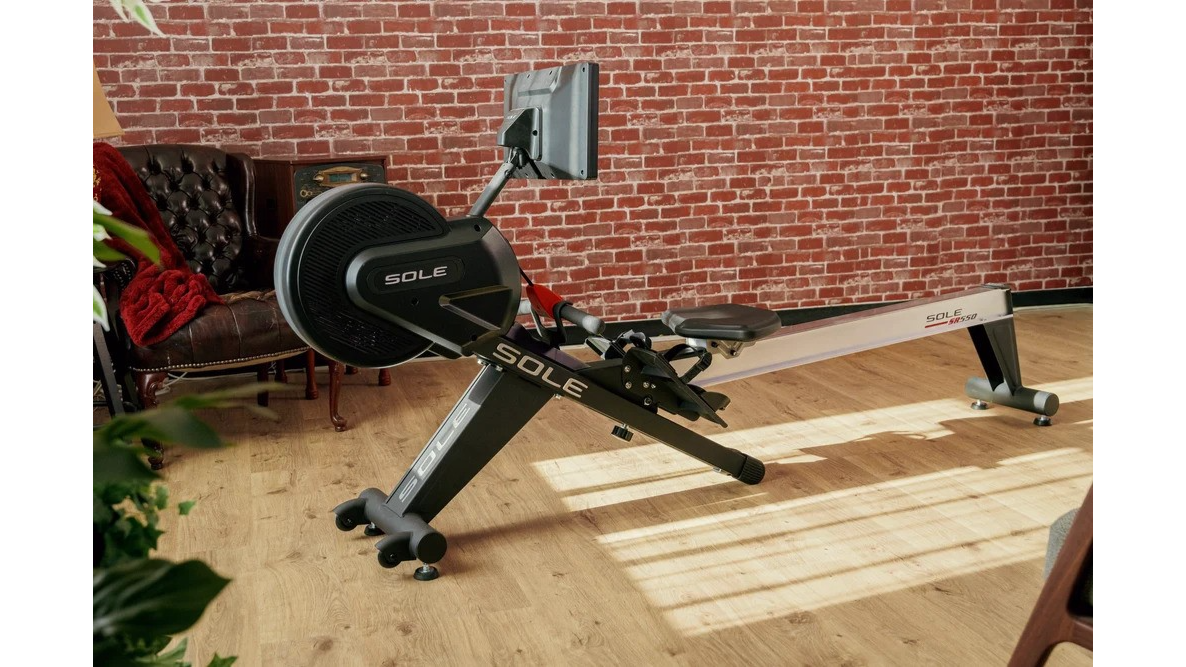
Key Takeaways
- A rowing machine can fit into a narrow apartment far more easily than a treadmill or elliptical, thanks to folding frames, transport wheels, and vertical storage options.
- A single rowing session can work the legs, core, and arms together, giving small-space exercisers a full-body workout without needing multiple machines.
- Resistance type matters for apartment living. Magnetic resistance rowers typically run around 40-55 dB, while air-resistance models typically measure around 70-80 dB, which is worth knowing before choosing a machine for thin-walled buildings.
- SOLE Fitness notes that floor space needs during a workout differ from a rower's resting dimensions, so measuring both before buying prevents an unpleasant surprise on delivery day. Find more of their expert insights below.
Finding exercise equipment that fits a small apartment can feel like solving a puzzle with no good answers. Bulky treadmills eat up entire corners, stationary bikes demand their own dedicated zone, and most cardio machines refuse to disappear when not in use. Rowing machines solve this problem in a way few other machines can, combining a narrow footprint, genuine full-body training, and flexible storage choices that work... even in tight hallways or studio apartments.
Why Rowers Beat Bulky Cardio Machines
Treadmills and ellipticals are built around fixed decks and swing arms that rarely shrink down, which means they tend to permanently claim a slice of living space whether someone is exercising or not. A rowing machine works on a different principle: the seat glides along a single rail, the frame is slim by design, and many models fold or separate to take up a fraction of their working footprint once the workout ends. This difference matters most for renters and small-space dwellers who need a room to serve double duty as a living room, office, and gym.
Rowing machines have earned a loyal following among people who want serious training results without giving up square footage, since a compact, foldable design lets a machine tuck into a closet or against a wall after use. A rower delivers this kind of flexibility while still offering resistance levels and workout tracking comparable to machines twice its size. The result is a smarter trade-off: less permanent floor space given up, without giving up training quality.
The Floor Space a Rower Really Needs
Shoppers often assume a rowing machine will take over a room the way a treadmill does, but the numbers tell a different story. Most rowing machines need a footprint of roughly 8 to 9 feet in length and about 2 feet in width while someone is actively rowing, a stretch that fits comfortably along a wall in most bedrooms or living rooms. A ceiling height of around 8 to 9 feet is comfortable for most users, especially for taller rowers reaching full extension. That space is temporary, too, since it only matters during the actual workout.
Footprint in Use vs. Resting Dimensions
The space a rower occupies while in use is called its active footprint, and it differs from the resting dimensions listed on a spec sheet. While rowing, the seat travels the full length of the rail and the body extends outward with each stroke, so the footprint during active use accounts for that extended reach plus the area where impact and vibration travel into the floor below. Resting dimensions only describe the machine sitting still, which is why measuring both the folded size and the full extended length before buying is worth the extra step.
This distinction explains why two rowers with similar folded sizes can feel completely different once someone starts pulling the handle. A rail that is slightly shorter might force taller users to compress their stroke, while a longer rail keeps the stroke natural without needing a wider room to compensate.
How Folding and Transport Wheels Shrink the Space
Folding mechanisms and built-in transport wheels make the biggest difference for apartment dwellers. A rower with a hinge near the seat rail can fold its length roughly in half, while wheels mounted at the base let the folded unit roll out of the way without any lifting or straining.
- A folding frame reduces the machine's footprint once a workout wraps up, freeing the floor for other furniture or activities.
- Transport wheels let a single person reposition or store the machine without help, which matters in apartments where every square foot counts.
- A quick-release or separating design, found on some models, lets the machine break into smaller sections for even tighter storage spots.
A Full-Body Workout in One Compact Machine
Rowing stands out because it asks the legs, core, back, and arms to work together in a single, flowing motion rather than isolating one muscle group at a time. Each stroke begins with a leg drive, moves through a core-engaged lean, and finishes with an arm pull, a sequence that engages a large share of the body's muscles from head to toe. That coordinated effort combines strength training and cardiovascular endurance into one session, which is a major reason rowing has earned its reputation as an efficient workout.
This efficiency is especially valuable in a small apartment, where there may not be room for a separate strength rack, a cardio machine, and a stretching area. One rower can replace what would otherwise require several pieces of equipment, each with its own space requirements. A rowing session can cover cardio conditioning and functional strength work at the same time, which is difficult to replicate on a treadmill or stationary bike alone.
Storage Options for Tight Apartments
Storage flexibility is where rowing machines separate themselves from other cardio equipment. Because the frame is narrow and the resistance mechanism is usually self-contained, most rowers offer more than one way to tuck themselves out of sight.
Vertical Storage Against a Wall
Standing a rower upright against a wall saves more floor space than any other storage method, since the machine's long rail becomes vertical instead of horizontal. This option works best with a stable base and enough ceiling clearance to avoid tipping, so checking a room's height before committing to this approach is worth the extra minute. A corner near a closet door or behind a bedroom door often becomes the perfect spot once the machine is standing on end.
Folding Under Furniture or in Closets
Folding designs let a rower tuck under a bed, beside a sofa, or inside a closet, though the folded profile can still run several feet long depending on the model. This method suits apartments where vertical wall space is already claimed by shelving or artwork, giving renters a flexible alternative that does not require moving other furniture. A rower folded this way stays within easy reach for quick workouts between meetings or after a long commute.
Machines That Separate for Tight Hallways
Some rowing machines separate into two or more sections, which makes moving them through narrow hallways or around tight doorway corners far simpler. This design is especially useful for apartment buildings with slim stairwells or elevators that cannot accommodate a long, rigid frame. The trade-off is that assembling and disassembling the machine repeatedly may not suit everyone's daily routine, so this option fits best with people who store their equipment away for longer stretches rather than daily use.
Protecting Floors from Vibration
Even a quiet rower sends some vibration into the floor with every stroke, which can travel into the unit below in apartment buildings with shared walls or ceilings. A dedicated equipment mat placed under the rower absorbs much of that vibration while also protecting hardwood or laminate flooring from scuffing caused by the machine's wheels or feet. This simple addition costs little compared to the machine itself but goes a long way toward keeping workouts considerate of neighbors and landlords alike.
Placing the mat slightly larger than the rower's resting footprint, rather than trimmed to its exact size, gives extra buffer room for the extended reach and movement created during an active stroke. A mat thick enough to dampen impact, yet firm enough to keep the rower stable, strikes the right balance for most apartment setups.
Compact Rowers Deliver Big Results
Rowing machines prove that effective, full-body training does not require a dedicated home gym or a spare room. The right combination of folding design, transport wheels, and smart storage placement lets a rower blend into even the narrowest apartment layout. According to SOLE Fitness, pairing that compact footprint with quiet resistance control and a protective floor mat rounds out a setup that works for both fitness goals and apartment living realities.
For anyone ready to compare specific rowing machine models, you might consider wheeled transport and adjustable resistance as solid places to start the
SOLE Fitness
City: Salt Lake City
Address: 56 Exchange Pl.
Website: https://www.soletreadmills.com/


Comments
Post a Comment