Why Single-Player Tracking & Autozoom Matter for Recruiting Highlight Tapes
Key Takeaways
- College coaches often decide whether to keep watching a recruiting video within the first 15 to 30 seconds, so clear footage of one player from the opening clip matters more than flashy editing.
- Single-player tracking and autozoom features help highlight tapes stay focused on jersey numbers and positioning instead of getting lost in a crowd of players.
- Optical zoom keeps footage sharp when a camera moves in close, while digital zoom can blur the exact moment a coach needs to see clearly.
- Coaches want to see decision-making, off-ball movement, and communication throughout a game, along with goals and highlight-reel moments.
- One tracking system, like I-TRX, can be shared between siblings playing different sports, which is worth understanding before comparing recruiting camera options.
Getting a college coach to watch a highlight tape all the way through is harder than it sounds. Between packed schedules and a stack of other recruiting videos waiting in the inbox, coaches rarely give an unclear or shaky clip a second chance. This makes the quality and focus of a highlight reel just as important as the plays inside it.
The First 30 Seconds Decide Everything
Recruiting guides consistently point to one hard truth: coaches often decide whether to keep watching within the first 15 to 30 seconds of a video. That means the opening clip cannot be a wide shot of a crowded field where the recruit is hard to spot. It needs to show the athlete clearly, doing something that proves they belong on the coach's radar.
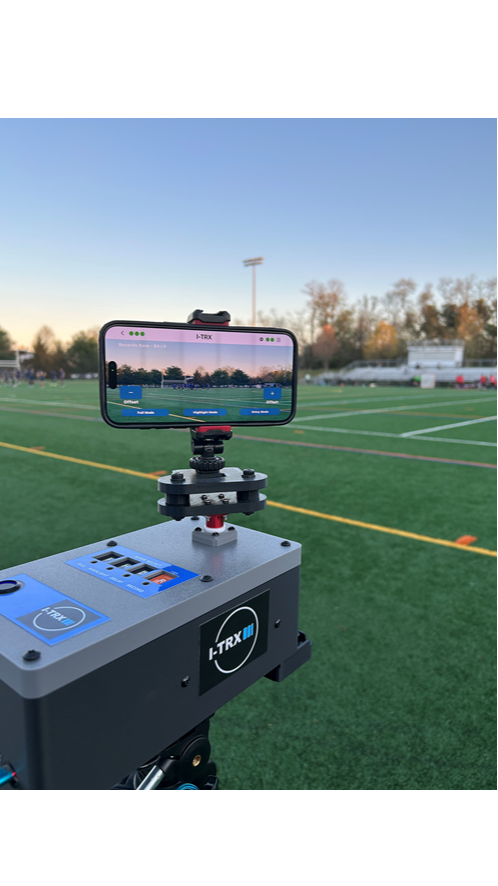
This is where camera technology starts to matter as much as coaching or skill development. A parent standing on the sideline with a phone, trying to follow their child through 22 other players, is fighting an uphill battle. Sensor-based tracking systems that automatically follow one athlete solve this problem at the source, framing the player correctly from the very first second of recording. I-TRX has built its entire approach around this idea, using a leg sensor to keep the camera locked onto a single athlete throughout a game.
Every second wasted on a blurry intro or a lost recruit is a second closer to a coach clicking away. Building a tape that respects that opening window sets the tone for everything that follows.
Why Coaches Reward Clear, Focused Footage
Highlight tapes function as evaluation tools rather than entertainment. Coaches are scanning for specific, checkable qualities, and clarity ranks near the top of that list. A video that keeps a recruit stable, visible, and easy to identify does more for a recruiting profile than a shaky clip stuffed with dramatic music.
Identifying Jersey Numbers and Positioning Instantly
A coach who cannot tell which player is being recruited will not spend time guessing. Usable recruiting footage needs stable framing, a clear view of the athlete, and enough resolution to read jersey numbers and understand field positioning. Some recruiting guides even recommend circling or marking the athlete in wide shots so there is zero confusion about who the coach should be watching.
This is precisely the gap that automatic tracking closes. When a camera follows one player based on movement rather than a parent's best guess, the athlete stays centered and legible no matter how fast the game moves. Positioning also tells its own story, since coaches often want to see where a player lines up relative to teammates and opponents, not just where the ball happens to be.
Optical Zoom vs. Blurry Digital Zoom
Zoom quality is where many recruiting videos quietly fall apart. Optical zoom preserves full resolution and image detail as a lens moves closer to the action, while digital zoom simply enlarges pixels, which can turn a promising highlight into a blurry mess right when it matters most.
- Optical zoom keeps facial features, jersey numbers, and ball control visible even in tight, fast-moving plays.
- Digital zoom stretches existing pixels, often producing a grainy or soft image the moment the camera pushes in.
- Autozoom systems that rely on optical zoom can dynamically reframe a shot without sacrificing clarity, a trait trade publications have highlighted in newer AI-powered sports cameras.
For a recruiting tape, this distinction carries real weight, marking the difference between a coach clearly seeing a first touch or defensive slide and squinting at a pixelated blur.
How Tracking Technology Follows Every Move
Manual filming asks a parent to do two jobs at once: watch the game and operate a camera well enough to produce usable footage. Tracking technology removes that trade-off by letting sensors and software handle the framing, so the person behind the camera can actually enjoy watching their kid play.
Sensor-Based Tracking Versus Manual Filming
Manual filming depends entirely on reaction speed and camera skill. A parent following a fast break in lacrosse or a counterattack in soccer has to predict where the play is heading, adjust zoom, and keep the athlete in frame all at the same time, often while also cheering, coaching from the sideline, or managing siblings nearby. It is a lot to ask of anyone holding a phone for two straight hours.
Sensor-based systems flip that script. A small sensor worn on the athlete, paired with a camera that reads its position and adjusts automatically, keeps the framing consistent no matter how chaotic the play becomes. This kind of setup is part of why trade coverage of AI-driven sports cameras has focused on systems that can follow a specific jersey number through crowded gameplay without anyone touching the controls.
Avoiding the Overzoom Trap Coaches Dislike
Zooming in too aggressively creates its own problem. Some recruiting guides warn that constant, tight zooming can strip away the tactical context coaches need, making it harder to judge decision-making, spacing, and how a player reacts to teammates around them.
The fix lies in smarter zoom rather than less zoom. Autozoom features that adjust based on where the ball and other players are positioned, rather than zooming in reflexively on every touch, tend to strike the right balance. This keeps the recruit clearly visible while still showing enough of the field for a coach to evaluate the bigger picture.
Building a Tape Coaches Actually Watch
A highlight reel full of goals and dramatic saves might be fun to watch at a family gathering, but it does not tell a coach much about a player's overall game. Recruiting-focused footage needs to do more work than a typical sports blooper reel.
Showing Skills Beyond the Scoreboard
Coaches consistently say they want to see decision-making, movement without the ball, communication, and effort, alongside a highlight reel of goals and big hits. A defender who reads a play early and cuts off a passing lane demonstrates more recruitable skill than a lucky bounce into the back of the net. The same goes for a midfielder who consistently finds open space or a lacrosse player who communicates on defense.
Clips that include three to five seconds before and after the key action give coaches the context to judge that decision-making properly. A goal without its buildup tells half a story, while a goal shown with the run, the pass, and the finish tells the whole one.
Keeping Reels Short and Purposeful
Recruiting guides tend to agree on length: a highlight video generally works best somewhere in the three-to-five-minute range. Anything longer risks losing a coach's attention, while anything shorter may not show enough variety to prove consistency.
A well-built reel usually follows a simple structure:
- Open with the strongest, clearest clip to grab attention immediately.
- Follow with a mix of skill-based plays that show range, not just scoring.
- Close with one or two more standout moments that leave a strong final impression.
Full match film often comes later in the process, once a coach wants to verify the consistency a highlight reel promised. Building the short reel with that in mind, rather than cramming in every exciting moment from the season, tends to produce a stronger first impression.
Turning Game Day Footage Into Highlights
Recording good footage solves half the problem. Getting that footage into a usable, shareable highlight without hours of editing software solves the other half, and it is often the part that burns out even the most dedicated recruiting parent.
Saving Clips Without Editing Software
Editing software has a learning curve, and most parents do not have hours to spend trimming footage after a long weekend of games. Highlight Mode addresses this directly by letting a parent save a clip straight to an iPhone's camera roll with one click, no editing software required. From there, building a reel becomes as simple as stitching a handful of camera-roll clips together in a basic app like iMovie.
This kind of instant-save workflow matters more than it might seem at first glance. A highlight saved and shared the same day a coach reaches out carries a different kind of urgency than one that requires a week of digging through raw footage first.
Sharing One System Across Siblings
Families with more than one athlete face a real math problem when every child needs recruiting footage. Buying separate recording setups for each kid adds cost fast, especially with systems tied to monthly subscriptions.
A single tracking system built to work across siblings changes that equation. With no subscription fees or team sign-ups, and the ability to be shared between multiple athletes, a family with a soccer player and a lacrosse player can rely on one $649 setup rather than paying twice for two separate services. The system runs outdoors with iPhones only, using a five-foot tripod that fits into a carrying bag, and it holds around four hours of battery life after an overnight charge, enough to cover most tournament days.
Clear Footage Remains Recruiting's Deciding Factor
Talent gets an athlete noticed, but footage is what actually gets watched. Every element covered here, from optical zoom to smart tracking to short, purposeful editing, exists to make sure a coach's first impression matches the player's real ability on the field.
Recruiting footage does not need to be complicated to be effective. It needs to be clear, focused, and built around the athlete a coach is actually there to evaluate. For families weighing their options, comparing automatic tracking camera systems built specifically for youth sports recruiting is a reasonable next step before the next big tournament weekend.
I-TRX
City: ELLICOTT CITY
Address: 9756 Gudel Dr
Website: https://www.i-trx.com
Phone: +1 410 446 0964
Email: john.reed@electroappcorp.com


Comments
Post a Comment