What Schools Pay for Group Protection: Boston Student Tour Security Pricing
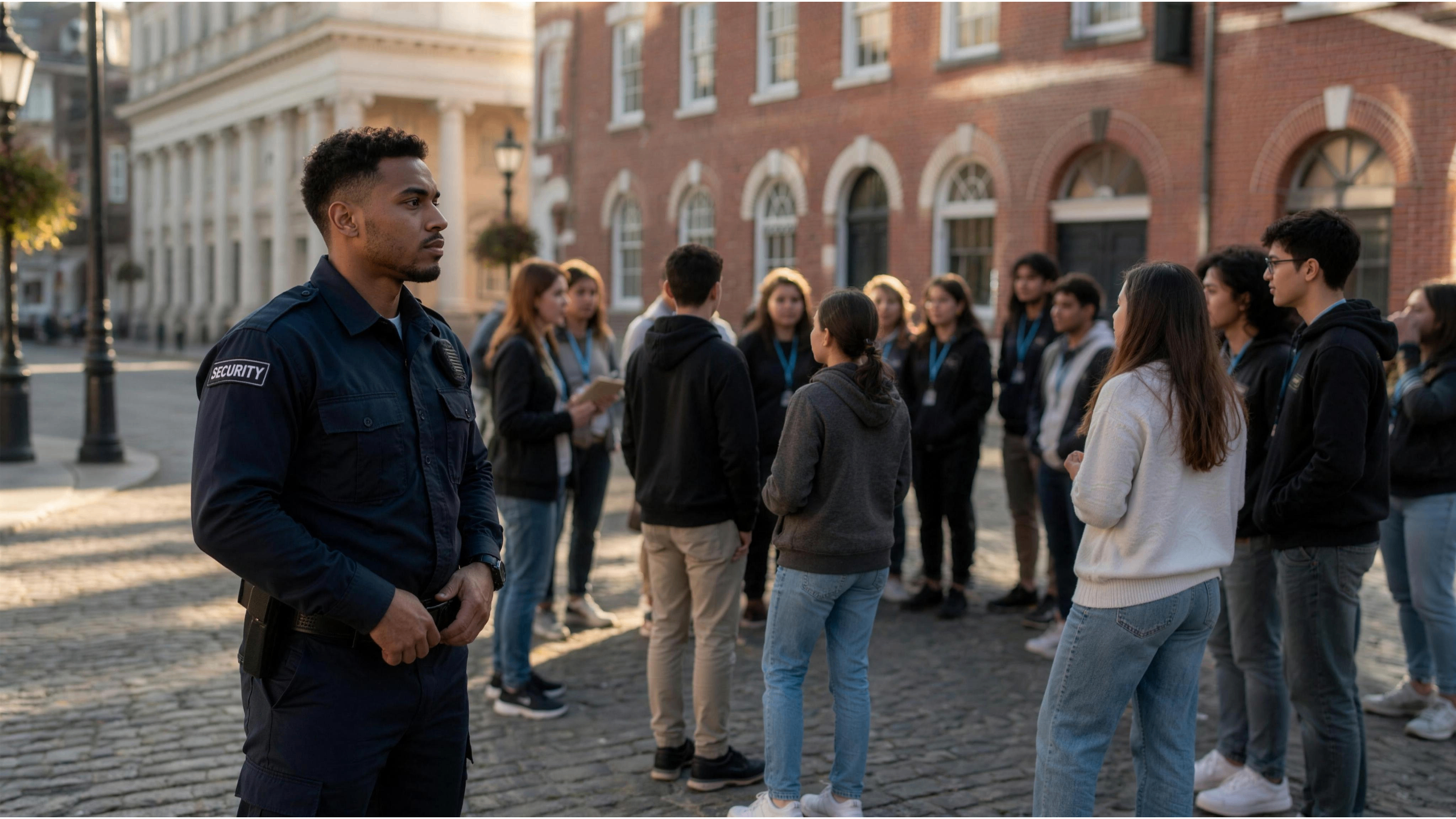
Key Takeaways
- Student tour security pricing depends on group size, overnight coverage, and travel logistics rather than a single flat rate
- Unarmed guard rates nationally average close to $45 per hour, while armed guard rates run somewhat higher due to added training and licensing requirements
- Group size, hotel floor count, overnight coverage hours, and multi-city travel are the biggest factors driving a quote up or down
- Overnight hotel security typically includes curfew enforcement, hallway patrols, and staff trained in first aid and fire safety - details worth confirming before booking
- Pre-trip hotel security audits and written post orders are part of preparing a tour before students arrive
Planning a class trip or scholastic tour through Boston brings up one question school administrators and tour operators can never skip: how much will security actually cost, and what does that cost buy? The answer depends less on a flat rate and more on the shape of the trip itself. This article breaks down what drives pricing up or down, and what a security detail should actually cover once it is on the clock.
Boston School Security Runs $45-$75 Per Hour
Schools and tour groups booking guard services can expect pricing to depend heavily on scope rather than a single set number. Unarmed guard rates nationally average close to $45 per hour, while armed guard rates run somewhat higher, reflecting added licensing and liability requirements. Student tour security tends to sit above general hourly averages because of the added complexity of overnight hotel duty, travel logistics, and group supervision that a scholastic tour requires.
That premium is not arbitrary. Tour security teams often handle floor-by-floor hotel monitoring, curfew enforcement, and emergency response training that a typical retail or office guard post never touches. New England Security has worked with student groups, band trips, and school sports teams across the country, and points to group configuration, overnight needs, and destination logistics as the biggest swing factors in a final quote. Understanding those variables ahead of time makes it easier for a school administrator or tour coordinator to budget accurately instead of guessing.
Why Tour Security Costs Vary So Much
Two schools booking what looks like the same three-day trip can receive very different quotes, and the reasons usually trace back to a handful of practical details. Group size, coverage hours, and destination complexity all stack together to shape the final invoice.
Group Size and Hotel Floors
Larger groups typically need more coverage, not just more guards. A tour that fills a single hotel floor might need one guard stationed there overnight, while a larger group spread across three or four floors needs a guard posted on each one to keep watch effectively. Cost scales with floor count as much as with headcount, so a large group packed onto two floors can actually cost less to secure than a smaller group scattered across five.
Overnight Coverage and Night Differentials
Overnight hours cost more everywhere, and student tours are no exception. Night, weekend, and holiday shifts commonly carry a premium of 10% to 25% above standard day rates, since overnight work demands guards who stay alert through the quietest, and often most liability-heavy, hours of the trip. A four-night tour with overnight coverage every night will always price higher than a day trip that wraps up before dinner.
Destination and Multi-City Coordination
A single-city Boston tour is the simplest scenario to price. Multi-city itineraries add coordination costs, since security teams need to schedule handoffs, confirm local hotel logistics, and sometimes bring in different personnel for each stop. Tours that move between Boston, New York, and Washington, D.C., for example, require more planning hours before a single guard ever reports for duty, and that planning shows up in the quote.
Armed vs. Unarmed Guard Rates
Armed and unarmed guards serve different purposes on a student tour, and the price gap between them reflects real differences in training and liability.
- Unarmed guards nationally average close to $45 per hour and cover most student tour needs such as hallway patrols, curfew checks, and access monitoring.
- Armed guards nationally average somewhat higher per hour, reflecting the additional licensing, training, and liability that comes with carrying a firearm.
Most scholastic tours never need armed personnel. Guards trained in de-escalation, first aid, and emergency evacuation cover the vast majority of situations a school group encounters on the road. Armed coverage tends to get reserved for higher-risk destinations, large public events tied to the tour, or specific client requests, which is why it is worth discussing risk level honestly with a provider before assuming armed security is necessary.
What Overnight Hotel Security Actually Covers
A guard standing in a hallway is only part of the picture. Overnight hotel security for a student group is built around a set of specific, repeatable tasks designed to catch problems before they escalate.
Curfew Enforcement and Hallway Patrols
Enforcing curfew sounds simple until a hotel has a hundred or more excited teenagers spread across several floors. Guards posted for overnight duty typically patrol hallways continuously, check that students are in their assigned rooms after curfew, and keep unauthorized visitors away from student floors. This kind of constant presence lets chaperones actually rest instead of taking turns pacing the halls themselves.
Emergency, First-Aid, and Fire Training
Overnight security involves more than watching doors. Guards assigned to student tours are commonly trained in emergency procedures, fire safety, evacuation protocols, first aid, and CPR, so a medical issue or fire alarm in the middle of the night has someone on-site who knows how to respond immediately rather than waiting on outside help. Pre-trip physical security audits of the hotel itself, paired with specific written post orders for guards, have become a standard part of how experienced providers prepare for a tour before students even arrive.
Why Liability Makes Security Non-Negotiable
Liability sits near the top of the list of concerns for elementary and secondary school principals regarding field trips, and for good reason. A group of minors away from home, staying overnight in an unfamiliar building, creates exposure that a single chaperone or teacher cannot manage alone. Professional security fills that gap by taking on tasks that fall outside a teacher's training and legal comfort zone, from managing an unauthorized visitor late at night to responding to a medical emergency before paramedics arrive.
Schools across the United States collectively spend substantial sums each year on security guards, a figure that reflects how central professional protection has become to school risk management generally, even before factoring in travel-specific coverage. Treating security as a discretionary add-on rather than a core line item is one of the more common and costly mistakes made during trip planning.
Getting a Custom Quote for Your Tour
Because so many variables affect pricing, most reputable providers avoid quoting a flat number without first learning the specifics of a trip. A useful quote conversation typically covers:
- Total group size and the number of hotel floors the group will occupy
- Total nights requiring overnight coverage, plus any daytime escort needs
- Destination city or cities, including whether the tour involves multi-city travel
- Any known risk factors, such as large public events tied to the itinerary
Booking early tends to pay off. Security orders can typically be placed up to a year in advance, with schedule changes confirmed within 48 hours, giving school administrators room to lock in coverage before peak travel seasons fill provider calendars. Coordinators who need to make last-minute adjustments benefit from working with a provider that staffs a 24/7 dispatch center capable of handling those changes without disrupting the trip.
Bottom Line: Pricing Reflects Your Trip's Risk
Student tour security pricing is not a mystery once the variables are laid out clearly. Group size, overnight hours, destination complexity, and whether armed personnel are needed all combine to shape a final rate. The trips that cost more to secure are usually the ones carrying more real-world risk, whether that means a bigger group, more hotel floors, or a multi-city itinerary.
For school administrators and tour operators weighing the expense, the smarter question is whether the trip's specific risks are being matched with the right level of coverage. Getting quotes early and asking detailed questions about group size, coverage hours, and guard training turns an abstract cost into a clear, defensible line item that protects both students and the institution. For trips involving overnight hotel stays, comparing quotes for student tour group security before finalizing an itinerary can help set realistic expectations for what proper coverage should include.
New England Security
City: Malden
Address: 208 Broadway
Website: https://newenglandsecurity.com


Comments
Post a Comment