What Is Reformer Pilates Good For? Greenwich Village Studio Explains Benefits
Key Takeaways
- Reformer Pilates uses a spring-loaded carriage machine to deliver a low-impact, full-body workout that builds strength, flexibility, and better posture
- The workout follows six guiding principles: concentration, control, centering, flow, precision, and breathing
- Natural Pilates explains that Reformer sessions can help beginners, athletes, older adults, and people recovering from injury, though certain precautions apply before starting
Reformer Pilates has become a familiar sight in many fitness studios, and for good reason. The workout pairs a spring-loaded machine with classic Pilates principles to deliver a full-body session that feels challenging without being hard on the joints. Before booking a first class nearby, it helps to understand how the machine works, what it targets, and who tends to benefit most.
The Machine Behind the Workout
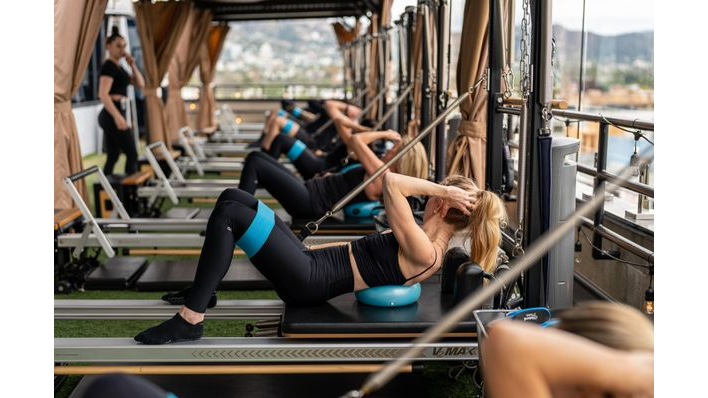
A Pilates reformer looks simple at first glance, but every part plays a role. The core piece is a padded platform called a carriage, which glides back and forth along a set of rails. Springs attached beneath the carriage create resistance, and that resistance can be adjusted up or down depending on the exercise and the person doing it.
A footbar gives something to push off during leg work, while shoulder blocks keep the body anchored in place so movements stay controlled rather than sliding out of position. Straps and handles attach to the springs, letting hands or feet pull against resistance in dozens of directions. Together, these parts turn a single machine into a tool for full-body training that stays gentle on the joints while still building real strength.
Six Principles That Guide Every Move
Behind every reformer sequence sits a set of six guiding principles that shape how instructors cue movement and how students should think about their own form. These principles come straight from the foundations of Pilates itself and apply whether someone is on a mat or a machine.
- Concentration: Full mental focus stays on each exercise, rather than drifting to a to-do list.
- Control: Movements happen with deliberate precision instead of momentum or bouncing.
- Centering: Power draws from the core, meaning the deep abdominals, hips, and low back.
- Flow: Motion stays smooth and continuous, connecting one exercise to the next.
- Precision: Alignment and technique matter more than speed or repetition count.
- Breathing: Inhale and exhale coordinate with movement to energize the muscles being worked.
These principles turn what could be a simple strength routine into something closer to moving meditation. A class built on these ideas tends to feel calmer and more focused than a typical gym workout, even when the muscles are working hard.
Full-Body Benefits You Can Expect
Reformer Pilates touches nearly every muscle group in a single session, which is part of why it has stayed popular across decades of fitness trends. The benefits break down into a few clear categories worth understanding before stepping onto the carriage for the first time.
Strength, Endurance, and Core Power
The resistance springs on a reformer target the core, arms, legs, glutes, and back all in one workout, building both muscle strength and stamina over time. Because the springs can be adjusted, a single machine works for a beginner easing into fitness and an experienced athlete pushing for deeper muscle activation.
A randomized controlled study on soccer players found that an eight-week Pilates program improved agility, passing performance, and single-leg triple hop results, with reformer Pilates producing greater improvements in these areas than mat-based Pilates. That finding suggests the added resistance and carriage instability genuinely ramp up how hard the core and stabilizing muscles have to work compared to bodyweight-only training.
Posture, Alignment, and Balance
The reformer's structure supports the body in proper alignment while guiding movements with immediate feedback, which makes it easier to feel when form drifts off track. This kind of built-in feedback is harder to get from mat work alone, since there is no equipment reinforcing where the spine or hips should sit.
Balance improves too, since staying stable on a moving carriage forces small stabilizing muscles to fire constantly throughout a class. A 2018 study found that reformer Pilates helped reduce fall risk in older adults and people with limited mobility by improving posture, strength, and balance together, which points to real functional gains beyond just looking taller or standing straighter.
Flexibility and Chronic Pain Relief
Reformer sessions build in flowing stretches that gently lengthen muscles and expand joint range of motion, which supports both everyday flexibility and quicker recovery after strain or injury. The springs provide light assistance during stretches, so a deeper range of motion becomes accessible without forcing a joint past a safe limit.
Chronic pain relief is one of the more well-documented benefits of this style of training. A randomized controlled trial found that reformer Pilates significantly reduced pain severity, fear of movement, and fatigue, and improved sleep quality in young adult women with chronic low back and neck pain. Similar research has shown reduced pain and improved quality of life for people managing fibromyalgia, arthritis, and other chronic conditions, making reformer work a common recommendation from physical therapists treating these issues.
Reformer vs. Mat: Key Differences
Both styles of Pilates share the same six guiding principles, but the experience of a mat class and a reformer class differs in some important ways.
Mat Pilates has several clear advantages:
- It requires nothing more than a mat, making it accessible at home or anywhere with floor space.
- Free or low-cost classes are widely available online, keeping costs minimal.
- It builds foundational core strength and control using bodyweight resistance alone.
- It travels easily, with no equipment to pack or set up.
Reformer Pilates brings a different set of strengths:
- Adjustable spring resistance allows each exercise to be customized to the person and the goal.
- The sliding carriage and strap system take pressure off the joints, which helps during injury recovery.
- A broader range of movement variations keeps sessions from feeling repetitive.
- Built-in equipment support boosts precision, guiding alignment in ways a mat alone cannot.
The tradeoff comes down to accessibility versus variety. Mat Pilates fits into a tight budget or a small apartment; reformer Pilates asks for a studio visit but delivers a wider, more supported range of exercises in return. Many people end up mixing both, using mat work at home to reinforce habits built during reformer sessions in a studio.
Who Benefits Most from Reformer Work
Reformer Pilates was designed to flex around the person using it rather than asking the person to adapt to a fixed routine, which explains why such a wide range of people show up in class rosters.
Beginners, Athletes, and Older Adults
New students often appreciate how the machine's support makes it easier to learn proper form compared to jumping straight into mat work. Many beginners start with two to three reformer sessions per week, giving the body time to adapt while strength and flexibility build gradually.
Athletes use reformer training to sharpen agility, balance, and core stability in ways that carry over directly into their primary sport, as reflected in the soccer performance research mentioned earlier. Older adults, meanwhile, often turn to reformer classes specifically for the balance and fall-prevention benefits, since the machine offers support that makes challenging movements feel safer to attempt.
Injury Recovery and Rehabilitation
The low-impact nature of reformer work makes it a common recommendation during active recovery, since the springs and carriage reduce pressure on joints compared to many other forms of exercise. Stretching built into reformer routines can also support quicker, more complete recovery by gently expanding range of motion without overloading a healing area.
This adaptability makes reformer Pilates a frequent fit for people managing chronic conditions like arthritis or fibromyalgia, including those returning to movement after surgery or treatment, always under guidance suited to their specific situation. A doctor, physical therapist, or licensed Pilates instructor can help determine which modifications make sense for a given injury or condition before starting.
Precautions Before Getting on the Carriage
Reformer Pilates is generally considered safe, but a few precautions matter before hopping on the machine for the first time. Injuries can happen if the equipment is used with incorrect form, so working with a certified instructor for the first several sessions is worth the investment.
A few groups should check in with a doctor before starting:
- Anyone who is pregnant, since certain positions and resistance levels may need adjusting.
- Anyone with a diagnosed spinal condition, since some reformer exercises load the spine directly.
- Anyone recovering from a recent injury or surgery, since healing tissue may need a modified approach.
Talking with a doctor, personal trainer, or Pilates instructor beforehand helps prevent complications and ensures the workout gets customized appropriately rather than applied as a one-size-fits-all routine.
A Low-Impact Path to Lasting Strength
Reformer Pilates earns its popularity by combining strength training, flexibility work, and posture correction into a single low-impact session that suits a wide range of bodies and goals. From beginners easing into fitness to athletes chasing better performance to older adults working on balance, the adjustable resistance and full-body focus make it a workout that grows alongside the person doing it.
For a closer look at how a structured, full-body approach comes together in practice, consider trying reformer Pilates classes as a next step toward building strength without the wear and tear of high-impact training.
Natural Pilates
City: New York
Address: 28 West 22nd Street
Website: https://www.naturalpilates.com


Comments
Post a Comment