Water Damage Found Mid-Demolition: Monmouth County Remodeler Explains Next Steps
Key Takeaways
- Finding hidden water damage during demolition is common in older Monmouth County homes and requires fast action within the EPA's 24-48 hour window to prevent mold
- Homeowners should call a professional if mold growth covers more than 10 square feet or if the water source involved sewage
- Restoration professionals use thermal imaging and moisture meters to find moisture hidden behind walls and under floors that a visual check would miss
- Careful documentation during the drying and rebuild process can make a real difference in how smoothly an insurance claim moves forward
- PNE Construction LLC brings IICRC-certified restoration know-how to renovation surprises, helping turn a stalled project back into a solid rebuild
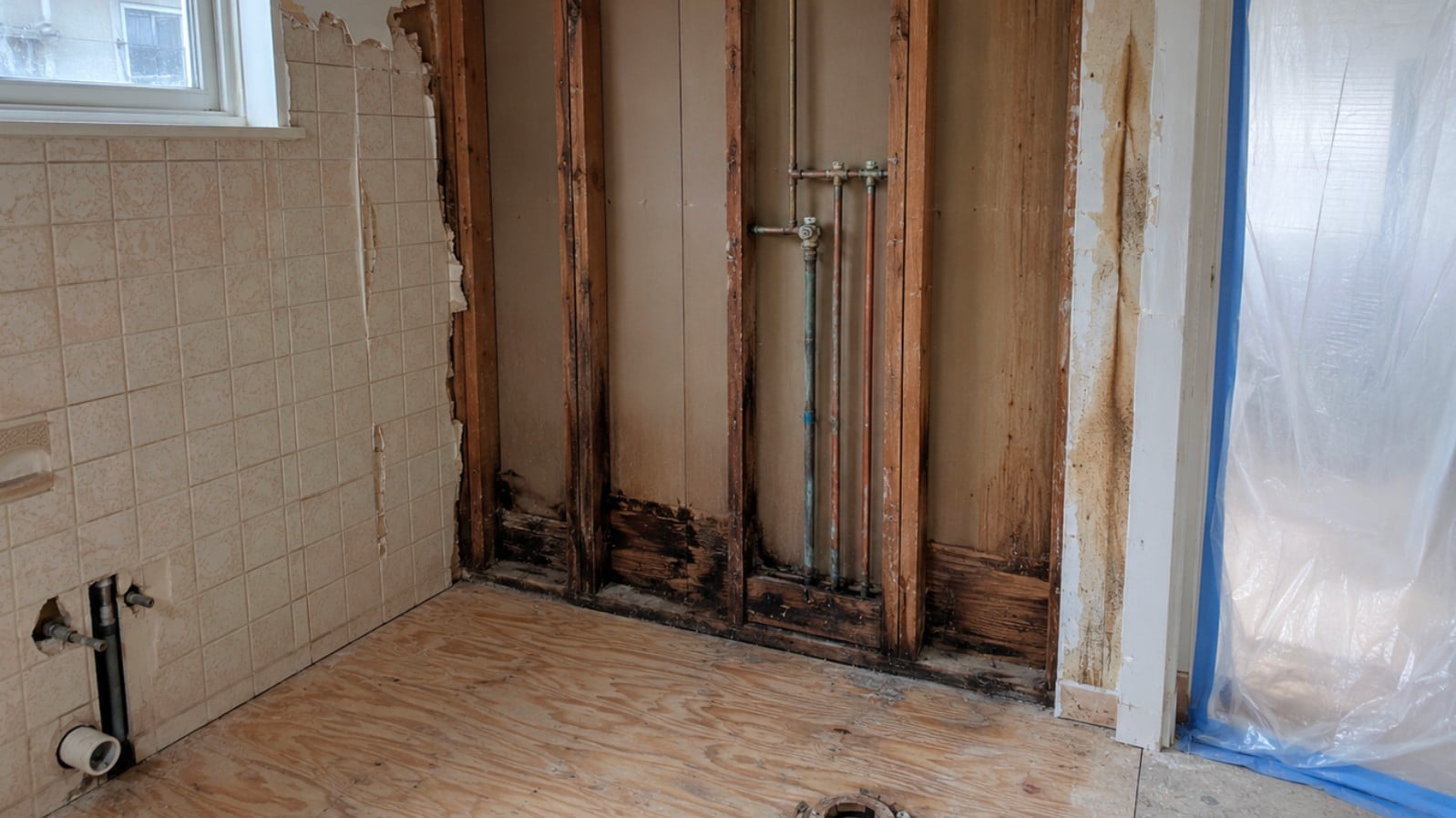
Demolition day is supposed to feel like progress. Then a contractor pulls back a section of drywall or pries up old flooring, and there it is: dark staining, a musty smell, or soft, spongy wood that should not be there. For homeowners across Monmouth County mid-renovation, encountering hidden water damage can feel like the project hit a wall. This situation is more common than most people realize, and there is a clear, proven path forward.
You Just Found Hidden Water Damage
Older homes throughout Monmouth County, from Red Bank to Long Branch, often hide small leaks behind walls for years before a renovation ever begins. A slow drip under a bathroom sink, a roof flashing issue, or a slab leak can quietly soak framing and subfloor long before anyone notices a problem. Once demolition exposes the damage, the clock starts ticking on how it gets handled. Contractors experienced in bathroom remodeling in Monmouth County frequently encounter this exact scenario, since bathrooms are one of the most common places for hidden leaks to develop over time.
The first instinct for many homeowners is to keep moving forward with the renovation plan and deal with the water issue later. That approach almost always backfires, since covering up damp materials only traps moisture and sets the stage for a much bigger problem down the road.
Why the Next 24-48 Hours Matter
Timing matters more than almost anything else in this situation.
EPA: How Mold Takes Hold Within 24-48 Hours
The U.S. Environmental Protection Agency states that the key to controlling mold is controlling moisture. The agency's guidance is direct: wet or damp materials need to be dried within 24 to 48 hours of a leak or spill, or mold is likely to start growing. Once mold takes hold, it continues to spread and cause damage the longer it is left alone. That short window explains why waiting even a few extra days to deal with water damage found during demolition can turn a simple drying job into a full mold remediation project.
When to Call a Professional Instead of DIY
Some water damage situations are manageable without outside help. Others call for an experienced hand right away. The EPA recommends bringing in a professional if mold growth covers more than 10 square feet, or roughly a 3-foot by 3-foot patch, since problems of that size are harder to fully remove without the right equipment and containment methods. A professional should also be called in immediately if the water damage came from sewage or another contaminated source, since that type of water carries health risks that go beyond typical moisture cleanup.
For anything smaller and involving clean water, a homeowner with the right protective gear may be able to handle it. Once the damage is more widespread, hidden behind multiple wall cavities, or tied to an active renovation timeline, professional assessment saves both time and money.
What Professional Assessment Looks Like
A thorough assessment goes well beyond a quick visual check of the exposed area.
EPA Guidance on Finding Hidden Moisture Behind Walls and Floors
Moisture rarely stays confined to the spot where it is first discovered. It travels along framing, wicks into subfloor material, and pools in places that are impossible to see without the right tools. Restoration professionals commonly rely on thermal imaging cameras and moisture meters to map out exactly how far water has traveled behind walls, under flooring, or inside insulation, giving a much clearer picture than a flashlight and a guess.
EPA-Recommended Extraction, Drying, and Dehumidification Steps
Once the scope of the damage is understood, the next step is removing standing water and drying out the structure. This typically involves industrial-grade pumps and extraction vacuums for any standing water, followed by high-powered air movers and dehumidifiers to pull moisture out of framing, subfloor, and insulation. The Institute of Inspection, Cleaning and Restoration Certification (IICRC) sets the drying standards that guide most professional restoration work nationwide, and these steps generally follow that framework.
Stopping Mold Before It Spreads
Drying the structure is only part of the equation. Preventing mold from taking root matters just as much, especially once materials have already been wet for a day or more.
EPA-Registered Antimicrobial Treatment and HEPA Filtration
Restoration crews often apply antimicrobial treatments to surfaces that were exposed to moisture, reducing the chance of mold taking hold even in areas that look dry. High-Efficiency Particulate Air (HEPA) filtration is also part of standard remediation practice, used both to clean the air during the process and to capture any mold spores that may have already been disturbed during demolition.
EPA Humidity Targets During Reconstruction
Keeping humidity in check matters throughout the rest of the rebuild, not just during the initial drying phase. The EPA recommends keeping indoor relative humidity below 60 percent, ideally somewhere between 30 and 50 percent, to prevent new mold growth as construction continues. A simple humidity meter, available at most hardware stores, can help homeowners keep an eye on conditions even after professional drying equipment has been removed.
Protecting Your Insurance Claim
Water damage discovered mid-renovation often becomes an insurance matter, and how it is documented can shape the entire claims process.
Documentation Adjusters Expect, Per EPA Thresholds
Insurance adjusters tend to look for clear evidence that a water problem was identified quickly and addressed following accepted drying standards, and they often use the EPA's 24-48 hour drying window as a reference point when reviewing a claim; detailed photos, moisture readings, and a written record of when the damage was found and what steps were taken all support that review, and restoration work that begins quickly and follows that window tends to move through claims review more smoothly than cases where a delay allowed mold or additional damage to develop. Some restoration companies build this documentation into their process from day one, including daily moisture logs, photographic records, and moisture maps prepared in a format adjusters are used to reviewing, which can shorten back-and-forth during the claims review.
Why the EPA's 24-48 Hour Window Shapes Claim Timelines
A typical covered water loss involves several days of active drying, followed by a period of insurance review before rebuild work can begin, and the overall timeline often comes down to how quickly mitigation started and how well it was documented along the way.
Turning a Setback Into a Solid Rebuild
Finding water damage mid-demolition is frustrating, but it does not have to derail a renovation. Addressing the moisture quickly, documenting the process carefully, and following established drying and mold-prevention standards turns what feels like a setback into an opportunity to fix an old, hidden problem for good. Homeowners who work with contractors experienced in both restoration and remodeling often find the rebuild ends up sturdier and better protected than before the damage was ever found.
For homeowners facing this exact situation, working with a team that understands both the restoration side and the remodeling side of the project, such as bathroom remodeling in Monmouth County, can help keep the timeline on track from discovery through to a finished, mold-free space.
PNE Construction LLC
City: Little Silver
Address: 115 Oceanport Ave
Website: https://www.pneconstructionllc.com/
Phone: +1 888 827 6326
Email: hello@pnepros.com


Comments
Post a Comment