Roof Storm Damage Checklist: Documentation & Prep Tips Before Filing A Claim
Key Takeaways
- Good documentation often decides whether a Tennessee roof storm damage claim gets paid in full or denied.
- Wide shots of the whole roof plus close-up photos of every impact mark, lifted shingle, and water stain give adjusters the clearest evidence.
- A written log noting the date, time, weather event, and what was observed helps an adjuster verify the story behind the photos.
- Most policies require homeowners to tarp or patch damage quickly to prevent it from getting worse, and those receipts matter later.
- Reviewing a policy's deductible and covered perils before filing can save homeowners from a claim that does not make financial sense.
Severe storms roll through Middle Tennessee often enough that most homeowners will face roof damage at some point. What happens in the hours and days right after the storm can matter just as much as the damage itself, because insurance companies rely almost entirely on documentation to decide what they will pay.
Why Documentation Decides Your Claim
Adjusters cannot see what happened during a storm. They can only see what is put in front of them: photos, written notes, and receipts. When that evidence is thin or confusing, claims get delayed, underpaid, or denied outright. When it is thorough and organized, the process moves faster and payouts tend to reflect the real cost of repair.
The gap between a paid claim and a denied one usually comes down to preparation. A detailed guide on documenting roof damage for a Tennessee insurance claim walks through exactly what adjusters look for and how homeowners can put together a record that holds up. The rest of this checklist breaks that process into steps any homeowner can follow after the next storm passes through.
Photograph Damage Right After the Storm
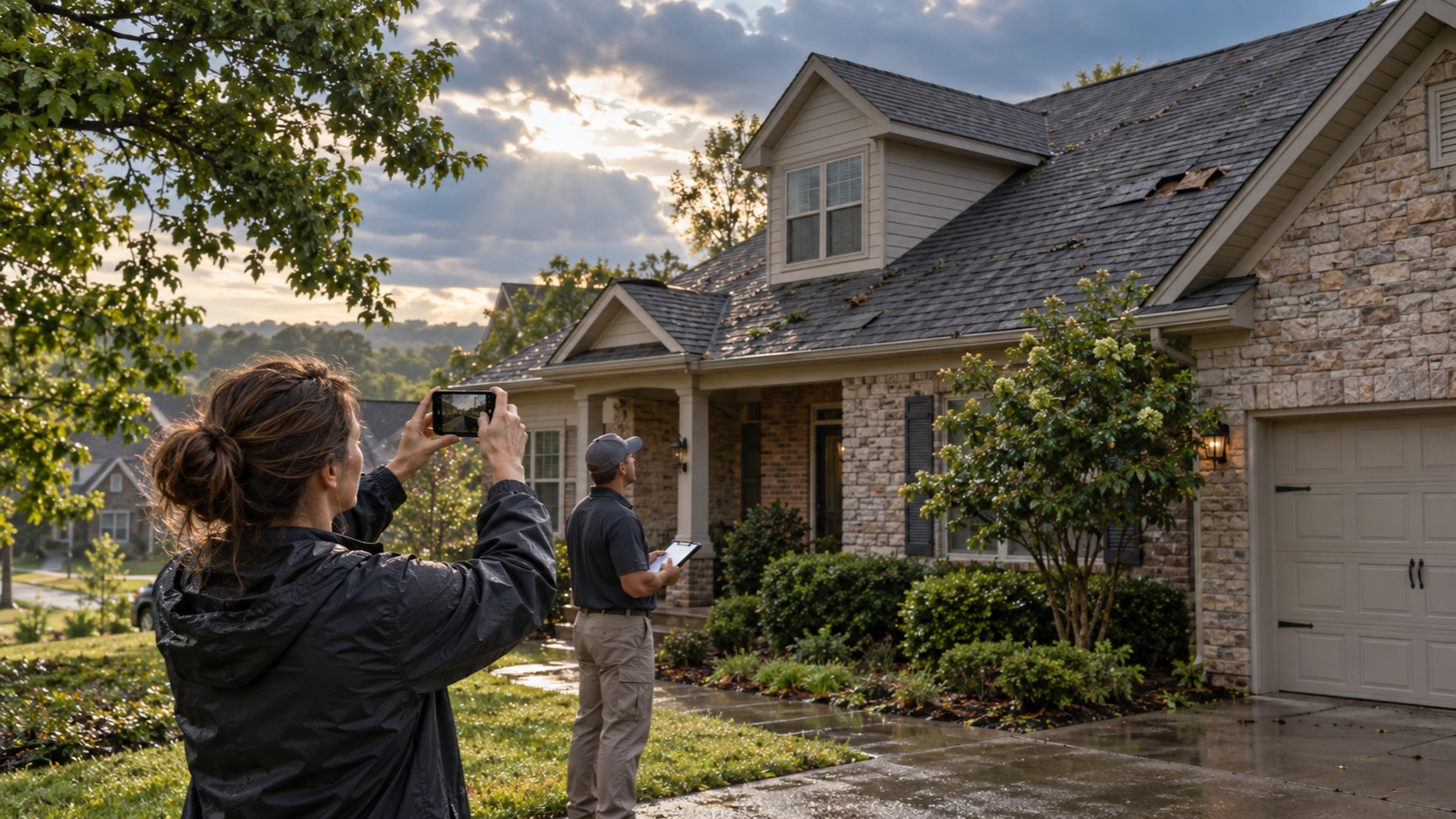
Photos taken immediately after a storm carry more weight than photos taken days later, because hailstone bruising and wind-lifted shingles are at their clearest right when they happen. Waiting even a few days lets rain wash away granules, wind push shingles back into place, or a second storm arrive and muddy the timeline. As soon as it is safe to step outside, walking the property with a phone camera is one of the most valuable things a homeowner can do.
Safety matters here too. Climbing onto a wet or damaged roof to get a better photo is not worth the risk, and a licensed roofer can document roof-level detail far more safely and thoroughly than a homeowner standing on a ladder.
Wide Shots vs. Close-Up Details
Two types of photos work together to tell the full story. Wide shots capture the entire roof slope, the whole house, and the surrounding property, showing the storm's overall reach rather than one isolated spot. Close-up shots then zoom into each specific problem area:
- Hail impact bruises, which look like dark spots where granules have been knocked loose
- Lifted or torn shingle tabs along any slope
- Cracked or pulled flashing around chimneys, vents, and valleys
- Dents in metal vent caps, gutters, or downspouts
- Scattered shingle granules collecting in gutters after a hailstorm
Taking more photos than seems necessary is smart, since a missed shot cannot be recreated once conditions change.
Adding Scale to Impact Photos
A close-up of a dent or crack means little to an adjuster without something to measure it against. Placing a coin, a tape measure, or even a hand next to the damage gives a clear sense of size, which helps confirm the intensity of the storm and supports the scope of repair being requested. This small step takes seconds but often makes the difference between a photo that gets questioned and one that gets accepted at face value.
Capturing Interior Water Stains
Roof damage rarely stays outside. Water stains on ceilings, damp spots in the attic, or sagging insulation are strong evidence that a breach in the roof is already affecting the home. These interior photos matter as much as the exterior ones because they connect the visible roof damage to real, ongoing harm inside the house, strengthening the overall claim.
Keep a Written Damage Log
Photos tell part of the story, but a written log fills in the details a picture cannot capture. Recording the date and time of the storm, the type of weather event such as hail, straight-line winds, or a falling tree limb, and exactly what was observed gives an adjuster a factual timeline to match against the photos. Noting which slopes of the roof were affected, when the damage was first discovered, and any interior signs like leaks or stains rounds out the record.
Keeping this log simple and factual works best. Sticking to what was seen, when, and where creates a document an adjuster can quickly cross-reference with the photo evidence, rather than a narrative built on impressions.
Tarp Fast, Save Every Receipt
Most homeowners policies include a duty to mitigate further damage after a storm, which means a torn-open roof is expected to be tarped or temporarily patched without much delay. Skipping this step can actually give an insurer grounds to deny part of a later claim, since the damage may be seen as something that could have been prevented from spreading.
Every receipt tied to that emergency work matters. Tarps, temporary patches, and even hotel stays if the home becomes unlivable are often reimbursable expenses under a standard policy. Emergency tarping is both a protective measure and something insurers expect to see documented, so keeping those receipts in the same folder as the photos and written log makes the eventual claim submission far simpler.
Check Your Policy Before You File
Not every storm-related repair is worth turning into an insurance claim, and reviewing the policy itself is the step many homeowners skip. Coverage depends on the specific policy, the deductible amount, and the actual cause of the damage. Sudden events like hail, high winds, or falling trees are generally covered, while damage tied to age, wear, or poor maintenance typically is not.
Deductibles and Covered Perils
Deductibles for wind and hail damage in Tennessee vary by policy, and can show up as a fixed dollar amount such as $500, $1,000, $2,500, or $5,000, or as a percentage of the home's insured value, often in the 1% to 2% range. If the estimated repair cost is close to or below the deductible, filing a claim may not make financial sense, since a paid claim can affect future premiums. Reading through the policy's declarations page before calling the insurer, or asking a roofer to help interpret it, avoids a wasted claim and sets realistic expectations from the start.
Why a Roofer Should Meet the Adjuster
Insurance adjusters inspect a large number of roofs, especially after a widespread storm, and hidden damage is easy to miss during a quick visual pass. Hail bruising that has not fully broken the surface, subtly lifted flashing, or wear hidden in a valley can slip past an adjuster who is not looking at roofs all day, every day. A roofer standing on-site during that inspection can point directly to what needs attention, closing the gap between what gets seen and what actually needs repair.
That kind of on-site coordination often speeds up the process of reaching an agreed scope of work, since both sides are looking at the same evidence at the same time rather than comparing separate reports after the fact.
Strong Records Mean Fair Payouts
Clear, organized evidence gives an insurer little reason to question a claim. Photos taken quickly, a written log that matches those photos, saved receipts for mitigation work, and a policy review before filing all work together to build a record that supports a fair settlement rather than a drawn-out dispute.
Storm damage is stressful enough without also worrying about whether the paperwork will hold up. Homeowners who treat documentation as seriously as the repair itself tend to see faster answers and payouts that actually cover the cost of putting the roof back together. For homeowners ready to put these steps into action, a roof storm damage documentation checklist can help turn a stressful situation into a manageable, well-supported claim.
Terry Woodall Roofing
City: Nashville
Address: 805 52nd Ave N
Website: https://terrywoodallroofing.com
Phone: +1 615 300 6005
Email: twoodall002@gmail.com


Comments
Post a Comment