Retaining Wall Ideas for Sloped Backyard: Combining Function & Aesthetic Appeal
Key Takeaways
- Retaining walls hold back soil on sloped yards, stopping erosion while creating flat, usable outdoor space
- Material choices range widely, from natural stone at $30 to $40 per square foot to budget-friendly timber and locking landscaping blocks
- Short sitting walls, raised beds, and tiered layouts turn a practical structure into a yard's best design feature
- Homeowners can expect to pay between $3,500 and $9,400 on average for a retaining wall, depending on size and material
- Pairing the right material with the right layout is what makes a retaining wall both sturdy and beautiful
A backyard that slopes downhill can feel like wasted potential. Water rushes over bare soil, flower beds wash out after a heavy rain, and there is never quite enough flat ground for a patio set or a swing. Retaining walls solve this problem in a way few other outdoor features can, holding soil firmly in place while opening up new possibilities for how a yard looks and functions.
Why Sloped Yards Need Retaining Walls
A retaining wall is a structure built to hold back soil and create level ground on land that would otherwise slide, erode, or pool water in all the wrong places. New Jersey properties can face this challenge regardless of soil type, since even well-drained ground erodes once heavy rain hits an unmanaged slope, and any property with a real grade change is at risk of losing topsoil and destabilizing plantings over time. Once a wall is in place, that same slope becomes usable ground for gardens, seating, or play space instead of a problem to work around.
Beyond stopping erosion, a well-built retaining wall protects the structural integrity of everything uphill from it, including foundations, patios, and mature trees. Sage Landscape Contractors & Tree Experts often points out that retaining wall projects work best when they are planned alongside drainage and grading, rather than treated as an afterthought once the slope has already caused damage. Anyone weighing options for a sloped property can find a helpful starting point through retaining wall design and installation guidance built around exactly this kind of terrain challenge.
Materials That Balance Function and Beauty
Picking a material is one of the biggest decisions in any retaining wall project, since it affects the wall's strength, upkeep, and the overall style of the yard. Some materials lean rustic and organic, while others offer a cleaner, more modern edge, so it helps to think about the house style and budget together before settling on one.
Stone, Veneer, Block, and Brick Options
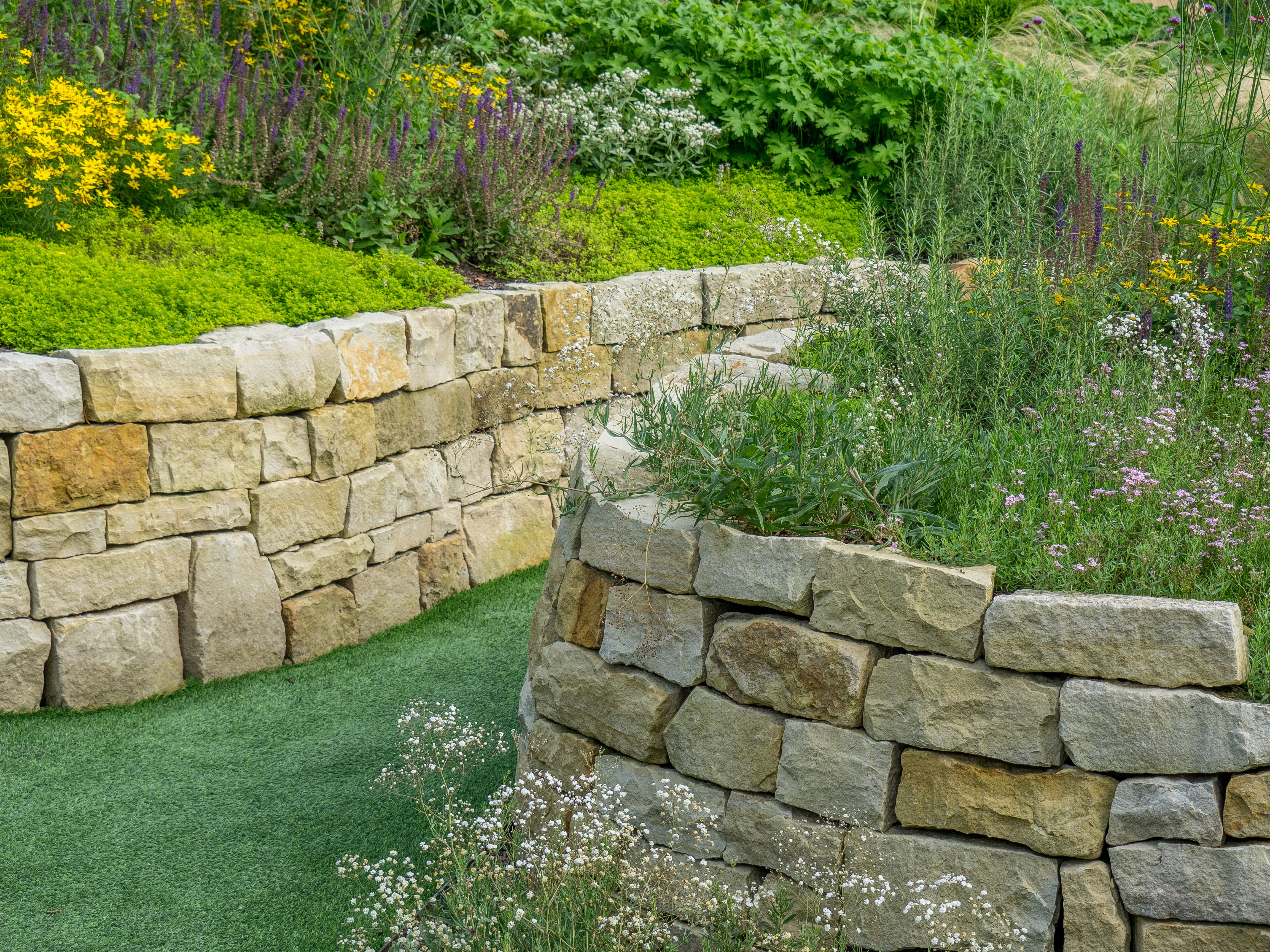
Natural stone brings an earthy, organic texture that blends into almost any garden style, and it holds up for decades with very little maintenance. Stone veneer, sometimes called faux stone, mimics that same look using manufactured panels and typically costs far less to install than full natural stone.
Natural stone costs roughly $30 to $40 per square foot and provides a rustic, one-of-a-kind look since no two stones are alike.
- Stone veneer averages around $10 per square foot, making it a budget-friendly way to get a similar appearance.
- Landscaping blocks with self-locking flanges snap together without mortar, which speeds up installation and keeps the wall visually clean and uniform.
- Brick retaining walls bring a classic, structured look, with red clay tones that make nearby flower beds pop with color.
Timber, Gabion, and Corten Steel Alternatives
Wood retaining walls remain a popular pick for homeowners who want an eco-friendly and cost-effective option, since timber generally has a smaller environmental footprint than concrete or steel. Gabion walls, built from wire mesh cages filled with stone, offer excellent drainage and a naturally rugged texture that suits woodland-style yards especially well.
Corten steel is another standout choice for anyone who wants an industrial, modern aesthetic. This steel develops a protective rust-colored coating over time, which resists corrosion, requires very little upkeep, and skips the need for repainting altogether. Each of these three materials tends to suit a different design goal, so matching the material to the yard's overall style pays off in the long run.
Practical Perks Beyond Erosion Control
Erosion control gets most of the attention, but retaining walls solve several other common backyard headaches at the same time. Homeowners often find these secondary benefits only after the wall goes in, which is part of why the structures pay for themselves in more than one way.
Raised Beds and Sitting Walls
Turning a retaining wall into a raised garden bed brings several gardening perks that flat-ground beds simply cannot offer. Raised soil drains better, resists compaction from foot traffic, and tends to face fewer pest problems than beds planted at ground level.
- Limited weed competition compared to open, ground-level garden beds
- Less soil compaction since foot traffic stays outside the wall
- Fewer pests reaching plants tucked above ground level
- Better control over moisture and drainage around root systems
Short retaining walls, often just one or two feet tall, can double as sitting walls that frame a patio or reading nook. Pairing one with native plants or flowering perennials creates a cozy, lived-in feel without requiring a large investment.
Managing Slopes and Drainage
Retaining walls slow down water as it moves across a slope, which reduces the erosive force of runoff during storms. This matters even more on properties with mature trees, since a wall built around a tree's base protects its root system from being exposed by washed-out soil while also creating a built-in spot for a decorative flower bed underneath the canopy.
Well-designed walls also integrate drainage pipes or gravel backfill behind the structure, which channels water away instead of letting it build up pressure against the wall. Skipping this step is one of the most common mistakes in retaining wall projects, since trapped water is a leading cause of bulging or failing walls over time.
Design Ideas That Boost Curb Appeal
A retaining wall can look like more than a purely functional fix. With some thought given to layout and placement, the same wall that stops erosion can become the most eye-catching feature in the front or back yard.
Tiered and Curved Layouts
Multi-tiered walls break a steep slope into a series of level steps, and each tier can serve its own purpose, whether that means a vegetable garden on one level and a seating area on the next. This layered approach also makes a slope feel less imposing, since the eye reads it as a series of manageable steps rather than one steep drop.
Curved walls, on the other hand, soften the overall look of a yard by following the natural contour of the land instead of cutting it into hard angles. This style works especially well on gently rolling properties, where a curved wall reads as a natural extension of the property rather than a construction project.
Focal Points, Patios, and Water Features
A retaining wall can anchor a front yard centerpiece, giving a small tree, a cluster of flowering shrubs, or an elegant water feature a solid foundation to sit on. Water features paired with a retaining wall, including small waterfalls that spill from an upper tier, add motion and sound that most flat yards cannot match.
Retaining walls also pair naturally with patios, expanding usable outdoor living space while visually framing the seating area. Adding a fire pit nearby turns that same wall-and-patio combination into a gathering spot that gets used year-round, not just during peak summer months.
What Retaining Walls Typically Cost
Budget is often the deciding factor in which material and design a homeowner chooses, so it helps to have a general sense of pricing before meeting with a contractor. Retaining wall projects range from simple DIY block walls to elaborate multi-tier stone installations, and the price tag reflects that spread.
On average, a retaining wall costs between $3,500 and $9,400, landing around $6,300 for a typical residential project depending on size and material. Material choice swings that number significantly, since natural stone runs $30 to $40 per square foot while stone veneer averages closer to $10 per square foot. Landscaping blocks tend to be the most wallet-friendly option per unit, which explains why so many homeowners start there when tackling a smaller slope or a first-time DIY project.
Retaining Walls Deliver Both Form and Function
A retaining wall earns its keep the moment it stops soil from washing away, but its real value shows up in everything it makes possible afterward. Flat ground for a patio, a raised bed that keeps pests at bay, a sitting wall for warm evenings outside: all of these come from the same structure that started as a solution to erosion.
Choosing the right material and layout makes the difference between a wall that simply holds soil and one that becomes a defining feature of the whole property. For homeowners ready to learn what fits their own yard, retaining wall ideas built around both drainage needs and design goals offer a practical place to start planning.
Sage Landscape Contractors & Tree Experts
City: Plainfield
Address: 16 Driftway Ln
Website: https://sagelandscaping.com


Comments
Post a Comment