Radiologist Shortage in the US: How Remote Supervision Meets Coverage Needs
Key Takeaways
- Imaging facilities facing radiologist shortages can use remote contrast supervision to keep offering contrast-enhanced studies while staying CMS compliant
- CMS permanently authorized virtual direct supervision for Level 2 diagnostic tests, including contrast-enhanced CT and MRI, effective January 2026
- The AAMC projects a specialist shortfall of 17,000 to 42,000 by 2033, and an overall physician shortage of up to 86,000 by 2036, a gap radiology training pipelines cannot close quickly
- Virtual contrast supervision typically costs $45 to $150 per hour on the open market, and pricing based on actual scanning hours can meaningfully lower annual costs compared with a full-time on-site radiologist
- The article walks through how to audit staffing and technology readiness before choosing a compliant supervision platform
Imaging centers across the country are watching a workforce gap grow wider every year, and it's starting to touch daily operations in ways patients can actually feel. A rural patient waits three extra weeks for a contrast CT. A weekend MRI slot sits empty because no radiologist is on the schedule. These are symptoms of a much bigger structural shift happening in radiology right now. For a deeper breakdown of how this shortage is colliding with new federal rules, remote contrast supervision, and the 2026 industry impact offers useful context on where the field is headed.
CMS Now Permits Virtual Contrast Supervision
In January 2026, the Centers for Medicare and Medicaid Services (CMS) permanently changed how it defines direct supervision for contrast-enhanced imaging. Qualified physicians can now meet "immediate availability" requirements through real-time, two-way audiovisual technology instead of standing physically inside the office suite. This permanent rule lets facilities build long-term staffing plans around remote coverage rather than treating it as a stopgap.
For imaging center administrators, this rule change answers a question that has hung over the industry for years: can a radiologist supervise contrast administration safely without being in the building? CMS has now said yes, provided the technology and workflow meet specific technical standards. That answer opens the door to a different staffing model, one built around connectivity and coverage rather than physical headcount at every site.
Why Radiologist Shortages Threaten Imaging Access
The pressure behind this rule change did not appear overnight. Imaging centers have spent years absorbing the slow squeeze of fewer available radiologists chasing a growing volume of scans, and the strain is now visible in scheduling delays, canceled appointments, and patients driving long distances for studies that used to be available locally.
A Projected Physician Shortage of Up to 86,000 by 2036
The Association of American Medical Colleges projects a shortfall of 17,000 to 42,000 specialists, a group that includes radiologists, by 2033. A separate AAMC update projects an overall physician shortage of up to 86,000 by 2036. These numbers describe a shortage that touches every corner of medicine, but radiology feels it in a particular way, because contrast-enhanced studies require a supervising physician to be available the moment a patient's IV line is placed.
Why Training Pipelines Can't Close the Gap
Radiology training is long by design. It requires a preliminary clinical year, a four-year residency, and often one to two additional years of fellowship for subspecialists. That pipeline cannot simply be sped up when demand spikes, because residency slots depend on accredited programs, faculty availability, and sufficient clinical case volume, none of which expand quickly.
Even a meaningful increase in residency positions today would not change staffing realities on the ground for years. Retirements among experienced radiologists continue at a steady pace, and new graduates entering the field are not arriving fast enough to offset that outflow. For an imaging center administrator planning next year's schedule, that timeline offers little practical comfort, which is exactly why the CMS rule change matters so much right now.
Inside the 2026 CMS Supervision Rule
Understanding exactly what the new rule allows, and what it still requires, is the first step toward building a compliant remote supervision program.
Which Diagnostic Tests Are Covered
The rule applies specifically to Level 2 diagnostic tests, a category that includes contrast-enhanced CT scans and contrast-enhanced MRI studies. These procedures have historically required physician supervision because of the clinical risks tied to contrast agent administration, including the possibility of allergic or adverse reactions. Under the previous framework, a physician had to be immediately available on-site during these studies. The updated rule allows that same supervisory role to be fulfilled remotely, as long as the technology and response protocols meet CMS standards.
Audio/Video Standards Facilities Must Meet
CMS does not treat every video call as equivalent to physical presence. A few specific standards define what counts as compliant supervision:
- The connection must be real-time, two-way, and HIPAA-compliant, with no perceptible delay that could compromise a radiologist's ability to respond to an adverse reaction.
The platform must let the radiologist both see and speak with the on-site care team throughout the procedure, while also providing more than a one-way video feed.
- Recorded or asynchronous communication does not satisfy the requirement; supervision has to happen live, in the moment the contrast is administered.
Facilities that treat these standards as a checklist rather than a formality tend to have a much smoother path through CMS reviews later.
How Virtual Supervision Protects Patient Access
Beyond compliance, the real value of remote supervision shows up in how many more patients a facility can safely serve without adding physical headcount.
One Radiologist, Multiple Sites, Real-Time Coverage
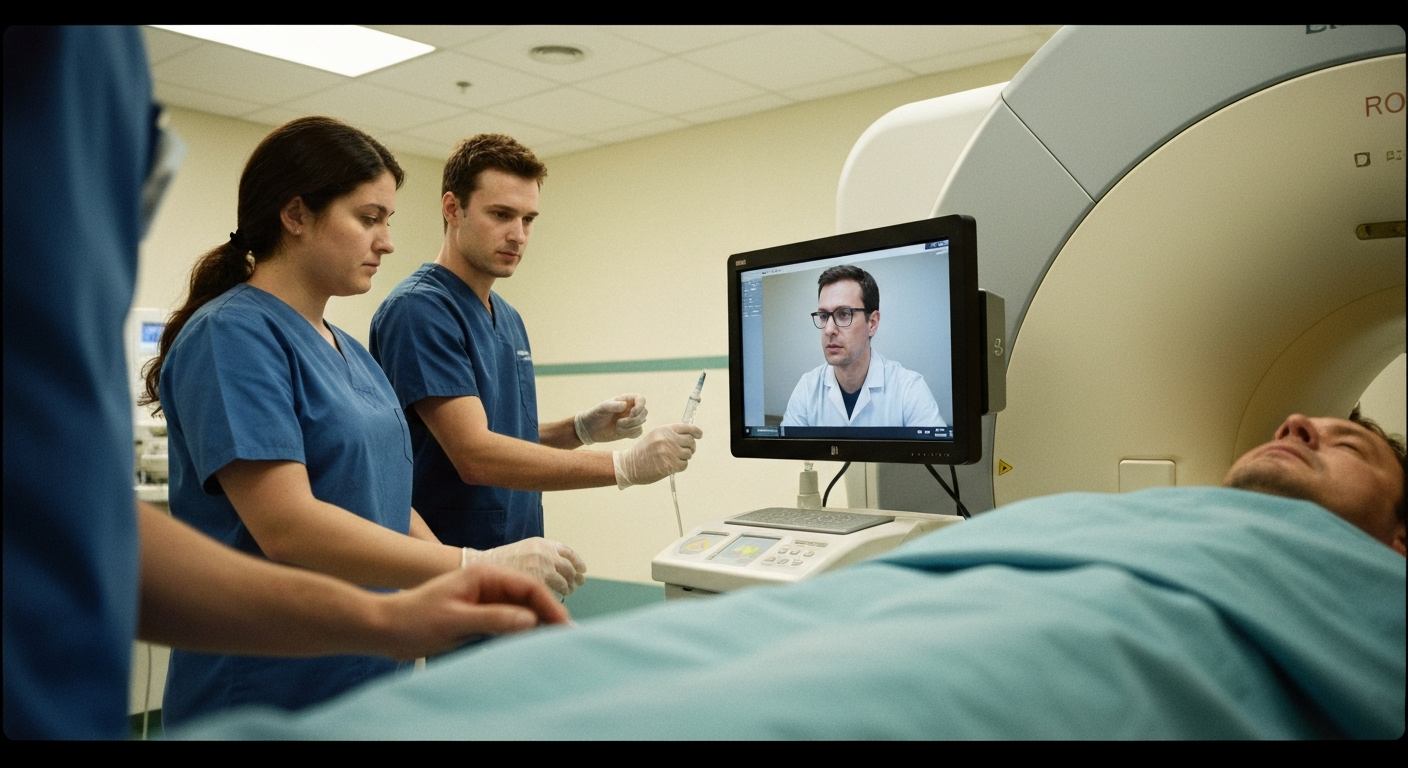
A single radiologist working within a virtual supervision network can cover multiple facilities during one shift by staggering procedure windows so active supervision periods do not overlap. Scheduling is structured so coverage flows from one site to the next. For administrators managing multiple locations, this model can mean the difference between canceling a Friday afternoon contrast study and running it as scheduled.
This scheduling flexibility also opens the door to extending hours. Facilities that once limited contrast-enhanced imaging to weekday business hours, simply because that was when an on-site radiologist was available, can now consider evening or weekend slots, provided remote coverage is arranged.
Handling Contrast Reactions Remotely
Administrators most often ask what happens if something goes wrong during a remote-supervised study. The answer lies in response speed and clinical protocol. When a technologist flags a contrast reaction, a connected radiologist assesses the patient's symptoms and vitals live over audio and video, then directs the technologist on exactly what to do next, from administering medication to escalating for emergency support. Radiologists who supervise contrast studies regularly manage several reactions on an average day, which builds a level of pattern recognition and calm decision-making that comes only from repeated, real-world experience with these events.
Preparing Your Facility for the Transition
Moving toward remote supervision works best as a deliberate process rather than a rushed switch, and a short internal audit up front saves headaches later.
Auditing Staffing and Technical Readiness
Start with an honest look at how contrast-enhanced procedures are currently supervised across the facility. A useful audit typically covers:
- Mapping every contrast-enhanced procedure performed monthly and identifying which ones require physician supervision.
- Tracing exactly how that supervision is delivered today, whether through an on-site radiologist, locum coverage, or another arrangement.
- Running a connectivity check on imaging suites, looking specifically at sustained upload and download speeds during peak hours rather than just average internet performance.
- Reviewing HIPAA compliance for any audio/video platform under consideration.
- Surveying technologists and nursing staff on their comfort level with remote communication workflows.
The gaps this audit uncovers become the actual roadmap for implementation, rather than a guess at what might need fixing.
Choosing a Compliant Supervision Platform
Not every virtual supervision platform is built to the same clinical or technical standard, so it helps to evaluate options against a consistent set of criteria. Look for explicit documentation confirming CMS compliance, verified HIPAA compliance, clear response-time guarantees for connecting with a supervising radiologist, the ability to schedule across multiple sites, and integration with existing RIS/PACS infrastructure. ContrastConnect, for example, structures its platform around these criteria, pairing real-time audio and video connections with radiologist response times measured in seconds and documentation built to withstand CMS audits. Facilities weighing platform options tend to find that response-time guarantees and audit-ready documentation matter just as much as the video technology itself.
Weighing the Cost of Remote vs. On-Site Coverage
Cost is often the deciding factor once compliance questions are settled, and the numbers tend to favor remote coverage for facilities that cannot justify a full-time on-site radiologist. Virtual contrast supervision services typically run between $45 and $150 per hour on the open market. Pricing coverage against actual scanning hours rather than a flat rate is an approach that can meaningfully lower annual contrast supervision costs compared with a dedicated on-site radiologist.
On-site coverage carries costs beyond salary alone. Recruitment fees, relocation packages, benefits, and the overhead of maintaining coverage during vacations or illness all add up, especially in rural or underserved markets where recruiting a radiologist is hardest in the first place. Remote supervision shifts that equation by allowing facilities to pay only for active coverage hours rather than a full-time position that may sit underutilized during slower periods. For administrators managing tight margins, that difference can free up budget for extended hours, additional equipment, or other patient-access improvements.
Compliant Remote Supervision Is Now a Viable Path Forward
The radiologist shortage is not resolving on its own, and the timelines involved in training new specialists make it clear that hiring alone will not close the gap anytime soon. The permanent CMS rule change gives imaging center administrators a practical, compliant alternative that does not depend on winning a competitive recruiting market. Facilities that take the time now to audit their staffing, confirm technical readiness, and choose a platform built around CMS and HIPAA standards will be better positioned to maintain patient access as workforce pressures continue.
Facilities that audit their current contrast volumes and supervision schedules will have a clearer picture of where remote coverage could fit without disrupting existing workflows. The CMS rule provides a workable framework; the main task now is making sure the technology and staffing model behind it are built to last.
ContrastConnect
City: Las Vegas
Address: Las vegas
Website: https://www.contrast-connect.com/


Comments
Post a Comment