How to Whiten Aging Yellow Teeth: Tips & Procedure Explained by Nottingham Pro
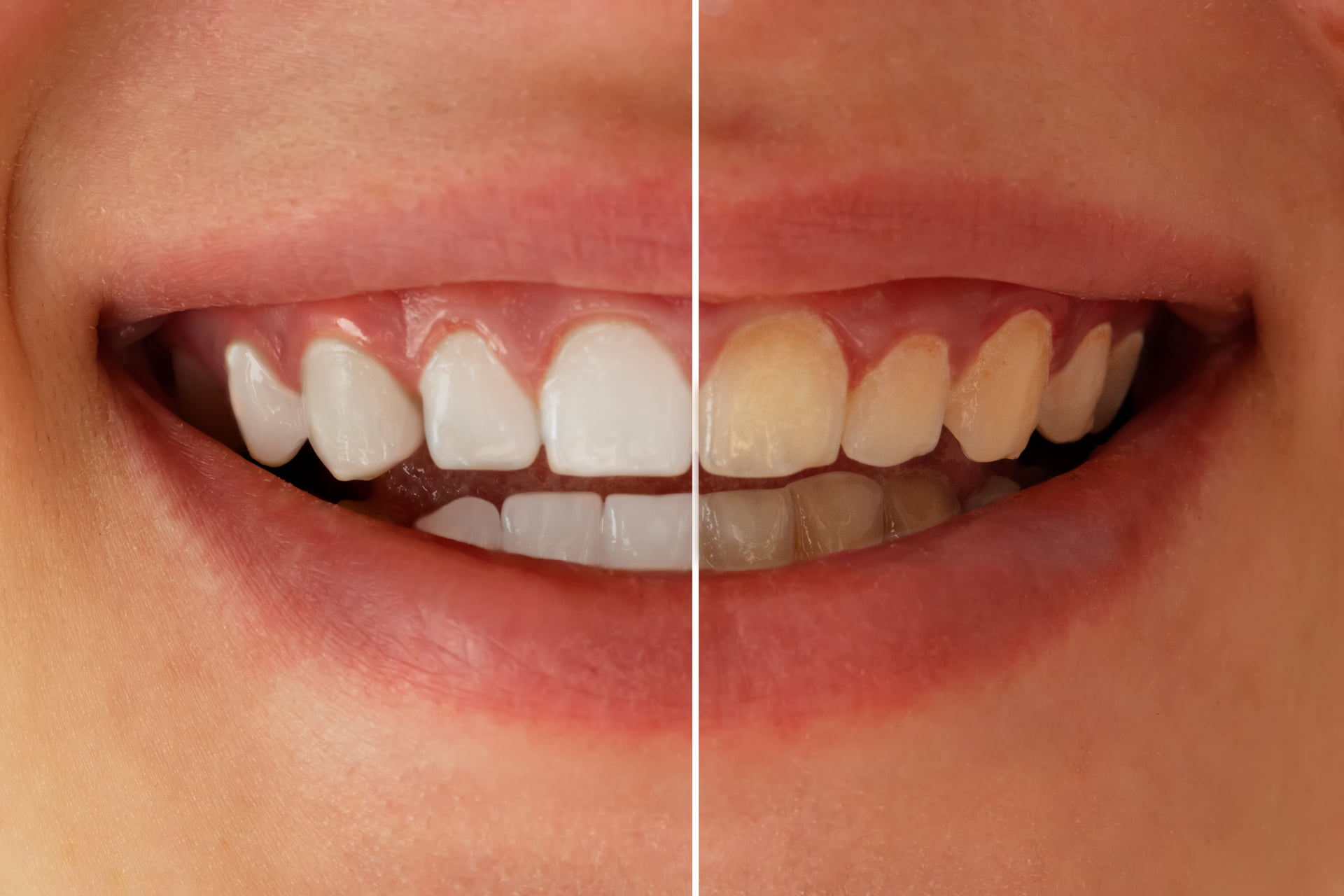
Key Takeaways
- Tooth enamel naturally thins with age, exposing the yellowish dentine beneath - this is the root cause of age-related tooth discolouration.
- Over-the-counter whitening products address surface stains only; professional whitening agents penetrate the enamel to break down deeper, intrinsic discolouration.
- The professional take-home whitening process involves just two short appointments, with treatment carried out at home over 2-4 weeks.
- Older adults can safely benefit from professional whitening, though existing restorations and enamel sensitivity require a dentist's assessment first - more on that below.
Yellow teeth are one of the most common cosmetic complaints that come with getting older - and one of the most misunderstood. Many people reach for whitening toothpastes or strips from the supermarket, only to find the results disappointing. Understanding why teeth yellow with age, and what actually works to reverse it, makes all the difference.
Your Teeth Yellow With Age - Here's Why
Tooth enamel is the hard, semi-translucent outer layer of every tooth. Over decades of use, that enamel gradually thins. As it does, the layer underneath - called dentine - becomes more visible. Dentine is naturally yellow in colour, so the thinner the enamel, the more that warm, yellowish hue shows through. Age-related yellowing is less about staining and more about the tooth's structure changing over time.
Lifestyle plays a role too. Decades of coffee, tea, red wine, and smoking all leave their mark on the enamel surface. Certain medications - particularly tetracycline antibiotics taken during childhood - can cause deeper, more stubborn discolouration. Without consistent oral hygiene over the years, surface pigments accumulate faster than most people realise. The result is teeth that look dull, tired, and noticeably older.
Why Over-the-Counter Products Fall Short
Surface Stains vs. Intrinsic Stains
Tooth discolouration broadly falls into two categories: extrinsic stains (on the surface of the enamel) and intrinsic stains (deeper within the tooth structure itself). Whitening toothpastes rely on mild abrasives or low-concentration chemical agents that can lift surface pigments to a degree, but their low concentration and short contact time mean they are generally ineffective at breaking down deeper, intrinsic discolouration. Age-related yellowing is almost always intrinsic, sitting below the surface where supermarket products cannot meaningfully reach.
Whitening strips fare slightly better, but their one-size-fits-all design leads to uneven coverage, and the peroxide concentrations available over the counter are legally limited in the UK. For genuinely yellowed, ageing teeth, they tend to produce modest results at best.
What Professional Agents Actually Do
Professional whitening gels - typically containing hydrogen peroxide or carbamide peroxide at clinically appropriate concentrations - work differently. These agents penetrate the porous structure of the enamel and trigger an oxidation reaction within the tooth. That reaction breaks discoloured molecules apart, scattering them into smaller, colourless fragments. The tooth itself becomes structurally lighter in shade - a result that high-street alternatives simply cannot replicate.
Who Can Benefit From Professional Whitening?
According to the Nottingham dental experts at Arnold Dental & Implant Centre, age alone does not determine whether someone is suitable for teeth whitening; the condition of the teeth, gums and any existing restorations should be assessed first.
Professional teeth whitening is considered safe for adults of all ages, provided that overall oral health is in good shape. That means no untreated decay, no active gum disease, and a general level of dental fitness confirmed at consultation. Healthy teeth that have simply yellowed over time are excellent candidates.
Special Considerations for Older Adults
Older patients often bring a more complex dental picture to the chair - and that is not a barrier, just something to plan around carefully. A few key factors to be aware of:
- Existing restorations don't whiten. Crowns, bridges, veneers, and composite bonding are made from materials that don't respond to whitening agents. If these are visible in the smile, the treatment plan needs to account for shade-matching.
- Enamel sensitivity. Thinner enamel can mean greater sensitivity during and after treatment. A qualified dentist will adjust gel concentration and wear time accordingly.
- Gum recession. Exposed root surfaces - which are darker and made of dentine rather than enamel - don't whiten the same way, which is another reason a thorough assessment matters.
With those considerations addressed professionally, the benefits are well worth pursuing. Improved aesthetics, greater self-confidence, and a noticeably more youthful appearance are among the most commonly reported outcomes - and those carry real weight for social confidence and quality of life.
The Whitening Procedure, Step by Step
Professional take-home whitening is straightforward, low-disruption, and carried out largely in the comfort of home. Here's how it works.
Initial Consultation and Custom Tray Fitting
The process begins with a consultation to assess oral health and discuss realistic expectations for shade improvement. Once approved for treatment, either a 3D digital scan or traditional impressions are taken of the teeth. These are used to fabricate custom-fitted whitening trays - precision-made to the individual's exact tooth shape.
At-Home Treatment Over 2-4 Weeks
A second short appointment - around 20 minutes - follows once the trays are ready. The dentist demonstrates exactly how to load the professional-grade whitening gel into the trays and how long to wear them each session. From there, treatment is carried out at home on the patient's own schedule. Most people begin noticing a visible difference within the first few days; the full course typically runs 2 to 4 weeks, depending on the degree of discolouration and the target shade.
The Review Appointment
A final check-in appointment allows the dentist to assess the outcome, ensure the patient is satisfied, and address any questions. The dentist can also advise on maintaining results going forward - and the custom trays can be kept and reused with top-up gel for future touch-ups.
Why Custom Trays Make the Difference
Custom trays are central to why professional whitening outperforms the alternatives. A tray moulded precisely to an individual's teeth ensures the whitening gel is distributed evenly across every surface - no missed patches, no pooling. A well-fitted tray also keeps the gel away from the gums, which significantly reduces the risk of soft tissue irritation.
Generic whitening strips, by contrast, shift position during wear, leave gaps around curved or uneven teeth, and frequently cause gum sensitivity from gel contact. Custom trays are also reusable - patients can order top-up gel in the future and repeat the process without another full course, making the upfront cost considerably more efficient over time.
Book Your Consultation Today
Age-related tooth yellowing is one of the most treatable cosmetic concerns in dentistry - but only when approached with the right tools. Surface-level fixes have their limits. A professionally guided whitening course, using custom trays and clinically formulated gel, addresses the problem at its source and delivers results that actually last.
For Nottingham residents, the process begins with a consultation — a straightforward way to get a clear picture of what's achievable and a plan that accounts for individual dental health.
Arnold Dental & Implant Centre
City: Nottingham
Address: 77C High Street, Arnold
Website: https://arnolddental.co.uk/


Comments
Post a Comment