How To Stop Yelling At Your Kids: Breaking Negative Parental Response Patterns
KEY TAKEAWAYS:
- A child's frustration response is often modeled from repeatedly watching how the adults around them handle stress, not taught directly.
- Recent developmental psychology research now links parents' emotional patterns and children's emotion-regulation skills closely over time.
- Guilt after recognizing a personal anger pattern rarely changes behavior on its own; noticing specific warning signs beforehand is more useful.
- Small, repeatable shifts, like a pause or a softer opening line, are what eventually replace the old pattern a child is watching.
Yelling doesn't usually feel like a choice in the moment. It feels automatic, like the volume climbs before there's time to think, and it's over almost as fast as it started. Then comes the harder part: the child's face, the sudden quiet, or worse, hearing that same sharp tone come right back out of their own mouth days later. For a lot of parents, that's the moment things start to shift. Not another article about calming a child down, but a harder question turned the other way: where does a child actually learn to react like that in the first place, and what would it take to change the pattern at the source, starting with the person doing the yelling.
The Moment Parents Don't Forget
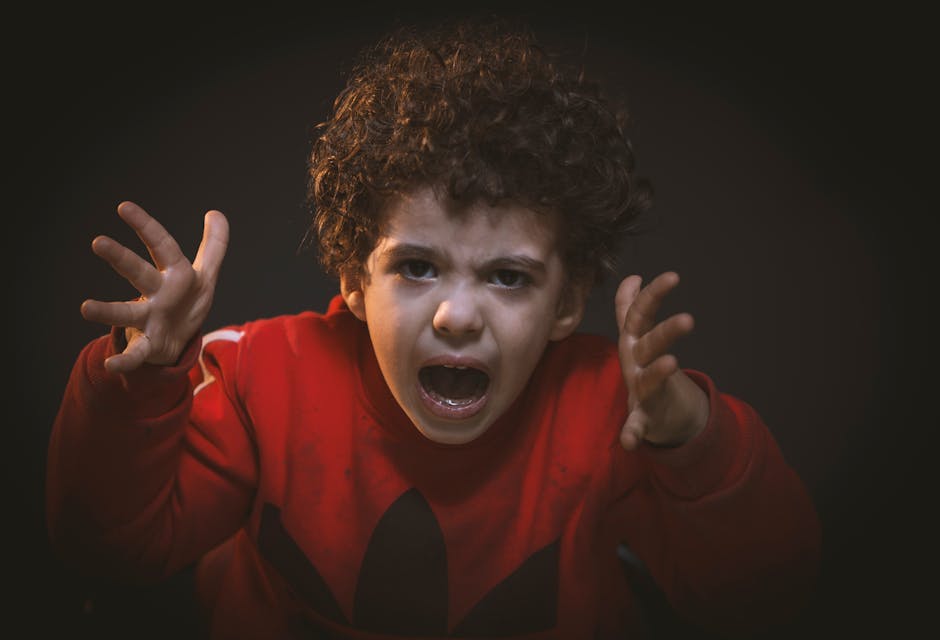
It usually happens somewhere ordinary. A toy won't fit back in the box, a shoe won't tie, a sibling takes the wrong seat at the table. And then it comes: the exact tone, the exact words, the exact huff of breath that a parent recognizes instantly, because it's their own. Not a version of it. The thing itself, coming back through a much smaller voice.
That moment tends to land harder than an ordinary parenting frustration. It's not just that a child is upset. It's the sudden, specific recognition of hearing oneself.
Children Don't Learn Frustration From a Lecture
Most parenting advice about anger focuses on the child: how to calm a tantrum, how to set a consequence, how to talk a kid down from a meltdown. Far less attention goes to where a child's version of frustration actually comes from in the first place.
Children are constantly watching how the adults around them handle stress, long before they can describe what they're seeing. A slammed cabinet door, a sharp sigh, a raised voice over something minor, a sarcastic comment under pressure. None of these moments feel significant in isolation. Repeated over months and years, they become a template. A child doesn't need to be told how to react to frustration. They've already seen it modeled, dozens of times, by the person they trust most.
This isn't a discipline failure. It's something closer to unintentional teaching.
What the Research Actually Shows
This pattern isn't just a feeling parents have. A study published in the journal Scientific Reports in July 2025, which followed more than 2,300 children over several years, found that children's emotion-regulation skills and their parents' emotional warmth were closely linked over time. A child's ability to manage frustration in early childhood also predicted conduct and emotional difficulties by school age.
The findings point to something worth sitting with: a parent's own emotional patterns and a child's ability to handle stress don't develop in separate lanes. They move together.
Recognizing the Pattern Without the Guilt Spiral
Recognizing a personal anger pattern in a child's behavior can trigger a flood of guilt, but guilt on its own rarely changes anything. It tends to just add another layer of frustration to manage, on top of whatever triggered the reaction in the first place.
A more useful response starts with noticing, specifically, what happens right before the reaction. Was it a tone shift? A particular phrase? A physical gesture, like a sharp exhale or crossed arms? These small, repeatable signals are usually easier to catch than the anger itself, and catching them earlier creates room to respond differently before a reaction fully takes over. Over time, that noticing becomes less about self-criticism and more like paying attention to a familiar warning light on a dashboard.
Mind Reboot, the company behind the Anger Reset System, frames this shift as a change in what a parent pays attention to. Instead of focusing only on a child's outburst in the moment, the approach centers on noticing an adult's own escalation points first, on the idea that a child's frustration response develops gradually, shaped by repeated exposure to how the adults around them handle stress.
Small Changes, Repeated Often
None of this requires becoming a different person overnight. A pause before responding. A softer opening line. Naming the frustration out loud instead of acting it out ("I'm feeling really frustrated right now") models a completely different lesson than a slammed door does.
Over time, those small, repeated shifts become the new thing a child is watching. And eventually, that's the version that gets passed on instead.
MIND REBOOT
City: Fuengirola
Address: C. Reina Victoria Eugenia 8
Website: https://mindreboot.vip/


Comments
Post a Comment