Home Infrared Saunas: Benefits, Types & How to Choose the Right One
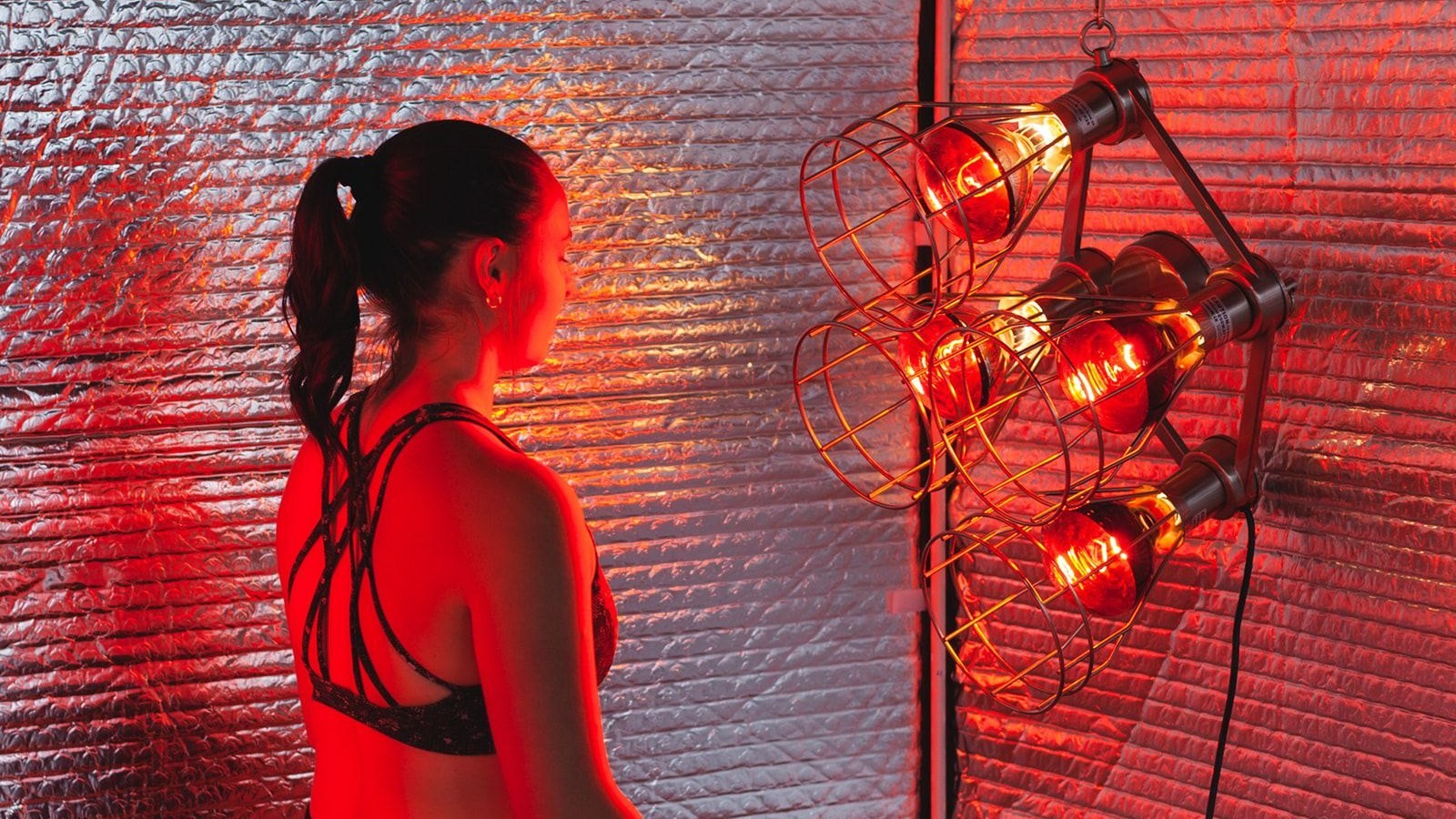
Homeowners considering an infrared sauna have more choices than ever. Near-infrared, far-infrared, full-spectrum, and traditional Finnish-style saunas differ in how they produce heat, how quickly that heat is felt, operating temperature, interior space, electrical requirements, portability, and everyday use.
Understanding those differences makes it easier to choose a home sauna based on how it will actually be used, rather than selecting whichever technology is marketed as the most advanced.
So Many Sauna Types, So Little Clarity
Start shopping for a home sauna and the terminology multiplies quickly: near infrared, far infrared, full spectrum, radiant heat, carbon panels, ceramic heaters, LED light, incandescent lamps, traditional Finnish sauna.
Several of these systems are sold as "infrared saunas," yet they do not produce the same spectrum, radiant intensity, heat exposure, or user experience.
The most useful question a buyer can ask is a simple one: what is actually producing the heat and radiant energy?
Near-Infrared Saunas Can Use High-Powered Radiant Heat Lamps
Some near-infrared sauna systems use high-wattage incandescent heat lamps positioned inside an insulated enclosure. These lamps produce intense radiant heat along with a broad spectrum of visible and infrared energy, so the user feels radiant warmth shortly after the lamps are switched on instead of waiting for an entire sauna room to reach its operating temperature.
This is one reason radiant near-infrared sauna systems provide a substantially different experience from a conventional panel-heated infrared sauna. The lamps radiate energy directly toward the body while also warming the air, surfaces, and enclosure around the user. Creatrix Solutions, which manufactures the Sauna Fix® radiant near-infrared sauna, builds its larger insulated tents with enough room to sit, stand, recline, stretch, change positions, or perform light movement during a session.
Near-Infrared Heat Lamps Are Different From Small NIR LEDs
The words "near infrared" describe very different products. A small near-infrared LED device and a high-wattage incandescent sauna lamp both produce wavelengths within the NIR portion of the electromagnetic spectrum, but their output and intended use can be dramatically different.
LED photobiomodulation devices concentrate their output into selected wavelength bands, and many are designed to deliver light without the whole-body thermal load expected from a sauna. Incandescent heat lamps produce a broad, continuous spectrum containing visible light and infrared wavelengths while also generating substantial radiant heat.
Red and near-infrared light fall within what researchers call the tissue "optical window," described in a 2012 review in the Annals of Biomedical Engineering (Chung et al.) as roughly 600 to 1,070 nanometers, where absorption and scattering are lower than at many visible wavelengths, allowing a portion of the incident light to reach below the skin surface. The same review notes that the response to light changes with wavelength, irradiance, and exposure time. How much energy reaches tissue depends on those variables, on distance and illuminated area, and on the tissue itself, not simply on whether the source is an LED or an incandescent bulb.
That distinction matters when comparing equipment. It would be inaccurate to say that an incandescent photon at a given wavelength inherently penetrates deeper than the same wavelength emitted by an LED. Intensity and dose, however, differ enormously between products. A high-powered radiant lamp system delivers far more total radiant and thermal energy across a large portion of the body than a small, low-output LED device, while a sophisticated high-powered LED array may produce much greater irradiance than a small consumer LED panel.
For a buyer, that means seeing "850 nm," "NIR," or a large LED count in an advertisement is not enough information to tell how two systems compare.
Spectrum, Intensity, and Treatment Area All Matter
When comparing radiant systems, look beyond wavelength labels and consider:
- Wavelength range and spectral output
- Radiant power and irradiance at the user's normal position
- Distance between the body and the emitter
- Total illuminated area
- Exposure time
- Thermal output
- Number and position of emitters
Comparisons should rest on measured output and system design, not on the assumption that every LED or every incandescent lamp performs the same way.
Far-Infrared Saunas Use Heated Panels
Far-infrared, or FIR, saunas generally use carbon or ceramic heating elements positioned around the enclosure. Instead of concentrated incandescent lamps, the panels warm up and emit far-infrared radiation toward the user.
These systems commonly run at lower air temperatures than traditional Finnish saunas. A 2018 systematic review of dry sauna research in Evidence-Based Complementary and Alternative Medicine (Hussain and Cohen) reported that infrared saunas generally run at 45 to 60 degrees Celsius, roughly 113 to 140 degrees Fahrenheit, with similar exposure times to Finnish saunas. Many people find the lower-temperature environment comfortable, particularly if they do not enjoy the intense air temperature of a traditional sauna. FIR systems are sold as both permanent wooden cabins and portable tents.
Near Infrared and Far Infrared Are Not the Same
Both fall within the infrared spectrum, but near-infrared and far-infrared sauna systems are not interchangeable. Near-infrared wavelengths are shorter and sit within the optical window described above; far-infrared wavelengths are considerably longer, interact with tissue differently, and are associated primarily with surface heating.
Just as important, the equipment is different. A radiant NIR lamp sauna uses several concentrated heat sources relatively close to the body, while an FIR sauna distributes heat through larger panels positioned around the enclosure. Those differences affect how the heat feels, how quickly radiant heat is available, heater placement, distance from the heat source, air temperature, interior design, electrical configuration, replacement components, safety instructions, and the overall experience. A detailed near vs far infrared sauna comparison walks through each of those differences, including what infrared does not do.
Traditional Finnish Saunas Heat the Environment Differently
Traditional Finnish-style saunas use a wood-burning or electric heater, usually combined with heated stones. Rather than relying on infrared panels or close-range radiant lamps, the heater raises the temperature of the whole room.
The same 2018 review describes traditional Finnish saunas as running at 80 to 100 degrees Celsius, roughly 176 to 212 degrees Fahrenheit, with dry air at 10 to 20 percent relative humidity. Water poured over the heated stones creates a temporary rise in humidity and the burst of steam known in Finnish sauna culture as löyly. So despite occasionally being called a "wet sauna," the normal Finnish sauna environment is hot and relatively dry, with short increases in humidity when water is added to the stones.
Traditional Finnish Sauna Has the Largest Long-Term Research Base
Buyers encounter extensive health claims around every sauna technology, so it helps to separate what has been studied most from what is simply extrapolated from sauna research in general.
Traditional Finnish sauna bathing has the strongest body of long-term population research. Infrared sauna research exists too, but most of it involves far-infrared systems. Of the 40 studies in the Hussain and Cohen review, 25 used infrared saunas, and all but one of those used far-infrared units; the exception used a full-spectrum sauna.
That does not make one format superior. It means a buyer should be cautious when a manufacturer takes research conducted with one sauna technology and presents it as proof that every device carrying the word "infrared" will behave the same way.
What About Full-Spectrum Infrared Saunas?
"Full spectrum" generally describes systems marketed as producing several portions of the infrared spectrum, often near, mid, and far infrared. The phrase alone does not explain how the sauna produces those wavelengths. One sauna may combine different emitter types; another may use heating elements with broader spectral output.
When evaluating a full-spectrum system, ask:
- What type of emitters are used, and which one produces the near-infrared and the far-infrared components?
- Are the emitters independently controlled, and where are they positioned?
- What is the measured spectral output and the irradiance at the user's position?
- Are replacement emitters available?
"Full spectrum" is a starting point for comparison, not the end of the buying decision. A useful next step is to understand how light, radiant heat, and session length combine into a sauna thermal dose, and to read spectrum claims against measured data instead of labels.
What Are the Benefits of Having an Infrared Sauna at Home?
The most immediate advantages of a home infrared sauna are practical. Depending on the design, these can include convenient home heat sessions, lower operating air temperatures than a traditional Finnish sauna, dry heat without a steam generator, direct radiant heat, portable or collapsible configurations, smaller space requirements, options for seated or full-body use, no sauna stones or water, and shorter preparation times with radiant lamp systems.
Not every infrared sauna offers all of these advantages, which is why buyers should compare the actual design rather than assuming all infrared saunas provide the same experience.
Warm-Up Time Can Make a Big Difference
Warm-up time seems minor until the sauna is used several times a week. Traditional saunas need time to heat the room, heater, and stones. FIR panel systems need time for the panels and enclosure to warm. Radiant incandescent lamps begin producing radiant energy and heat almost immediately after being switched on, although the enclosure keeps warming during the session. For anyone who wants shorter or more spontaneous sessions, this is a practical difference.
Interior Space Determines What You Can Actually Do
Usable interior space is easy to overlook. Many portable steam and FIR saunas are designed around a chair; the compact size is convenient for storage but restricts movement. Larger insulated radiant sauna tents, depending on their dimensions, provide room to sit, stand, recline, stretch, change positions, perform gentle mobility work or light exercise, and in some designs accommodate more than one person. Traditional wooden cabins also offer more interior space but need a much larger permanent footprint.
Before choosing, think about what you want to do inside the sauna, not only whether the enclosure fits the available room.
Portable Versus Permanent Installation
A permanent wooden sauna can be an attractive feature of a home, but it dedicates part of the house to one purpose, and installation may involve electrical work, dedicated circuits, flooring, ventilation, assembly, and significant permanent floor space.
Portable infrared systems are the alternative. Some lamp-and-tent systems can be disassembled, relocated, or stored far more easily than a permanent cabin, which matters to renters, smaller homes, wellness centers, gyms, treatment rooms, and anyone who expects to move.
Electrical Requirements Should Be Checked Before Buying
Verify electrical requirements before purchasing any sauna. Large traditional and infrared cabins may need dedicated circuits or higher-voltage service. Portable systems may run on ordinary household service, but still confirm voltage, amperage, required circuits, plug configuration, the manufacturer's extension-cord restrictions, and total electrical load. A sauna that needs electrical upgrades can cost substantially more installed than its advertised price suggests.
Sauna Materials Matter Too
It is easy to concentrate on the heater and overlook everything around it. Sauna materials are repeatedly exposed to elevated temperatures: wood, fabrics, reflective layers, insulation, coatings, adhesives, wiring, plastic components, zippers, and structural parts. When a manufacturer uses terms such as "non-toxic," "low VOC," or "low off-gassing," look for the testing, documentation, or specifications behind the statement. Published documentation tells you more than marketing terminology.
Replacement Parts Can Determine Long-Term Value
Even a well-built sauna contains parts that eventually wear: incandescent lamps, carbon or ceramic heaters, controllers, power cords, tent covers, frames or poles, switches, and temperature controls. Before buying, find out whether replacements are readily available. A serviceable sauna stays useful for many years, while a system that depends on unavailable proprietary parts becomes difficult to repair. Warranty coverage and accessible customer support are part of the purchase price.
Sauna Safety Still Matters
A sauna is a heat-exposure environment, and more heat is not automatically better. New users can begin with shorter sessions and gradually learn their personal heat tolerance. Hydration is important, and a session should stop if dizziness, nausea, unusual weakness, faintness, or other concerning symptoms occur.
Use each sauna according to its manufacturer's instructions. Radiant lamp systems have specific requirements for lamp distance, positioning, exposure, and eye protection; panel saunas and traditional saunas have their own temperature, electrical, and operating requirements. People who are pregnant, have significant cardiovascular or other medical conditions, take medications that affect blood pressure or heat tolerance, or have been advised to limit heat exposure should seek individualized medical guidance before beginning regular sauna use.
Which Home Sauna Is Right for You?
No single sauna technology is ideal for every household.
- Consider a radiant near-infrared lamp system if you want strong direct radiant heat, minimal wait before radiant heat is available, broad-spectrum incandescent output, portability, or enough interior space for different body positions and light movement.
- Consider a far-infrared sauna if you prefer dry heat at a lower air temperature and like the experience of carbon or ceramic panels surrounding the body.
- Consider a full-spectrum infrared sauna if you specifically want several portions of the infrared spectrum and have verified how that particular sauna produces and delivers them.
- Consider a traditional Finnish sauna if you enjoy very high air temperatures, sauna stones and löyly, have sufficient permanent space, and prefer the traditional experience with the longest history of population-level research.
A Home Sauna Buying Checklist
Before making a final decision, compare:
- Heating technology: near-infrared versus far-infrared output, and incandescent lamps versus heating panels or LEDs
- Spectrum, radiant intensity or irradiance, distance from the heat source, and total body area exposed
- Operating temperature, warm-up requirements, and humidity
- Interior dimensions and room to sit, stand, stretch, and recline
- Portability, storage, and electrical requirements
- Materials, insulation, and the testing behind any material claims
- Manufacturer safety requirements
- Replacement-part availability, warranty coverage, and customer support
- Total installed cost
Don't Choose an Infrared Sauna by the Label Alone
The biggest mistake a buyer can make is assuming that every device carrying the words "infrared sauna" provides essentially the same exposure. It does not. A compact FIR panel tent, a small NIR LED panel, a high-powered incandescent radiant sauna, a full-spectrum wooden cabin, and a traditional Finnish sauna create very different environments.
For infrared systems in particular, look beyond a wavelength number or an LED count. Spectrum, radiant intensity, distance, treatment area, thermal output, enclosure design, usable space, and serviceability all shape the actual experience. Comparing home sauna options by how they actually produce and deliver heat gives a far clearer basis for choosing a system that fits your space, routine, and preferred sauna experience.
Sources: Hussain J, Cohen M. Clinical Effects of Regular Dry Sauna Bathing: A Systematic Review. Evidence-Based Complementary and Alternative Medicine, 2018. Chung H, et al. The Nuts and Bolts of Low-level Laser (Light) Therapy. Annals of Biomedical Engineering, 2012.
Disclosure: This article was produced for Creatrix Solutions, operated by Nuco Enterprise Solutions LLC, which manufactures and sells the Sauna Fix® radiant near-infrared sauna. Other sauna types are described in general terms from published research and public product information.
Creatrix Solutions
City: Kennewick
Address: 214 E Albany Avenue
Website: https://creatrixsolutions.com
Phone: +1-866-686-5605
Email: contact@creatrixsolutions.com


Comments
Post a Comment