Functional Medicine for Thyroid: How to Read a Report That Says Normal
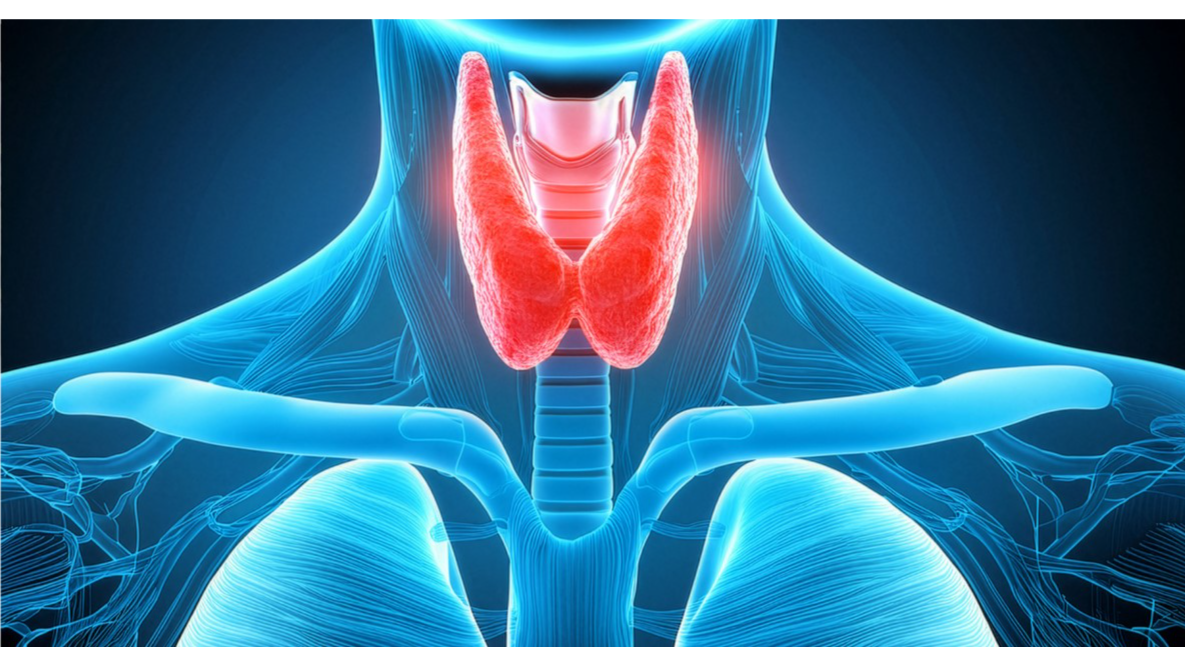
Thousands of people leave an appointment each year holding a thyroid report with no high or low markers on it, and the same symptoms they walked in with. Fatigue that rest does not fix. Cold hands. Thinning hair. A mind that will not sharpen up.
The report is usually accurate. It is also usually incomplete, and the gap between those two things is where the frustration lives.
Start here: the practice's full breakdown of functional medicine for thyroid symptoms walks through the sequence a standard panel skips.
Key Takeaways
- A standard panel asks whether the thyroid gland has failed. That is not the same question as whether thyroid hormone is reaching the cells that need it.
- A reference range is a statistical comparison against the population a laboratory has already tested, not a measure of what one person's cells require.
- The active hormone is free T3, and the body has to produce it through a conversion sequence that a two-marker panel does not observe.
- Reverse T3 is an inactive form that can rise at the expense of the active hormone, and it is absent from most routine orders.
- Stress and digestion interrupt that conversion more often than anything else, which is why a thyroid case rarely stays about the thyroid.
The gland is rarely where the problem starts
The thyroid is a small gland in the neck, and it waits for instruction. The hypothalamus reads the blood and decides whether more thyroid hormone is needed. It signals the pituitary, and the pituitary releases thyroid-stimulating hormone, or TSH, telling the thyroid to produce.
When TSH comes back very high or very low, that result describes one thing: the gland is being over-stimulated or under-stimulated. It does not say why.
Barring cancer or a significant goiter, the gland generally does what it is told. So a flagged TSH has identified a symptom rather than a source. The more useful questions sit on either side of the gland. What happened to the signal coming in, and what happened to the hormone going out?
What normal means on a lab report
Reference ranges are built, not discovered. A laboratory takes the results of the people it has already tested in a region, finds the average, and sets boundaries a fixed distance out from that midpoint in either direction.
Those boundaries are wide. They are drawn to take in roughly 95 out of every 100 people tested, which means a result has to land in the most extreme two or three percent before it earns an H or an L beside it. Everything else prints as normal, however far from the middle it sits.
Two consequences follow, and both matter to someone who feels unwell.
A value can drift a long way from the center without ever being flagged. Nothing on the report distinguishes a result sitting near the edge of a range from one sitting dead center. Both print the same way.
The range describes a population, not a person. Some laboratories build their intervals from screened healthy volunteers. Others derive them from the results already sitting in their own regional database. Either way, the interval answers one question: is this result common among the people this laboratory has measured? Whether a particular person's cells have what they need to work is a different question, and the report does not address it.
Dr. Bobbie Stowe, DC, who leads Functional Medicine of Houston, graphs patient values against these ranges rather than reading them as pass or fail. Across the patients who have come through the practice, those values cluster toward the low side, well inside the boundaries and well away from the middle.
The conversion step a standard panel does not observe
The thyroid mostly produces T4, which is a storage form. T4 is not the hormone that switches a cell on. That is free T3, and the body has to build it through a sequence: total T4 to free T4, free T4 to total T3, total T3 to free T3.
That sequence runs on nutrients. Two of the primary ones are selenium and iodine.
Selenium builds the enzymes. The conversion is carried out by enzymes called deiodinases, which are selenoproteins. Selenium sits at their active site, and without it they do not function properly. Deiodinase research indexed in the National Institutes of Health's PubMed Central describes types 1 and 2 as the enzymes that convert T4 into the active T3 the body uses.
Iodine builds the hormones. The hormones themselves are structured around iodine. T4 carries four iodine atoms and T3 carries three, so production depends on iodine being available.
The National Institutes of Health Office of Dietary Supplements lists fish, shrimp, seaweed and other seafood, dairy, eggs, and iodized salt as the main dietary sources. That last one is worth a second look for anyone who has switched to sea salt, kosher salt, or Himalayan salt. Specialty salts are usually not iodized.
Intake histories at the practice turn up the same pattern repeatedly: very little seafood, and salt that carries no iodine at all.
None of this appears on a report that measures TSH and total T4. Those two numbers describe the signal and the storage form. Everything downstream goes unobserved.
Reverse T3, the marker most panels omit
T4 has a second path available to it. A third enzyme in the same family converts T4 into reverse T3, an inactive form, instead of into the active hormone.
Free T3 enters the cell and puts it to work. Reverse T3 does neither. Every molecule of T4 routed down that path is one that never becomes an active hormone.
Dr. Stowe describes it as a car sitting in the driveway with the engine running. Is the car working? A car's job is to move someone from one place to another, and this one is not moving. Fuel is going somewhere the engine cannot draw on.
Reverse T3 rises during illness and under sustained stress, a pattern recognized in the medical literature since the 1970s, and it rises at the direct expense of the active hormone. It is not included on most standard panels. If it was never measured, no one involved knows whether it is high, including whoever is interpreting the rest of the report.
What sits upstream: stress and digestion
Two things interrupt the conversion more often than anything else. Neither is a thyroid problem, and neither shows up on a thyroid panel.
Stress. The signal that starts the whole process originates in the brain, and the brain and the gut are closely connected. Adrenal output responds to stress, and stress physiology pushes more T4 down the reverse T3 path instead of toward the active hormone. Gut and brain influence the adrenals, and adrenal activity influences what happens to several of the thyroid hormones.
Digestion. Selenium and iodine have to be absorbed before they can be used, and absorption is a function of how well the digestive system works. Protein breakdown begins in the stomach, where parietal cells produce hydrochloric acid to break protein down and intrinsic factor to bind vitamin B12 and carry it to the lower small intestine.
Cell function declines with age, and these cells are no exception. Indigestion in an older adult is often the visible edge of that decline, and B12 status tends to fall alongside it.
This is why a patient who has told two separate things- that the thyroid is fine and that they are anemic- has usually been handed two halves of one problem. Low iron and low B12 produce fatigue on their own, and they also travel the same absorption pathway as the nutrients the conversion runs on. A stomach that cannot free up B12 from food is not reliably freeing up selenium either.
Examined separately, these read as unrelated findings. Examined together, they describe one sequence that stopped working.
Six questions worth asking about a thyroid panel
- Was anything measured beyond TSH and total T4?
- Were the free forms measured, free T4 and free T3, or only the totals?
- Was reverse T3 measured at all?
- Did any value come back without an H or an L beside it, and if so, where inside the range did it land?
- Were selenium, iodine, iron, and B12 status reviewed alongside the thyroid numbers?
- Was the full hormone cascade run, from TSH through free T3 and reverse T3? If not, why?
If the answer to most of those is no, the report is not wrong. It is describing the first two steps of a longer process.
What a fuller workup looks at
Functional Medicine of Houston runs an eight-marker thyroid panel: TSH, total T4, free T4, total T3, free T3, and reverse T3, with thyroid antibody markers added when a patient's history calls for them. Adrenal, micronutrient, food sensitivity, and gastrointestinal panels are ordered when the intake history points that direction, not applied to every patient as a matter of routine.
Results are read against optimal ranges rather than flagged high or low against a population average, and the protocol that follows is built around what the patient's own numbers show. More on how the practice works is on the functional medicine clinic page.
A normal thyroid report and a body that does not feel normal are not a contradiction. They are the predictable result of measuring two points in a process that has several.
Anyone whose thyroid numbers read normal but whose symptoms haven't changed can review the practice's approach and request a consultation with a thyroid functional medicine doctor in Texas. Functional Medicine of Houston works with patients statewide by telemedicine and is currently accepting new patients.
Functional Medicine of Houston
City: Boerne
Address: 103 Canyon Springs
Website: https://functionalmedicineofhouston.com/


Comments
Post a Comment