Diamond C Vs. Load Trail: Which Equipment Trailer Best Suits Your Business?
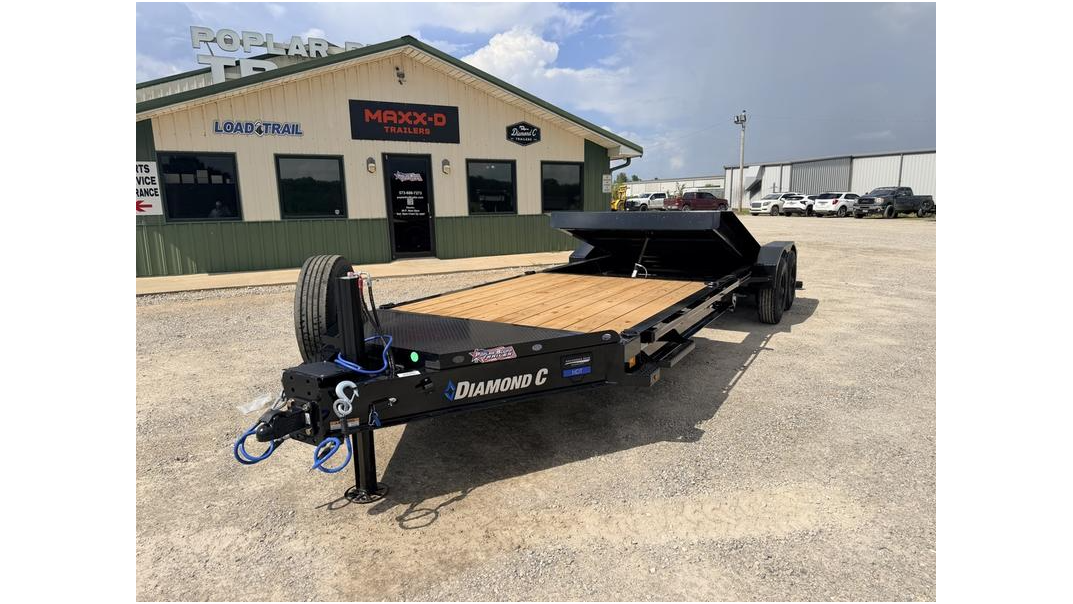
Key Takeaways
- The right equipment trailer choice comes down to matching GVWR, frame design, and warranty coverage to actual hauling needs rather than picking a brand by reputation alone
- A 23,000 lb GVWR Diamond C tilt trailer and a 14,000 lb GVWR Load Trail equipment trailer represent very different weight classes, with a significant gap separating their payload capacities as well
- Diamond C backs 2026 and later models with a 6-year structural warranty, while Load Trail provides a 3-year structural warranty plus 2 years of roadside assistance under its 2-3-2 Protection Plan
- Frame construction, tie-down setups, and suspension choices vary enough between these two brands that a closer side-by-side look pays off before signing on a trailer
Contractors and serious haulers rarely shop for an equipment trailer the same way twice. A trailer that hauls a skid steer across town every day needs different bones than one that occasionally moves a compact tractor between job sites.
Diamond C and Load Trail both build equipment trailers with loyal followings, and each one solves a different set of problems, so knowing where each brand shines makes the buying decision a lot easier.
23,000 Lb Vs 14,000 Lb GVWR Showdown
The clearest starting point when comparing these two brands is weight capacity, because it tells a buyer almost everything about intended use. A 2026 Diamond C HDT210 tilt equipment trailer, built with an 82-inch by 24-foot deck, carries a 23,000 lb GVWR and an 18,050 lb payload capacity. That kind of rating is meant for hauling heavier equipment like skid steers, mini excavators, or multiple smaller machines in a single trip.
A 2026 Load Trail CH8324 equipment trailer, with an 83-inch by 24-foot deck, carries a 14,000 lb GVWR and a 10,201 lb payload capacity. That's still plenty of muscle for mowers, ATVs, small tractors, and general contractor gear, just at a lighter-duty tier than the Diamond C unit. The substantial gap between these two ratings is the single biggest clue for narrowing down which trailer fits a specific fleet.
Frame Engineering: Two Philosophies
Frame design shapes how a trailer holds up under repeated loading, and Diamond C and Load Trail approach it from different angles.
Diamond C's Engineered I-Beam Design
Diamond C fabricates its own I-beams in-house through what the company calls Engineered Beam Technology, tuning each beam's height and thickness to the specific trailer configuration it's built for. The HDT210 rides on a Next-Generation Patented Engineered I-Beam Frame with 3-inch I-beam cross-members set on 16-inch centers. This custom approach traces back to the brand's early days, when its co-founder is said to have developed a "Sway Control" method using a 5-inch round pipe down the center of the frame to add durability and stability to longer trailers, a design philosophy that, according to the company, still shapes how Diamond C engineers its frames today.
Load Trail's Heavy-Duty 8" Channel Frame
Load Trail takes a more traditional route with a heavy-duty 8-inch channel frame, paired with cross-members set on 16-inch centers, as seen on the CH8324. Channel-frame construction is a proven, widely used method across the trailer industry, prized for being straightforward to repair and dependable under everyday work loads. Load Trail also finishes its frames with Sherwin Williams Powdura OneCure, a single-cure primer and topcoat powder coating built to resist corrosion and chemical exposure, which helps offset the fact that channel frames typically run heavier than engineered I-beam designs.
Axles, Suspension & Ride Quality
Ride quality affects more than comfort behind the wheel. It directly impacts how well a load rides, how much stress the equipment absorbs, and how long components last. Diamond C provides a range of suspension choices, including leaf spring, torsion, heavy-duty adjustable, and air ride setups, and it uses Lippert axles as standard equipment on its premium lines.
The HDT210 specifically runs two 10,000 lb commercial-grade electric drum brake axles on an ultra-smooth torsion straight axle suspension system, paired with 18-ply super single tires. Diamond C also provides a Slipper Roller Suspension system on select models, which uses integrated rollers to dampen impact and improve load control on rough terrain.
Load Trail keeps things simpler with Dexter spring axles across its equipment trailer lineup. The CH8324 uses two 7,000 lb Dexter spring axles paired with electric FSA (Forward Self-Adjusting) brakes. Spring suspension delivers a firmer ride than torsion setups, but it's a well-understood system, and because Dexter is such a widely used axle brand, sourcing replacement parts for brakes, bearings, and hubs tends to be easy no matter where a job takes the trailer.
Tie-Downs & Loading Setups Compared
Securing a load safely comes down to two things: how many anchor points a trailer offers and how equipment gets on and off the deck in the first place.
Diamond C's 8-Point Tie-Down System
The HDT210 includes 8 total tie-down points, built around 4 extra heavy-duty 5/8-inch D-rings, a continuous rub rail, and integrated stake pockets. Loading is handled by an 8-foot stationary front deck paired with a 16-foot hydraulically dampened gravity tilt bed, which lets equipment roll on smoothly and settle into place without the jolt of a traditional tilt mechanism. Beyond this specific model, Diamond C's broader tie-down lineup includes recessed D-rings, pipe spools, and slide track and ratchet systems for buyers who need flexible or unlimited anchor points.
Load Trail's MAX Ramps and D-Rings
The CH8324 takes a different approach to loading with MAX Ramps and a dovetail, giving equipment a full-width surface to roll straight onto the deck. Tie-down duty falls to 4 weld-on 4-inch D-rings, a simpler setup than Diamond C's, but one that covers the needs of lighter equipment and everyday contractor gear without added complexity. For operators who load and unload multiple times a day, that dovetail-and-ramp combination can shave real time off each stop.
Warranty Coverage, As Specified By Each Manufacturer
Warranty terms are one of the most concrete ways to compare how each manufacturer stands behind its build quality. For 2026 and later models, Diamond C backs its trailers with a 6-year structural warranty, a 2-year full bumper-to-bumper warranty, and a 3-year warranty on the powder coating finish. The HDT210 reflects this exact coverage, listed with its 6-year structural and 2-year full-coverage terms right on the spec sheet.
Load Trail structures its coverage as a "2-3-2 Protection Plan," combining a 2-year full-coverage warranty, a 3-year structural warranty, and 2 years of roadside assistance for both the trailer and the tow vehicle across the U.S. and Canada. The CH8324 carries this same 3-year structural and 2-year bumper-to-bumper coverage. Side by side, Diamond C's structural warranty runs twice as long as Load Trail's, though Load Trail sweetens its plan with roadside assistance that extends to the tow vehicle, not the trailer alone.
Payload Capacity for Your Workload
Payload capacity is where GVWR turns into a practical, real-world number: how much weight can actually ride on the deck. The Diamond C HDT210 offers 18,050 lbs of payload capacity, putting it in range for car haulers, larger excavation equipment, and contractors who need to move heavier machines in fewer trips. The Load Trail CH8324 offers 10,201 lbs of payload capacity, well-suited to daily work hauling mowers, skid steers, and general equipment without stepping up into heavier-duty territory.
Matching payload to actual job requirements avoids two common mistakes: overspending on capacity that never gets used, or undershooting it and putting stress on a trailer that's rated below the equipment being hauled. A quick tally of the heaviest machine in a fleet, plus a little buffer, usually points toward the right class of trailer.
The Right Trailer Depends On Your Job
Neither brand wins outright, because the two trailers are built for different tiers of work. Diamond C's engineered I-beam frame, higher GVWR, longer structural warranty, and torsion suspension make it a strong fit for contractors regularly hauling heavier equipment or running commercial fleets that need premium components and long-term durability. Load Trail's heavy-duty channel frame, Dexter axles, and MAX Ramp loading setup make it a practical, value-driven option for hauling lighter equipment on a daily basis, especially for buyers who want easy-to-source parts and straightforward maintenance.
Budget matters too, and the price gap between these two specific units is significant. Weighing GVWR needs, frame preferences, warranty priorities, and typical daily loads against that price difference is the clearest path to the right decision. For a closer look at how these features stack up in person, equipment trailer options built for heavier hauling is a solid next step toward matching a trailer to the job at hand.
Poplar Bluff Trailer
City: Poplar Bluff
Address: 135 Hwy T Suite B
Website: https://www.poplarblufftrailer.com/


Comments
Post a Comment