Best UPRT Flight Training Aircraft comparison: Grob 115 D2 vs Extra 300 for UPRT
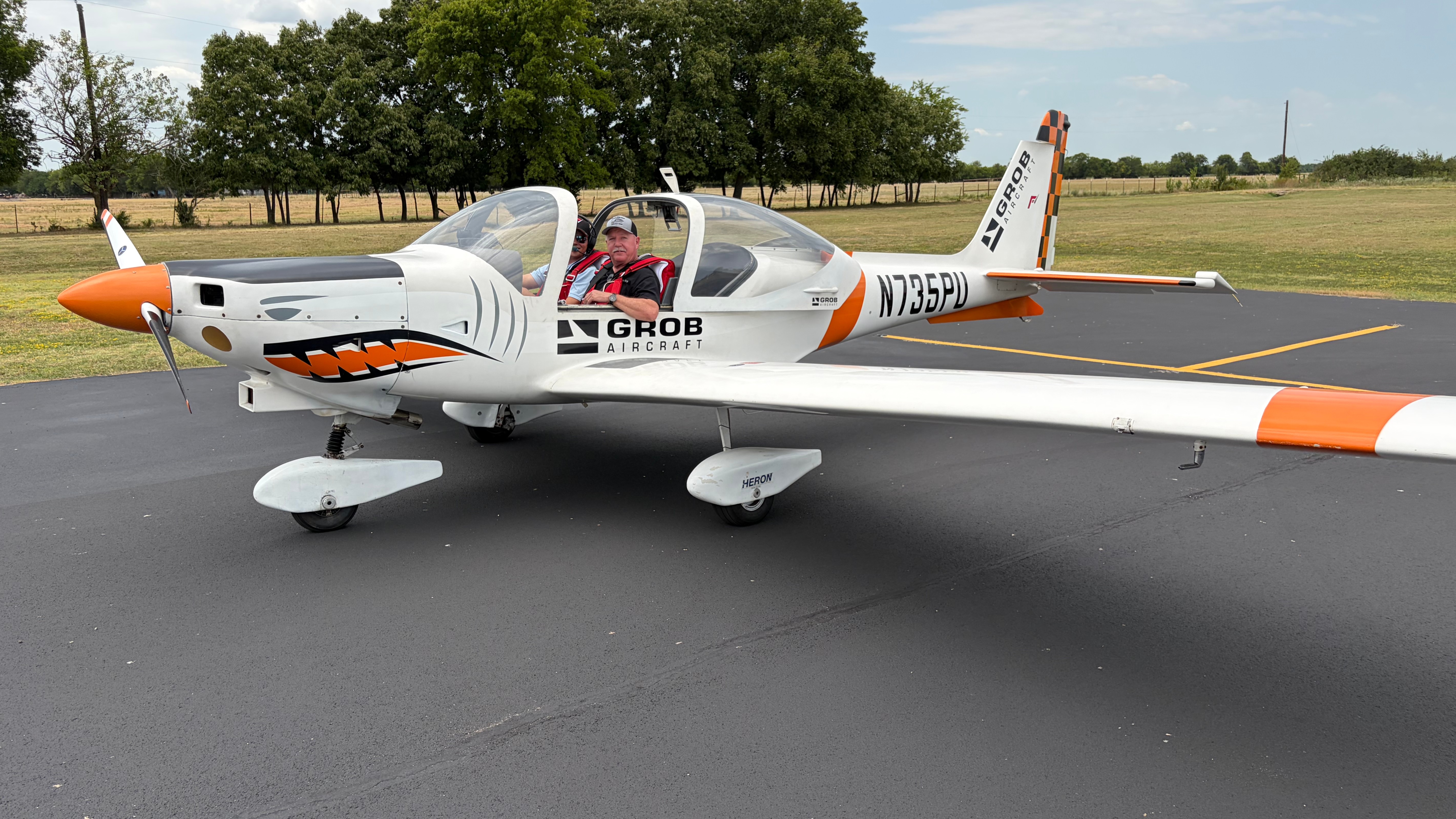
Why the Grob G 115 Is the Better Aircraft for Practical UPRT Training
Grob G 115 vs. Extra 300: Training for Recovery, Not Aerobatics
A high-performance aerobatic aircraft is not automatically the best aircraft for upset prevention and recovery training.
The Extra 300 is one of the world’s most capable aerobatic platforms. It is powerful, structurally strong and exceptionally responsive. In the right hands, it is ideal for competition aerobatics, advanced maneuvering and teaching pilots to operate precisely throughout a wide aerobatic envelope.
But UPRT has a different objective.
Effective upset prevention and recovery training is not primarily about exposing pilots to the most extreme attitudes, roll rates, or G loads. It is about helping pilots recognize a developing loss-of-control condition early, understand the aircraft’s energy state, apply disciplined and appropriately sized control inputs, and recover without making the situation worse.
For that purpose, the Grob G 115 is the more relevant and transferable training platform.
The Grob is fully aerobatic-capable. It can be used to teach stalls, spins, aerobatics, unusual attitudes, energy management, and recovery discipline. At the same time, it behaves much more like the aircraft most pilots will actually fly: conventional trainers, touring aircraft, and many entry-level commercial aircraft.
That is the key distinction: the Grob teaches a pilot to recover an airplane. The Extra teaches a pilot to fly an Extra.
UPRT Must Transfer to Normal Flying
The value of a UPRT aircraft is not determined by how dramatic the maneuver looks or how far outside the normal envelope it can go. Its value is determined by whether the training transfers to the aircraft the pilot flies after the course.
A pilot learning upset prevention and recovery must develop habits that remain valid in normal operations:
· Recognizing an unusual attitude before it develops into a full loss-of-control event
· Understanding the relationship between pitch, bank, airspeed, power, flight path, angle of attack, and aircraft performance.
· Using coordinated elevator, aileron, rudder, and power inputs
· Avoiding overcontrol and over-G
· Recovering with the minimum appropriate control input and altitude loss
· Making decisions from the aircraft’s actual energy state, rather than reacting to visual sensation or one instrument indication
These skills are broadly applicable, but they are learned best when the training aircraft behaves in a way that resembles the aircraft the pilot will later operate.
FAA guidance on UPRT focuses on prevention, recognition and correct recovery responses. It also stresses the importance of training that is appropriate to the intended aircraft and operation, including avoiding negative transfer when an aircraft or simulation device does not adequately represent the aircraft being flown.
Why the Grob Is More Relevant
The Grob G 115 is not merely a basic trainer that happens to be aerobatic. It is a capable aerobatic training aircraft that retains the operating characteristics and workload of a conventional airplane.
That combination matters.
Its fixed landing gear, moderate power, conventional control response and less specialized aerobatic design mean students must manage it in a way that feels familiar and recognizable. The aircraft rewards correct fundamentals: coordinated flight, suitable pitch control, energy awareness, smooth recovery inputs, and disciplined rudder use.
Students do not get the benefit—or the distraction—of an aircraft designed to make extreme maneuvers easy.
In a Grob, a recovery is more likely to resemble the thought process and aircraft-management problem a pilot will face in real-world flying:
1. Identify the developing problem.
2. Reduce angle of attack.
3. Roll toward an appropriate bank attitude using coordinated controls.
4. Manage power and airspeed.
5. Avoid excessive pitch input, bank reversal or abrupt control movements.
6. Stabilize the aircraft and verify that it is truly back under control.
That is the core of useful UPRT.
The aim is not to condition a pilot to complete aggressive maneuvers. It is to build the judgment to make the correct correction at the correct time and with the correct magnitude.
Moderate Performance Is an Advantage
The Extra’s performance is remarkable, but for core UPRT it can also create a training environment that is less representative of normal aircraft operations.
The Extra 300L has exceptionally high roll authority—commonly cited at about 360 degrees per second—and is designed for high-G aerobatic flight. Depending on the variant and loading, aircraft in the Extra family have aerobatic structural envelopes generally associated with limits of roughly ±8 G to ±10 G.
Those capabilities make the Extra outstanding for aerobatics. They do not automatically make it the most appropriate aircraft for teaching recovery habits needed in a Cessna, Piper, Cirrus, Diamond, Beechcraft, Mooney, or transport-category aircraft.
A normal aircraft does not roll like an Extra. It does not accelerate, decelerate, or reverse direction in the same way. It does not have the same pitch response, control-force gradient, roll inertia, power-to-weight ratio, or energy behavior.
The difference is not academic. It changes what the student feels, sees and learns to do.
In a highly responsive aerobatic aircraft, a small input can produce a rapid result. That may encourage an artificially aggressive style of control use, control inputs that are too mild when applied to a real-world scenario, or lead a student to believe that recovery is solely a fast reaction. In many real upset events, the more important issue is correct recognition, angle-of-attack management, directional control, energy awareness, and preventing a poor initial response from developing into a secondary upset.
The Grob offers enough aerobatic capability to expose students to genuine unusual attitudes and loss-of-control precursors while keeping the aircraft’s behavior closer to the general aviation and training environment where those skills must be used.
UPRT Is Not Aerobatic Training
Aerobatic training and UPRT overlap, but they are not the same course.
Aerobatics teaches pilots to intentionally place an aircraft into unusual attitudes and maneuvers, then fly accurately through a planned sequence. It develops coordination, visual awareness, energy management, G tolerance and precise aircraft control. Those are valuable skills.
UPRT teaches pilots to avoid unintentionally entering an upset and to recover safely if prevention fails. It also teaches valuable lessons in coordination, instrument and visual interpretation, precise aircraft control, and energy management.
The distinction matters because an aerobatic aircraft is optimized for intentional maneuvering. It is designed to operate comfortably in a large part of the aerobatic envelope. A conventional aircraft is not.
In an Extra, inverted flight, rapid rolls, steep pitch changes and high-G maneuvering are part of the aircraft’s normal purpose. In a conventional airplane, the same conditions are abnormal, potentially hazardous, and often accompanied by much tighter margins for airspeed, load factor, stall risk, altitude and recovery.
An Extra can therefore be a valuable supplementary platform for experienced pilots who want aerobatic proficiency or exposure to higher-performance maneuvering. It should not, however, be confused with the most representative primary aircraft for practical UPRT.
The Extra’s Strength Is Also Its Limitation
The Extra 300 is a remarkable aircraft. Its control authority, structural strength, and high performance make it one of the finest dedicated aerobatic training aircraft available.
Its limitation for mainstream UPRT is that it is fundamentally unlike the aircraft most students intend to fly afterward.
The aircraft’s rapid roll response and light, highly effective controls are useful when the training objective is advanced aerobatics. They can reduce realism, however, when the objective is to teach a pilot how to recognize and recover from an upset in a normally operated aircraft.
For example, a student may learn to stop a rapidly developing roll in an Extra with a control input that is physically small but aerodynamically very powerful. That instinct may not translate well to a conventional trainer, heavier touring airplane or transport-category aircraft. Conversely, the mental model and control timing learned in a highly responsive aerobatic aircraft may be poorly matched to an aircraft with more inertia and less control authority.
This is why UPRT should be designed around transfer of learning, not spectacle.
A good UPRT course should leave a pilot more capable in the airplane they already fly. It should not merely make them more comfortable being upside down in an aerobatic aircraft. A fairly serious upset recovery in an aerobatic aircraft such as the Extra may take under 2 seconds to be under control, wings level, and climbing. A comparable upset in any other category may take 30. Those 28 seconds (more or less) is a substantial amount of time for the upset to turn into something worse if energy is not managed appropriately. As such, it is vital to train in an aircraft that forces you to learn energy management in a far deeper way.
What the Grob Teaches Better
The Grob G 115 provides a practical bridge between normal flight training and meaningful upset-recovery instruction.
It can teach:
· Angle of attack awareness and control
· Spin awareness and recovery in all phases
· Unusual attitude recognition and recovery
· Correct rudder use in high-angle-of-attack situations
· Energy management during the initial recovery and stabilization
· The consequences of overcontrol
· Recovery from distraction, disorientation or an incorrect initial response
· How to prioritize aircraft control
More importantly, it teaches these subjects in an airplane that requires students to operate like pilots rather than aerobatic performers.
The aircraft’s behavior helps make the learning transferable. The student must assess what the airplane is doing, identify the developing aerodynamic problem, and apply an appropriate solution. The skill is not simply moving the controls quickly enough to keep up with a highly responsive aerobatic machine.
A Better Training Philosophy
For most pilots, the best progression is not necessarily “Grob first, then Extra.” It is a program that uses each training tool for the purpose it serves best.
1. Ground school: Cover the aerodynamic, operational, environmental, and human-factors causes of loss of control.
2. Practical UPRT in the Grob: Teach prevention, recognition, stalls, unusual attitudes, energy management and disciplined recovery inputs in a capable but representative airplane.
3. Targeted simulator work: Apply those principles to the pilot’s actual aircraft type, operating environment, and company procedures where appropriate.
4. Optional aerobatic training in an Extra (or even a Grob): Build advanced maneuvering proficiency, aerobatic competence and confidence in a dedicated aerobatic aircraft. The Grob is also very capable of aerobatics, but it is far more mentally demanding and thus harder to master.
This approach keeps each tool in its proper role.
The Grob teaches transferable aircraft-control fundamentals. The simulator can teach type-specific procedures and scenarios. The Extra develops crisp aerobatic skills fast.
All three can be valuable. They should not be treated as interchangeable.
The Verdict
For practical UPRT, the Grob G 115 is the more suitable primary training aircraft.
It is aerobatic enough to expose pilots to genuine unusual attitudes, stalls, spin training, loss-of-control precursors, and recovery scenarios. Yet it remains sufficiently conventional that students must manage it in a manner that resembles normal flying.
That makes the learning more relevant, more realistic and more likely to transfer into the cockpit of the aircraft the pilot will fly after training.
The Extra 300 remains an extraordinary aerobatic platform. It is superb for pilots seeking advanced aerobatic skills, high-performance maneuvering, and precision control in a dedicated aerobatic airplane. But its exceptional performance is also why it is not automatically the best UPRT aircraft.
For UPRT, the objective is not to teach a pilot how to handle the most capable aerobatic airplane. It is to teach them how to avoid and recover from loss of control in the airplane they are most likely to fly.
That is where the Grob excels.
Training must always be conducted by appropriately qualified instructors, in accordance with the aircraft’s approved flight manual and limitations, applicable regulations, and an approved training syllabus.
Pilots weighing where to begin should think less about which airplane is objectively better and more about which stage of training actually fits where they stand today. For a practical next step, a structured aerobatics and UPRT program can help map out that progression from foundational recognition skills toward the decisive, split-second reactions real upset recovery demands.
Flight College
City: Terrell
Address: 200 Silent Wings Blvd
Website: https://www.flightcollege.com/
Phone: +1 844 321 5679


Comments
Post a Comment