Are We Living In An Alternate Reality? Plausible Sci-Fi May Provide Answers
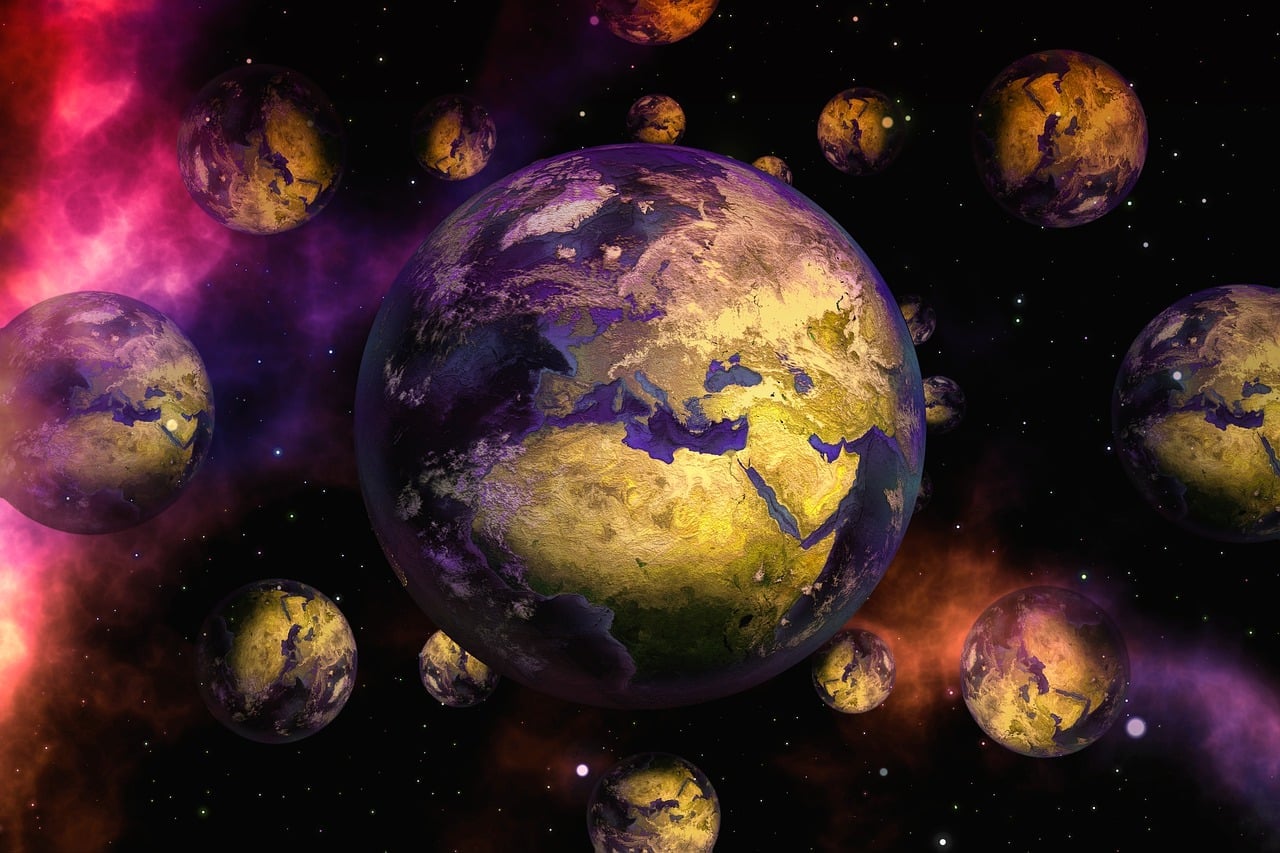
Every few years, something happens that reignites one of humanity's oldest questions: What if reality isn't exactly what we think it is?
Recently, renewed attention has been directed toward declassified Pentagon files and ongoing discussions surrounding unidentified anomalous phenomena, or UAPs. While none of these releases provide definitive proof of extraterrestrial life, alternate dimensions, or hidden civilizations, they have once again pushed questions about reality, perception, and the unknown into the public conversation.
And whenever something appears to challenge our understanding of the world, people begin asking bigger questions.
- Could there be more to reality than we currently understand?
- Are there dimensions we can't perceive?
- Could entirely different versions of reality exist alongside our own?
These questions may sound like science fiction, but many of them have roots in real scientific theories, philosophical debates, and ongoing discussions about the nature of consciousness and the universe itself.
Why Humans Keep Questioning Reality
Humans have always been fascinated by the possibility that reality may be more complicated than it appears.
Part of this curiosity comes from the limitations of our own perception. We experience the world through our senses, but those senses only capture a small fraction of what exists around us. Humans cannot see infrared light, hear ultrasonic frequencies, or directly perceive many of the forces that shape the universe.
Even our memories can be unreliable. Phenomena such as déjà vu, false memories, and the widely discussed "Mandela Effect" remind us that our perception of reality is not always as straightforward as we might assume.
When experiences don't fit neatly into our understanding of the world, the mind naturally begins searching for explanations.
Sometimes those explanations are scientific. Sometimes they're philosophical. And other times they become the foundation for compelling works of fiction.
The Science Behind Alternate Reality Theories
The idea of alternate realities isn't purely the domain of science fiction writers. Several scientific and philosophical theories have explored concepts that, at least on the surface, resemble alternate realities.
One of the most widely discussed is the multiverse theory. Depending on the specific interpretation, the multiverse suggests that our universe may be one of many, each potentially operating under different conditions or containing different versions of events.
Another concept that receives attention is the simulation hypothesis. This idea proposes that advanced civilizations could theoretically create simulated realities so sophisticated that those living inside them would be unable to distinguish them from reality itself.
Quantum mechanics has also contributed to discussions about alternate realities, particularly through interpretations that suggest multiple possible outcomes may exist simultaneously until an observation occurs.
It's important to note that these theories remain speculative. They represent attempts to understand difficult scientific questions, not proven explanations for how reality works.
Still, the fact that respected scientists and philosophers continue discussing these ideas helps explain why they capture the public imagination so powerfully.
Why Plausible Sci-Fi Feels Different
Not all science fiction approaches these questions in the same way. Some stories rely on fantasy, supernatural elements, or technologies that intentionally ignore scientific limitations.
Plausible science fiction takes a different approach. Instead of asking readers to accept the impossible, it starts with ideas that already exist in science and then explores where those ideas might lead.
The question becomes:
- What if a current theory turned out to be correct?
- What if consciousness works differently than we think?
- What if reality contains layers we haven't discovered yet?
This style of storytelling occupies a fascinating middle ground between science and imagination.
It doesn't claim to predict the future. It simply explores possibilities that science has not yet fully answered.
That often makes the stories feel more compelling because they remain connected to ideas that could, at least in theory, be possible.
Can Fiction Help Us Explore Real Scientific Questions?
Throughout history, science fiction has frequently served as a laboratory for ideas.
Long before humans walked on the Moon, authors imagined space travel.
Decades before artificial intelligence became a practical reality, writers explored intelligent machines and the ethical questions surrounding them.
Virtual worlds, global communication networks, and autonomous technologies all appeared in fiction long before they entered everyday life.
That doesn't mean science fiction predicts the future. What it does exceptionally well is create thought experiments.
It allows readers to explore possibilities before science has enough evidence to confirm or reject them.
In that sense, plausible sci-fi often functions less as entertainment and more as a way of examining questions that remain unresolved.
What The UAP Conversation Really Tells Us
One reason recent UAP disclosures have generated so much interest is that they highlight a simple truth: There are still things we don't fully understand.
That doesn't automatically mean alien spacecraft, alternate dimensions, or hidden realities. An unexplained observation is exactly that. Unexplained.
History is full of phenomena that initially appeared mysterious before eventually receiving ordinary explanations through advances in science and technology.
At the same time, unexplained events remind us that our knowledge remains incomplete. Science is not a collection of final answers. It's an ongoing process of asking questions, testing ideas, and refining our understanding of the world.
That uncertainty creates space for curiosity. And curiosity is often where both scientific discovery and science fiction begin.
Why The Idea Of Alternate Realities Is So Appealing
Beyond science and speculation, there's a psychological reason these ideas remain popular.
Humans are naturally drawn to mystery - we want to understand where we came from, how the universe works, and whether our everyday experience captures the full picture of reality.
The possibility of alternate realities speaks directly to that curiosity. It suggests that there may be more to existence than what we currently know.
It invites us to imagine possibilities beyond our immediate experience.
And perhaps most importantly, it encourages us to question assumptions we rarely stop to examine.
Whether someone approaches the topic through science, philosophy, or fiction, the underlying motivation is often the same - a desire to better understand our place in the universe.
Final Thoughts
Are we living in an alternate reality? At this point, nobody knows.
Science has not proven the existence of alternate dimensions, simulated universes, or parallel versions of reality. Yet questions about consciousness, perception, and the structure of the universe remain far from settled.
That's part of what makes plausible science fiction so compelling. It occupies the space between what we know and what we wonder.
Rather than providing definitive answers, it encourages readers to think more deeply about the nature of reality itself. And perhaps that's where its greatest value lies.
Not in proving another reality exists, but in challenging us to look at our own reality with fresh curiosity and a willingness to explore the unknown.
Sam Toney
City: Thonotosassa
Address: 10072 Main Street
Website: https://revelationequation.com


Comments
Post a Comment