Why Pawcredible BioBowl Fusion Is Not Like Any Other Kibble on the UK Market
Key Takeaways
- Bioavailability is the proportion of nutrients a dog's body actually absorbs and uses - not just what's listed on a food label.
- High-heat extrusion, the process behind most traditional kibble, degrades heat-sensitive vitamins and reduces protein digestibility.
- Minimally processed ingredients, particularly freeze-dried raw, consistently deliver higher nutrient bioavailability than heavily processed alternatives.
- Stool quality is a reliable, practical indicator of how well a dog is actually digesting and absorbing its food.
- The difference between a nutritionally complete label and real, usable nutrition is where a dog's long-term health is won or lost - keep reading to see exactly where that gap opens up.
Every dog owner wants their dog to thrive. But most of the conversation around dog food stops at the ingredient list or the guaranteed analysis panel on the back of the bag. What rarely gets discussed is whether a dog's body is actually extracting and using those nutrients - and that gap between what's in the food and what reaches the bloodstream is where bioavailability lives.
The Incomplete Story on Your Dog's Food Label
Pick up any bag of dog food and the numbers look convincing: protein percentage, fat content, vitamins, minerals. Reassuring on paper. The problem is that those numbers reflect what went into the food before processing, not what comes out on the other side of digestion.
A food can appear nutritionally complete and still fail to adequately nourish a dog if absorption is compromised. That's the part the label doesn't tell you. For dogs eating the same food every single day, the cumulative effect of low bioavailability adds up quietly, meal after meal, over years.
What Bioavailability Actually Means
Bioavailability refers to the proportion of a nutrient that a dog actually absorbs and utilizes. Of all the protein, fat, vitamins, and minerals in a bowl of food, how much of it crosses from the gut into the bloodstream where it can do something useful?
That number varies significantly depending on ingredient quality, how the food was processed, and whether nutrients work synergistically or compete with each other for absorption. Antinutritional compounds - naturally occurring substances in some plant ingredients - can actively block mineral uptake, further widening the gap between label claims and real nutrition.
Nutrients Listed vs. Nutrients Used
The guaranteed analysis on a dog food bag is a starting point, not a finish line. Two foods could show identical protein percentages, but if one uses highly digestible raw meat and the other uses a heavily processed meal, the actual amino acids reaching the dog's muscles will differ substantially. What matters is nutrient availability, not just nutrient content.
The Risk of a Consistently Low-Bioavailability Diet
Dogs don't rotate their diets the way humans do. Most eat the same food twice a day for months or years. When that food consistently delivers poor bioavailability, the shortfall compounds. Sub-optimal coat condition, sluggish digestion, and reduced immune resilience can all trace back to nutrients that were technically present but practically inaccessible.
How Traditional Kibble Loses Nutritional Value
Traditional kibble is made through a process called extrusion - ingredients are mixed, pushed through a machine under high pressure, and cooked at temperatures that can exceed 150 degrees Celsius. It's an efficient, scalable manufacturing process, and also one of the most nutrient-destructive ones.
High-Heat Extrusion Degrades Key Nutrients
Heat-sensitive vitamins - including B vitamins, vitamin A, vitamin C, and vitamin E - are particularly vulnerable to high-temperature processing. Protein structures are also altered during extrusion, reducing their digestibility. The result is a kibble that has technically gone through the motions of including quality ingredients, but delivers a fraction of their original nutritional value.
How much nutrition survives depends on cooking temperature, duration, ingredient source quality, and the presence of compounds that interfere with absorption. The longer and hotter the process, the steeper the loss.
When Synthetic Vitamins Fall Short
To compensate for what processing destroys, manufacturers add synthetic vitamins back into the formula. This is standard practice - and while it addresses a labeling requirement, it doesn't fully address a nutrition one. Synthetic nutrients, such as certain forms of vitamin E, can be less efficiently absorbed than their natural counterparts found in whole foods. The dog's body responds differently to each.
Raw Ingredients and Bioavailability: What the Evidence Shows
Raw meat consistently demonstrates high bioavailability for dogs. A greater proportion of its protein, fat, and micronutrient content is absorbed compared to the equivalent nutrients delivered through a heavily processed format. Research comparing fresh and extruded dry kibble diets - including studies measuring apparent total tract nutrient digestibility in dogs - has shown that raw and lightly cooked diets achieve higher total tract digestibility than extruded alternatives.
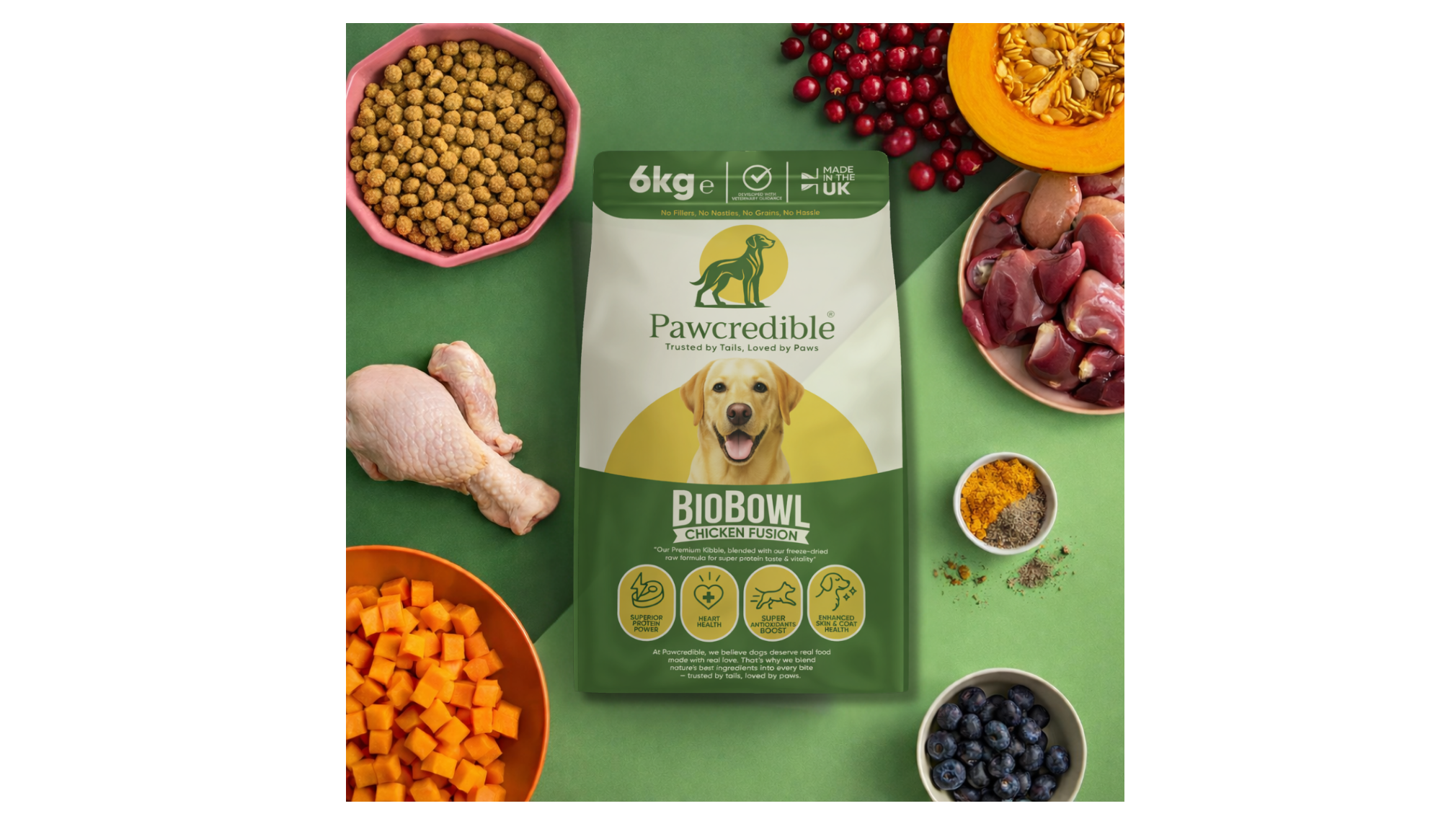
Minimally processed ingredients, as a general category, consistently outperform heavily processed ones on bioavailability. The less a nutrient is disrupted before reaching the gut, the more of it survives to be absorbed. Pawcredible's BioBowl Fusion is built around this principle, using freeze-dried raw ingredients to close the gap between what's listed and what's actually delivered.
Stool Quality as a Digestibility Indicator
One of the most practical, real-world indicators of digestibility is what comes out the other end. Dogs on minimally processed diets tend to produce smaller, firmer stools - a reliable sign that more of the food is being absorbed rather than passing through as waste. Larger, softer, or more frequent stools typically point to lower digestibility. Not glamorous data, but honest data.
Freeze-Drying: The Science Behind Preserved Nutrition
Freeze-drying removes moisture from raw ingredients at low temperatures through a process called lyophilization. The food is frozen and then placed in a vacuum that causes ice to convert directly to vapor, bypassing the liquid stage entirely. No significant heat is applied.
Natural enzymes, amino acids, vitamins, and the original food structure are preserved in a way that high-heat cooking cannot replicate. Freeze-dried ingredients retain the nutritional profile of their raw counterparts while gaining shelf stability. Adding freeze-dried raw food as a topper to kibble - or incorporating it directly into the formula - introduces natural enzymes that support digestion alongside a concentrated source of bioavailable vitamins and minerals. That's a meaningful nutritional upgrade, not a cosmetic one.
What Improved Nutrient Absorption Does for Your Dog
Higher bioavailability shows up in ways that are visible and measurable over weeks, not years.
Coat, Joints, and Digestion: Absorption-Driven Results
When a dog is actually absorbing the omega fatty acids in its food, the coat responds - softer, shinier, and less prone to dryness. When amino acids from high-quality protein are genuinely bioavailable, muscle maintenance and joint support improve. These outcomes are downstream effects of a single upstream variable: nutrient absorption.
- Coat quality: Bioavailable omega-3 and omega-6 fatty acids support skin barrier function and coat shine
- Joint health: Properly absorbed protein and collagen precursors support connective tissue
- Digestion: Natural enzymes from minimally processed food reduce digestive burden and support regularity
- Immune function: Bioavailable antioxidants and micronutrients build active immune defense rather than just fulfilling label requirements
Practical Perks Kibble Still Delivers
Kibble has real advantages: convenient, shelf-stable, easy to measure, and genuinely useful for puzzle feeders and training. The question isn't whether kibble belongs in a dog's bowl - it's whether the kibble in the bowl is delivering on its nutritional promise. The format is fine; the processing method is where the real scrutiny belongs.
Real Nutrition Means Every Bowl Counts
The gap between a label that says complete and balanced and food that actually nourishes is real, measurable, and consequential. Bioavailability is the bridge between what a dog eats and what a dog gets. Choosing food based on ingredient quality, minimal processing, and demonstrated digestibility isn't reserved for performance dogs or sick animals. It's the baseline every dog deserves, twice a day, for life.
For dog owners ready to close that gap, Pawcredible formulates freeze-dried raw kibble designed so that every bowl delivers nutrition the body can actually use.
Pawcredible
City: Chipping Norton
Address: 37 Finsbury Place
Website: https://pawcredible.org/


Comments
Post a Comment