What Makes Peruvian Pima Cotton Different From Ordinary Baby Clothing Cotton
Here's the complete, updated guest blog with the revised sections integrated:
What Makes Peruvian Pima Cotton Different From Ordinary Baby Clothing Cotton
Most cotton baby clothing looks alike on a hanger. The real differences don't show up until a dozen washes in, when one piece has thinned and pilled while another still feels new. That gap comes down to where the cotton was grown. It's the premise behind Nellapima's Heritage line, covered in more depth in this look at the material and craft behind Nellapima's Heritage baby clothing.
Key Takeaways
- Peruvian Pima cotton's extra-long fiber staple helps it resist pilling and thinning over years of washing.
- The cotton comes from a single, traceable region on Peru's northern coast.
- Every Heritage piece is hand-smocked, a technique no machine can replicate.
- The standard traces back to founder Marianella's decision for her own first grandchild.
Where the Cotton Comes From
Pima cotton has grown on Peru's northern coast for generations. Founder Marianella grew up around it long before Nellapima existed, described in more detail on the Nellapima about page. Her father farmed the land, and her husband and brothers still work in agriculture today. She didn't learn about this cotton from a supplier's pitch deck. She grew up watching it get picked, sorted, and spun.
That's part of why Nellapima, launched in 2016, sources from this one region specifically rather than a broader commodity supply chain. The fiber's reputation isn't secondhand for the brand's founder; it's family history.
Why the Fiber Itself Matters
Ordinary cotton clothing is spun from short fibers. That's a big part of why it pills, thins, and loses shape within a season or two. Peruvian Pima cotton runs longer at the fiber level, so there are fewer loose ends working their way free with each wash cycle.
The practical effect: a piece worn hard through a baby's first winter can still look presentable by the third one. Not because it gets special treatment in the wash. The fiber itself simply holds together longer than a short-staple cotton ever could.
Hand-Smocked, Never Machine-Made
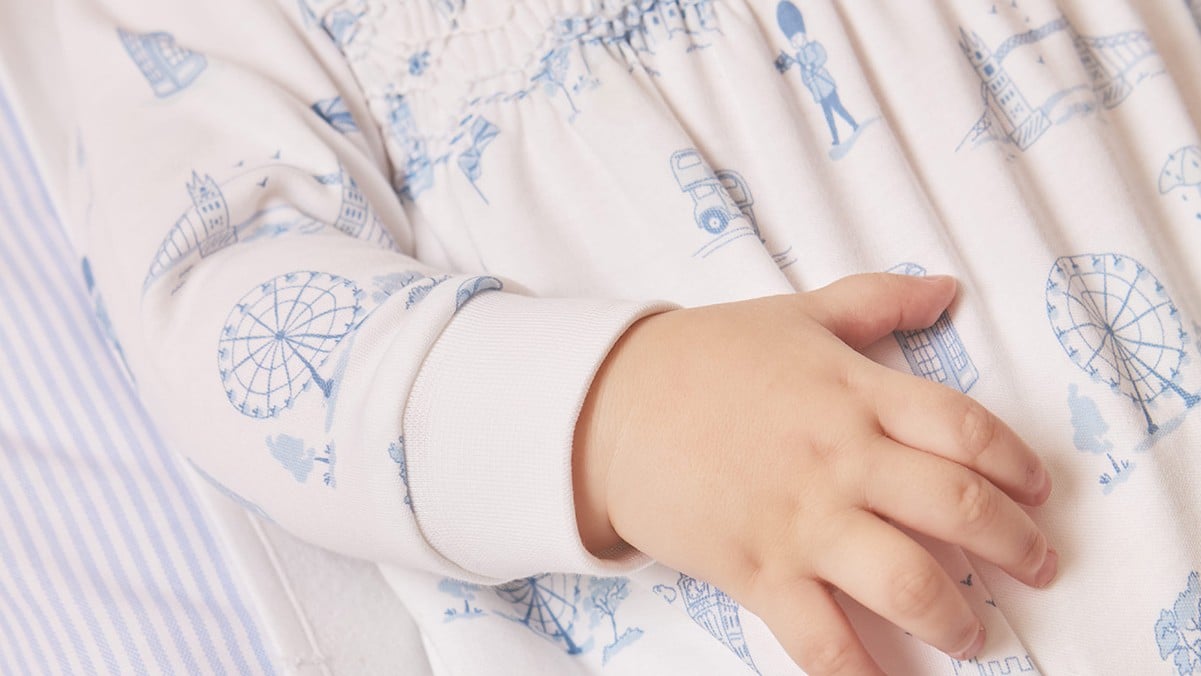
Every garment in the smocked collection is finished by hand, one row of gathers stitched at a time. Machine-pleated versions exist and are often sold under the same "smocked" name, but they're a different product entirely; uniform, fast, and missing the slight irregularity that comes from a human hand doing the work.
Hand-smocking takes longer. A single garment can take hours to finish this way. But a hand-stitched piece holds its shape for years rather than a season, and that durability is the actual reason a brand builds its identity around the technique rather than switching to machine work to cut costs.
Built to Become an Heirloom
Fiber quality and hand-finishing together are why pieces in Nellapima's Heritage line hold up over years instead of months. Some go on to join Nellapima's heirloom collection: a garment one baby outgrows gets washed, folded away, and pulled back out for a cousin or younger sibling two or three years later, still fitting the way it should.
Marianella's Standard
It started with one grandchild. When Marianella's first grandchild was born, she wouldn't put the baby in just any cotton, only the kind grown in the region she'd known since she was a girl. That preference never really went away. Decades later, it's still what a new Nellapima piece has to live up to before anyone talks about forecasts, trends, or what's selling this quarter.
The Bottom Line
There's no marketing trick here. One family kept going back to the same stretch of Peruvian farmland for its cotton, then insisted on finishing every piece by hand instead of running it through a machine. Both of those choices cost more and take longer. Nellapima made them anyway, long before the first garment ever shipped.
Nellapima
City: Atlanta
Address: 250 Spring Street Northwest
Website: https://www.nellapima.com
Phone: +1 713 904 5001


Comments
Post a Comment