The Horse Didn't Fail. Technology Moved On. Is AI Doing the Same to Work?
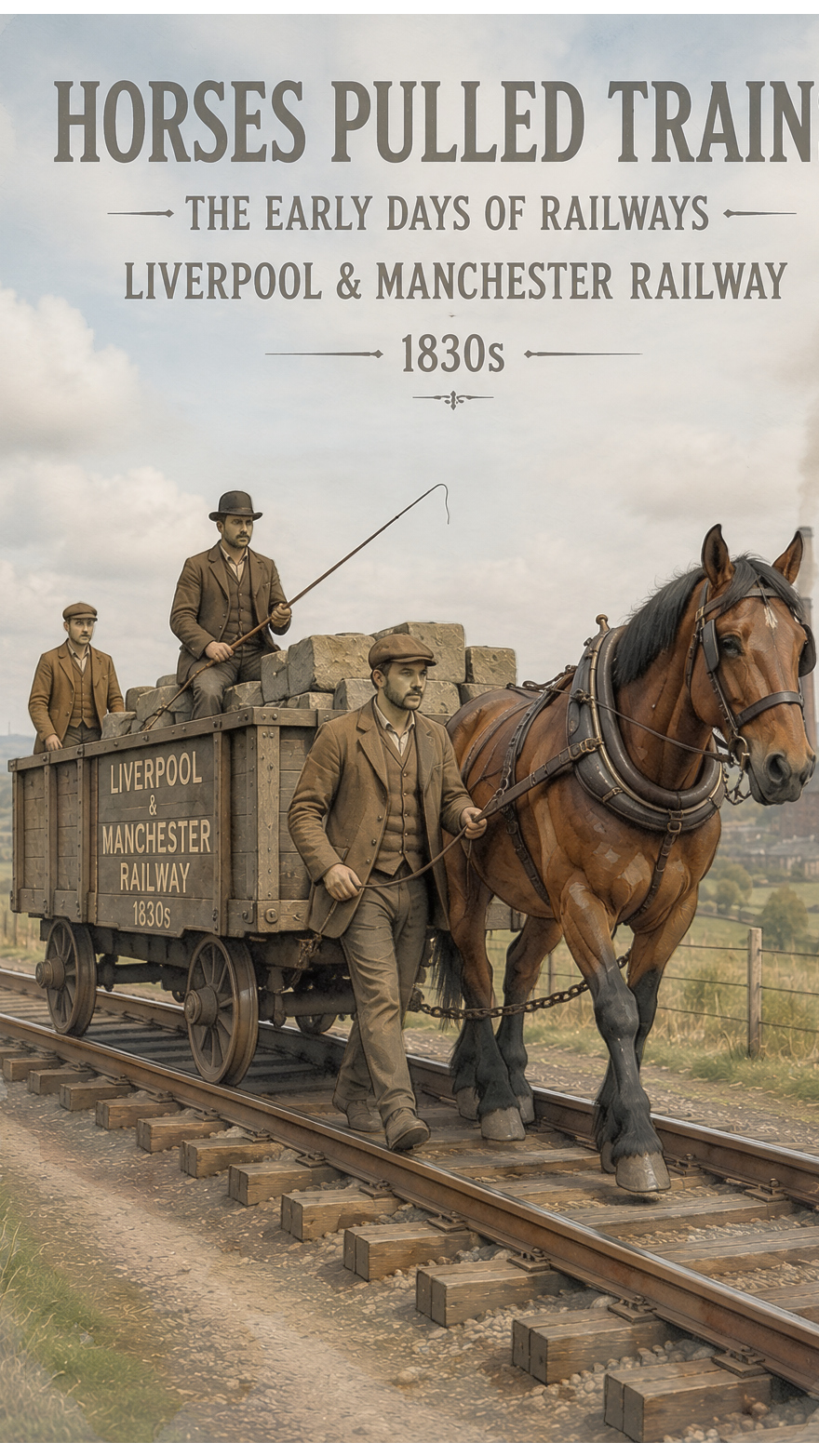
There was nothing wrong with the horse. That's perhaps the most important part of the story. In the early days of railways, horses and ponies really did pull wagons along the tracks. Rails reduced friction and allowed them to haul loads far heavier than they could manage on ordinary roads. For a time, horse power and railway technology worked perfectly well together. Then the steam locomotive arrived. Suddenly, a machine could do one particular job faster, farther, and on a vastly greater scale.
The horse hadn't failed. Technology had moved on.
That distinction may help us think differently about Artificial Intelligence.
Are We Asking the Wrong Question About AI?
Much of today's discussion about AI begins with replacement.
Will AI replace writers?
Will it replace programmers?
Teachers?
Researchers?
Designers?
Accountants?
The questions are understandable. Artificial Intelligence can already perform tasks that, until recently, required significant human knowledge and skill.
But history suggests that concentrating only on replacement can obscure the bigger transformation.
When steam replaced horses on the railway, transportation did not disappear.
It expanded.
When machinery transformed factories, manufacturing didn't disappear.
When computers arrived in offices, administration didn't disappear.
When the internet transformed information, people didn't stop communicating, researching, publishing or doing business.
The work changed.
A Job Is More Than a Task
Artificial Intelligence is becoming extraordinarily capable at individual tasks.
It can produce sentences, analyse information, write software, summarise research, generate images, translate languages and perform many other activities that once required considerably more human time.
But a task and a profession are not necessarily the same thing.
A writer is more than someone who produces sentences.
A teacher is more than someone who delivers information.
A researcher is more than someone who finds facts.
A programmer is more than someone who writes lines of code.
When technology becomes better at one part of a job, the more interesting question is what happens to everything around that task.
That is where adaptation begins.
People Aren't the Horses
This is also where the railway analogy can easily go wrong.
Humans aren't the horses.
We're the people who built the railway. We designed the locomotive. We created businesses around it. We built cities, industries and entirely new ways of living because transportation changed.
And now we've built intelligent systems.
So perhaps our objective shouldn't be to compete with AI at everything it can do well. We don't compete with calculators at arithmetic. We don't compete with excavators at digging holes.
We use them. The real opportunity may lie in discovering what people can do now that these tools exist.
Technology Changes What Is Possible
Every major technological transition creates disruption.
Some tasks disappear.
Some occupations shrink.
Others change almost beyond recognition.
And entirely new kinds of work emerge.
Nobody standing beside an early horse-drawn railway could have predicted every industry, profession and possibility that modern transportation would eventually create. We should probably be equally cautious about pretending we know exactly where AI will lead.
But history gives us a useful perspective.
A better tool does not automatically make a human less valuable. Sometimes it simply means human effort can be directed elsewhere. That is why the horse-drawn railway is more than an amusing historical curiosity. It reminds us that technological change is not merely a story of replacement.
It is a story of adaptation.
Horses don't pull trains anymore.
People still travel.
Work still gets done.
The tools change.
And so do we.
The original illustrated essay, carousel, and video are part of the ongoing RoguesCulture Living with AI conversation about technological change, work, and human adaptation.
Read the original essay:
https://roguesinparadise.com/HorsesDontPullTrains/
Explore the complete Living with AI series:
https://roguesinparadise.com/livingwithai/
Working Smarter. Staying Human.
AXSES INC
City: Boutiliers Point
Address: 211 Kennedys Road
Website: https://roguesinparadise.com


Comments
Post a Comment