STEM vs STEAM Education: How to Choose the Right Assembly for Your School
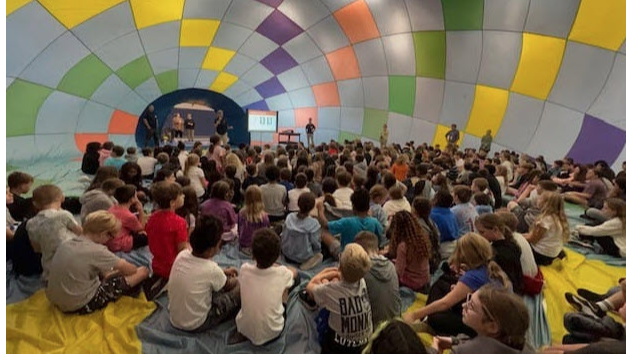
Assembly programs have become a common way for schools to supplement classroom instruction with live, interactive experiences. Among the most requested categories are STEM and STEAM assemblies, terms that are often used interchangeably but represent different educational approaches. Understanding what separates them can help administrators and teachers select a program that actually supports their school's learning goals, rather than choosing based on branding alone.
What STEM Assemblies Focus On
STEM stands for science, technology, engineering, and mathematics. Assemblies built around this framework tend to concentrate on subject-specific skills and concepts, such as chemical reactions, basic engineering principles, or mathematical problem-solving. These programs are often structured around a single discipline or a tight combination of two, with content designed to reinforce specific curriculum standards.
Experts from the Academic Entertainment explain that a STEM assembly might walk students through the physics of flight, demonstrate chemical reactions using safe household materials, or introduce basic coding logic through interactive games. The goal is typically depth over breadth, giving students a clear, focused understanding of a particular scientific or mathematical concept.
This approach works well for schools looking to reinforce a specific unit of study or prepare students for standardized testing in STEM subjects. It also suits older students who are ready to engage with more technical, subject-specific material.
What STEAM Assemblies Add
STEAM assemblies build on the same foundation but incorporate the arts, whether through visual design, music, storytelling, or performance. Rather than isolating science or math as standalone subjects, STEAM programs frame these concepts within a broader creative or narrative context.
For example, a STEAM assembly might use music to teach mathematical ratios and patterns, or combine storytelling with physics to explain concepts like gravity and motion. The arts component is not decorative. It serves as a teaching tool that helps students approach technical concepts from a different angle, which can be particularly effective for students who do not respond as strongly to traditional, subject-isolated instruction.
This interdisciplinary framing also mirrors how many real-world careers actually operate, where design, communication, and creative problem-solving intersect with technical skill. Schools focused on developing well-rounded thinking, rather than isolated subject mastery, often find STEAM assemblies better aligned with that goal.
Matching the Assembly to Grade Level and Learning Goals
Grade level plays a significant role in deciding between the two formats. Younger students, particularly in elementary school, often respond well to STEAM assemblies because the creative elements help sustain attention and make abstract concepts more accessible. Story-driven or performance-based formats can introduce foundational STEM ideas without requiring prior technical knowledge.
Older students, especially in middle and high school, may benefit more from STEM-focused assemblies that dive deeper into specific subject areas, particularly if the goal is to reinforce classroom content tied to standardized curriculum or prepare students for more advanced coursework.
Beyond grade level, schools should consider their specific objectives. If the goal is to reinforce a particular unit, such as a physics or algebra topic already being taught in class, a STEM assembly may be the more direct fit. If the goal is broader, such as increasing overall engagement with STEM fields or supporting a school-wide creative initiative, a STEAM assembly may serve that purpose more effectively.
Aligning Assembly Choice With Curriculum Priorities
Ultimately, the decision comes down to what a school is trying to achieve. STEM assemblies offer focused, subject-specific reinforcement, while STEAM assemblies provide a broader, more creative entry point into the same core concepts. Neither approach is inherently better than the other. The right choice depends on grade level, existing curriculum priorities, and whether the goal is deep subject reinforcement or interdisciplinary engagement.
Administrators and teachers evaluating STEM school assembly shows should start by identifying their specific learning objectives for the event, then match those objectives to the format, whether STEM or STEAM, that best supports them.
Academic Entertainment
City: Pullman
Address: 1495 Lost Trail Drive
Website: https://www.academicentertainment.com/
Phone: +1 800 883 9883
Email: Info@AcademicEntertainment.com


Comments
Post a Comment