Roll-Off Dumpster Rental Pricing | Peoria IL Service Reveals Weight Limits
Key Takeaways
- Roll-off dumpster rental pricing includes a weight allowance - but dense debris like concrete can hit that limit long before the container looks full.
- Zap Dumpsters Peoria connects contractors with 10- to 40-yard containers through local hauling partners, offering transparent pricing information for projects across Central Illinois.
- Overage fees for exceeding weight limits can range from $30 to $250 per additional ton - understanding this upfront is the single biggest way to avoid surprise costs.
- Peoria requires a $20 permit for dumpster placement on public streets; private property placement requires no permit.
- Illinois EPA rules distinguish between clean and general demolition debris - a compliance detail every contractor operating in the state needs to understand.
Weight limits are where most contractors get burned on dumpster rental pricing. The invoice looks simple until an overweight fee shows up. Understanding what is actually built into a quote - and what pushes you over - is how professionals keep job-site waste costs predictable.
Weight Caps Hit Before Dumpsters Look Full
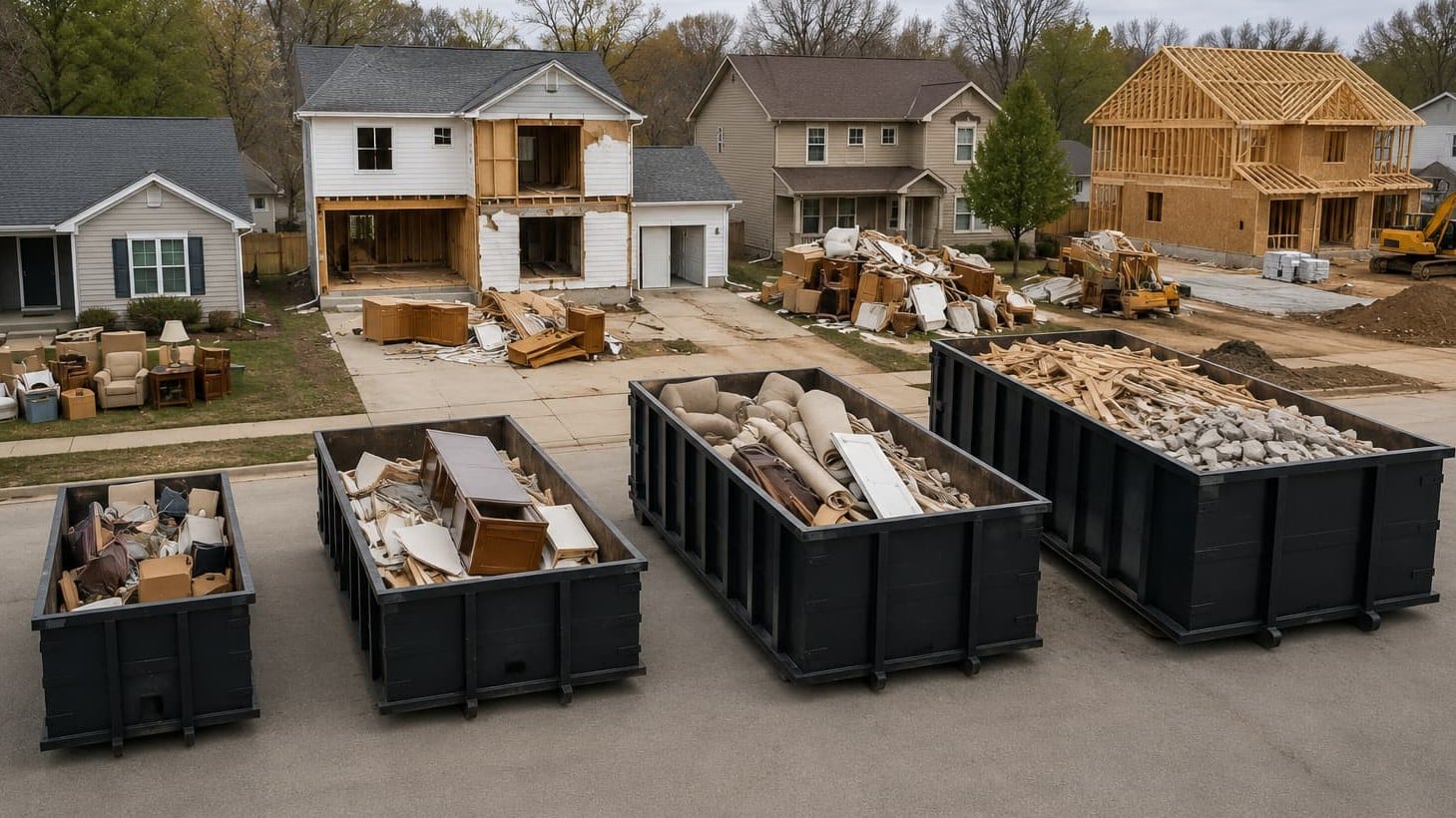
Here is the problem no one talks about at booking: a dumpster can be legally at its weight limit while still looking half-empty. That is not a billing trick - it is physics. Dense materials like concrete, brick, and dirt pack an enormous amount of weight into a small volume. A container that appears to have plenty of room can already be maxed out on its allowed tonnage.
This matters because weight, not visual capacity, is what determines whether you pay extra. Once a loaded container is over its limit, the hauler either charges an overage fee or will not move it until debris is removed. Neither option is cheap or convenient mid-project.
What's Actually Included in the Base Price
Most roll-off rental quotes bundle several things together: delivery, pickup, a standard rental period (commonly 7-10 days), disposal fees, and a weight allowance. That weight allowance is the number contractors need to pay attention to.
Weight Allowances by Container Size
Included weight limits vary by container size. Based on industry data, typical allowances break down roughly like this:
- 10-yard: 1-2 tons included
- 20-yard: 2-3 tons included
- 30-yard: 3-5 tons included
- 40-yard: 5-8 tons included
Zap Dumpsters Peoria's local hauling partners set specific limits within these ranges. Their 10-yard containers carry an internal weight limit of 2,000 lbs (1 ton), while 30-yard containers are rated at 6,000 lbs (3 tons). These limits reflect legal road weight requirements and equipment capacity - not arbitrary figures. Contractors can review residential rental options and size details at zapdumpsterspeoria.com/residential-rentals to get a clearer picture before booking.
Overage Fees When You Exceed the Limit
Exceed the included tonnage and overage fees kick in. Industry-wide, those fees typically run $30 to $250 per additional ton depending on the hauler and the market. On a project with even one extra ton of concrete or roofing material, that is a meaningful line item. The safest approach: estimate debris weight before booking, not after loading.
Dense Debris Changes the Math Entirely
Light construction debris - wood framing scraps, drywall, packaging - is forgiving. It is bulky but not heavy. Dense debris is the opposite: compact and extremely heavy, which flips the usual logic of bigger container equals better value.
Concrete: Solid vs. Broken Weight Difference
This distinction matters more than most contractors realize. Solid poured concrete weighs approximately 4,050 lbs per cubic yard - about 2 tons. Broken or demolished concrete weighs roughly half that: around 2,025 lbs per cubic yard - about 1 ton - because air gaps from demolition reduce the density.
That gap changes how you plan. A few cubic yards of solid slab material can push a container past its limit fast. Broken rubble buys a bit more room, but not as much as the volume suggests.
Why a 10-Yard Often Beats a 30-Yard for Concrete
Smaller containers often make more financial sense for concrete disposal. A 30-yard container has a 3-ton weight limit. Solid concrete at roughly 2 tons per cubic yard means hitting that ceiling after loading just 1.5 cubic yards - a tiny fraction of the container's volume. The rest of the space is unusable, but the overage fees are very real.
A 10-yard container, properly loaded with broken concrete, can be filled closer to its actual capacity without exceeding weight limits. For dense debris, multiple smaller pulls often cost less total than one oversized container loaded incorrectly.
Peoria Permit Rules: Public Street vs. Private Property
Placement location determines whether a permit is needed. The rule in Peoria is straightforward: no permit is required when the dumpster sits entirely on private property - a driveway, private lot, or job-site staging area. The moment it moves to a public street or alley, a permit is required.
Right-of-Way Placement Requirements
A right-of-way use permit for placing a dumpster on Peoria's public streets or alleys costs $20 per 30-day period. Beyond the fee, placement rules apply:
- The container must be positioned at least 50 feet from any intersection
- It must sit at least 10 feet from a fire hydrant
- Boards must be placed underneath to protect the road surface
These requirements are not optional. Skipping a permit or violating placement conditions can result in fines or forced removal - both of which cost more than the $20 permit. Applying at least 48-72 hours before planned delivery avoids scheduling delays.
Illinois EPA Rules Contractors Must Know
Illinois EPA regulations divide construction and demolition debris into two categories, and the distinction has real compliance implications.
CCDD (Clean Construction or Demolition Debris) covers uncontaminated broken concrete without protruding metal bars, bricks, rock, stone, reclaimed asphalt pavement, and uncontaminated soil mixed with any of those materials. This material is treated differently - and often more favorably - at disposal facilities.
GCDD (General Construction or Demolition Debris) covers everything else: mixed C&D material that does not meet the clean debris standard.
Keeping concrete loads separate from wood, drywall, and general trash is not just good practice - it determines whether a load qualifies as CCDD. Mixed loads may be rejected by recycling facilities and redirected to standard landfill disposal, which carries higher tipping fees. Contractors coordinating their own hauls should verify applicable IEPA licensing and transport requirements with the Illinois EPA before moving debris off-site.
Sizes Zap Dumpsters Peoria Connects You With
10- to 40-Yard Options Through Local Hauling Partners
Zap Dumpsters Peoria is a sourcing and brokerage service - it connects contractors and homeowners with independent local hauling partners rather than operating its own fleet. Through those partnerships, roll-off containers in 10, 20, 30, and 40-yard sizes are sourced for projects across Peoria and surrounding Central Illinois communities within approximately 40 miles.
Disposal runs through active Peoria-area facilities including Indian Creek Landfill (Hopedale) and Wigand Transfer Station (19908 N Route 29, Chillicothe, IL 61523), both operated by GFL Environmental.
For mixed light debris, a 20- or 30-yard container typically covers large renovation and demolition jobs. For dense material like concrete or brick, a 10-yard is almost always the smarter starting point - smaller pulls, controlled weight, fewer overage surprises.
Know Your Debris Weight Before You Book
Contractors who avoid overweight fees share one habit: they think about material density before they think about container size. Volume is visible. Weight is not. A dumpster that looks manageable can become a billing problem if the wrong material goes into the wrong container.
Before booking, identify the primary debris type. If it is light mixed construction waste, size up for volume. If it is concrete, brick, dirt, or roofing material, size down and plan for multiple pulls if needed. Communicating debris type to the hauler upfront makes it easier to get the right weight allowance before pickup rather than after.
For access to hauling partners across the Peoria area, Zap Dumpsters Peoria helps contractors find the right container size and sourcing connection - without the guesswork.
Zap Dumpsters Peoria
City: Peoria
Address: 208 SW Center St
Website: https://zapdumpsterspeoria.com
Phone: +1 309 650 8954


Comments
Post a Comment