Natural Tick Prevention for Dogs: Tips & Best Repellent Solutions
Key Takeaways:
- Regularly checking dogs for ticks after outdoor activities is an important part of prevention.
- Avoiding dense vegetation and keeping lawns and outdoor areas maintained can reduce opportunities for tick exposure.
- Veterinarian-recommended flea and tick preventives are an important option for dogs at risk of tick-borne disease.
- Natural repellents can provide an additional approach for owners seeking alternatives to conventional topical products.
- NatPat Pet Tick Repellent Stickers use Geranium and Cedarwood essential oils and are designed to attach to a dog's collar or tag.
- The best repellent solutions for dogs depend on individual needs, outdoor exposure and veterinary guidance.
Ticks are more than an outdoor nuisance for dogs. They can transmit diseases, making prevention an important part of responsible pet care, particularly for dogs that regularly explore wooded trails, grassy areas, parks, and other tick habitats. In April 2026, the Centers for Disease Control and Prevention (CDC) reported that emergency-room visits for tick bites were higher than usual across much of the United States, with weekly rates in most regions at their highest levels for that time of year since 2017. This surge in tick numbers poses real risks for pets as well as their humans.
For dog owners looking for natural tick prevention, there are several approaches worth considering. Veterinary-recommended preventives remain an important option, while environmental precautions, regular tick checks, and plant-based repellent products can form part of a broader strategy.
Why Tick Prevention Matters for Dogs
Dogs can encounter ticks almost anywhere outdoors. Wooded areas, tall grass, brush, and leaf litter provide common tick habitat, but exposure is not limited to remote hiking trails. A walk through a neighborhood park or time spent in a backyard can also bring a dog into contact with ticks.
The health consequences can be serious. Depending on the species and location, ticks can transmit diseases including Lyme disease, ehrlichiosis, anaplasmosis, babesiosis, and Rocky Mountain spotted fever. The American Kennel Club notes that dogs should receive consistent tick prevention and recommends consulting a veterinarian about the most appropriate option based on factors such as age, health, breed, location, and lifestyle.
Prevention is therefore not simply about keeping a dog comfortable. It can help reduce exposure to parasites capable of transmitting disease.
1. Veterinary-Recommended Tick Preventives
The most important starting point for a dog's tick-prevention routine is a conversation with a veterinarian. Available options include oral medications, topical treatments, collars, sprays, and other products. Different formulations provide different levels and durations of protection, and not every product is appropriate for every dog.
The AKC emphasizes that parasite prevention is not one-size-fits-all. Puppies, senior dogs, dogs with particular health conditions, and households containing other animals may have different requirements.
Natural products should therefore not automatically be regarded as substitutes for veterinary-recommended preventives. Instead, owners considering plant-based approaches should discuss them with a veterinarian, particularly when a dog has previously experienced a reaction to a pest-control product or regularly visits areas with significant tick exposure.
2. Natural Tick Repellent Stickers
For owners interested in a plant-based repellent that can be easily incorporated into outdoor routines, wearable tick-repellent stickers offer a different approach to conventional topical products.
For example, NatPat's Pet Tick Repellent Stickers are designed to attach to a dog's collar or tag rather than directly to the animal's skin. The stickers use geranium, cedarwood, vetiver, and fractionated coconut oil infused into biodegradable bamboo fibers through the company's AromaWeave™ technology. NatPat states that each sticker provides up to eight hours of tick-repellent activity.
The format is particularly straightforward: peel a sticker from its packaging and place it on the pet's collar or tag to gain up to eight hours of tick repelling aromas. How does this work? Ticks hunt by smell. Quite simply: if they can't smell the dog's breath, they leave the dog alone. Studies have also shown that particular scents, like geranium, actively repel ticks.
This type of product may appeal to owners looking for a mess-free, wearable addition to their dog's outdoor routine. However, because essential-oil-based products can vary considerably in formulation and concentration, veterinary guidance remains appropriate when determining whether a particular product is suitable for an individual pet.
3. Regular Tick Checks
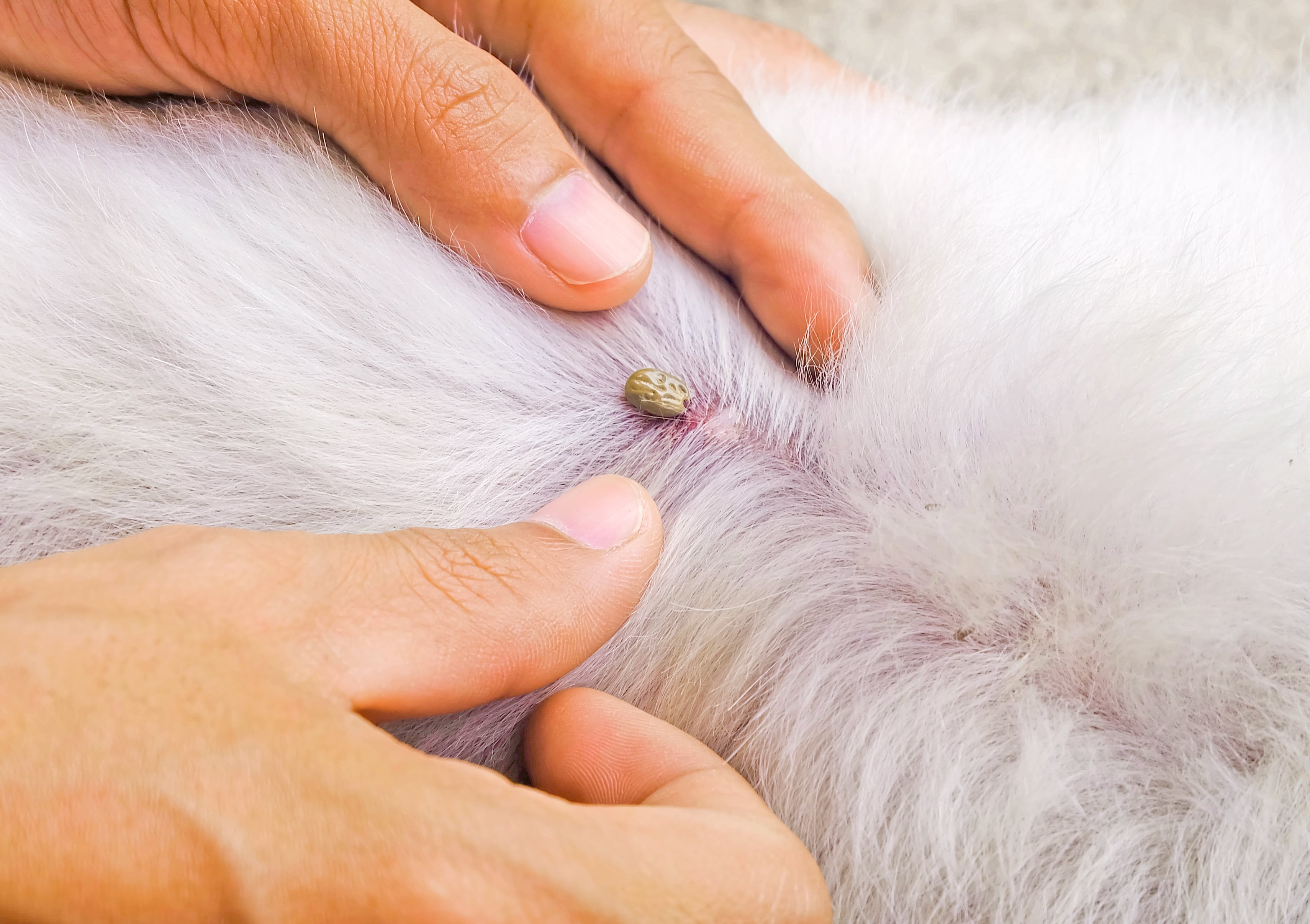
Even when a preventive, a repellent, or both is being used, checking a dog for ticks after outdoor activities is important. The CDC recommends checking pets for ticks every day, particularly after time outdoors.
Areas that deserve particular attention include around and inside the ears, around the eyes, underneath the collar, between the toes, under the front legs, between the back legs, and around the tail. Running the fingers gently through the coat can help identify small bumps that may indicate an attached tick.
Finding a tick promptly is important because some tickborne infections require time before transmission occurs. The AKC notes, for example, that Anaplasma transmission can take approximately 12 hours and Lyme disease transmission can take 24 to 36 hours, although timing varies.
4. Reduce Exposure Around the Home
Tick prevention does not have to stop at the dog. Managing the outdoor environment can reduce opportunities for exposure.
Keeping grass trimmed, clearing accumulated leaf litter, and limiting dense vegetation around frequently used areas can make a yard less hospitable to ticks. During walks, staying on established paths and avoiding tall grass and dense brush can also reduce contact with tick habitat.
Building a Consistent Tick-Prevention Routine
There is no single approach that eliminates every possible tick encounter. A more practical strategy combines appropriate veterinary care with everyday habits: use a suitable preventive, consider additional repellent measures, check the dog after outdoor activities, and remove any attached ticks promptly.
For owners interested in a natural, wearable option, NatPat's Pet Tick Repellent Stickers provide one way to incorporate plant-based repellency into walks, hikes, camping trips, and other outdoor activities. Used as part of a broader prevention routine, products such as these can give dog owners another tool to consider when managing exposure to ticks.
The most effective routine is ultimately one that is appropriate for the individual dog and applied consistently. With regular prevention, outdoor awareness, and thorough tick checks, dog owners can make tick management a routine part of keeping pets healthy and ready for the next adventure.
*Disclaimer: This article is for general informational purposes only and is not intended as medical advice. Always consult a healthcare provider before starting any new treatment, remedy, or product, especially if you have allergies, sensitive skin, or an existing medical condition. For more information,visit NatPat.
NatPat
City: Melbourne
Address: Melbourne
Website: https://natpat.com


Comments
Post a Comment