Inbound vs Outbound Marketing For B2B Companies: Traffic-Building Strategies
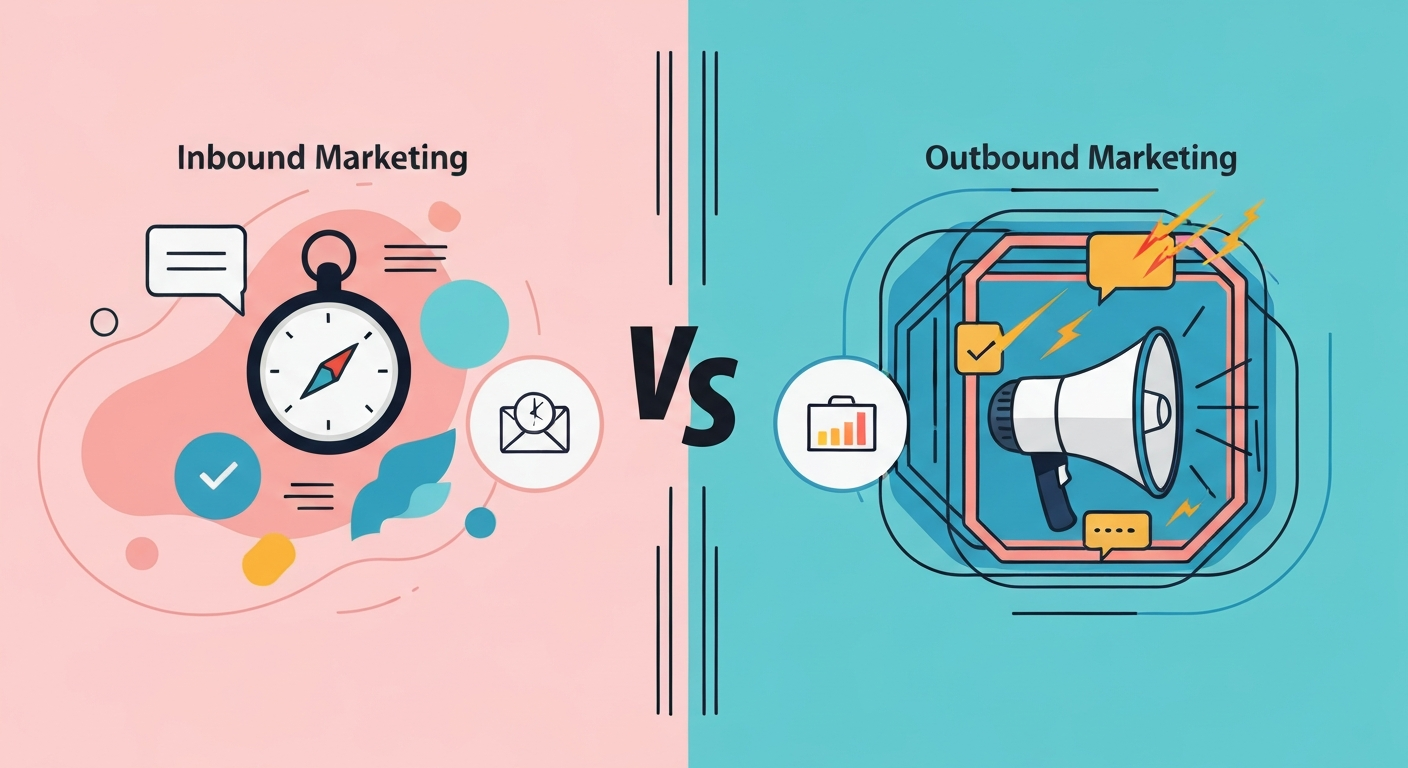
Key Takeaways
- Inbound leads cost 61-62% less than outbound leads on average, making content-driven strategies a long-term economic advantage for B2B companies.
- Outbound marketing fills pipelines faster - cold emails and LinkedIn campaigns can book meetings within days, while SEO content takes months to gain traction.
- The right strategy depends on your company's stage: startups benefit from the speed of outbound, while established brands compound value through inbound content.
- Combining both approaches creates a sustainable, scalable B2B lead pipeline that neither strategy can build alone - and AI-powered distribution tools can dramatically accelerate the inbound side.
Both inbound and outbound marketing are traffic-building pillars for B2B companies, but they work very differently. Knowing which one to lean on - and when - can be the difference between a pipeline that stalls and one that scales.
Inbound Leads Cost 61% Less - But Outbound Fills Your Pipeline Faster
There's a persistent debate in B2B marketing circles: go long with content, or go direct with outreach? The data makes a strong case for both. Inbound leads cost 61-62% less than outbound leads on average, and inbound methods can generate three times more leads per dollar invested over time. Yet outbound campaigns powered by intent data and advanced targeting signals consistently outperform traditional prospecting - particularly when layered with technographic and firmographic data.
As digital marketing specialists note, neither approach wins outright. What matters is understanding the mechanics of each, because the tradeoffs are real, and choosing the wrong tool for the wrong moment is an expensive mistake.
What Inbound Marketing Actually Does for B2B
Inbound marketing attracts prospects on their own terms. Rather than interrupting someone's day, it places useful, relevant content in their path when they're actively searching for answers. That could be a blog ranking on Google, a LinkedIn article, or a downloadable guide that captures a lead already deep in research mode.
How Buyers Find You First
Modern B2B buyers do most of their research before ever contacting a vendor. By the time they reach a sales team, their preferences are often already shaped by the content they've consumed. Research suggests SEO can deliver significant ROI for B2B companies, with some industry estimates pointing to it driving the majority of trackable B2B website traffic and accounting for a substantial share of total B2B revenue. Inbound puts your brand into that research phase - organically.
Industry data suggests a strong majority of B2B marketers consider SEO to generate higher-quality leads than PPC, with inbound close rates estimated to be significantly higher than those of outbound efforts. The intent behind an inbound lead is simply higher.
Why Content Assets Compound Over Time
One of inbound's most underrated advantages is compounding. A well-optimized blog post published today can generate qualified leads two years from now - at near-zero marginal cost. Content marketing costs approximately 62% less than traditional outbound marketing, but the real payoff comes from accumulation. Each new piece of content adds to a growing library that works around the clock without additional spend. Outbound stops the moment the budget does.
Where Outbound Marketing Still Wins
Inbound's long-term economics are compelling, but there are scenarios where outbound is simply the right tool. For many B2B teams, waiting six to twelve months for organic traffic isn't an option - they need pipeline now.
Speed to Pipeline
Outbound marketing delivers fast. A targeted cold email sequence can generate booked meetings within a week. A LinkedIn Sponsored Content campaign can surface decision-maker responses within days. That speed is irreplaceable when launching a new product, entering a new market, or recovering from a slow quarter. Outbound also provides real-time feedback on messaging, which can directly inform and improve inbound content strategy.
Targeting Decision-Makers Directly
Outbound's other advantage is precision. While inbound waits for the right person to search for the right term, outbound lets marketing teams go directly to a specific company, job title, or industry segment. LinkedIn is one of the most effective outbound channels for B2B, particularly for reaching senior decision-makers. Outbound strategies give teams the ability to surface high-value opportunities that would never organically appear through content alone.
Head-to-Head: Cost, Speed and Audience Control
Short-Term vs. Long-Term Economics
Outbound can look cost-effective early because the results arrive fast. But it requires continuous spend - reach ends when the budget does. Inbound has higher upfront costs in content creation and optimization, but the cost per lead decreases as the content library and domain authority grow. One high-ranking piece of content can generate hundreds of leads at almost zero ongoing cost. Long-term, the economics heavily favor inbound.
Who Controls the Engagement
Inbound puts the prospect in control - they engage when they're ready, which tends to produce higher-intent leads. Outbound flips this: the marketer controls who gets contacted, when, and through which channel. That control is especially valuable in account-based marketing (ABM), where specific companies are targeted with personalized outreach. Neither model is better in isolation; they serve different parts of the buyer journey.
Which Strategy Fits Your B2B Stage?
Stage matters more than preference. A lot of B2B companies default to the strategy their leadership team is most comfortable with - sales-oriented founders go outbound, content-focused founders go inbound. Neither instinct is wrong, but neither is complete.
Startups and New Market Entry
For startups with no brand recognition, or for any company entering a new market, outbound is the more practical starting point. There's no content authority to build on, no organic traffic to capture. Outbound provides a direct line to prospects and generates the early revenue needed to fund longer-term inbound investment. It also gives sales teams real-world feedback on positioning and messaging that no SEO strategy can replicate in the early days.
Established Brands Scaling Long-Term
Established B2B brands with an existing audience and domain authority are sitting on untapped inbound potential. Consistent blog content, gated resources, and LinkedIn thought leadership build a compounding lead engine over time. Prospects who arrive via inbound content are pre-educated - they already understand the problem and have consumed content that frames your solution favorably. That shortens sales cycles and eases conversions in ways cold outreach rarely achieves at scale.
The Combined Approach That Drives Both Traffic and Pipeline
The most effective B2B marketing strategies don't choose sides - they use both. Outbound can drive traffic to inbound content; inbound warms up prospects before outbound follow-up. The two strategies reinforce each other when coordinated around a shared content and messaging framework.
Real Results from Blended B2B Strategies
The case for combining both approaches is well-supported. Advance B2B, a B2B marketing agency, achieved significant increases in leads and website traffic by strategically adopting inbound marketing as part of a broader, blended strategy. These results reflect something important: inbound and outbound are complementary systems. The challenge for most B2B teams isn't knowing this - it's executing both simultaneously without the resources of an enterprise marketing department.
Build Your Specialized Strategy Today
There's no universal answer to the inbound vs. outbound question in B2B marketing. The data is clear that inbound generates lower-cost, higher-intent leads over time, while outbound delivers speed and targeting precision that content alone can't replicate. The companies that win aren't picking one - they're building systems where both strategies feed each other.
Start by auditing where your pipeline pressure sits. If the need is immediate, build the outbound motion first. If the goal is sustainable growth, invest in content infrastructure now so the compounding starts. If both are true, coordinate them around a shared message and let each strategy amplify the other.
AmpiFire
City: London
Address: London Office 15 Harwood Road, , London, England United Kingdom
Website: https://ampifire.com/
Email: support@ampifire.com


Comments
Post a Comment