How to Get Referral Traffic From ChatGPT: Strategies to Attract More Customers
Key Takeaways:
- ChatGPT is already sending real referral traffic to websites, and the channel is growing fast - making it worth optimizing for now, not later.
- Getting discovered by ChatGPT starts with technical access: if OpenAI's crawler can't reach your pages, your content can't be considered as a source.
- Creating original, authoritative content that directly answers customer questions is the single biggest competitive advantage for ChatGPT visibility.
- Third-party credibility - mentions in publications, directories, and industry sites - reinforces your business's authority beyond your own website.
- Read on to learn how to make your business's entity crystal clear to AI systems, a step most small businesses overlook entirely.
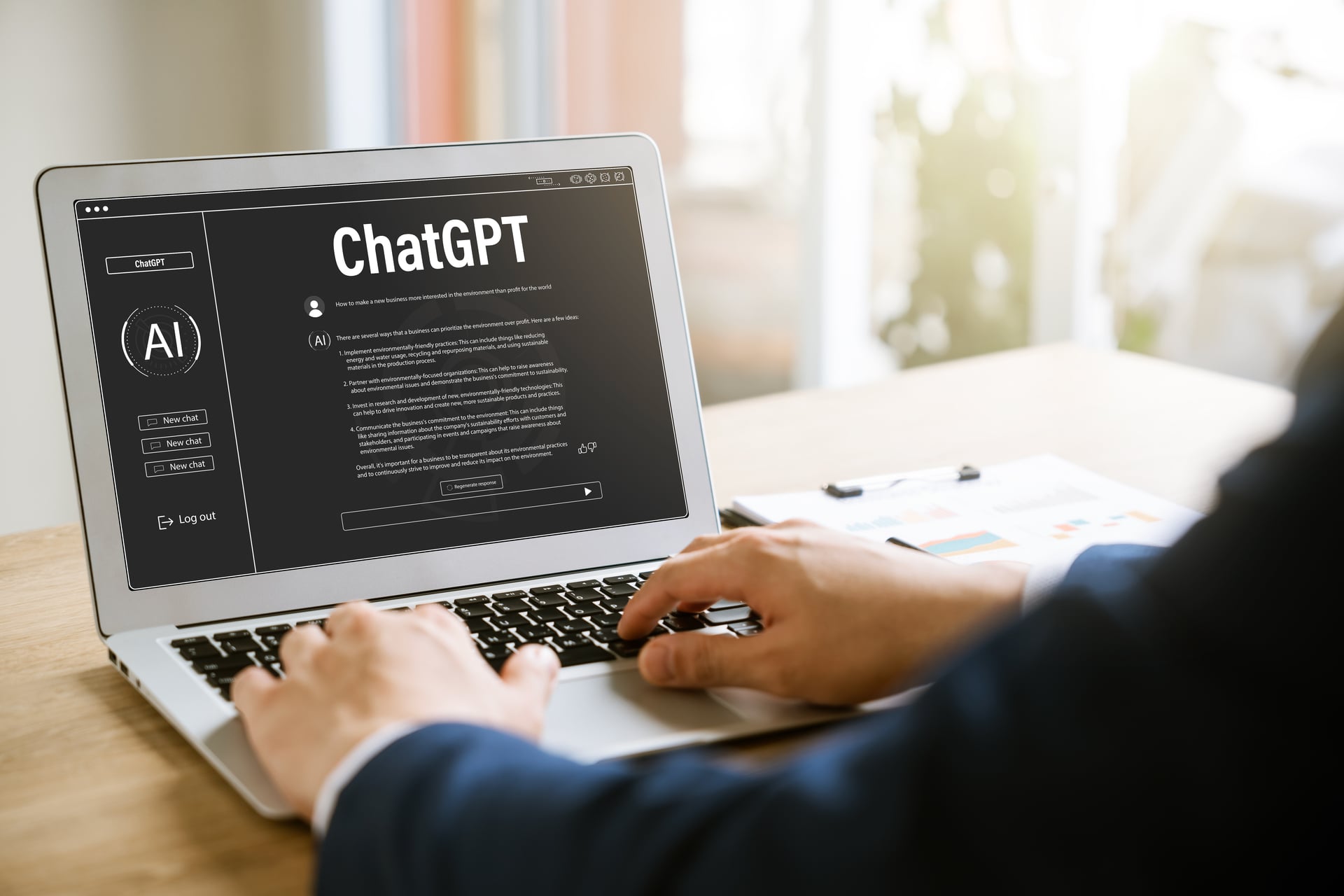
Something new is happening with website traffic. Alongside the usual flow from Google and social media, a quieter channel has opened up: ChatGPT. People are asking it questions, getting answers that include website links, and clicking through to those sites. For small business owners, that's a real opportunity - and one that's still early enough to act on.
ChatGPT Is Already Sending Customers to Websites
By early 2024, Similarweb reported a clear trend: AI chatbot referral traffic was still small relative to overall web volume, but growing rapidly. That gap is closing. ChatGPT doesn't return a ranked list of blue links. It reads the web, synthesizes what it finds, and surfaces sources within its responses. When someone asks it a question and it cites a business's page, that's a referral visit. The goal for any business is to become the kind of source worth citing.
How ChatGPT Referral Traffic Actually Works
What Sets It Apart From Google Traffic
Traditional search shows a list of results based on a query. ChatGPT searches the web, synthesizes multiple sources, and generates an answer that links to relevant pages. That means ranking for a keyword and being cited by ChatGPT are two different things. A business can rank well in Google and still be invisible when someone asks ChatGPT for a recommendation in its category.
The opportunity shifts from getting on page one to becoming a useful source. Content needs to be clear enough, credible enough, and original enough that an AI model finds it worth referencing.
How to Spot It in Your Analytics
ChatGPT automatically adds a utm_source=chatgpt.com parameter to referral URLs, which means web analytics platforms can track it directly. This only applies to browser-based visits, however. Traffic from the ChatGPT mobile app frequently arrives without referrer data, which means it often gets misclassified as Direct or Unassigned traffic.
To avoid undercounting this channel, set up custom channel groupings in your analytics platform that capture chatgpt.com as a defined source. This gives a more accurate picture of how much AI-driven traffic is already arriving.
First: Make Sure ChatGPT Can Find You
Check Your robots.txt File
OpenAI confirms that allowing OAI-SearchBot to crawl a website is a prerequisite for content to be eligible for ChatGPT Search results. The first technical step is checking your robots.txt file to ensure important public pages - service pages, guides, case studies, FAQs - aren't unnecessarily blocked from that crawler.
One important nuance: robots.txt controls crawler access during indexing, not real-time visits. When a ChatGPT user directly follows a link, those directives don't apply. Still, keeping key pages open to OAI-SearchBot is foundational.
Review Firewall and CDN Settings
A website can allow a crawler in robots.txt and still block it entirely at the infrastructure level. Firewalls, CDN bot-protection rules, rate limiting, and CAPTCHA systems can all prevent AI crawlers from reaching page content - regardless of what robots.txt says. OpenAI specifically recommends reviewing these layers when its crawlers encounter access problems.
The practical goal here is broad: ensure all legitimate crawlers can access your important pages. LLMs read raw HTML and structured data directly, so anything blocking that access blocks the opportunity.
Build Content Around Customer Questions
Why Conversational Queries Change the Game
People type very differently into ChatGPT than they do into Google. Instead of short keyword strings, they ask full questions: How do I choose a digital marketing agency for my small business? or What should I look for in a local accountant? Content built around these natural, conversational questions is far more likely to match what ChatGPT is trying to answer.
This means the content strategy shifts from targeting keywords to answering the real questions customers ask before they ever contact a business. Think about the questions your sales team hears on repeat - those are the topics worth turning into content.
Cover the Full Buying Journey
ChatGPT users can be at any stage of a decision. Someone might ask an early awareness question like What causes water pressure problems in a home? long before they ever search for a plumber. Content that addresses the full journey - from problem recognition through evaluation and decision - creates more entry points and more opportunities to be cited.
- Awareness: What is this problem, and why does it happen?
- Research: What are the possible solutions?
- Evaluation: What should I look for in a provider?
- Comparison: How do these options differ?
- Decision: Who should I hire, and what questions should I ask?
Give ChatGPT Something Worth Citing
First-Hand Experience Beats Generic Advice
AI models already have access to enormous amounts of generic information. Repeating what everyone else has published gives ChatGPT no reason to choose one source over another. The competitive advantage lies in producing content that is genuinely harder to replicate: original insights, proprietary data, in-depth analysis, and expertise drawn from real work.
Google's guidance for generative AI search echoes this directly, emphasizing unique, non-commodity content and first-hand expertise. The same principle applies across AI systems. A business's strongest content asset is often what it has actually learned from doing the work - practical lessons, implementation challenges, honest assessments - things a generic article can't offer.
Original Research and Detailed Case Studies
Two content formats earn disproportionate citation value: original research and detailed case studies.
Original research - surveys, industry benchmarks, customer trend analyses, proprietary datasets - gives journalists, publishers, and AI systems information that simply doesn't exist anywhere else. That rarity is exactly what makes it citeable. A well-documented case study works similarly. A structure like Customer Situation - Problem - Approach - Implementation - Outcome provides evidence that a business has actually applied its expertise, not just described it.
Strengthen Your Authority Off Your Own Site
Where Third-Party Credibility Comes From
A business's own website is only part of its digital footprint. AI systems encounter information about companies from across the web - industry publications, professional associations, news sites, directories, partner pages, conference listings, and customer websites. These external references reinforce what a business claims about itself.
The goal isn't to accumulate as many mentions as possible. A handful of credible, relevant references from respected sources carries far more weight than hundreds of low-quality listings. Digital PR - original research, expert commentary, useful industry analysis - creates legitimate reasons for publications to cover and link to a business. That coverage then becomes part of the information ecosystem that ChatGPT draws from.
Make Your Business Entity Crystal Clear
Before any content optimization makes a meaningful impact, AI systems need to understand what a business actually is. If the website is vague - full of phrases like helping businesses achieve better results without specifics - it becomes much harder for ChatGPT to associate that business with relevant queries.
The website should make these relationships explicit: Company - Products - Services - Customers - Industries - Locations - Expertise. Beyond the website, that same information should be consistent across external profiles, directories, and third-party sources. Contradictory descriptions - different service lists, varying business names, mismatched locations - create confusion that weakens AI visibility. A clear, consistent digital identity is the foundation everything else is built on.
Strong Fundamentals Still Drive ChatGPT Discovery
None of the strategies above work in isolation from the basics. Crawlability, clear site structure, internal linking, and well-organized page content remain essential - not just for Google, but for any AI system reading the web. One practical step is building a list of questions potential customers might ask ChatGPT, then testing them regularly to see whether the business appears, what description is used, and which competitors show up instead.
AI search optimization isn't a separate system from SEO - it's an extension of the same underlying discipline: make useful, credible, accessible content for real people, and make sure systems can find and understand it.
MomentumPilot Agency
City: Sheridan
Address: 30 N Gould St
Website: https://momentumpilotagency.com/
Phone: +1 307 333 9040
Email: rick@momentumpilotagency.com


Comments
Post a Comment