How Often Should You Get a Furnace Tune-Up? Quad Cities Experts Weigh In
Key Takeaways
- Annual furnace tune-ups - recommended by the U.S. Department of Energy - improve safety, efficiency, and system lifespan, with well-maintained furnaces lasting 15 to 20 years or more.
- The best time to schedule a tune-up is early fall (late September through early November), before HVAC technicians get booked solid for the season.
- A professional tune-up covers safety checks, burner cleaning, heat exchanger inspection, filter replacement, thermostat calibration, and more - tasks that go well beyond DIY maintenance.
- Tune-up costs typically range from $80 to $300, but maintenance plans can offer better long-term value - keep reading to see how the numbers stack up.
Fall sneaks up fast in the Quad Cities. One week the windows are open; the next, the furnace clicks on for the first time since March. That first startup moment is exactly when deferred maintenance turns into a cold, expensive night. According to the Quad Cities specialists from Northwest Plumbing, Heating & AC, knowing what a tune-up actually does — and when to schedule one — takes the guesswork out of winter prep.
Skip This and Risk a Mid-Winter Breakdown
Here is the situation most homeowners do not think about until it is too late: HVAC technicians are nearly impossible to book quickly once temperatures drop. When a furnace fails at 11 p.m. in January, emergency rates apply and wait times stretch. The furnace that ran fine last March may have spent the entire summer quietly developing a cracked heat exchanger, a failing blower motor, or a dirty flame sensor - none of which announce themselves until the system is under load.
Annual maintenance catches those issues in September, not December. Fix the small thing now so it does not become the expensive thing later. Manufacturers agree - most require documented annual service to keep equipment warranties valid. Skip the appointment and a covered repair can suddenly become an out-of-pocket one.
What a Tune-Up Actually Does
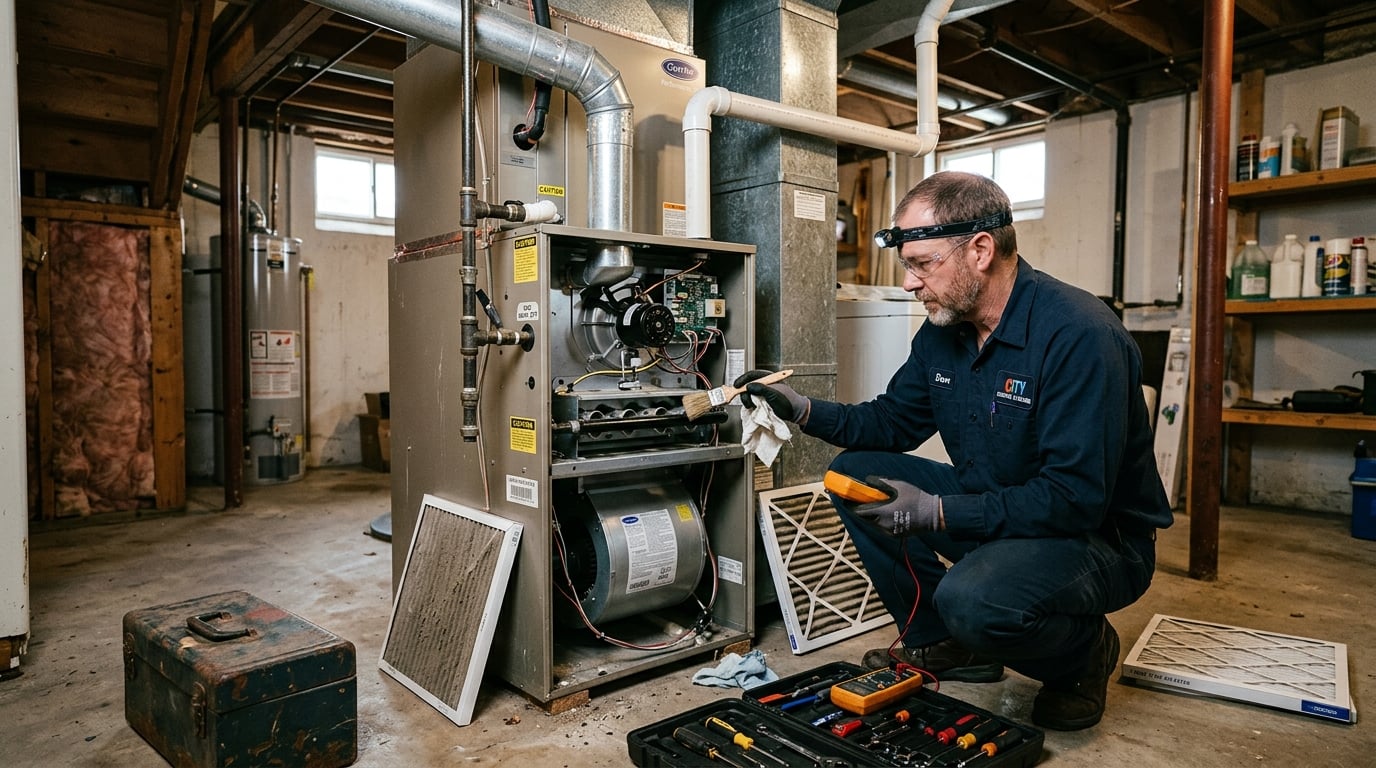
A furnace tune-up is a systematic inspection, adjustment, and testing process that a certified HVAC technician runs through on every major component of the heating system. Think of it the same way an oil change works for a car - routine, unglamorous, and absolutely essential for avoiding bigger problems down the road.
Safety Checks That Matter Most
The most critical part of any professional tune-up is the safety inspection. Technicians inspect the heat exchanger for cracks - a cracked exchanger can allow carbon monoxide to mix with heated air circulating through the home, creating a serious health hazard with no visible warning signs. Carbon monoxide testing using combustion analysis tools, gas pressure verification with a manometer, and confirmation that all safety limit switches are functioning correctly are all part of this process.
Efficiency and Airflow Adjustments
A dirty burner assembly or clogged blower wheel makes the furnace work harder than it needs to - and that extra effort shows up directly on the monthly energy bill. Technicians clean burners, inspect the flame sensor, measure the blower motor amp draw, and verify that airflow is moving efficiently through the duct system. High amp draw on the blower is a red flag that the system is straining, and catching it early prevents a motor burnout mid-season.
Proper airflow also connects directly to comfort. Uneven heating, cold spots in certain rooms, and weak output from vents are often airflow problems - not mechanical failures - and a tune-up addresses all of them.
What a Professional Tune-Up Checklist Covers
A thorough professional tune-up works through every major system component in a structured sequence. Here is what a complete service appointment typically includes:
- Component inspection - blower, heat exchanger, burners, electrical connections, and venting system reviewed for wear or damage
- Burner and internal cleaning - dust, soot, and debris removed to restore proper combustion and airflow
- Filter check or replacement - standard 1-inch filters typically included; proper filtration protects both air quality and system efficiency
- Lubrication - blower motor, fan bearings, and other moving parts lubricated to reduce friction and extend component life
- Safety controls tested - limit switches, ignition system, and carbon monoxide levels verified
- Thermostat calibration - accuracy confirmed and recalibrated if needed to ensure the system responds correctly
- Combustion analysis - air-to-fuel ratio tested to confirm efficient, safe burning
- Ductwork inspection - leaks or blockages identified that could reduce efficiency or create comfort issues
- Performance testing - full system cycle run to verify proper startup, operation, and shutdown
- Written report - findings documented with any recommended repairs or parts flagged for future attention
That last point matters. A trustworthy technician does not just hand over a receipt - they walk through what was found, explain what is working, and flag anything that may need attention before next season.
What Homeowners Can Handle Themselves
Not everything requires a professional visit between annual appointments. Homeowners can and should handle a few basic tasks on their own:
- Replace air filters every 1 to 3 months
- Keep a minimum three-foot clearance around the furnace unit
- Clean dust from accessible vents and registers
- Check thermostat settings and replace batteries when needed
- Listen for unusual sounds or odors and report them promptly
These steps support the annual tune-up - they do not replace it. Gas pressure testing, heat exchanger inspection, combustion analysis, and electrical diagnostics all require specialized tools and training that go beyond what a homeowner can safely perform.
Book Early Fall - Before the Rush Hits
The optimal window for a furnace tune-up is late September through early November. Scheduling during this period means the heating system is fully inspected and ready before it needs to run consistently - and it means booking while HVAC technicians still have availability.
Once the first real cold snap hits, scheduling a non-emergency appointment becomes difficult. Early bookings also tend to offer more flexible time slots, making it easier to find an appointment that fits a busy schedule.
Warning Signs You Cannot Ignore
Annual maintenance is the standard recommendation, but certain symptoms mean a furnace should not wait until next fall. Schedule an inspection promptly if any of the following appear:
- Unusual noises - banging, rattling, squealing, or grinding all point to mechanical issues that worsen over time
- Uneven heating - rooms that are noticeably colder than others suggest airflow or distribution problems
- Rising energy bills - unexplained increases mean the system is consuming more fuel to do the same job
- Frequent cycling - short, repeated on-off cycles indicate thermostat, sensor, or sizing issues
- Weak airflow - reduced output from vents often signals a dirty filter, blocked duct, or failing blower
- Strange odors - musty smells, burning odors, or anything resembling sulfur warrant immediate attention
- Longer heat-up times - a system struggling to reach the set temperature is working harder than it should
Any one of these signs means the furnace is flagging that something is wrong. Waiting makes the eventual repair more expensive and the risk of a mid-winter breakdown significantly higher.
What a Tune-Up Costs - and Why It Pays Off
A professional furnace tune-up typically costs between $80 and $300, with the exact price depending on the service provider, geographic location, fuel type (gas, oil, electric, propane), and the age and condition of the unit. Older systems naturally require more time and attention, which can push costs toward the higher end of that range.
Put that number in context: a single emergency repair call in January - after-hours rates, possible parts replacement, and a system pushed to failure - routinely costs several times more than a preventive tune-up. A well-maintained furnace also uses less fuel, which translates to lower monthly heating bills throughout the season. In most cases, the tune-up pays for itself.
Schedule a Furnace Tune-Up Before the Season Fills Up
A furnace tune-up is one of the few home maintenance investments that directly improves safety, reduces monthly costs, and extends the life of a major appliance - all in a single appointment that typically takes one to two hours. The U.S. Department of Energy recommends it annually, manufacturers often require it to keep warranties intact, and the math on cost versus risk consistently favors doing it rather than skipping it.
Fall is the right time to schedule. Early fall is the better time. Booking before the first cold snap means a full inspection before winter demand locks up the schedule — and it means heading into the coldest months with the heating system checked, cleaned, and confirmed ready.
Northwest Plumbing, Heating & AC
City: Davenport
Address: 5885 Tremont Ave
Website: https://www.callnw.com/


Comments
Post a Comment