Elliptical vs Vertical Climber: Calorie Burn, Muscles & Afterburn Effect
Key Takeaways
- Vertical climbers burn more calories per minute - roughly 8-13+ calories - compared to an elliptical's 6-13+, largely because there is little to no mechanical assistance, forcing muscles to work constantly.
- The elliptical's flywheel creates momentum that reduces muscular demand, but intentional use of resistance, incline, and the moving handlebars can close much of that gap.
- Joint health and workout sustainability matter just as much as per-minute burn - the elliptical wins for beginners or anyone managing knee or hip issues.
- Vertical climbers produce a significantly higher EPOC (afterburn) effect, meaning calorie burn continues at an elevated rate well after the workout ends.
The vertical climber vs. elliptical debate often comes down to one number: calories per minute. Focusing only on that number, though, misses a lot. Intensity, muscle activation, joint stress, and how long someone can actually sustain a workout all shape real-world weight loss results.
Here's a closer look at how these two machines truly stack up.
Vertical Climbers Burn More Calories
On paper, the vertical climber wins the calorie-burn race. It forces every major muscle group to work simultaneously with minimal help from any mechanical system. That kind of full-body, zero-rest demand drives calorie expenditure unusually high for a low-impact machine.
Calorie burn per minute is only one variable, though. A machine that leaves someone too sore or too winded to return the next day probably shouldn't be considered the better weight loss tool. Consistency over weeks and months outweighs a single intense session - which is exactly why the elliptical remains one of the most effective long-term cardio machines available, despite giving up some per-minute burn.
How Each Machine Actually Works
Zero-Momentum Climbing vs. Flywheel-Assisted Pedaling
The vertical climber's mechanics are simple... and demanding. Both hands grip handles while both feet stand on pedals. Drive one knee up while pulling the opposite handle down, then alternate continuously. On most models, the primary resistance comes from bodyweight, though many modern vertical climbers also offer adjustable resistance settings to increase workout intensity. There is no motor and no stored energy assisting the motion. When effort stops, the machine stops.
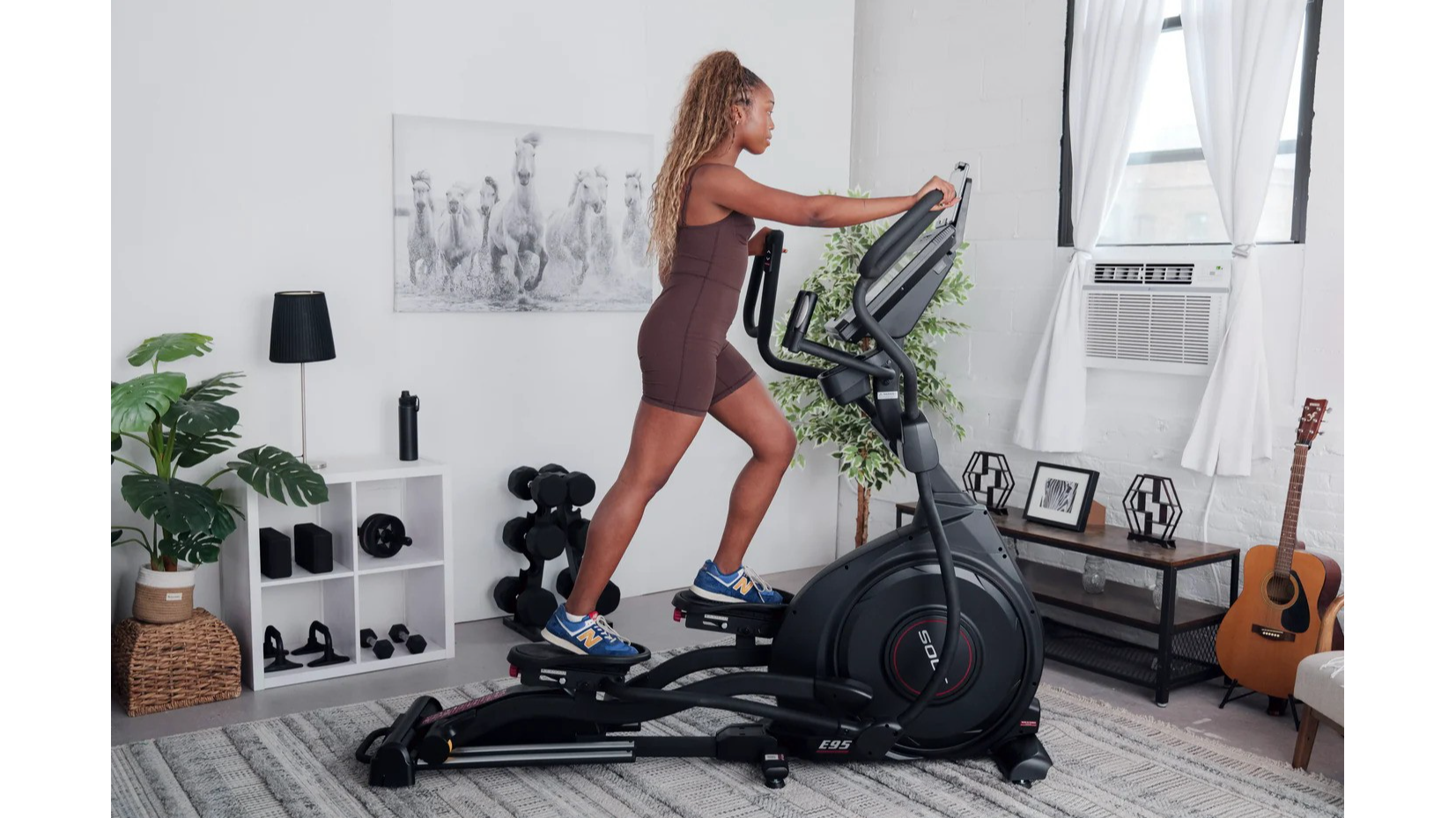
An elliptical works very differently. Feet remain on large oval pedals connected to a flywheel that builds rotational momentum as the workout progresses. That spinning flywheel actively assists the pedaling motion between power strokes, which is what creates the smooth, gliding feel ellipticals are known for.
Why Momentum Changes Everything for Calorie Burn
The flywheel's assistance is both the elliptical's greatest strength and its most significant limitation for burning calories. Because the machine carries some of the workload, muscles are doing less total work than they would on a momentum-free machine at the same perceived effort level. Research has found that perceived exertion on an elliptical often runs lower than actual cardiovascular demand - meaning users can unknowingly coast through portions of a workout without realizing it.
The fix is intentional effort: increase resistance, use the incline feature, and actively push and pull the handlebars rather than resting hands on them. Done right, an elliptical session becomes a genuinely demanding workout. Done passively, it becomes a comfortable but less efficient one.
Calorie Burn Per Minute: The Real Numbers
Vertical Climber: 8-13+ Calories Per Minute
For a 150-pound person working at moderate to high intensity, a vertical climber burns approximately 500-800+ calories per hour - translating to roughly 8.3-13.3+ calories per minute. The constant full-body demand, combined with minimal mechanical assistance, is what drives those numbers. Even at moderate effort, every second on the machine requires real muscular output from the legs, arms, and core simultaneously.
Elliptical: 6-13+ Calories Per Minute Depending on Weight and Intensity
That same 150-pound person burns approximately 400-740 calories per hour on an elliptical at moderate intensity, or about 6.7-12+ calories per minute. Push resistance and incline to their upper ranges while actively engaging the handlebars, and the upper end of the range climbs to 13+ calories per minute - comparable to the vertical climber. That ceiling requires deliberate, sustained effort rather than a comfortable stride.
Full-Body Muscle Activation Compared
Vertical Climber's Upper Body and Core Edge
The vertical climber is one of the rare cardio machines that genuinely qualifies as a full-body workout. The cross-body climbing pattern - opposite arm and leg moving together - engages the biceps, triceps, shoulders, and upper back with every single rep, while the abs and obliques fire continuously to stabilize the torso. Most users report unexpected upper body soreness after their first few sessions, a direct sign of muscular demand that most cardio machines simply don't produce.
Because resistance is driven largely by bodyweight - and on many models can be supplemented with adjustable resistance - the vertical climber builds meaningful muscular endurance in the glutes, quads, and hamstrings over time, adding a metabolic benefit beyond the workout itself, since more muscle tissue burns more energy at rest.
Where the Elliptical Holds Its Own
The elliptical primarily targets the lower body - quads, hamstrings, glutes, and calves - with upper body involvement that scales up significantly when the moving handlebars are actively used. Core engagement is mild compared to the vertical climber, and the guided, smooth motion means smaller stabilizing muscles around the hips and knees are not heavily challenged. For maintaining lower body muscle tone during periods when joint health limits more intense exercise, the elliptical is highly effective.
Afterburn Effect: Why the Vertical Climber's EPOC Lasts Longer
EPOC (Excess Post-exercise Oxygen Consumption) is the elevated calorie burn that continues after a workout ends as the body restores itself to its resting state. The higher the workout intensity and the more muscle mass involved, the greater and longer-lasting the EPOC effect.
The vertical climber scores very high on both counts. Its full-body, high-intensity demand creates a significant oxygen debt, meaning the body continues burning calories at an elevated rate for hours after the session ends. Studies involving vertical climber HIIT training have shown meaningful improvements in both cardiovascular fitness and body composition - results consistent with what high EPOC workouts are known to produce. The elliptical generates a moderate afterburn effect, particularly at higher resistance and incline settings, but generally does not match the post-workout calorie burn of a true full-body climbing session.
Joint Impact and Long-Term Sustainability
Why the Elliptical Is Easier to Sustain
The elliptical was engineered to replicate running's cardiovascular benefits without the impact. Feet never leave the pedals, which eliminates the landing forces that travel through ankles, knees, and hips with every running stride. Physical therapists frequently recommend ellipticals for clients managing joint pain or recovering from lower-body injuries precisely because of this.
The guided oval pedal path also reduces the risk of awkward joint angles, and the lower perceived exertion makes it easier to sustain sessions of 30-60 minutes - far longer than most people can maintain genuine effort on a vertical climber. For weight loss, that extra time on the machine adds up. A 40-minute moderate elliptical session can match or exceed the total calories burned in a shorter, high-intensity vertical climber session, simply because the duration is sustainable.
Starting on a Vertical Climber: Intensity and Form Come First
The vertical climber, while low-impact compared to running, still places a continuous, moderate load on the knees, hips, and shoulders through repetitive climbing motion. There is no easy phase mid-session - the demand is constant from the first rep to the last. Anyone with active knee injuries, hip problems, or shoulder joint issues should consult a healthcare professional before starting. For healthy beginners, the learning curve is real: most people find the machine genuinely challenging within the first two minutes. Starting with shorter sessions - 10 to 15 minutes - and prioritizing form over speed is the right approach.
Which Machine Fits Your Weight Loss Goal?
The answer depends on three things: current fitness level, joint health, and how much intensity someone is prepared to manage consistently.
- Already fit, healthy joints, limited time: The vertical climber delivers more calorie burn per minute and superior EPOC, making it the more time-efficient weight loss tool.
- Beginner, managing joint issues, or building a sustainable habit: The elliptical's low impact, longer sustainable sessions, and lower barrier to entry make it the smarter long-term choice.
- Somewhere in between: Both machines work. The American Council on Exercise (ACE) consistently emphasizes varying equipment and routines to challenge different muscle groups and prevent fitness plateaus - using both over time is a legitimate strategy.
Ellipticals Win on Accessibility - Climbers Win on Efficiency
Neither machine is universally superior. The vertical climber is more efficient on a per-minute basis, activates more muscle mass, and produces a stronger afterburn effect. The elliptical is more accessible, kinder to joints, easier to sustain for longer sessions, and - when used with intention - still delivers serious cardiovascular and calorie-burning results.
For most people starting a weight loss journey, the elliptical is the machine they will actually use consistently. For intermediate or advanced users who want maximum output in minimum time, the vertical climber is hard to beat. The best cardio machine is ultimately the one that gets used — and keeps getting used — week after week.
SOLE Fitness
City: Salt Lake City
Address: 56 Exchange Pl.
Website: https://www.soletreadmills.com/


Comments
Post a Comment