Can You Predict A Heart Attack? NY Cardiologist On What A Stress Test Can Miss
Key Takeaways
- Stress tests are designed to detect obstructive blockages that cause symptoms - they are not built to find the vulnerable plaque responsible for most heart attacks.
- A basic treadmill ECG catches only 60-70% of significant blockages, meaning it can miss up to 4 in 10 people with real coronary artery disease.
- Most heart attacks originate from plaque that does not severely narrow arteries - so passing a stress test is not the same as being cleared of heart attack risk.
- Women face a larger diagnostic gap with stress testing due to differences in disease pattern and baseline heart rhythms.
- Advanced tools like Coronary Artery Calcium (CAC) scoring and Coronary CT Angiography (CCTA) offer a far more complete picture of actual risk.
Every year, people walk out of their doctor's office after a normal stress test feeling completely reassured - only to have a heart attack weeks later. That's not a rare fluke. It's a predictable gap in what stress tests are actually capable of detecting. Understanding that gap could be one of the most important things anyone at risk for heart disease can do, says Dr. Bradley Radwaner, Founder & Medical Director of The NY Center for the Prevention of Heart Disease.
Stress Tests Often Miss the Plaques That Cause Heart Attacks
Here's the uncomfortable truth: the test most commonly used to evaluate heart health was never designed to predict heart attacks in the first place. Stress tests are built to find blockages that are already causing symptoms. But the plaques that trigger most heart attacks often cause no symptoms at all - and they frequently don't show up on a stress test either.
Research published in Circulation and echoed across major cardiology literature confirms that the majority of heart attacks occur at sites of plaque that are not severely narrowing the artery. A patient could pass a stress test in the morning and suffer a heart attack that same afternoon - and by its own design standards, the stress test would not be considered inaccurate. That's the core problem.
What Stress Tests Are Actually Built For
Designed to Detect Obstructive Disease
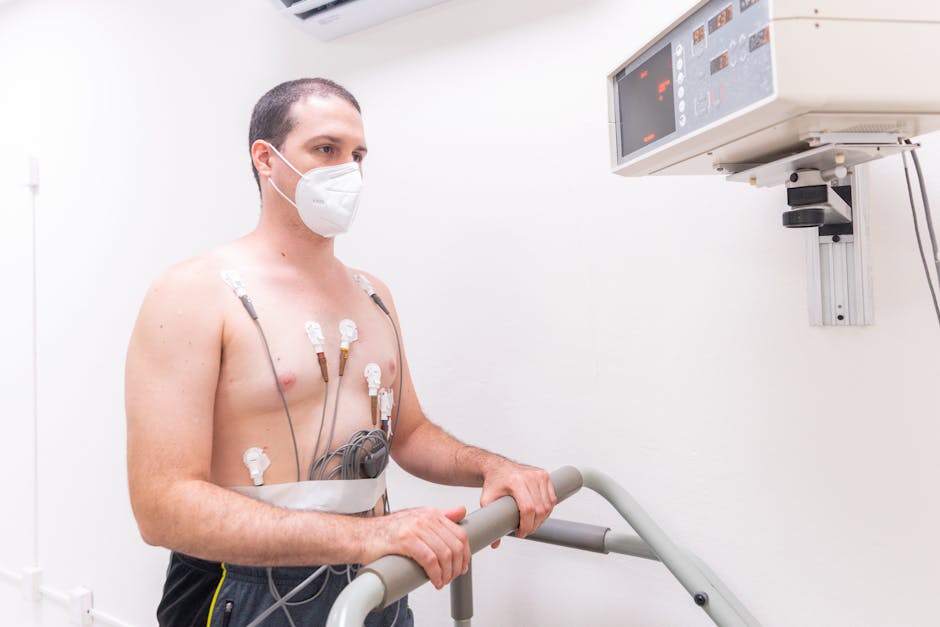
A stress test works by pushing the heart harder - usually through exercise or medication - and then watching for signs that blood flow is being restricted. When a blockage is severe enough to limit blood flow during exertion, the heart shows it through electrical changes, reduced pumping motion, or abnormal imaging patterns. That makes stress tests genuinely useful for one specific question: Is this chest pain being caused by a severe, obstructive blockage? If yes, a stent or bypass procedure might be the right next step. For that purpose, stress testing does its job reasonably well, explains Dr. Radwaner.
Not a Screening Tool for Asymptomatic Patients
The problem arises when stress tests are used as general heart health screenings for people with no symptoms. Guidelines from the American College of Physicians have reviewed the evidence for using ECGs, nuclear stress tests, and stress echocardiograms to screen low-risk, asymptomatic patients - and found no evidence supporting that use. Stress tests simply weren't built for that job, and using them that way creates a dangerous false sense of security. It's worth noting that the American Heart Association and American College of Cardiology do allow for stress testing in asymptomatic individuals with intermediate or high cardiovascular risk scores, where it may help stratify risk - but routine screening of low-risk patients remains unsupported.
The Vulnerable Plaque Problem
Most Heart Attacks Originate From Non-Severely Narrowed Arteries
Coronary artery disease doesn't follow a tidy, predictable path. Arteries accumulate two very different kinds of plaque: obstructive plaque, which narrows the artery enough to restrict blood flow and cause symptoms, and vulnerable plaque, which is softer, more unstable, and often sits in arteries that aren't severely narrowed. When vulnerable plaque ruptures, it triggers a clot that can completely block blood flow in minutes - causing a heart attack.
According to cardiology research, the vast majority of heart attacks occur in blockages that wouldn't have triggered any alarm on a stress test. Most vulnerable plaque is not obstructive. Blood flows freely past it, which is precisely why the stress test sees nothing wrong.
Why Plaque Stability Matters More Than Degree of Narrowing
The degree to which an artery is narrowed tells only part of the story. A 40% blockage made of soft, inflamed plaque can be far more dangerous than a stable 70% blockage. Plaque stability - its composition and likelihood of rupturing - is the real variable driving heart attack risk. Standard stress tests have no mechanism to evaluate that. They measure how well blood flows during exertion, not what the plaque lining the artery walls looks like or how likely it is to tear open.
How Often Stress Tests Miss Real Disease
Basic Treadmill ECG: Catches Only 60-70% of Significant Blockages
The 2021 AHA/ACC guidelines place the sensitivity of a standard exercise treadmill ECG in the 60-77% range. In plain terms: if 100 people with real, significant coronary artery disease walked in for a basic stress test, somewhere between 23 and 40 of them could walk out with a normal result. That's not a fringe failure rate - it's a structural limitation of the test itself. Former President Bill Clinton famously passed a nuclear stress test before an angiogram later confirmed he needed bypass surgery. He's a well-known example, but far from an isolated one.
Imaging-Based Tests: Improved but Still Carry Meaningful False Negative Rates
Adding imaging - either stress echocardiography or nuclear myocardial perfusion imaging - substantially improves accuracy. Meta-analyses show that stress echocardiography achieves sensitivity around 85%, while nuclear stress testing reaches approximately 87%. Those are real improvements. But they still leave a meaningful gap. False negatives are more common with single-vessel disease, when patients don't reach adequate heart rate, or when certain medications blunt the heart's response. Even at 87% sensitivity, roughly 1 in 8 people with real disease are missed.
Women Face a Greater Diagnostic Gap
Stress tests are measurably less reliable in women, and the reasons are worth understanding clearly. Women are more likely to have baseline electrical changes on their ECG that make exercise-induced changes harder to interpret. They also tend to show ST-segment depression during exercise - a pattern that mimics a positive finding but often reflects something other than obstructive blockage. Women are also more likely to have diffuse coronary disease or problems in smaller blood vessels (microvascular disease) rather than the large, focal blockages that stress tests are optimized to detect. Microvascular dysfunction can cause real cardiac symptoms and real risk, yet standard stress tests routinely miss it entirely. For all these reasons, imaging-based stress tests are generally preferred over a plain treadmill ECG when evaluating women, though even those carry limitations in this population.
More Accurate Tools for True Risk Assessment
Coronary Artery Calcium (CAC) Scoring
A Coronary Artery Calcium scan uses a non-contrast CT to detect and quantify calcified plaque in the coronary arteries. It's a strong, independent predictor of future cardiovascular events - and it can identify individuals at elevated risk even when their stress test results are entirely normal. A zero calcium score in the right patient can be meaningfully reassuring. A high score (particularly above 400) signals elevated risk that warrants closer attention, often including further testing. The AHA and ACC both recognize CAC scoring as a valuable tool in refining risk assessment beyond what traditional stress tests can offer.
CCTA: Evaluating Plaque for a More Complete Risk Picture
Coronary CT Angiography (CCTA) goes a step further by directly visualizing the coronary arteries and characterizing plaque - not just whether it's there, but what it looks like. CCTA can identify low-attenuation plaque (a marker of vulnerable, soft plaque), detect non-obstructive disease that stress tests miss entirely, and provide a far more detailed map of an individual's coronary anatomy. For people trying to understand their true heart attack risk rather than just whether they need a stent, CCTA represents a fundamentally different - and more complete - kind of answer.
Passing a Stress Test Is Not Clearance From Heart Attack Risk
A normal stress test result has real value in a specific context: it suggests that a severe, obstructive blockage is unlikely, and that symptoms probably aren't being driven by critical arterial narrowing. That's worth knowing. But it does not mean the coronary arteries are clean. It does not mean vulnerable plaque isn't present. And it does not mean heart attack risk is low.
A significant proportion of men and women who die suddenly from heart disease had no prior symptoms, stresses The NY Center for the Prevention of Heart Disease's Dr. Radwaner. Many of them had likely passed a stress test at some point without issue. The test simply isn't built to find what kills most people - and understanding that distinction is the first step toward asking better questions and seeking more complete answers.
The NY Center for the Prevention of Heart Disease
City: New York
Address: 136 East 57th Street, Suite 1001
Website: https://www.thenyheartcenter.com/
Phone: +1 212 717 0666
Email: Thenyheartcenter@gmail.com


Comments
Post a Comment