AI SEO: Search Behavior Shift to AI Assistants & Multi-Platform Discovery
Key Takeaways
- Consumer search behavior has fundamentally shifted - AI assistants, social platforms, and zero-click results now compete directly with traditional Google searches.
- Local businesses face the steepest climb: achieving AI local visibility can be up to 30 times harder than traditional local search, demanding a completely different playbook.
- Traditional SEO alone can no longer keep pace - a unified strategy combining technical SEO, local presence, content, and reputation management is now the baseline requirement.
- 40% of Gen Z already starts discovery on TikTok or Instagram, signaling that multi-platform visibility is not a future trend - it is already here.
- The businesses that adapt their SEO strategy to AI-era search behavior now will have a commanding advantage over those still optimizing for a search landscape that no longer exists.
The rules of being found online have changed faster than most businesses have had time to notice. What worked reliably just a few years ago - ranking on Google, maintaining a website, maybe collecting a few reviews - is no longer enough to stay competitive. The way people search has quietly but dramatically evolved, and businesses still playing by the old rules are losing ground every single day.
80% of Buyers Research Online - But Google Is Not Their Only Stop Anymore
Over 80% of consumers research online before making a buying decision. That statistic has held for years, and it still holds. But the word that matters in that sentence is online - not Google. The path a buyer takes before choosing a business now spans AI assistants, social platforms, review sites, local directories, and yes, still search engines. The finish line has not moved; the course has gotten considerably more complicated.
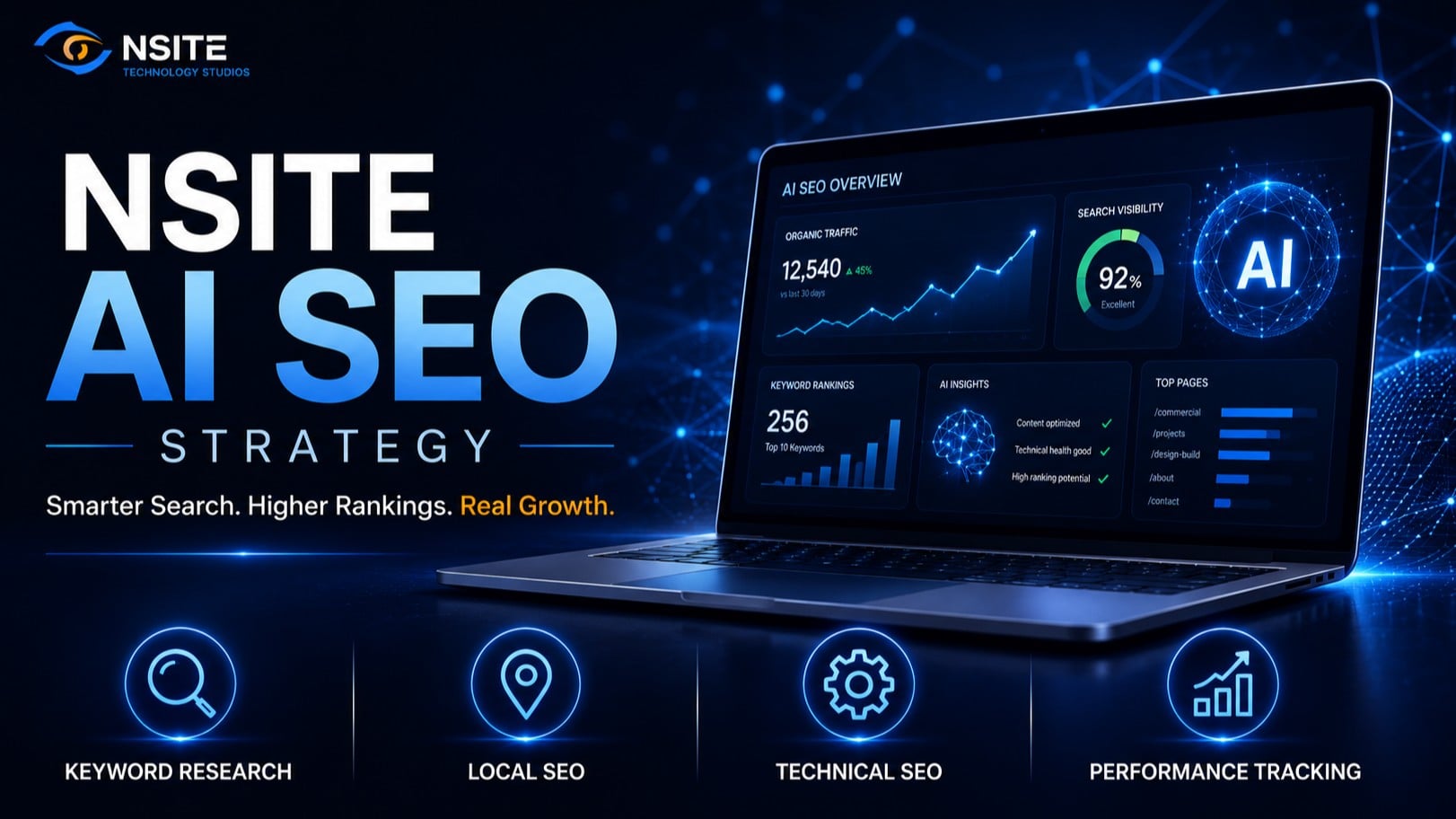
For small and medium-sized businesses, this shift shows up as fewer phone calls, lower website traffic, and the uncomfortable sense that visibility is slipping despite doing everything right. Understanding where that visibility is going - and why - is the first step to reclaiming it. Nsite Technology Studios has been tracking exactly this evolution, and their Nsite AI SEO service is built around the technical, local, content, and reputation signals that today's AI-powered search actually uses to rank and recommend businesses.
AI Assistants Have Quietly Replaced the Search Bar
It did not happen all at once. But at some point, asking Siri, Alexa, or Google Assistant a question became just as natural as typing into a search box - and for many people, more natural. The numbers reflect this shift at a scale that is hard to overstate.
8.4 Billion Active AI Voice Assistants - More Than People on Earth
In 2024, the number of active AI voice assistants surpassed 8.4 billion - exceeding the entire global population. More than half of all smartphone users engage with these assistants daily. This is no longer niche behavior; it is mainstream. When someone asks an AI assistant for a recommendation, that assistant does not pull up a list of ten blue links. It delivers a single answer, drawn from structured data, verified business profiles, and trusted content signals. That is a fundamentally different game than ranking on page one of Google - and most SMBs are not yet playing it.
68% of Google Searches Now End Without a Single Click
Even on Google itself, the traditional model is breaking down. Approximately 60% of searches now conclude without users clicking through to any website, as AI-generated summaries and direct answers resolve queries right on the results page. AI Overviews - which synthesize content from websites, reviews, and directories - now appear in 68% of local business queries. The result: roughly 80% of consumers rely on AI-written results for at least 40% of their searches, contributing to a 15 to 25% reduction in organic web traffic to traditional websites. Traffic that once flowed to a business's website is now being absorbed by the search engine itself.
Local Businesses Are Hit Hardest
Every business feels the pressure of AI-era search, but local businesses absorb the impact most directly. A national brand can spread its visibility across hundreds of pages and thousands of keywords. A local plumber, dentist, or boutique retailer lives and dies by what appears in a very specific geographic query - and that territory is increasingly controlled by AI.
AI Overviews Dominate Informational Queries, But the Local Pack Still Leads Pure Local Intent
There is an important nuance here. When someone searches how much a dental cleaning costs, AI Overviews dominate - and a local business may never appear. But when someone searches for a dentist open on Saturday nearby, the local pack still leads. The challenge is that the informational queries - the ones that used to funnel curious researchers toward local businesses - are now largely captured by AI before a user ever scrolls. Local businesses are losing the top of the funnel without losing the bottom, which makes growth increasingly difficult.
Local AI Visibility Is 30x Harder Than Traditional Local Search
Industry analysis puts the scale of this challenge in stark terms: achieving AI local visibility can be up to 30 times harder than traditional local search visibility. AI tools respond to complex, conversational queries by evaluating reviews, location context, business information consistency, and personal preferences simultaneously. A business that ranks well in a standard local search may be completely invisible to an AI assistant pulling from different signals entirely. Succeeding today means building a presence that works across both systems at the same time.
Discovery Has Gone Multi-Platform
Search engine optimization was built around search engines. But discovery - the act of finding something new before you even know you need it - has migrated far beyond Google's borders.
40% of Gen Z Searches Start on TikTok or Instagram - Not Google
40% of Gen Z audiences prefer using social platforms like TikTok and Instagram over Google for discovery. They are not searching for something they have already decided to buy; they are finding products, services, and businesses through content - a short video, a tagged location, a comment thread. For SMBs that rely on younger consumers, this is not a future consideration. Multi-platform presence is not optional anymore; it is foundational.
Why Traditional SEO Can No Longer Do the Job Alone
Traditional SEO was built for a specific environment: a user types keywords into Google, Google returns ten links, the user clicks one. Optimize the page, build some backlinks, update the title tag - done. That environment still partially exists, but it now represents a shrinking slice of how people actually find businesses.
Today's search environment requires a business to be structured so search engines can parse it technically, consistent enough that AI assistants trust its data, reputable enough that review signals support its recommendations, and present enough across platforms that discovery can happen anywhere. No single tactic covers all of that. A technically sound website with a neglected Google Business Profile and three-year-old reviews will lose to a less polished competitor that shows up consistently across every signal AI uses to evaluate trust. The game has expanded, and the strategy has to expand with it.
The Unified Fix: Technical SEO, Local Presence, and Reputation as One Strategy
The answer is not to do more of everything separately - it is to integrate the signals that AI-era search actually responds to into one coherent approach. Here is what that looks like in practice.
Search Visibility: Rankings Where It Counts
Technical SEO - site architecture, page speed, structured data, keyword strategy, and content architecture - remains the foundation. AI systems still parse websites; they just require cleaner structure and more explicit signals than a human reader does. Getting this right means being eligible to appear at all, whether in a traditional search result or an AI-generated overview.
Local Presence and Reputation: What AI Actually Uses to Judge You
AI assistants pulling local recommendations evaluate business listing consistency, Google Business Profile completeness, and online reviews in real time. An inconsistent name, address, or phone number across directories - or a profile that has not been updated in months - can quietly eliminate a business from AI recommendations entirely. Review monitoring and response are not just good customer service practices anymore. Search engines now incorporate review signals directly into ranking algorithms, and AI assistants weight them heavily when forming recommendations.
Ongoing Content: Staying Relevant as Algorithms Evolve
Static websites do not hold rankings as algorithms evolve. Ongoing content - blog posts, local landing pages, FAQ content - keeps a business's signal fresh, expands the range of queries it is eligible to answer, and provides the material AI Overviews pull from when synthesizing answers. Consistent content output is how businesses stay in the conversation as AI search continues to develop.
SMBs Who Adapt Now Will Own the Search Landscape Others Abandoned
Industry analysts have begun calling the next phase of local search Local 5.0 - a model where AI does not just retrieve information, it interprets intent, evaluates evidence, and connects context to decide which businesses to trust and recommend. In that environment, the businesses that have built consistent, trustworthy, multi-signal digital presences will be the ones AI recommends - repeatedly, automatically, and at scale.
The window to build that advantage is open right now, while most competitors are still running traditional SEO playbooks. SMBs that integrate technical SEO, local presence, and reputation management into a single, coordinated strategy today will not just keep up - they will pull ahead in a search environment that others have already conceded. The shift has happened. The question is whether to adapt to it or wait until the gap becomes impossible to close.
To find out what an AI-enhanced search strategy looks like for your specific business, visit Nsite Technology Studios - a digital strategy firm helping SMBs build the kind of unified online visibility that today's AI-driven search environment actually rewards.
Nsite Technology Studios, Inc.
City: Westminster
Address: 11071 Wolff Way
Website: http://www.nsitetechnologystudios.com
Email: contact@nsitetechstudios.com


Comments
Post a Comment