Yoga Instructor Shares Pain vs Intensity Signals Beginner-Friendly Studios Teach
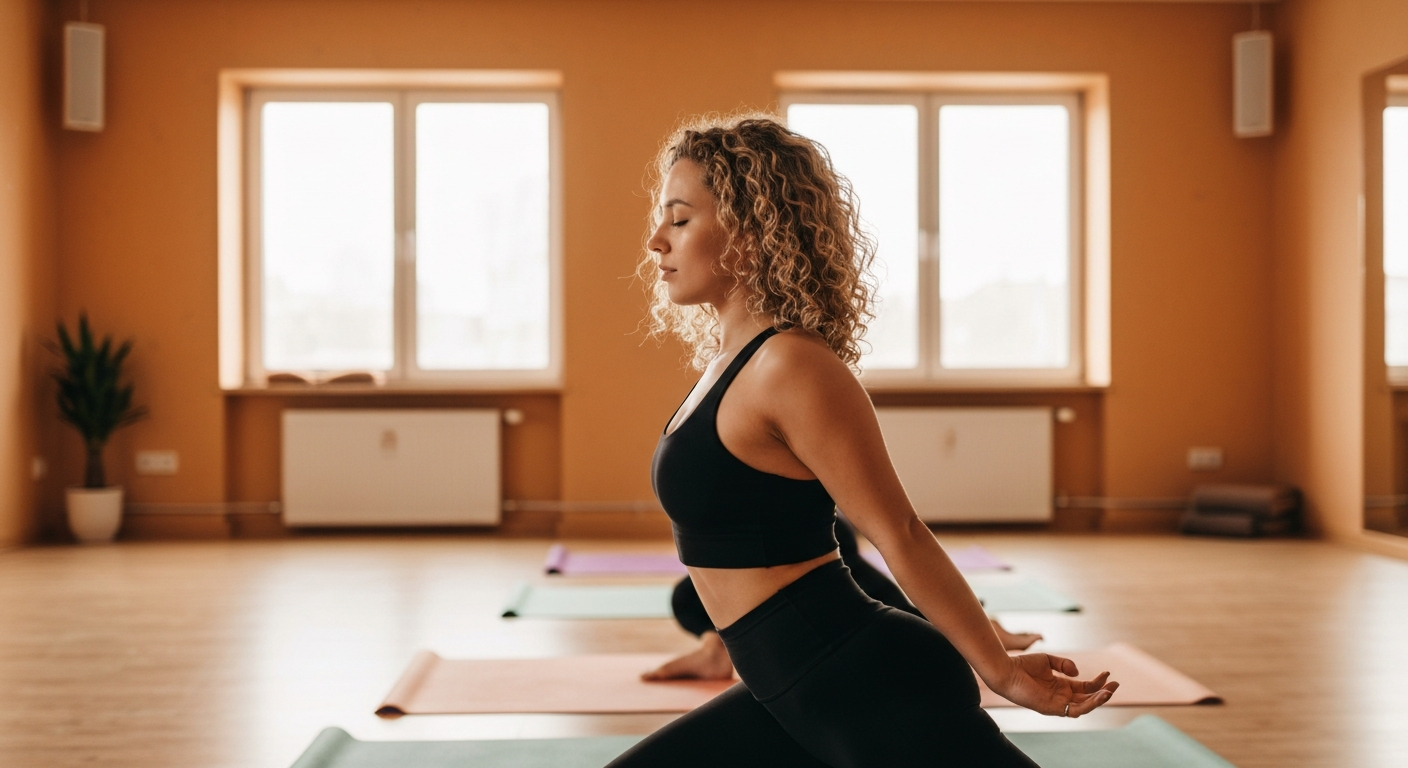
- Sharp pain — especially in joints — is a stop signal, not something to push through. Intensity in the belly of a muscle, however, is a normal and healthy part of growth.
- Other warning signs like tingling, numbness, shaking, or nausea are just as important to recognize as pain itself.
- Beginner-friendly formats like Hatha yoga move slowly enough to give new practitioners time to actually feel what's happening in their bodies.
- Qualified instructors with at least 200 hours of training are specifically schooled in alignment, injury prevention, and how to help students communicate discomfort before it becomes damage.
- Almost every yoga pose can be modified — meaning physical limitations or past injuries don't have to keep anyone off the mat.
Starting yoga comes with a lot of firsts: first time holding Warrior I for longer than feels comfortable, first time noticing a strange pulling sensation in the hamstring during a forward fold, first time wondering whether what you're feeling is progress or a warning sign. That uncertainty is one of the most common reasons new practitioners either push too hard and get hurt, or hold back so much they never really grow. Learning to read the body's signals accurately is, arguably, the most important skill a beginner can develop — and it's one that good studios and instructors prioritize from day one.
Sharp Joint Pain Means Stop — Muscle Intensity Means Grow
The single most important distinction in yoga — especially for beginners — is the difference between pain and intensity. These two sensations can feel confusing at first, but they carry completely different messages from the body, and responding to them correctly is what separates a safe practice from an injurious one.
Pain, particularly in the joints, is the body's hard stop. It's sharp, often sudden, and localized — and it means back off immediately. Intensity, on the other hand, is the warmth, the effort, the stretch that builds slowly in the belly of a muscle. That sensation is not just normal; it's the point. It signals that the body is working, adapting, and getting stronger.
New practitioners often don't have a reference point for either sensation yet. The mat is unfamiliar territory, and everything feels new. Studios focused on beginners — like ASY Studio — treat this education as foundational, building body awareness into the practice from the very first class so students aren't left guessing on their own.
What Pain vs. Intensity Actually Feels Like
Pain: Sharp, Localized, and Persistent — Especially in Joints
Pain in yoga tends to arrive fast and in a specific spot. It's sharp rather than diffuse, often feels like it's coming from a joint — the knee, the hip socket, the lower spine, the wrist — and it doesn't ease up when you breathe into it or shift slightly. If anything, it sharpens.
This is the body signaling a structural concern. Joints are surrounded by ligaments, which are designed to limit movement, not support extreme ranges of it. When a pose pushes a joint past its stable range, the ligaments are placed under stress they weren't built for. Repeatedly overstretching ligaments over time leads to joint instability — and chronic pain that can follow a practitioner well off the mat.
The rule is straightforward: sharp, shooting, or persistent joint pain is not a sensation to breathe through. It's a signal to stop, come out of the pose, and let the instructor know what happened. There's no pose worth an injury.
Intensity: A Warm, Manageable Sensation in the Muscle Belly
Intensity feels entirely different. It builds gradually, spreads through the broader area of a muscle — not a single pinpoint — and carries a quality of warmth or effort rather than alarm. Think of the slow, spreading heat in the hamstrings during a seated forward fold, or the quiver of the thighs holding Chair Pose for the first time. That's intensity at work.
Intensity is manageable. It may be challenging, even uncomfortable in a demanding way, but it doesn't spike, doesn't make you want to recoil, and it typically softens as the breath deepens. This is the sensation that signals adaptation — the muscle fibers are being asked to lengthen or strengthen, and they're responding. Learning to stay present with intensity, without confusing it for danger, is one of the core skills yoga develops over time.
A useful mental check: does the sensation change when you breathe slowly into it? If it softens, it's likely intensity. If it sharpens or stays the same regardless of breath, treat it as pain and back off.
Other Warning Signals Beginners Often Miss
Tingling, Numbness, Shaking, or Nausea Are Red Flags Too
Pain isn't the only signal worth paying attention to. Several other physical responses during practice can indicate that the body needs a break or a modification — and because they don't always feel like pain in the traditional sense, beginners often dismiss them or feel embarrassed to mention them.
Tingling or numbness — especially in the hands, feet, or face — can indicate nerve compression or restricted blood flow. This is not a normal part of any pose. Shaking can be normal muscle fatigue during strength-building work, but shaking that feels uncontrolled or spreads beyond the working muscle is a sign the body is at its limit. Nausea or dizziness, particularly during inversions or rapid transitions, signals the nervous system is being overwhelmed — and the appropriate response is to rest in Child's Pose or sit down, not to push through.
Any of these sensations are worth mentioning to the instructor. A good teacher won't judge the report — they'll use it to help find a better variation of the pose, or to suggest a rest. The body rarely sends false alarms; the skill is learning to receive the messages clearly.
Why Beginner-Friendly Classes Teach This First
Hatha Yoga's Slower Pace Creates Space to Read Your Body
Not all yoga styles are equally well-suited for beginners, particularly those who are still learning to interpret physical sensations. Fast-paced practices like Vinyasa or Ashtanga compress the time between poses — which compresses the window a practitioner has to check in with how the body is responding. For someone still developing body awareness, that pace narrows the buffer between experiencing a sensation and missing an important warning.
Hatha yoga, by contrast, moves slowly and holds poses longer. That pacing isn't incidental — it's pedagogical. The slower tempo gives students actual time to settle into a shape, notice where they feel something, assess the quality of that sensation, and make a conscious decision about whether to stay, deepen, or back off. Each held pose becomes a small lesson in self-study. For beginners, that time is invaluable.
Foundational Poses Build Awareness Before the Challenge
Beginner-friendly classes also tend to anchor their sequences in foundational postures — Mountain Pose, Cat/Cow, Child's Pose, Downward Facing Dog, Warrior I — not because these poses are easy (they're not, done well), but because they're stable enough to allow attention to turn inward. When the body isn't struggling just to stay upright, the mind has bandwidth to notice what's happening in the hips, the spine, the shoulders.
This is how body awareness actually gets built: repetition of familiar shapes, with increasing attention to detail each time. Before introducing challenging inversions or deep hip openers, quality beginner programs develop the foundational vocabulary of sensation that makes those later poses both navigable and safe. Awareness is always built before the challenge is introduced.
How Qualified Instructors Keep You Safe
200-Hour Trained Instructors Are Schooled in Alignment and Injury Prevention
The yoga industry's baseline standard for registered instructors is a 200-hour teacher training program. That training isn't just about learning pose sequences — a substantial portion covers anatomy, biomechanics, alignment principles, and injury prevention. Instructors who have completed this training understand which joints are vulnerable in which poses, how misalignment increases injury risk, and how to spot warning signs in a student's body before the student has even registered discomfort.
This matters greatly for beginners, who are often practicing in bodies that aren't yet accustomed to the demands of yoga. A trained eye watching the class can catch a collapsed knee in Warrior II, a strained neck in Cobra, or a hyperextended elbow in Downward Dog — and offer a correction before any damage occurs. Instructor qualification isn't a formality. It's a layer of protection that students may not always see working, but that's working consistently on their behalf.
They Encourage You to Communicate Discomfort — Not Push Through It
One of the most important cultural norms a good instructor establishes from the very first class is that speaking up about discomfort is not weakness — it's wisdom. New students often come from fitness environments where pushing through is celebrated, and they carry that conditioning onto the mat.
Skilled yoga teachers actively counter this. They give explicit permission to back off, to rest, to ask questions. They model non-judgment so the classroom feels safe enough for a student to raise a hand and say something in my knee felt strange in that last pose. That communication loop is what allows the instructor to intervene before discomfort escalates into injury. The safest yoga classes aren't the ones where everyone is silent and stoic — they're the ones where students feel free to report what they're experiencing.
Breath and Body-Contact Cues Help Redirect Away From Pain
Beyond verbal encouragement, skilled instructors use specific cueing techniques to help students work through sensation. Rather than telling a student to ignore discomfort, they redirect attention — to the quality of the breath, to the feeling of the feet pressing into the floor, to the weight of the hands on the mat. These body-contact and breath-based cues serve a real physiological purpose: they shift the nervous system's focus without asking the student to override a pain signal they should be listening to.
This approach is especially helpful for students who arrive with chronic discomfort or past injuries. By anchoring attention in neutral or pleasant sensations — the steadiness of the breath, the support of the floor — instructors help students begin to separate movement from the anticipation of pain, creating space for healing rather than avoidance.
Modifications Let You Practice Without Limits
Most Poses Can Be Adapted to Suit Injuries or Medical Conditions
One of the most persistent myths about yoga is that it requires a certain kind of body — flexible, injury-free, young. The reality is nearly the opposite. Yoga has one of the most robust systems of modification of any physical practice, and virtually every pose has accessible variations that serve the same purpose as the full expression of the shape.
Tight hamstrings in a forward fold? A yoga block under the hands brings the floor to the practitioner instead of forcing them down. Sensitive knees in a low lunge? A folded blanket under the kneecap changes the entire experience. Wrist issues in Downward Dog? Fists or forearms redistribute the weight. These aren't lesser versions of the poses — they're intelligent adaptations that honor where the body actually is today, rather than where cultural expectation says it should be.
For practitioners managing injuries or medical conditions, modifications are the path to a sustainable practice — not a detour around it. The goal was never the pose itself. The goal has always been what the pose creates: strength, awareness, steadiness, and ease. Props and modifications deliver exactly that, without the risk of pushing beyond healthy limits.
Finding Your Edge Safely Is the Real Beginner Skill
Everything covered here — the pain versus intensity distinction, the warning signs, the slower pacing of beginner classes, the role of trained instructors, the availability of modifications — all of it converges on a single concept that experienced practitioners call finding the edge. The edge is the threshold between productive challenge and potential harm. It's not a fixed line. It moves depending on the day, the quality of sleep the night before, stress levels, hydration, and a dozen other factors that change constantly.
Beginners are often told to listen to their body as though this is self-explanatory. But listening to the body is actually a skill — one that takes practice, instruction, and time to develop. The body speaks in sensations, and learning to translate them accurately is exactly what the first months of yoga practice are for. Sharp pain in the joint says: stop now. Warm intensity in the muscle belly says: you're at the edge — breathe and decide. Tingling or numbness says: something is compressed — back off and tell someone.
Once a practitioner learns this language, yoga becomes genuinely self-regulating. The practice teaches the skill it requires. Each session adds a little more fluency — more ability to stay present with intensity without panic, and more ability to recognize real pain without hesitation. That fluency is what makes yoga sustainable for life, rather than something that ends with an injury after six weeks. The edge isn't something to fear. It's something to learn to find, respect, and — over time — grow beyond.
For anyone ready to start building that awareness in a supportive, structured environment, ASY Studio offers beginner-focused yoga classes designed to meet new practitioners exactly where they are.
ASY studio
City: Warszawa
Address: 40 Studencka #10
Website: https://asy-studio.pl/


Comments
Post a Comment