Why Are My French Bulldog's Ears Down? Teething Stage Fluctuation
Key Takeaways
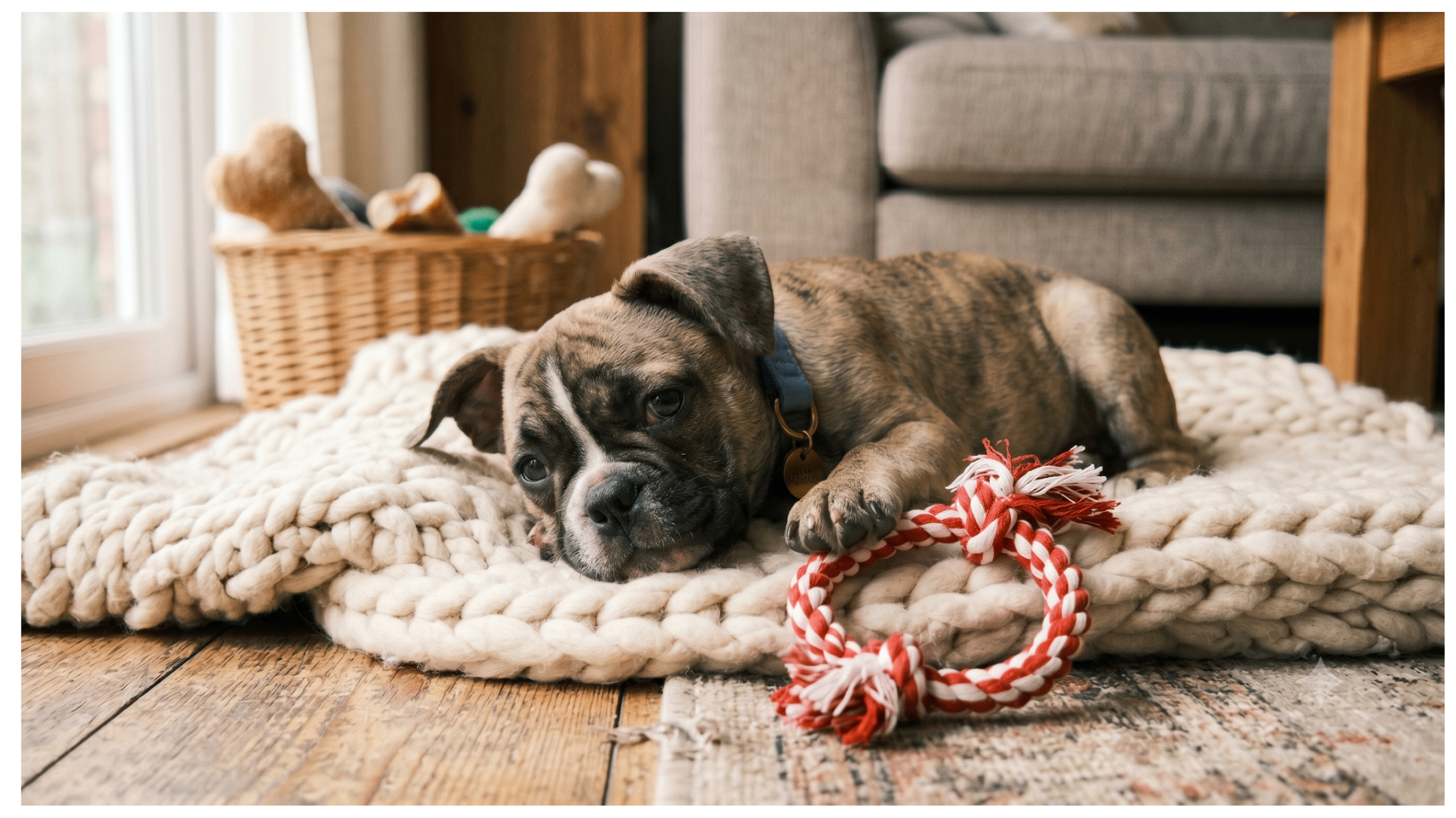
- All French Bulldogs are born with floppy ears - it's completely normal, and most ears stand up naturally between 5 and 15 weeks of age.
- During the teething phase (typically 12-14 weeks), ears can drop, rise unevenly, or switch positions day to day - this is a temporary and expected part of development.
- Calcium being redirected to developing teeth is a leading reason ear cartilage temporarily softens during this period.
- Most breeders advise against worrying until around 8 months old; only a small percentage of Frenchies ever need ear taping to stand fully upright.
- Ear infections can also cause drooping - knowing the difference matters, and this post covers how to spot it.
Seeing a French Bulldog puppy with one ear up and one flopped sideways is one of the quirkier moments of early puppyhood. For new owners, it can also be a source of real anxiety. The good news: that floppy, lopsided look is almost always part of a perfectly normal developmental process, and patience is usually all that's needed.
Floppy Ears During Teething? That's Normal
French Bulldog ears have a reputation for being dramatic. They go up, they go down, they point sideways like tiny satellite dishes - sometimes all in the same week. What looks like a problem is almost always just the body doing its job. The teething stage, roughly between 12 and 14 weeks, throws a temporary wrench into ear development, and the results can look strange even when everything is going exactly as it should.
Understanding why this happens makes the whole process a lot easier to watch without worry.
All Frenchies Start With Floppy Ears
Every French Bulldog is born with soft, floppy ears - no exceptions. The cartilage that will eventually hold those signature bat ears upright simply isn't strong enough at birth to do its job yet; that takes weeks of growth.
The 5-15 Week Bat Ear Window (and Sometimes Longer)
In most cases, Frenchie ears begin standing somewhere between 5 and 15 weeks of age, though the range can stretch to 18 months in some puppies. Some puppies have perfectly erect ears as early as 4 weeks old, while others may take 10 weeks or longer - even within the same litter. The variation is completely normal and tied to individual growth rates, not health problems.
If signs of the ears starting to rise are visible by around 7 weeks, that's a strong signal they'll eventually stand on their own without any intervention.
Why Some Puppies Take Longer
Genetics play a role, but so does the pace of overall physical development. Puppies from the same parents can have noticeably different ear timelines. There's no reliable way to predict which puppy will pop up early and which will take its time - and that uncertainty is entirely part of the process.
Why Teething Makes Ears Drop
The teething phase is the most common culprit behind ears that were starting to stand suddenly going back down. Two distinct physical processes drive this, and both are temporary.
Calcium Shifts to Developing Teeth
Around 12-14 weeks, a puppy's body is working hard to grow a full set of adult teeth. That process demands a significant supply of calcium - and the body prioritizes the teeth. With calcium concentrated in dental development, ear cartilage can temporarily soften, causing ears that had just started standing to droop back down. Once teething wraps up and calcium availability normalizes, cartilage firms back up and the ears typically resume their upward climb.
Chewing Tires the Connected Jaw Muscles
There's a mechanical side to this too. The muscles involved in chewing are physically connected to the base of the ear structure. During teething, puppies chew constantly - on toys, furniture, fingers, anything available. That sustained chewing fatigues the jaw muscles, and that fatigue transfers to the ear muscles, causing temporary drooping. Think of it as the canine equivalent of working one muscle group so hard that neighboring muscles feel the effect.
The Wonky Ear Phase Is Part of the Process
Once ears start moving, they rarely go straight to fully erect. The journey tends to look messy before it looks right - and that's perfectly fine.
One Up, One Down - Then Reversed
One ear standing weeks before the other - then swapping - is extremely common. An owner might notice the right ear is up on Monday, and by Thursday the left is standing while the right has flopped. This flip-flopping is actually a sign of active development. The muscles and cartilage on each side simply develop at slightly different rates.
Airplane Wings Before Full Erection
Even when both ears are technically up, they often don't point straight. Instead, they angle outward - what breeders call the airplane wing phase. The ears aren't fully vertical yet; they're angled to the sides. This is another normal milestone on the way to the classic upright bat ear position, not a stopping point.
When to Worry (and When Not To)
The instinct to intervene early is understandable, but acting too soon is usually unnecessary and can disrupt the natural process.
Wait Until Around 8 Months Before Intervening
Most experienced breeders advise against any concern or intervention until a Frenchie puppy is around 8 months old. Puppies develop at their own pace, and the teething phase alone can cause extended periods of ear fluctuation. Jumping to conclusions at 12 or 14 weeks - right in the middle of the most chaotic developmental window - leads to unnecessary stress for both owner and puppy. Resources for French Bulldog owners at LeSnort reinforce this same message: ear development is a process, not an event, and most of it resolves without any help.
Ear Infections Can Cause Drooping Too
One important exception: ear infections can cause ears to droop in ways that look similar to normal developmental fluctuation. French Bulldogs are among the breeds most prone to ear infections, largely due to the shape of their ear canals. Key symptoms to watch for include:
- Persistent head shaking or scratching at one or both ears
- Unpleasant odor coming from the ear
- Yellowish or dark discharge inside the ear canal
- Redness or swelling around the ear opening
If any of these are present alongside drooping ears, a vet visit is worth the trip. Routine ear cleaning - whether on a regular schedule or after swimming - can help prevent infections, though cleaning too frequently can sometimes cause irritation, so following your vet's guidance on frequency is a good idea.
How to Tape Stubborn Ears
The vast majority of French Bulldogs - well over 95%, according to breeder observations - never need taping. But for the small percentage with ears that simply won't cooperate, taping is a proven, low-risk option.
When Taping Makes Sense
If a puppy's ears show no signs of movement by around 8-16 weeks, taping can provide the structural support the cartilage needs to set in the correct position. Some breeders suggest considering intervention as early as 7-8 weeks if there are no signs of the ears beginning to perk. Taping is a corrective assist for ears that are developmentally close but need a nudge - not a cosmetic shortcut. Consulting a vet or experienced breeder before starting is always a good idea, especially if calcium supplementation is being considered alongside taping, as rich supplements can upset a young puppy's stomach.
The Wrap, Bridge, and Wait Method
The most widely recommended taping approach from breeders involves three steps:
- Wrap each ear individually. Use a breathable medical tape or masking tape, typically around 1 inch wide. Wrap loosely from the base to the tip of each ear, keeping the ear flat and applying at least two layers of tape for full support.
- Create a bridge. Once both ears are wrapped, position them where they should naturally stand - roughly at 11 o'clock and 1 o'clock on the top of the head. Then tape a connecting bridge between both ears to hold that alignment.
- Wait and remove. Leave the tape in place for up to five days, then gently remove it. If the ears were close to standing on their own, they'll likely stay up. Occasionally a second or third round of taping is needed, but it's uncommon.
Patience Pays - Most Ears Stand on Their Own
The ear journey of a French Bulldog puppy is one of those things that looks alarming in the middle and makes complete sense in hindsight. Floppy ears, lopsided ears, airplane-wing ears - they're all stages in a story that almost always ends with two upright bat ears staring back from across the room. The teething phase is temporary, calcium redistribution is temporary, and the wonky ear phase is temporary. Most of what seems like a problem is just development doing its work on its own timeline.
For more French Bulldog care guides and breed-specific advice, the LeSnort French Bulldog blog is a solid resource for owners getting through puppyhood one floppy ear at a time.
LeSnort
City: Post Falls
Address: 3312 N Backweight Loop
Website: https://lesnort.com/blogs/french-bulldogs/


Comments
Post a Comment