Urinary Incontinence Treatment: Non-Surgical Options Explained by SC Expert
Key Takeaways
- Urinary incontinence affects millions of men and women, yet it is not an inevitable part of aging.
- The Emsella chair uses FDA-cleared HIFEM technology to deliver the equivalent of 11,200 Kegel contractions in a single 30-minute session — fully clothed and pain-free.
- Clinical studies show that 95% of patients reported a significant improvement in quality of life after a course of Emsella treatments.
- Specialized pelvic health centers, founded by medical device experts, are making this technology increasingly accessible through dedicated, focused care.
Bladder leaks can shrink a person's world, often in emotionally stressful ways. A morning run cut short. A laugh that triggers a rush of anxiety. A night interrupted four times before sunrise. These are everyday realities for a large number of women — yet most never seek treatment, assuming it is just part of aging or a burden to be managed with absorbent pads and willpower.
That assumption is outdated. Noninvasive, clinically proven options exist today and are far more accessible than most people realize.
Bladder Leaks Are Common — But You Don't Have to Live With Them
Urinary incontinence remains one of the most underreported health concerns among men and women. The reluctance to bring it up — even with a primary care physician — means millions are managing a genuinely treatable condition. Leaks triggered by a sneeze, a laugh, or a sudden, uncontrollable urge to go are not signs of inevitable physical decline. They are symptoms of weakened pelvic floor muscles, and weakened muscles can be strengthened.
The pelvic floor is a hammock of muscle and connective tissue that supports the bladder, uterus, and bowel. Pregnancy, childbirth, the hormonal changes associated with menopause, and the general effects of aging all reduce the tone and responsiveness of these muscles. When they weaken, the internal structures they support lose stability. That loss of stability is exactly when leaks happen.
Targeted pelvic floor strengthening has a measurable, scientifically documented impact on bladder control. The challenge has always been how to consistently and deeply engage those specific muscles. Traditional Kegel exercises help in theory, but most people perform these incorrectly, inconsistently, or cannot voluntarily activate the correct muscle groups. That neuromuscular gap is exactly what advanced medical technology is designed to bridge. Today, specialized treatment centers are focusing exclusively on closing that gap with targeted electromagnetic therapy.
What the Emsella Chair Actually Does
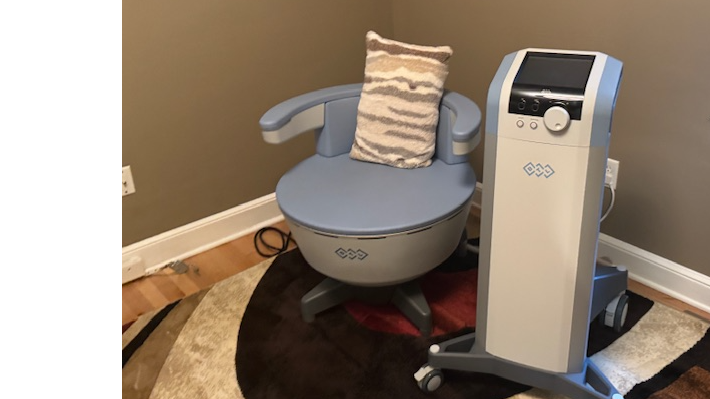
The BTL Emsella chair looks deceptively simple — it resembles an ordinary, modern seat. But what happens beneath the surface during a session is anything but ordinary. The device uses High-Intensity Focused Electromagnetic (HIFEM) energy to penetrate deep into pelvic floor tissue, directly activating the motor neurons that signal muscles to contract.
These are not surface-level twitches. The electromagnetic field reaches the full depth of the pelvic floor musculature, accessing areas that voluntary exercise cannot reach. The result is a profound neuromuscular response that rebuilds muscle fiber density, tightens supportive tissue, and restores the structural integrity required to keep the bladder closed under pressure. Think of it as precision physical therapy for a muscle group that is notoriously difficult to isolate.
11,200 Kegel-Equivalent Contractions in 30 Minutes
To put the intensity of a single session into perspective: one 30-minute Emsella treatment delivers the equivalent of 11,200 supramaximal Kegel contractions.
"Supramaximal" is the critical term here. These contractions are performed at an intensity the human body cannot produce voluntarily. No amount of dedicated, daily Kegel practice can replicate the depth, speed, or volume of muscular engagement achieved during a single session on the device.
That level of intense stimulation triggers the cellular muscle remodeling that leads to lasting physical change. It increases muscle fiber strength, improves neurological muscle coordination, and yields better bladder control. A standard course of treatment involves multiple sessions, and physiological improvements continue to build for several weeks after the final appointment as the tissue continues to adapt.
How HIFEM Technology Reaches Deep Pelvic Muscles
When a patient sits on the Emsella chair, HIFEM energy safely passes through clothing and skin to directly stimulate the pelvic floor's motor neurons. This process bypasses the brain's voluntary motor pathways entirely. By removing the brain's limitations, the technology achieves contractions that are vastly stronger and more thorough than any contractions generated by conscious human effort.
FDA-Cleared for Both Stress and Urge Incontinence
Not all bladder leaks stem from the same underlying factor. Understanding the distinction matters because a pharmaceutical or surgical treatment that works for one type of incontinence rarely addresses the other. The Emsella chair's FDA clearance covers both primary types, which sets it apart from alternative therapies.
Stress vs. Urge Incontinence: Which Does It Treat?
Stress incontinence occurs when physical pressure — such as a heavy cough, a sneeze, lifting weights, or even standing up quickly — overwhelms the bladder sphincter's ability to stay closed. It is a structural failure rooted in weakened pelvic floor support.
Urge incontinence, by contrast, is marked by a sudden, intense urge to urinate that is difficult or impossible to suppress. It often results in leakage before the patient can reach a bathroom. This type is generally linked to overactive bladder signals and impaired neuromuscular coordination.
The Emsella chair addresses both mechanisms simultaneously. By strengthening the pelvic floor muscles and surrounding connective tissue, it reinforces the physical support that prevents stress leaks. At the same time, the intense stimulation refines the neuromuscular control needed to suppress urgency and frequency. Treating both modalities at once makes this approach particularly effective for women dealing with "mixed incontinence" — a common presentation in which patients experience both stress and urge symptoms.
First Non-Surgical Device of Its Kind.
The BTL Emsella is the first non-surgical device to receive FDA clearance specifically for treating urinary incontinence, covering both stress and urge presentations. That regulatory approval carries significant weight in a consumer market flooded with unregulated supplements, at-home gadgets, and wellness therapies making unverified claims.
What Results Look Like — By the Numbers
Clinical data on Emsella is unusually consistent for a noninvasive medical treatment. Multiple peer-reviewed studies and patient outcome reports point to meaningful, measurable improvement in bladder control for the vast majority of patients who complete the protocol.
95% of Patients Report Significant Improvement.
Across clinical evaluations, 95% of treated patients reported a significant improvement in their quality of life following Emsella therapy. In a targeted study using the validated ICIQ-SF incontinence scoring tool, patients demonstrated an average improvement of 64.42% in symptom severity at a three-month follow-up. Furthermore, 81.33% of participants reported a drastic reduction in total symptoms.
A 64% reduction in symptom severity changes how a person manages their condition every day. It translates to fewer interruptions, the removal of physical limitations, and significantly less mental energy spent mapping out public restrooms.
Better Sleep, Fewer Pads, and Restored Confidence.
Beyond the clinical data, practical patient outcomes highlight the true value of the treatment. Women consistently report sleeping through the night without waking to use the bathroom — frequently transitioning from waking three or four times a night to sleeping seven uninterrupted hours. Others track a dramatic reduction in the use of hygienic pads, alongside a return to high-impact activities they had abandoned, such as running, jumping, and dancing.
What to Expect During a Session
One of the most common reasons individuals delay seeking treatment for pelvic health issues is the belief that the process will be uncomfortable, physically invasive, or require significant time away from work and family.
Fully Clothed, No Downtime, No Pain
A standard session involves sitting — fully clothed — on the Emsella chair for about 28 minutes. There are no internal probes, no undressing, no injections, and no recovery period. Because the electromagnetic energy works directly through clothing, the entire clinical experience is non-contact. Patients typically describe a series of distinct tingling sensations followed by strong pelvic muscle contractions.
Once the session concludes, patients can resume their normal day immediately. There is no downtime, no post-treatment physical restrictions, and no need for a companion to drive them home. The standard clinical protocol consists of six sessions scheduled twice a week over three weeks — a framework designed to fit easily into a busy schedule.
The Importance of Specialized Care
When seeking treatment for urinary incontinence, finding a provider with deep expertise in pelvic health makes a vital difference in patient outcomes.
Facilities focused exclusively on incontinence ensure every aspect of the patient experience — from the initial diagnostic consultation to the final treatment — is built around a single objective: restoring bladder control. Without the distraction of upselling unrelated aesthetic services, patients receive highly calibrated care from staff who understand the nuances of the technology.
When evaluating a local clinic, patients should look for leadership with a deep, verified background in healthcare and medical devices. A provider with a strong foundation in women's health brings both clinical credibility and the empathy needed to address the complex, highly personal needs of women dealing with bladder leaks.
Bladder leaks are incredibly common, but they are neither inevitable nor permanent. The physiological science behind HIFEM technology is well documented, its regulatory clearance is firmly established, and clinical outcomes consistently point to lasting relief. The decision to seek treatment is simply a conversation. Scheduling an initial consultation with a specialized urine incontinence treatment center is the first step toward understanding the technology and moving through life without constant anxiety.
About the AuthorAnn Peets is a women's health and medical device expert, and the founder of a urinary incontinence treatment center based in Charleston, SC. With a decades-long career managing pharmaceutical and medical device portfolios for global healthcare giants including Glaxo Wellcome, Novartis, and CooperSurgical, she is a leading advocate for accessible, clinically proven technologies that restore patient dignity and daily quality of life.
Core Restore
City: Charleston
Address: 675 Saint Andrews Boulevard
Website: http://www.corerestorecenters.com


Comments
Post a Comment