Tobio's Kits vs Emily Lex vs Temu: A Comparison Of Watercolor Painting Kits
Key Takeaways
- There is no single best watercolor kit for beginners — the right choice depends on how you learn best and how fast you want to start painting.
- Tobio's Kits offers a true all-in-one tin with everything included, designed so beginners can open the box and paint immediately — no extra shopping required.
- Emily Lex is a teaching-first studio whose workbooks and classes go deep on technique, but they require you to source your own supplies separately.
- Temu can be a genuinely viable budget option, but quality is inconsistent across product categories — knowing what to buy matters more than the platform itself.
- The order in which you tackle supplies vs. lessons turns out to matter more than most beginners expect — keep reading to find out why.
Picking a starting point for watercolor should not feel like a research project. But between curated kits, structured teaching studios, and budget marketplaces, the options multiply fast. Here is a clear-eyed breakdown of three very different approaches — and what each one actually delivers for someone just starting out.
Three Ways In — Only One Gets You Painting Tonight
Most beginner watercolor journeys stall before a single brushstroke happens. The culprit is almost always the setup phase — comparing paints, decoding brush types, wondering whether cold-press or hot-press paper even matters yet. The right entry point eliminates as much of that friction as possible without sacrificing the experience of actually learning.
Three options dominate beginner conversations right now: Tobio's Kits, the all-in-one physical kit built around immediate use; Emily Lex Studio, a teaching-first brand centered on structured workbooks and classes; and Temu, the ultra-low-cost marketplace where art supplies show up alongside everything else. Each represents a genuinely different philosophy — and each suits a different kind of beginner.
Understanding the difference between these three approaches saves both money and frustration. They are not competing versions of the same product. They are three distinct starting lines.
Two Different Products, Not Two Versions of the Same Thing
The most common mistake beginners make is assuming Tobio's Kits and Emily Lex are just two flavors of the same thing — a watercolor kit you buy and use. They are not. One sells tools with built-in guidance. The other sells guidance and trusts you to gather the tools.
Tobio's Kits: The Tool That Teaches Just Enough
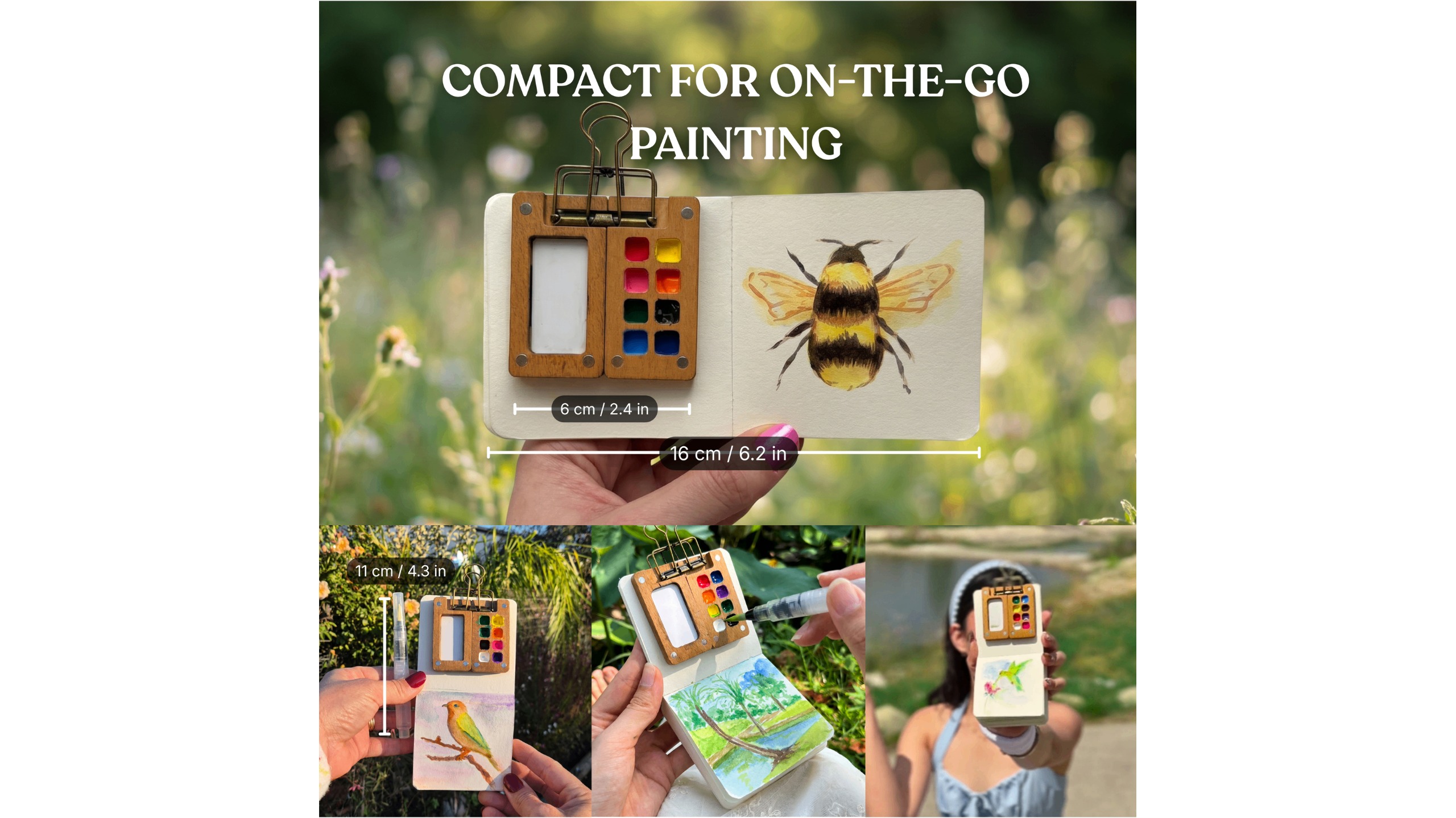
Tobio's Kits approaches the beginner problem from a hardware angle. The Tobio's watercolor kit packages pan paints, a self-contained no-spill water brush, and watercolor paper together in a single compact tin, along with a digital guide — and depending on the bundle, a physical workbook as well. Nothing is missing. Nothing requires a follow-up trip to an art store.
The teaching inside the kit is deliberately light — enough to produce a satisfying result on the first sitting and keep a beginner moving through the first week. It does not aim to build a skill library from the ground up. It aims to remove the wall between wanting to try watercolor and actually doing it. For most beginners, that gap is the whole problem.
Emily Lex: A Teaching-First Studio That Also Sells Its Own Supplies
Emily Lex Studio operates from the opposite direction. The brand is built around classes and a well-regarded line of watercolor workbooks that guide beginners through modern, approachable subjects — flowers, small landscapes, simple botanicals. The workbooks are structured, step-by-step, and printed on watercolor paper so students can paint directly on the pages, keeping the focus on technique rather than drawing confidence.
What the Emily Lex workbooks do not include is the paint or the brushes. Those come from a recommended supply list that students source on their own. The philosophy behind this approach centers on slowing down, paying attention, and building real observational skill — painting as a way of truly seeing the world, not just filling in shapes. That depth is genuinely valuable, but it requires a beginner to do some legwork before a single mark hits paper.
Zero-Friction vs. Teaching-First: What That Actually Means
These two terms describe more than just product design — they describe the entire beginner experience from unboxing to first finished piece.
Tobio's All-in-One Tin: Open It and Paint
Everything that makes watercolor intimidating for new artists — sourcing compatible materials, figuring out brush sizes, choosing the right paper weight — is already solved inside the tin. Pan sets like the one in Tobio's kit are particularly well-suited for beginners because of their portability and immediate usability. There is no water jar to knock over, no palette to prepare, no drying time for squeezed tube paint.
The compact, sealed format also means it travels. Into a bag for a lunch break. Into a carry-on for a weekend trip. Onto a coffee shop table without a production. For beginners who only have small pockets of time in a busy week, that portability quietly becomes one of the most important features of the whole kit — not because it sounds nice, but because it directly affects how often painting actually happens.
Emily Lex's Workbooks: Structured Skill-Building, With Optional Studio Supplies
Emily Lex's teaching resources do not just give instructions — they build a progression. The workbooks walk through technique in a sequence designed to accumulate skill, not just complete individual projects. For beginners whose real goal is to paint well rather than just paint now, that structure pays dividends over time.
The trade-off is the startup phase. Choosing supplies without experience is genuinely tricky. Student-grade paints, a couple of round brushes, and proper watercolor paper are the standard recommendation — but sourcing that independently adds both cost and decision fatigue before the first lesson even opens. Beginners who enjoy the research process often find this rewarding. Those who just want to start often find it exhausting.
Where Temu Fits the Beginner Picture
Temu occupies a completely different category. It is not a brand or a teaching studio — it is a marketplace where individual sellers list products at very low price points, often significantly lower than comparable items on Amazon or in art stores.
Hit or Miss by Category: What Tends to Hold Up, and What Doesn't
Independent reviews of Temu art supplies consistently land on the same conclusion: quality is real, but it varies sharply by product type. Brush holders, mop brushes, and well-constructed brush rolls have received genuinely positive assessments from reviewers who tested them against established alternatives. The Art Gear Guide's hands-on Temu experiment found that a faux-leather 10-piece brush roll and individual mop brushes delivered surprising quality relative to their cost.
Smaller, cheaper brush sets told a different story. A 12-piece round brush set came in with loose ferrules — the metal collar connecting bristles to handle — allowing water to seep in over time and potentially degrading the wooden handles. For a set priced under five dollars, that is an expected trade-off, but it is worth knowing going in. Watercolor paints and paper on Temu are similarly variable, and without guidance on what to look for, a beginner can easily end up with materials that actively work against them.
The Real Trade-Off: Low Cost, No Guidance
Temu's core appeal is the price. First-time buyer deals, rotating discounts, and baseline costs that undercut most art retailers make it genuinely accessible for anyone on a tight budget. Returns are reportedly straightforward — a 90-day free return window with refunds issued quickly for damaged or incorrect items, based on multiple reviewer accounts.
What Temu cannot offer is curation or context. There is no guidance on which paints are beginner-appropriate, no indication of whether a paper will hold up to washes, and no structured introduction to technique. A budget-conscious beginner can absolutely find usable supplies on Temu — but they need to know what they are looking for before they shop, which somewhat defeats the purpose of a beginner-friendly starting point.
Which Materials Actually Help Beginners Learn?
The quality of watercolor materials matters more at the beginner stage than most people expect — not because beginners need professional-grade supplies, but because genuinely poor materials can make basic techniques nearly impossible to execute correctly.
Why Student-Grade Beats Bargain-Bin for Building Technique
Student-grade paints are the sweet spot for beginners. They are affordable, they rewet reliably from a pan, and they produce results consistent enough to learn from. The key word is consistent. When paint behavior is unpredictable — colors that do not flow smoothly, pigment that granulates unexpectedly, or washes that dry patchy — it is nearly impossible to know whether a technique is failing or the material is.
Inferior materials do not just produce worse results; they create false feedback. A beginner who cannot get a clean gradient on cheap paper might conclude they lack talent when the real issue is paper that cannot handle multiple wet passes. Kits that include student-grade components quietly solve this by putting tested, compatible materials in one box. The paints, brush, and paper work together, which means a beginner's results actually reflect their technique.
Portability as a Hidden Factor in How Often You'll Actually Paint
Consistency matters more than intensity when learning a new skill. Painting for twenty minutes three times a week beats a single two-hour Sunday session followed by a two-week gap. Watercolor is one of the most portable art mediums available — pan sets in particular dry quickly, pack flat, and do not require cleanup beyond rinsing a brush.
A kit designed with portability in mind removes the activation energy required to start a session. No setup, no spread-out supplies, no reason to wait for a dedicated workspace. That is not a minor convenience — it is directly tied to how often a beginner actually practices, and practice is how technique develops.
Pick Your Starting Point
The right choice here is genuinely personal. These three options serve three different types of beginners.
Choose Tobio's Kits if You Want Momentum on Day One
If the goal is to be painting tonight — not researching, not ordering supplies, not preparing a workspace — an all-in-one kit is the answer. Tobio's Kits is the right fit for beginners who want zero friction, for anyone buying a gift for someone curious about watercolor, and for people who want a low-mess hobby they can pick up and put down easily. The built-in guide provides just enough direction to get through the first week with satisfying results.
Choose Emily Lex if Structured Technique Is the Whole Point
Emily Lex Studio makes sense for beginners who are serious about developing real skill from the start and do not mind doing the supply research upfront. The workbooks offer depth that a beginner kit does not try to replicate — step-by-step progression, structured projects, and a teaching philosophy built around observation and intention. Budget more time before the first brushstroke, but the foundation built is genuinely stronger.
Choose Temu if Budget Is the Deciding Factor
For beginners where cost is the primary constraint, Temu is worth considering — with realistic expectations. Stick to individual brushes and accessories rather than full sets in the cheapest price tier. Read product descriptions carefully and look for items with detailed reviews. Temu works best as a supplement to existing knowledge, not as a first stop for someone who does not yet know what good watercolor supplies feel like.
Start With the Kit, Add the Lessons — In That Order
The smartest path for most beginners is not picking one of these three options and committing forever — it is sequencing them correctly. Starting with a complete kit removes every barrier between wanting to paint and actually painting. Confidence builds fast when the materials work, the guidance is built in, and the first few pieces turn out well.
Once that foundation exists — once there is genuine enthusiasm and some muscle memory around brush control and water management — adding structured lessons from a teaching resource like Emily Lex pays off far more than it would have on day one. The vocabulary makes sense. The feedback is interpretable. The learning sticks.
Temu can fill in gaps along the way, particularly for accessories or experimental purchases where the price risk is low. But it works best once a beginner already knows what good materials feel like — and can tell the difference.
The order matters: momentum first, depth second, bargain hunting third. That sequence turns a curious beginner into someone who actually sticks with watercolor — and enjoys the process the whole way through.
Tobio's Kits
City: Fort Lauderdale
Address: 3833 Powerline Road
Website: https://tobioskits.com/
Phone: +1 (305) 257-6512
Email: gonzalo@tobioshop.com


Comments
Post a Comment