Quick Detailer Vs Spray Wax: Effectiveness, Use Cases & Alternatives
Key Takeaways
- Quick detailers clean light dust, fingerprints, and water spots using lubricants - and most modern formulas also deposit a short-term protective layer on already-clean surfaces.
- Spray wax is a protection-first product; it seals and shields what is already there rather than cleaning the surface.
- Neither product belongs on heavily soiled or gritty paint - using them on dirty surfaces can scratch and smear the clear coat.
- Hybrid ceramic detail sprays (SiO2-based) bridge the gap between the two, offering light cleaning plus durable, hydrophobic protection in a single product.
- The smartest detailing routine for most drivers uses both strategically - there is a right time for each, and knowing when matters more than which is better.
Most car owners pick up a quick detailer or a spray wax at some point and assume they are basically the same thing - both come in a spray bottle, both leave the paint looking better. But they do very different jobs. Using the wrong one at the wrong time does not just waste product, it can work against the finish being protected. Here is how to use each one correctly.
What Quick Detailers Actually Do
Lubricates to Lift Light Dust and Fingerprints Safely - But Only on Clean Surfaces
Quick detailers work because of lubrication, not aggressive cleaning power. When a fine layer of dust or a smudge from a handprint sits on the paint, a quick detailer suspends those particles so they can be wiped away without friction. That is the key word: friction. Without lubrication, even a soft cloth dragging across dry dust can create micro-scratches and swirl marks over time.
The cleaning agents in a quality quick detailer are intentionally mild - pH-neutral or close to it - so they can dissolve light contaminants like fingerprints, water spots, and fresh bird droppings without stripping any wax or sealant already on the paint. This makes quick detailers ideal for weekly or bi-weekly maintenance between full washes. They also work well as a drying aid after a wash, or as a lubricant when using a clay bar.
The critical limitation: quick detailers are surface maintenance products, not washing products. They are designed for topical, light contamination - not road grime, not brake dust buildup, not dried bug splatter. Using a quick detailer on a moderately dirty car does not clean it. The dirt becomes abrasive paste under the cloth, and the result is fine scratching that shows up under direct sunlight. If the car is not already clean, a proper wash comes first.
Protection Ranges From Days to Months Depending on the Formula
Standard quick detailers offer short-term protection that typically lasts one to two weeks. That is not a flaw - it matches the product's purpose. When used after a wash, the protective polymers in a quick detailer add a thin layer that boosts gloss and gives the paint a bit of a shield against light environmental exposure until the next wash cycle.
Advanced polymer-based and ceramic (SiO2) quick detailer formulas go further. They deposit a hydrophobic layer on the paint that causes water to bead and roll off, taking loose contaminants with it. That hydrophobic effect makes the paint easier to clean next time and keeps it looking sharper between washes. Depending on the formula, protection from these enhanced quick detailers can extend to several weeks rather than just a few days.
Even the best quick detailer is not a substitute for a dedicated wax or sealant when long-term protection is the goal. But as a maintenance tool that extends the life of whatever is underneath it, a good quick detailer punches above its weight - especially when used consistently.
Where Spray Wax Fits In
Protection-Only: It Does Not Clean
Spray wax has one job: build a protective layer on top of clean paint. There are no cleaning agents in the formula designed to lift contamination. When sprayed onto the surface and buffed out, it deposits a thin film - typically wax, synthetic sealant, or a combination of both - that bonds to the clear coat and acts as a barrier.
Because of this, spray wax should always follow a proper wash. Applied to a dirty surface, it does not penetrate through the grime to protect the paint - it coats whatever is sitting on top of it. Dust, oils, and fine particles get locked under the wax layer rather than removed. The surface might look shinier temporarily, but the finish underneath is not actually protected.
The convenience factor is real. Spray wax is significantly faster and easier to apply than traditional paste wax, which requires dedicated application tools, drying time, and more effort to buff off. For drivers who want the benefits of waxing without spending an afternoon doing it, spray wax is a practical solution - as long as the surface is clean before it goes on.
Water Repellency and Gloss in One Step - UV Defense Varies by Formula
A well-formulated spray wax does several things at once. It boosts gloss by creating a smooth, reflective layer over the clear coat. It adds water repellency, causing rain and rinse water to bead up and roll off rather than sheeting across the surface. And it provides a degree of protection against UV radiation, oxidation, and minor surface contaminants.
The UV protection piece is worth paying attention to, though. Not all spray waxes offer meaningful UV defense. Formulas built around carnauba wax tend to deliver a warm, deep gloss with moderate UV resistance, while synthetic sealant-based sprays often edge out carnauba in durability and UV blocking. Reading the formula matters here - not all spray waxes are created equal.
In terms of longevity, spray wax is more durable than a standard quick detailer but still falls short of a proper hand-applied paste wax. Realistically, a spray wax application holds up for a few weeks to a couple of months depending on exposure conditions, wash frequency, and the specific product. For drivers who wash regularly and want paint protected between full waxing sessions, spray wax fills that gap effectively.
How Hybrid Detail Sprays Bridge the Gap
Ceramic (SiO2) Technology Changes the Equation
Hybrid ceramic detail sprays have changed what is possible in a single-product format. Traditional quick detailers clean lightly and offer short-lived protection. Traditional spray waxes protect but do not clean. Ceramic hybrid sprays - built around silicon dioxide (SiO2) chemistry - do both, and they handle the protection piece significantly better than either of the older formats.
SiO2 particles bond to the clear coat at a molecular level, forming a hard, slick, hydrophobic layer that repels water, resists dust and grime adhesion, and boosts gloss with a depth that wax-based products typically cannot match. The hydrophobic effect is noticeably stronger than standard spray wax water beading - water sheets off aggressively rather than just forming rounded beads.
The durability is also a meaningful step up. While a standard quick detailer might hold for one to two weeks and a spray wax for a month or two, a quality ceramic hybrid detail spray can provide protection for several weeks to a few months with consistent use. Detailing professionals often recommend using a ceramic spray as a base protection layer on clean paint, then maintaining gloss and cleanliness between washes with a lighter quick detailer on top.
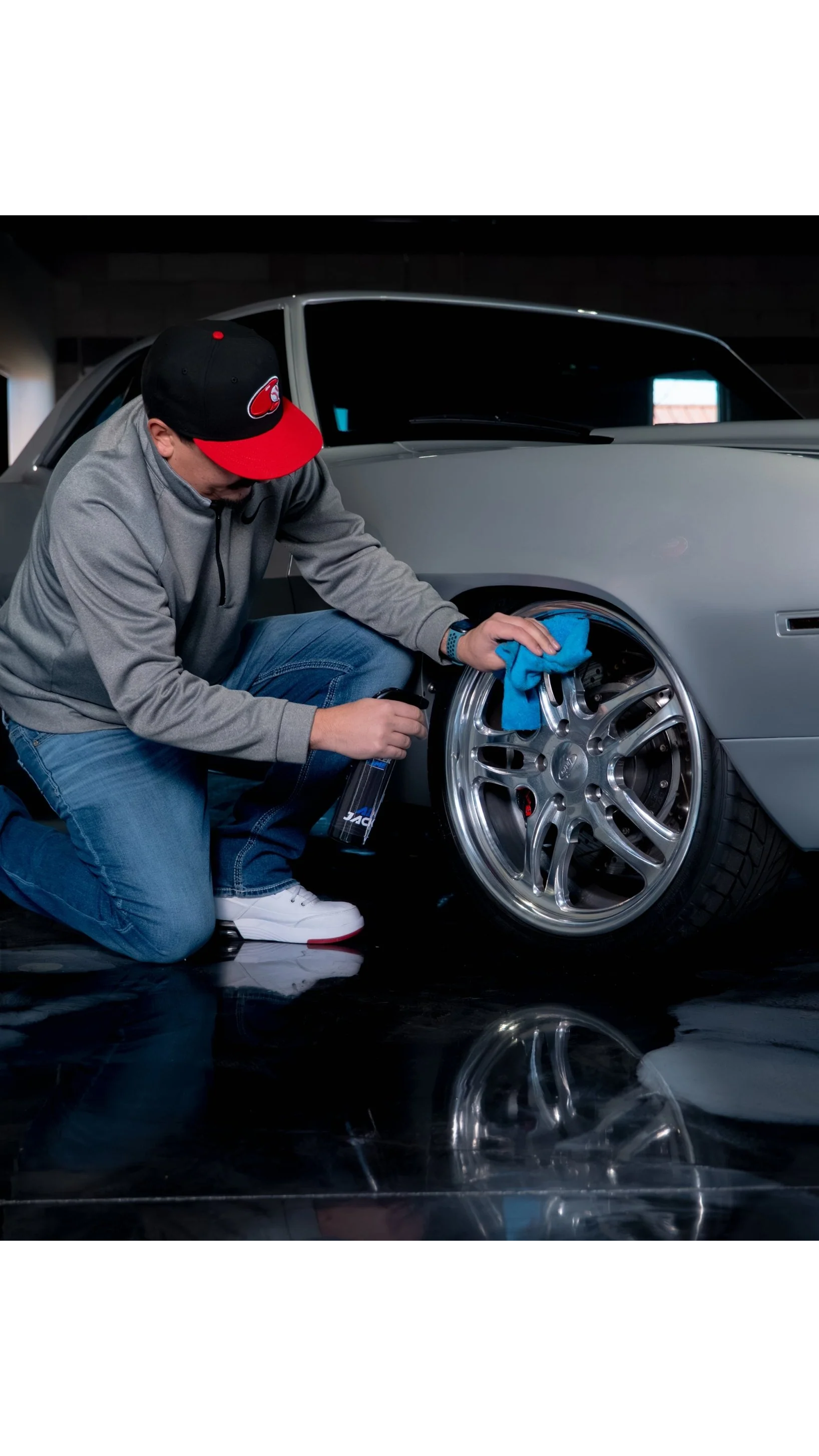
Willer Time's All Jack Car Detail Spray is built along these lines - a hybrid formula engineered for tires, rims, and clear-coat paint that delivers the speed of a quick detailer alongside ceramic-style water behavior and slickness, without a complicated multi-step install. With a six-ingredient formula printed directly on the label, it is a practical example of where the category has evolved: fast, transparent, and actually protective.
Application Techniques That Protect Your Paint
1. Always Use a Clean Microfiber Cloth
The cloth matters as much as the product. Microfiber is the only appropriate material for applying quick detailers or spray wax - soft enough not to scratch, absorbent enough to trap lifted particles, and textured in a way that picks up contamination rather than pushing it around. Cotton cloths, paper towels, and old t-shirts all carry too much risk of fine scratching on a clear coat surface.
The cloth also needs to be clean. A microfiber that has been used to wipe wheels, dry a muddy rocker panel, or clean the interior carries contamination that can damage paint regardless of how good the detailing spray is. Keep dedicated paint-safe microfibers separate from everything else, and wash them regularly without fabric softener - which clogs the fibers and reduces their ability to trap particles safely.
2. Apply to a Cool Surface in the Right Conditions
Temperature affects how quickly a product flashes dry and how evenly it spreads. Applying a quick detailer or spray wax to a hot panel - one that has been sitting in direct sun - causes the product to evaporate too fast before it can be spread and buffed properly. The result is streaking, uneven application, and residue that is harder to remove cleanly.
Always work in the shade, in a garage, or during cooler parts of the day. Early morning and late afternoon are ideal windows. For best bonding results, the surface should also be dry before applying spray wax or a ceramic hybrid - though quick detailers are commonly used as drying aids on wet surfaces, and some spray wax formulas are specifically designed for wet application. Check the product instructions to confirm what conditions it is built for.
3. Mist Lightly - Less Is More
Over-applying is one of the most common mistakes with spray-format products. More product does not mean more protection or more gloss - it means more residue, more buffing effort, and a higher chance of streaking. A light mist from about one to two feet away is all that is needed to cover a panel section effectively.
Work one section at a time rather than spraying the entire car and then going back. This keeps the product from drying on the surface before it can be spread and buffed, which leads to the hazy residue that makes paint look worse than before. Methodical, section-by-section application consistently delivers better results.
4. Wipe in One Direction, Then Buff Dry
Circular wiping motions are a well-known cause of swirl marks. Even with a microfiber cloth and a lubricating detail spray, circular buffing creates a pattern of micro-abrasions that becomes visible under direct or angled light. Linear wiping - straight passes in one direction - minimizes that risk and spreads the product more evenly.
After the initial wipe distributes the product, flip the microfiber to a clean, dry side and buff the panel with light pressure. This second pass removes any remaining residue and brings out the final gloss. The buffing step is what separates a clean, slick finish from a hazy, streaky one - do not skip it, and do not use the same side of the cloth used for application.
For Daily Drivers and Enthusiasts, the Smarter Routine Uses Both
The question is not really which product is better - it is which product is better right now for what the paint actually needs. Quick detailers and spray waxes are not competing. They occupy different positions in a complete maintenance routine, and using them together - in the right order, at the right time - is what actually keeps paint looking consistently sharp.
A practical routine looks like this: wash thoroughly, then apply a spray wax or ceramic hybrid detail spray while the paint is clean to lock in protection. Between washes, use a quick detailer to handle light dust, touch-ups, and fingerprints without risking the protective layer underneath. When the paint gets truly dirty again - road grime, heavy dust, bug splatter - wash first, and repeat the cycle.
For enthusiasts chasing a deeper, more durable result, layering a ceramic hybrid spray as the base protection and maintaining with a quick detailer on top is the approach many professional detailers recommend. The ceramic layer does the heavy protection work. The quick detailer keeps it clean and glossy without wearing it down. Neither replaces the other - they make each other more effective.
Willer Time
City: Colorado Springs
Address: 2020 N Academy Blvd Ste 261
Website: https://willertime.com/
Phone: 1(800) 555-1234
Email: support@willertime.com


Comments
Post a Comment