Post-Infidelity Stress Disorder: Brighton Counsellor Explains Trauma Signs
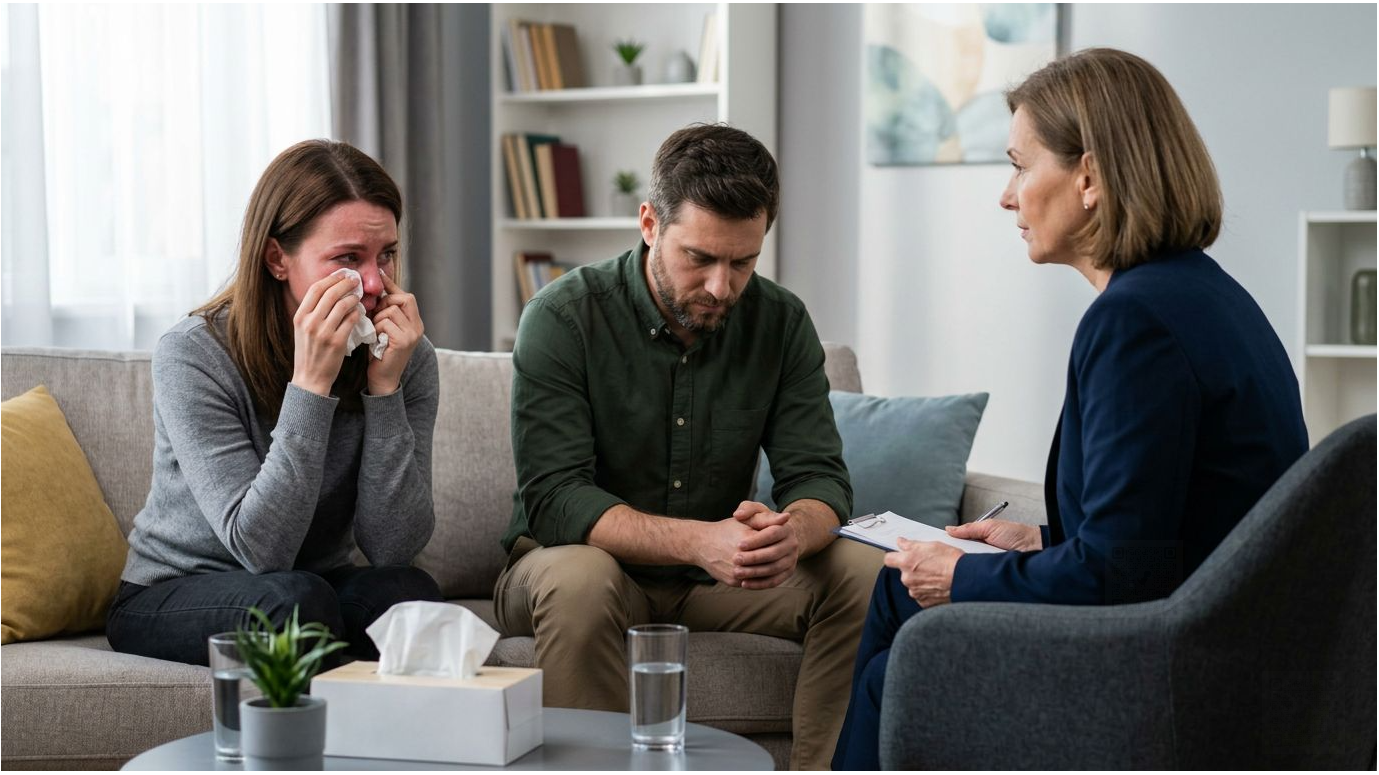
- Post-Infidelity Stress Disorder (PISD) is a clinically used term — its symptoms closely mirror PTSD, including flashbacks, hypervigilance, and emotional dysregulation, and it deserves to be treated as trauma, not just heartbreak.
- Standard couples counselling is often the wrong tool for infidelity recovery — trauma-informed therapy that stabilises the nervous system first is what research shows actually works.
- The Gottman Trust Revival Method offers a structured three-phase roadmap (Atonement, Attunement, Attachment) that gives couples a clear, evidence-based path forward — but only under the right conditions.
- Not every couple is ready for joint sessions immediately — active affairs, absent remorse, and certain mental health crises are genuine contraindications that need addressing first.
- Brighton and Hove residents face a specific challenge: NHS Talking Therapies services do not offer specialist infidelity counselling, leaving a significant gap that private, trauma-informed practitioners are best placed to fill.
Discovering a partner's infidelity doesn't just damage a relationship — it can shatter a person's sense of reality. The intrusive thoughts, the sleepless nights, the inability to stop replaying what happened: for many people, these aren't simply signs of being upset. They are symptoms of genuine psychological trauma. Understanding that distinction is the first step towards getting the right kind of help.
Infidelity Can Trigger a PTSD-Like Condition — Here's What to Look For
Most people expect to feel devastated after discovering a partner's affair. What far fewer expect is that the aftermath can look a lot like a trauma response — because, neurologically, that's exactly what it is. The betrayal doesn't just hurt emotionally; it disrupts the nervous system in ways that can persist for months or even years without the right support.
Psychologists now use the term Post-Infidelity Stress Disorder (PISD) to describe this specific cluster of symptoms. Research into betrayal trauma — the psychological impact of a profound breach of trust by someone in a close relationship — increasingly places PISD alongside complex PTSD in terms of its presentation and its clinical demands. Knowing the signs matters, because it directly shapes what kind of help is going to work.
For a detailed breakdown of what genuine infidelity recovery requires — and why most couples underestimate it — this guide from The Hove Counselling Practice covers the clinical realities in depth. Brighton counsellor Claire Sainsbury has written extensively on the subject, drawing on over fifteen years of specialist experience working with betrayal trauma.
What Is Post-Infidelity Stress Disorder?
Post-Infidelity Stress Disorder is the severe emotional and psychological distress that follows the discovery of a partner's infidelity. It is not a formal DSM diagnosis — rather, it is a term used by clinicians to describe a cluster of trauma-response symptoms that frequently appear after a person discovers their partner has been unfaithful. The symptom overlap with PTSD is significant enough that practitioners working in betrayal recovery treat it with the same trauma-informed lens. The betrayed partner's sense of safety, identity, and reality has been fundamentally disrupted. That disruption has physiological consequences, not just emotional ones.
Symptoms That Mirror PTSD
The symptoms of PISD map closely onto the classic PTSD triad of re-experiencing, hyperarousal, and avoidance:
- Intrusive thoughts and flashbacks — unwanted mental images of the affair, often triggered without warning by sensory cues such as a song, a smell, or a location
- Hypervigilance — a constant state of alertness, checking phones, monitoring whereabouts, being unable to relax or feel safe
- Emotional dysregulation — swinging between overwhelming grief, rage, numbness, and despair, sometimes within the same hour
- Sleep disruption — difficulty falling or staying asleep, nightmares, exhaustion that doesn't lift
- Identity disruption — a destabilised sense of self, questioning one's own judgement, worth, and perception of reality
- Avoidance — withdrawing from people, places, or situations that trigger memories of the affair
These aren't signs of weakness or over-reaction. They are the nervous system's predictable response to a traumatic event. Treating them as anything less — telling someone to just move on, or rushing into communication exercises in couples counselling — typically makes things worse.
Why Betrayal Dysregulates the Nervous System
The reason infidelity produces trauma-like symptoms lies in its nature as a relational trauma. Most external threats — an accident, a natural disaster — are clearly separate from the people a person depends on for safety and connection. Betrayal is different. The very person who provided attachment security is simultaneously the source of the threat. The nervous system has no clean way to process this contradiction.
This is what researchers call betrayal trauma — and it's why recovery from infidelity is so much more complicated than recovering from other types of loss. The brain can't simply file the event away and move forward, because the context of the trauma (the relationship) is still present. Every interaction with the betraying partner carries the weight of both the attachment bond and the attachment injury at the same time. Without targeted, trauma-informed support, that neurological loop can run indefinitely.
Why Standard Couples Counselling Falls Short
When a couple discovers infidelity, the instinct is often to find a couples counsellor as quickly as possible. That instinct is understandable — but acting on it without knowing the clinical difference between general couples counselling and infidelity-specific therapy can actually slow recovery down, or in some cases cause harm.
Trauma-Informed Therapy vs. Communication Skills Training
General couples counselling works well for relationships experiencing disconnection, recurring conflict, or communication difficulties. It typically starts with identifying patterns and teaching new communication tools — both partners reflect, practise, and implement changes together. That model assumes both partners are relationally safe and that the core issue is functional, not traumatic.
Infidelity breaks that assumption completely. Asking a couple in acute betrayal crisis to practise communication exercises is, as one clinical description puts it, roughly equivalent to asking someone to learn to drive while they are in anaphylactic shock. Before any structured relational work can begin, the betrayed partner's nervous system needs to be stabilised. Psychological safety has to be established first. Sessions must begin with emotional regulation and containment — not homework assignments.
This is the core difference between trauma-informed infidelity therapy and standard couples counselling. One addresses a dysfunctional relationship; the other addresses a traumatised one. The techniques, pacing, goals, and therapeutic stance are fundamentally different — and choosing the wrong approach at the wrong moment can compound the damage.
The Disclosure Factor: Why Honesty Changes Outcomes
One of the most striking findings from infidelity therapy research concerns the role of disclosure. A landmark five-year follow-up study found that 57% of couples in which the affair was revealed during therapy remained married five years later — compared to just 20% of couples where the infidelity was concealed throughout the therapeutic process.
That 37-percentage-point gap is not marginal. It reflects something clinically significant: couples therapy conducted while an affair is still being hidden is built on a foundation that is fundamentally still broken. Disclosure, when it happens within a structured, therapeutically supported environment, dramatically changes the trajectory of recovery.
Equally damaging is what's known as trickle-truth — the gradual, piecemeal revelation of affair details over time. Each new disclosure re-traumatises the betrayed partner and resets the recovery clock. Research consistently identifies complete, honest disclosure — delivered at one point, in a managed therapeutic setting — as a critical turning point in the recovery process.
The Gottman Trust Revival Method: A Three-Phase Recovery Road Map
Among the evidence-based frameworks available for infidelity recovery, the Gottman Trust Revival Method stands out for its clarity and clinical rigour. It organises the recovery process into three sequential phases, each with a distinct focus and set of therapeutic goals. Understanding the structure helps couples know what they're working towards — and why each phase matters.
1. Atonement: Full Accountability, No Minimisation
The first phase is the hardest, and the most predictive of whether recovery is possible at all. Atonement requires the betraying partner to take full, unconditional responsibility for what happened — not a qualified apology, not a partial account, and not a version of events that gradually re-frames the betrayed partner's needs or behaviour as contributing factors.
The betrayed partner has the right to ask any question about the affair and receive an honest answer. Defensiveness, minimisation, and blame-shifting are, according to Gottman's research, the single most reliable predictors of therapeutic failure at this stage. Genuine atonement extends beyond remorse — it includes a visible, sustained commitment to change, not just regret at having been discovered. Without this foundation, the subsequent phases have nothing solid to build on.
2. Attunement: Rebuilding Emotional Connection
Attunement shifts the focus from individual accountability to relational rebuilding. Couples begin to examine the unmet needs, communication failures, and vulnerability patterns that existed in the relationship before the affair — not as a way of redistributing blame, but as an honest examination of the context in which infidelity became possible.
Gottman's research describes this phase as the point where both partners begin to take care of each other's emotional experience again. That transition — from each partner being focused almost entirely on their own pain and self-protection, to genuinely attending to each other — marks a significant shift in the therapeutic process. It's gradual, often fragile, and requires careful guidance from a skilled practitioner.
3. Attachment: Re-Establishing Intimacy
The final phase addresses commitment, physical closeness, and the rebuilding of intimacy. Many couples find this the most emotionally complex stage — the betrayed partner may simultaneously want closeness and feel repelled by it. Both responses are completely normal and need to be honoured rather than hurried.
A skilled therapist guides this process at a pace set by the most cautious partner, helping both people develop what can, in some cases, become a more honest and genuinely intimate relationship than they had before the affair. The goal is not simply to return to what existed previously — it is to build something new on a foundation that has now been exposed, examined, and rebuilt with care.
When Couples Therapy Is Not Yet Appropriate
Identifying contraindications early is not pessimistic — it is clinically responsible. Joint infidelity therapy conducted under the wrong conditions can cause genuine harm. Knowing when to pause and address individual factors first protects both partners and gives the eventual joint work the best possible chance of success.
Active Affairs and Absent Remorse
If the affair has not ended, couples therapy is not appropriate. Conducting joint sessions while an affair continues means asking the betrayed partner to become emotionally vulnerable in a space that is not actually safe. The therapy cannot work, and it risks deepening the damage. The affair must be completely and unambiguously over — including any residual contact — before the first joint session takes place.
Similarly, where the betraying partner demonstrates no genuine remorse — continuing to minimise or justify the affair, engaging in therapy only under pressure, or shifting blame without any movement toward accountability — the therapeutic conditions for recovery are simply absent. Research consistently identifies a lack of remorse and ongoing blame as reliable predictors of therapeutic failure. In these cases, individual therapy for both partners is the more appropriate starting point.
Abuse, Addiction, and Acute Mental Health Crises
Three other situations require careful assessment before joint sessions begin. Domestic abuse or intimate partner violence — whether pre-existing or triggered by the discovery of infidelity — means joint therapy could place the abused partner at significant risk. Open, vulnerable disclosure in a couples session can be weaponised in an abusive dynamic; individual safety work and specialist domestic abuse support must come first.
Active substance misuse creates a fundamental instability that undermines the trust-building process at the heart of recovery. Most clinical models treat active addiction as a contraindication to conjoint treatment — not because recovery from both is impossible, but because addressing them simultaneously without first stabilising the addiction typically produces short-lived results.
Finally, acute mental health crises — including suicidal ideation, severe depression, or acute anxiety disorders triggered or worsened by the discovery of infidelity — require individual stabilisation before either partner has the capacity to engage in the relational demands of joint therapy. Individual sessions running alongside couples work is often the most effective structure once the acute crisis has passed.
Why Brighton and Hove Residents Can't Rely on the NHS for Infidelity Support
The need for specialist infidelity counselling in Brighton and Hove is real — and the gap between that need and what's publicly available is equally real.
High Anxiety, Limited Provision, and the Private Therapy Gap
Brighton and Hove's Health Counts 2024 survey — involving over 16,700 adults and representing approximately 7% of the city's adult population — found that 38% of residents recorded high anxiety scores and 24% reported low happiness levels, with mental health challenges outpacing national averages. These aren't just individual statistics; they accumulate inside relationships. High housing costs, commuting pressure, and cost-of-living strain are all documented contributors to emotional disconnection and relationship vulnerability across the city.
NHS Talking Therapies services in Brighton and Hove provide low and high intensity CBT and some counselling for depression and anxiety — but specialist infidelity counselling for couples in betrayal recovery is not within their remit. Extended waiting times for NHS talking therapies in the area mean that couples in acute post-affair crisis face significant delays, during which the damage can deepen. For this specific need, private specialist therapy is not a luxury — it is the only realistic pathway to timely, appropriate support.
Brighton and Hove has a reasonably active private counselling sector, but genuinely specialist infidelity recovery therapy — integrating Emotionally Focused Therapy (EFT), CBT, DBT and Emotional Freedom Technique (EFT) within a trauma-informed framework — is a significantly narrower offering. EFT in particular, which targets the attachment injury at the core of infidelity, achieves a 70-75% recovery rate for couples dealing with betrayal, with approximately 90% showing significant improvement by the end of treatment. Finding a practitioner trained to Advanced Level 3 Practitioner level in Emotional Freedom Technique, certified in Emotional Focused Therapy with specific infidelity specialism and holding BACP accreditation, narrows the field considerably.
Specialist, Trauma-Informed Support Is Available in Brighton — Start Your Recovery With Claire Sainsbury
Post-Infidelity Stress Disorder is real, its symptoms are serious, and the path through it requires more than goodwill and communication worksheets. The evidence is clear: trauma-informed therapy, structured around frameworks like the Gottman Trust Revival Method and delivered by practitioners trained in EFT and emotional regulation, produces meaningfully better outcomes than generalist approaches.
What that means in practice is finding a therapist who understands betrayal as a trauma event — someone who will stabilise before they structure, who will pace the process around the betrayed partner's nervous system, and who can hold both individual and relational dimensions of recovery simultaneously. Individual sessions alongside couples work, honest and complete disclosure, and the genuine remorse of the betraying partner are all ingredients that research has repeatedly shown to matter.
For those in Brighton and Hove — or further afield via secure online sessions — Claire Sainsbury at The Hove Counselling Practice brings over twenty years of specialist experience, Emotional Freedom Technique Advanced Level 3 Practitioner certification, Emotionally Focused Therapy and Dialectical Behaviour Therapy expertise, and BACP accreditation to this specific and demanding area of therapeutic work. Sessions are available Monday through Friday, 10am to 9.30pm, in person at 126 Shirley Street, Hove BN3 3WG, or online across Sussex and nationwide.
Recovery from infidelity is a long process — most experts place the full timeline at two to five years — but it begins with a single, well-informed step: getting the right kind of support, from the right kind of practitioner, at the right time.
To seek specialist infidelity and relationship counselling with a qualified, trauma-informed therapist, visit The Hove Counselling Practice.
The Hove Counselling Practice
City: Hove
Address: 126 Shirley St
Website: https://thehovecounsellingpractice.co.uk


Comments
Post a Comment