How Much Does It Cost to Start Golfing? First Year Total Breakdown
Key Takeaways
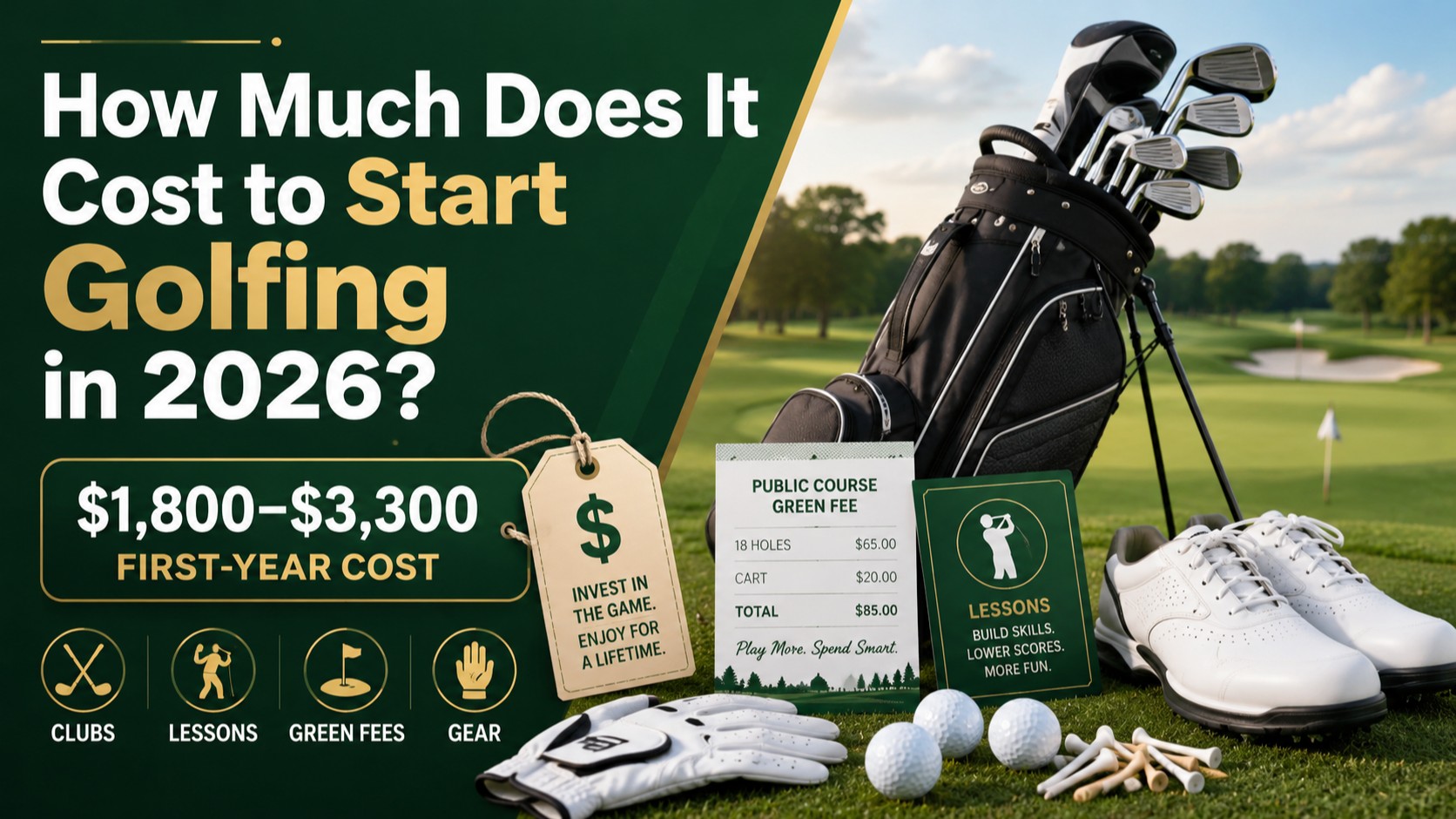
- Starting golf as an adult typically costs between $1,800 and $3,300 in year one - but budget-conscious beginners can realistically stay under $1,000.
- Three decisions drive most of the cost difference: where you buy clubs, where you play, and whether you choose group or private lessons.
- The PGA's Get Golf Ready program offers five structured lessons for around $150-$175 - one of the best entry points in the sport for adults who have never swung a club.
- Junior golfers can get started for as little as $296-$530 using programs designed specifically to lower the financial barrier for young players.
- Keep reading to find out exactly where most beginners overspend - and which specific choices make the biggest dent in year-one costs.
$1,800-$3,300 in Year One - But Under $1,000 Is Realistic
Golf has a reputation for being expensive. That reputation is not entirely wrong - but it is mostly earned by people who did not know where to start. The actual range for a first-year adult golfer runs from around $850 on the low end to over $3,300 if you are buying new clubs, taking private lessons, and playing regularly at weekend rates.
The spread is that wide because a few key choices - clubs, courses, and lessons - can either double or cut your costs in half. According to a detailed cost breakdown by Affordable Golf Courses, golfers who stay under $1,000 in year one almost always bought used clubs, stuck to public courses, and started with group instruction instead of private coaching.
That is a smarter starting point, not a compromise.
What Your First-Year Budget Actually Covers
The total cost of starting golf is not one big purchase - it is a collection of smaller ones that adds up across twelve months. Understanding what each category actually costs makes it much easier to plan without getting blindsided.
Budget vs. Mid-Range: Side-by-Side Costs
Here is a realistic look at what beginners pay depending on the route they take:
Expense Budget Option Mid-Range Option Club Set $150-$300 (used) $500-$700 (new) Golf Bag $30-$50 $80-$150 Golf Shoes $40-$60 $80-$150 Balls & Tees $40-$60 $60-$100 Lessons $150-$175 (group program) $250-$750 (private) Green Fees (annual) $600-$1,000 $1,200-$1,800 Total (Est.)~$1,010-$1,645~$2,270-$3,650
The Small Expenses That Quietly Add Up
Equipment and green fees get most of the attention, but smaller recurring costs can quietly push spending past budget. Gloves run $10-$20 each and last roughly 15-20 rounds, meaning most beginners go through two or three per season. Golf balls are the bigger wildcard - beginners lose more of them, especially on courses with water hazards. A 24-pack of beginner-friendly balls like Titleist TruFeel or Callaway Supersoft runs $40-$50, and recycled or refurbished balls can drop that to $20-$30 per dozen with no real performance difference at a beginner level. Cart rentals add $15-$50 per round, which can quietly add several hundred dollars over a full season for anyone playing regularly. Walking the course eliminates that cost entirely and is the default choice for budget-conscious beginners.
Beginner Golf Clubs: New vs. Used
Clubs are the most emotionally charged purchase most beginners make - and the easiest place to either overspend or underspend. The right range for a beginner is clear and genuinely affordable.
Used Complete Sets ($150-$300): Lower Entry Cost, Real Trade-Offs
A complete set that originally sold for $500-$600 can often be found in solid condition for $150-$250 on Golf Avenue, 2nd Swing Golf, eBay, or Facebook Marketplace. For a beginner still developing swing mechanics, the performance gap between a used set and a new one is negligible - the swing, not the shaft, determines where the ball goes at this stage.
The one real trade-off is that beginners do not yet have the experience to evaluate club condition carefully. Sticking to reputable resellers with condition ratings - or asking an experienced golfer to look things over before buying - reduces that risk considerably.
New Beginner Sets ($400-$1,200): Better Value for Long-Term Players
For beginners confident they will stick with the sport, investing $400-$600 in a new set like the Callaway Strata Ultimate (16 clubs, stand bag included) or a Wilson Profile SGI delivers noticeably more forgiving club heads and better consistency on off-center hits - which, early on, will be most of them. New sets also come with warranties and remove any uncertainty about club condition. If a new set goes on sale near used set prices, buying new is usually the smarter call.
Green Fees: What Public Courses Actually Charge
After clubs, green fees are the biggest ongoing expense. At many public and municipal courses, an 18-hole round runs $40-$50, though some can be found for less. Nine-hole rounds typically drop to roughly $20-$25, with some options below that - a practical choice for beginners still building stamina and focus.
Weekday Rates Save 20-40%; Twilight Rates Trim an Additional 15-20%
Timing matters more than most beginners realize. Weekday tee times typically cost $10-$20 less per round than weekend slots. Twilight rates - late-afternoon tee times when courses are filling remaining slots - can cut peak pricing by 30-40%. A golfer who plays once a week and consistently chooses weekday twilight times over weekend mornings can realistically save $600-$800 in green fees over a full season.
When a Monthly Membership Beats Pay-Per-Round
Some public and semi-private courses offer membership programs that meaningfully reduce per-round costs. For anyone planning to play more than twice a month, it is worth running the numbers before the season starts - the break-even point on most memberships arrives faster than expected, typically around 20-25 rounds per year.
Group Lessons vs. Private Instruction
Skipping lessons entirely is one of the most common beginner mistakes. Bad habits developed early are much harder to fix later than they are to avoid in the first place. At the same time, jumping straight into $100-per-hour private instruction is not necessary to build a functional swing.
Group lessons run $20-$50 per session and cover the same foundational mechanics as private coaching at a fraction of the cost. Private lessons range from $50-$150 per hour depending on the instructor's credentials, the facility, and location. Most beginners need 5-10 lessons to develop a consistent swing - at $75 average per private session, that is $375-$750 just for instruction. The most cost-efficient path for most new golfers: start with a structured group program, then move to private lessons once the basics are solid and there are specific issues worth addressing one-on-one.
PGA Get Golf Ready: 5 Lessons for Around $150-$175
The PGA's Get Golf Ready program is one of the clearest examples of affordable beginner instruction done right. For around $150-$175, adult beginners get five group lessons from a PGA Professional covering grip, stance, swing basics, chipping, and putting - everything needed to play a real round on a real course. The program assumes zero prior knowledge and carries no pressure. Locations are available across the country, making it accessible regardless of where you live. For a beginner trying to keep first-year costs down, it is one of the highest-value decisions in the sport.
Junior Golfers: Why First-Year Costs Run Lower
Junior equipment is priced differently from adult gear, and purpose-built programs make green fees almost a non-issue. Brands like US Kids Golf design clubs based on height rather than age - a more practical fit for growing kids - with complete junior sets running $72-$180. Because kids grow quickly, buying toward the lower end of that range and replacing sets as needed is the smarter approach over investing in high-end junior equipment.
The Youth on Course program takes the green fee equation nearly off the table. For $60 per year, junior members can play thousands of courses across North America for a maximum of $5 per round. Pair that with a junior club set and a junior-specific group lesson program like The First Tee (seasonal programs around $120), and a first year of golf for a junior golfer realistically costs $296-$530 total - compared to roughly $1,010-$1,645 for a budget-conscious adult.
Expense Junior (Budget) Adult (Budget) Club Set $72-$180 $150-$300 Lessons $99-$120 (junior programs) $150-$175 (group program) Green Fees (Annual) $60-$100 (Youth on Course) $600-$1,000 Balls, Tees, Glove $30-$50 $50-$80 Shoes $35-$80 $40-$60 Total (Est.)$296-$530$990-$1,615
Start Golfing for Under $1,000 - Smart Choices That Make It Possible
Getting under $1,000 in year one is about sequencing decisions correctly. The golfers who spend the least are usually the ones who did not rush to buy top-of-the-line gear before they needed it.
- Buy used clubs first. A set originally priced at $500-$600 is available in good condition for $150-$250 on Golf Avenue, 2nd Swing Golf, or Facebook Marketplace. The performance difference at a beginner level is negligible.
- Play public courses. Municipal and public courses offer the same core experience - fairways, greens, bunkers - at $40-$50 per round, without the $1,500-$5,000 annual commitment of a private club membership.
- Walk instead of renting a cart. At $15-$50 per round, cart rentals add up to hundreds of dollars over a season. Walking is traditional, healthy, and free.
- Start with group lessons. The PGA Get Golf Ready program's five lessons for around $150-$175 covers everything needed to play a real round. Master the basics in a group setting before spending on private instruction.
- Skip premium golf balls early on. Beginners lose more balls per round than experienced players. Recycled or refurbished balls perform the same at this stage and cost significantly less per dozen.
An adult golfer who follows this approach and plays once or twice a week can realistically finish the first year between $850 and $1,200 - without sacrificing the actual experience of learning and playing the game.
For more detailed cost breakdowns, course recommendations, and gear guides built around real budgets, Affordable Golf Courses covers the full spectrum of what it takes to play the game without overpaying for it.
Affordable Golf Courses
City: Pleasant Prairie
Address: 8767 3rd Ave
Website: https://affordablegolfcourses.com/


Comments
Post a Comment