Cordless Power Tool Starter Kits: Why Beginners & DIYers Should Consider Them
Key Takeaways
- Cordless power tool kits now dominate 65% of the global power tool market - and that number is still climbing.
- A starter kit bundles essential tools, batteries, and a charger into one purchase, almost always at a lower price than buying each item separately.
- Modern lithium-ion batteries and brushless motors have closed the performance gap between cordless and corded tools significantly.
- Unified battery platforms - where one battery powers an entire lineup - are reshaping how both hobbyists and contractors build their tool collections.
- The sections below break down what's inside a typical kit, why the technology matters, and how to make a smart buying decision at any skill level.
Whether the goal is hanging shelves on a weekend or framing walls on a job site, the right set of tools makes all the difference. Power tool starter kits have become the go-to entry point for both first-timers and experienced tradespeople - and for good reason. The combination of portability, safety, and real cost savings has turned these bundles into one of the smartest buys in the tool world. Retailers and specialists like GenuineTools have leaned into this shift, helping buyers cut through the noise and find kits that actually match their workload.
Cordless Kits Now Own 65% of the Power Tool Market
The numbers are hard to ignore. Cordless tools accounted for 65% of the total global power tool market in 2024, with growth projected to continue at a compound annual rate of over 10% through 2034. That's not a niche trend - it's a structural shift in how people work.
Driving that shift is a simple reality: cordless tools have become genuinely powerful. Early battery-powered tools sacrificed performance for convenience. Today's kits - built on lithium-ion cells and brushless motors - match or exceed corded alternatives in most everyday applications. The global DIY market now exceeds $800 billion, with 87 million U.S. households tackling projects each year, making the demand for accessible, capable starter kits easy to understand.
What's Actually Inside a Starter Kit
A starter kit is a system - and understanding what comes in the box helps set the right expectations.
Core Tools Included
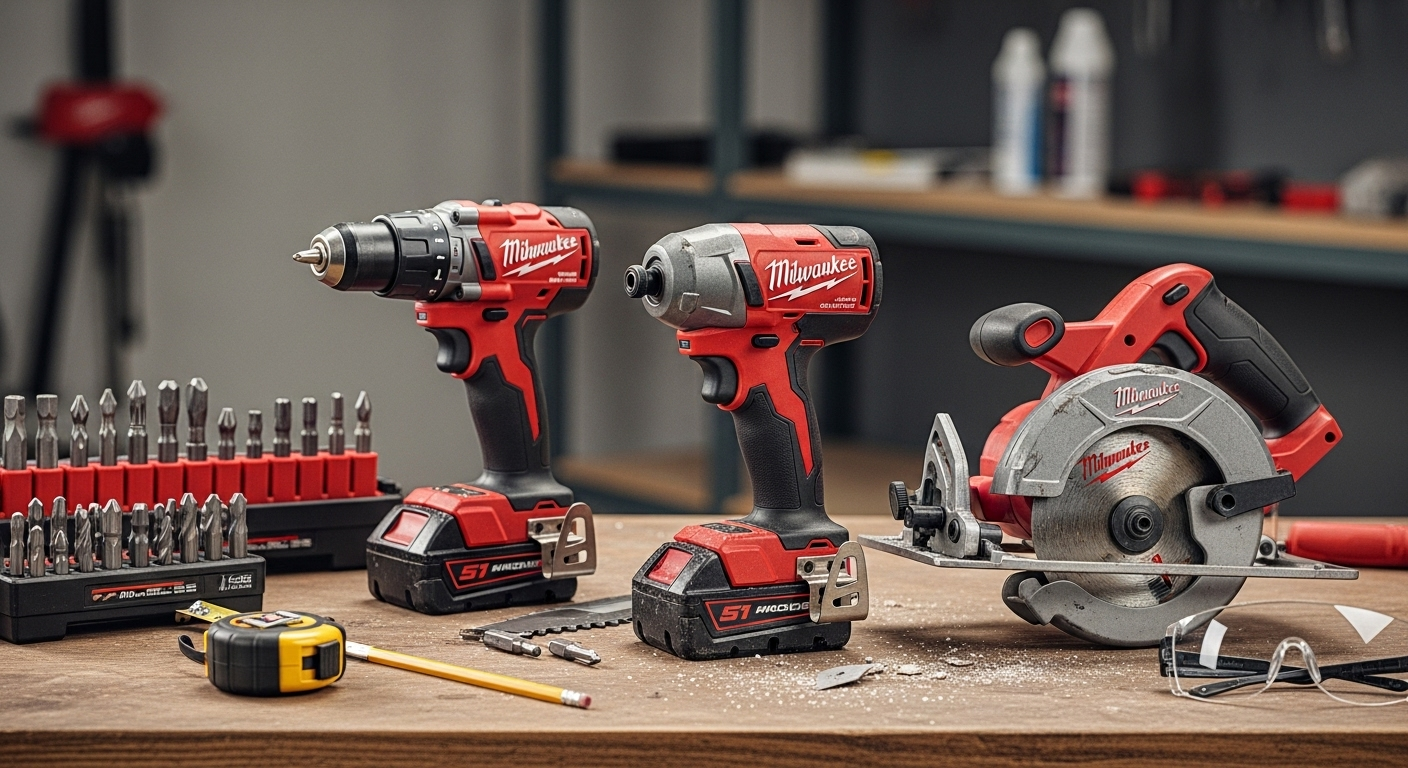
Most kits center around the tools that handle the widest range of tasks. A typical mid-range bundle includes:
- Drill/driver - for boring holes and driving fasteners
- Impact driver - higher torque for heavy fasteners and stubborn screws
- Circular saw - straight cuts in wood, plywood, and composite materials
- Reciprocating saw - demolition, pipe cutting, rough trimming
- Work light - often included in 5-piece sets as a practical bonus
Higher-tier kits add angle grinders, oscillating multi-tools, or hammer drills. The goal is coverage - one purchase that handles drilling, fastening, and cutting without gaps.
Shared Battery and Charger System
Every tool in the kit runs on the same battery platform: one charger, one battery type. This reduces cost and clutter in a meaningful way. Instead of managing multiple chargers and incompatible battery formats, a single charged pack moves freely between tools throughout the day. Most kits ship with two batteries so work doesn't stop while one is charging.
Freedom to Work Anywhere
No Outlets, No Limits
Outdoor decks, rooftops, crawl spaces, remote job sites - cordless tools go anywhere without hunting for an extension cord or a power source. That freedom is especially valuable for contractors moving between locations and for DIYers working in garages, yards, or older homes with limited outlet access. Eliminating the cord removes a logistical problem that, in practice, used to eat up significant time.
Lighter Build, Less Fatigue
Cordless tools are generally lighter and more maneuverable than their corded counterparts. Brushless motor designs contribute to this - more efficient motors can be built into smaller, lighter housings without sacrificing output. For extended overhead work or long days on a job site, that weight reduction translates directly into less arm fatigue and more controlled, accurate results.
Safer by Design
Cord Hazards Eliminated
Cords are a real safety liability. They tangle, fray, and stretch across walkways, and in damp or dusty environments they create genuine electrical hazards. Cordless tools remove all of that at the source - no cable running across a wet concrete floor, no tripping hazard strung between a ladder and a wall outlet. Many modern kits also include overload protection built into the battery management system, automatically cutting power before a motor overheats, along with anti-slip grip textures that improve control for beginners especially. The result is a tool setup that's meaningfully safer across a wide range of environments, not just in ideal workshop conditions.
Kits Cost Less Than Buying Separately
The math is straightforward. A drill, an impact driver, a circular saw, two batteries, and a charger purchased individually from the same brand will consistently cost more than the same items bundled as a kit. Manufacturers price combo kits to move volume, and buyers capture real savings - often hundreds of dollars on a full 5-piece set.
Beyond the upfront price, a shared battery platform keeps long-term costs lower too. Adding a new tool to an existing kit doesn't require buying another battery pack - the existing ones already work. That compounds into meaningful savings as a tool collection grows over time. For a beginner building out a first set of tools, or a contractor standardizing across a job site, the economics of buying a kit over individual tools is hard to argue against.
Battery Tech Has Changed Everything
Longer Runtime, Faster Charging
Lithium-ion batteries have reshaped what cordless tools can do. Compared to older nickel-cadmium (NiCd) packs, modern Li-ion cells offer higher energy density - more stored power in a lighter, smaller package. They also deliver consistent power output throughout the entire discharge cycle. Older battery types would fade as they drained; Li-ion packs run at full strength until they need a charge. Rapid-charging technology, now standard in most quality kits, can restore a depleted pack to full in 30-60 minutes depending on capacity.
Brushless Motors Boost Performance
The shift from brushed to brushless motors ranks among the most significant engineering changes in cordless tool history. Brushed motors use physical carbon contacts that wear down over time and generate friction heat. Brushless motors use electronic controllers instead - no contact, no wear, less heat. The practical results are clear:
- Higher torque output at equivalent battery sizes
- Extended battery life per charge, with less energy wasted as heat
- Longer tool lifespan with fewer mechanical components to replace
For professionals running tools hard all day, brushless motors are a meaningful performance and reliability upgrade. For beginners, they mean a tool that lasts longer and performs more predictably.
Brand Platforms Unify Your Tool Lineup
Within-Brand Compatibility Is Standard
Every major power tool manufacturer - DeWalt, Milwaukee, Makita, Bosch, and others - runs a battery platform strategy. A 20V/60V MAX battery from DeWalt's FLEXVOLT line, for example, is compatible across dozens of that brand's tools. Once locked into a platform, every new tool added is automatically powered by existing batteries. This is the standard model, and it works well when staying within a single ecosystem.
Cross-Brand Systems Are Emerging
A newer development worth watching: cross-brand battery compatibility initiatives. The Cordless Alliance System (CAS), supported by brands including Metabo, allows compatible batteries to power tools across member brands. Similarly, Hilti's Nuron platform represents a push toward unified high-voltage systems for professional contractors. These developments signal that the industry is moving - gradually - toward greater interoperability, though within-brand platforms remain the dominant and most practical choice for most buyers today.
The DIY Market Is Booming - Your Kit Should Keep Up
With 87 million U.S. households taking on DIY projects annually and the global market surpassing $800 billion, the appetite for accessible, capable tools has never been stronger. Starter kits sit at the center of that demand - they lower the barrier to entry for first-time buyers while offering the platform depth that growing DIYers and professionals need as their projects scale up.
The key is choosing a kit built on a strong battery platform from the start. A drill-only starter today should be the foundation of a 10-tool ecosystem two years from now. Thinking about the platform - not just the tools in the box - is what separates a good first purchase from a great one.
Genuine Tools
City: Beaverton
Address: 1500 NW Bethany Blvd.
Website: https://genuinetools.com/


Comments
Post a Comment